The 19th Amendment: Women’s Path to Voting Rights
Discover the epic struggle for women's suffrage that led to the 19th Amendment, transforming American democracy forever.
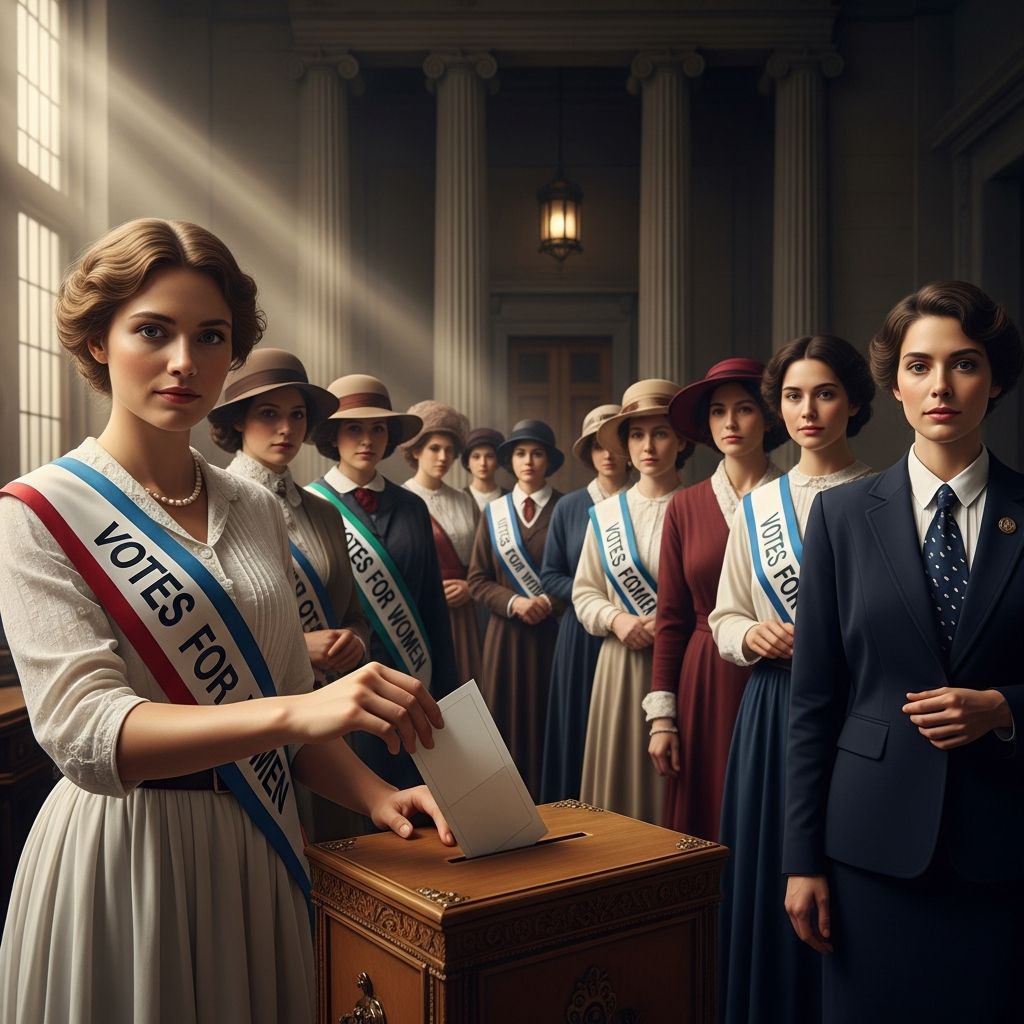
The 19th Amendment to the U.S. Constitution fundamentally altered American democracy by prohibiting denial of voting rights based on sex. Passed by Congress on June 4, 1919, and ratified on August 18, 1920, it marked the culmination of over seven decades of activism.
Roots of the Suffrage Movement
The push for women’s voting rights emerged in the mid-19th century amid broader calls for social reform. In 1848, the Seneca Falls Convention in New York brought together about 300 advocates, including Elizabeth Cady Stanton and Lucretia Mott, who drafted the Declaration of Sentiments. This document mirrored the Declaration of Independence, asserting women’s right to the ‘elective franchise’ as essential to equality.
Early suffragists linked their cause to abolitionism, but tensions arose. The 15th Amendment in 1870 granted Black men voting rights, prompting a split: some supported it despite excluding women, while others, like Stanton and Susan B. Anthony, opposed it, forming the National Woman Suffrage Association (NWSA) to prioritize a federal amendment.
By the 1890s, the movement unified under the National American Woman Suffrage Association (NAWSA), led by Susan B. Anthony and later Carrie Chapman Catt. They pursued state-by-state victories alongside national efforts, achieving suffrage in western territories like Wyoming (1869) and several states by 1910.
Introduction and Early Legislative Battles
The first federal suffrage amendment was proposed in 1878 by Senator Aaron A. Sargent of California. Known later as the Susan B. Anthony Amendment, it stated: ‘The right of citizens of the United States to vote shall not be denied or abridged by the United States or by any State on account of sex.’ Despite periodic debates, it stalled in committees for decades.
Opposition came from varied quarters: conservatives feared disrupting family structures, Southern politicians worried about empowering Black women, and some argued states should handle voting laws. The Senate rejected it in 1887, and multiple votes failed through the early 1900s.
| Year | Event | Outcome |
|---|---|---|
| 1848 | Seneca Falls Convention | Declaration of Sentiments issued |
| 1878 | Sargent introduces amendment | Languishes in committee |
| 1890 | NAWSA formed | Unified national strategy |
| 1917 | Anthony Amendment reintroduced | Multiple failures |
The Turning Tide: Militancy and Strategy
The 1910s brought renewed vigor. Alice Paul founded the National Woman’s Party (NWP), adopting militant tactics like parades, pickets, and hunger strikes. The 1917 Silent Sentinels protested outside the White House, enduring arrests and force-feeding, which galvanized public support.
NAWSA complemented this with lobbying and state campaigns. World War I shifted opinions; women’s contributions to the war effort pressured President Woodrow Wilson to endorse suffrage. In 1918, he addressed Congress, calling it a ‘war measure.’ This paved the way for progress.
- Parades and Protests: The 1913 Woman Suffrage Procession in Washington, D.C., drew 5,000 marchers but faced violence, highlighting the cause nationally.
- State Wins: By 1919, 15 states allowed women to vote in presidential elections.
- International Influence: Nations like New Zealand (1893) and Finland (1906) succeeding spurred U.S. activists.
Congressional Passage: A Narrow Victory
After five failed attempts, Wilson called a special session in May 1919. The House passed the amendment on May 21 (304-89), followed by the Senate on June 4 (56-25), securing the required two-thirds majorities. Southern Democrats posed the biggest hurdle, but wartime patriotism and lobbying prevailed.
Vice President Thomas R. Marshall signed it in a ceremonial office, flanked by suffragists. The measure then went to states for ratification, needing 36 approvals.
Ratification Drama: Tennessee’s Decisive Vote
Ratification began swiftly in the West, with 22 states by late 1919. Anti-suffragists mobilized: Alabama and Georgia rejected it first; Louisiana’s governor rallied 13 holdouts; Maryland tried blocking others.
Carrie Catt’s NAWSA and NWP lobbied intensely. By June 1920, 35 states had ratified. Tennessee, the 36th, deliberated in a sweltering Nashville chamber. Young Harry Burn, swayed by his mother’s letter, cast the deciding ‘aye’ vote on August 18, 1920. Secretary of State Bainbridge Colby certified it on August 26.
Legal challenges followed: Leser v. Garnett (1922) upheld Maryland ratifications despite prior rejection.
Immediate Effects and Limitations
The amendment doubled the electorate, enabling 10 million women to vote in 1920. It boosted turnout and influenced policies on labor, education, and prohibition.
However, it did not end disenfranchisement. Black women faced Jim Crow poll taxes, literacy tests, and violence, as did Native American, Asian, and Latina women under other restrictions. Full inclusion required later laws like the Voting Rights Act of 1965.
| Month/Year | States Ratified (Key Examples) | Total |
|---|---|---|
| June 1919 | Wisconsin, Illinois, Michigan | 8 |
| Dec 1919 | New Mexico, Oklahoma | 22 |
| Aug 1920 | Tennessee (36th) | 36 |
Key Figures Who Shaped the Victory
- Susan B. Anthony: Tireless NWSA leader; arrested for voting in 1872, amplifying the cause.
- Elizabeth Cady Stanton: Seneca Falls organizer; co-authored key texts.
- Carrie Chapman Catt: NAWSA strategist; orchestrated final ratification push.
- Alice Paul: NWP founder; pioneered nonviolent resistance.
- Ida B. Wells: Anti-lynching activist; fought for Black women’s inclusion despite marginalization.
Legacy in Modern Democracy
The 19th Amendment’s centennial in 2020 prompted reflection on progress and gaps. Women now hold records in Congress and executive roles, yet voter suppression persists, echoing suffrage-era barriers.
It inspired global movements and underscored activism’s power. Today, it symbolizes incomplete but pivotal strides toward equality, reminding us that rights are won through persistent struggle.
Frequently Asked Questions (FAQs)
What does the 19th Amendment say exactly?
The right of citizens of the United States to vote shall not be denied or abridged by the United States or by any State on account of sex. Congress shall have power to enforce this article by appropriate legislation.
Which state was the last to ratify the 19th Amendment?
Tennessee became the 36th state on August 18, 1920. Mississippi was the final holdout, ratifying in 1984.
Did the 19th Amendment give all women the right to vote immediately?
No, many women of color faced ongoing discrimination until mid-20th-century civil rights laws.
How long did the suffrage movement last?
From Seneca Falls in 1848 to ratification in 1920, spanning 72 years.
Who was Harry Burn?
The 24-year-old Tennessee legislator whose vote clinched ratification, influenced by his mother’s plea.
References
- Nineteenth Amendment to the United States Constitution — Wikipedia. 2023-10-01. https://en.wikipedia.org/wiki/Nineteenth_Amendment_to_the_United_States_Constitution
- The 19th Amendment, Explained — Brennan Center for Justice. 2020-08-18. https://www.brennancenter.org/our-work/research-reports/19th-amendment-explained
- The 19th Amendment was a Turning Point in American History — University of Virginia. 2025-08-18. https://engagement.virginia.edu/learn/thoughts-from-the-lawn/20250818-Borch
- 19th Amendment to the U.S. Constitution: Women’s Right to Vote — National Archives. 2020-08-26. https://www.archives.gov/milestone-documents/19th-amendment
- Senate Approves Nineteenth Amendment — U.S. Senate. 2020-08-01. https://www.senate.gov/about/women-of-the-senate/nineteenth-amendment-vertical-timeline.htm
- 19th Amendment — U.S. National Park Service. 2023-01-15. https://www.nps.gov/subjects/womenshistory/19th-amendment.htm
Similar Articles








Read full bio of medha deb