Enterprise-Grade Project Management Tools for Demanding Teams
Discover powerful project management solutions designed for teams handling intricate workflows and enterprise-scale operations.
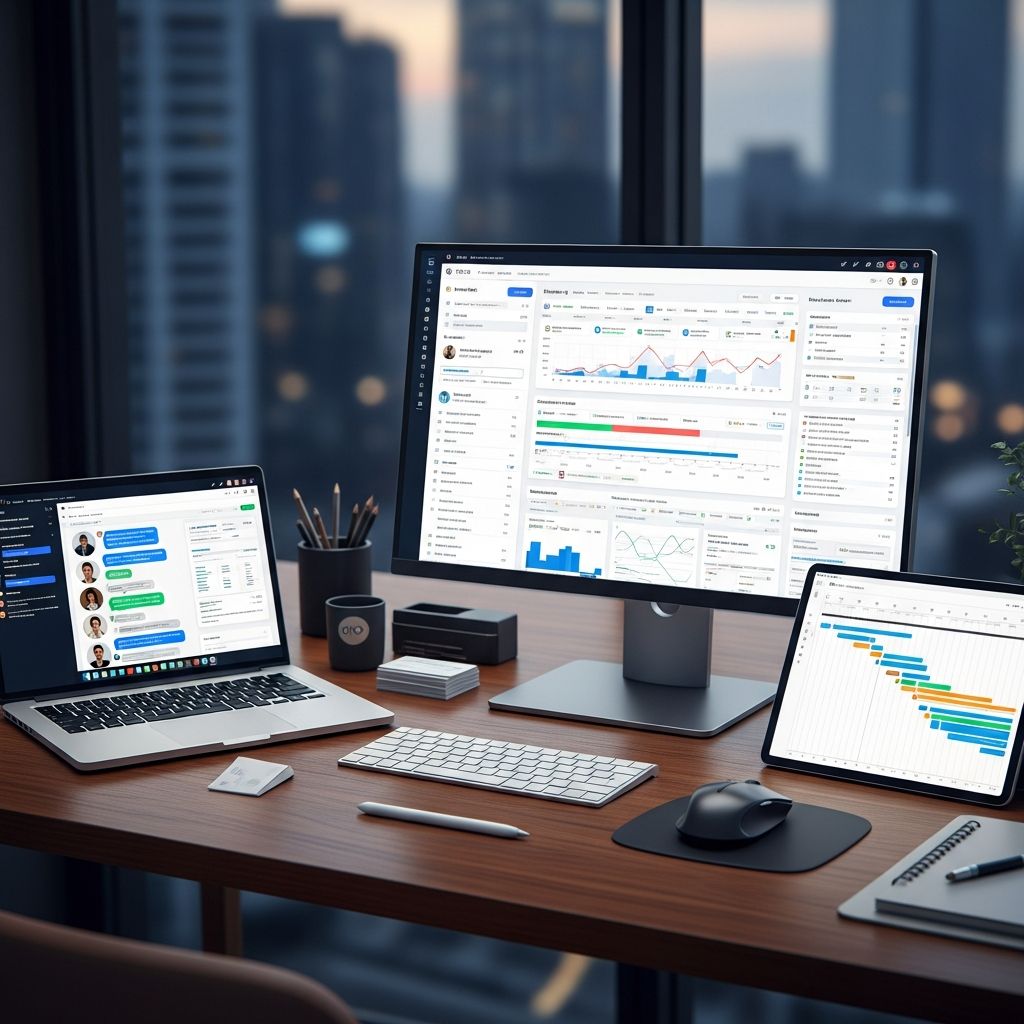
Understanding the Landscape of Advanced Project Management Platforms
Organizations operating at scale require project management solutions that transcend basic task tracking. The modern business environment demands platforms capable of orchestrating complex workflows, managing distributed teams, and providing real-time visibility across multiple initiatives simultaneously. Advanced project management tools have evolved beyond simple checklist systems to become comprehensive ecosystems that integrate planning, execution, monitoring, and reporting functions. These platforms serve as the operational backbone for enterprises managing thousands of concurrent tasks, managing resource allocation across departments, and maintaining financial accountability across portfolio-wide initiatives.
The distinction between consumer-grade and enterprise-grade project management lies not merely in feature quantity but in architectural sophistication. Advanced platforms consolidate previously fragmented toolsets into unified environments where project data, team communications, resource availability, and financial metrics converge. This integration eliminates context-switching inefficiencies and creates single sources of truth for project health and team productivity.
Comprehensive Feature Sets for Complex Operations
Sophisticated project management platforms provide capabilities designed for organizations managing intricate interdependencies, substantial teams, and stringent compliance requirements. These systems move beyond individual project management to encompass portfolio-level visibility and strategic resource optimization.
Workflow Customization and Automation
Enterprise solutions offer extensive customization capabilities allowing teams to tailor workflows to their specific methodologies. Unlike standardized platforms that enforce predetermined processes, advanced systems enable organizations to define custom stages, automate transitions between workflow states, and establish governance checkpoints. This flexibility proves essential for organizations with unique operational requirements or those managing multiple concurrent methodologies simultaneously.
Resource Planning and Capacity Management
Sophisticated platforms integrate resource management functions that enable managers to visualize team capacity, identify bottlenecks, and balance workload distribution across projects. These capabilities track individual availability, skills inventories, and allocation percentages, allowing organizations to optimize resource utilization and prevent overallocation. Advanced systems employ predictive algorithms to forecast resource constraints and recommend preventative actions before projects experience delays.
Financial Management and Cost Tracking
Enterprise-grade solutions incorporate budgeting, cost tracking, and financial reporting capabilities that satisfy organizational finance and compliance requirements. These systems track expenses, monitor budget consumption, and generate financial forecasts enabling accurate project profitability analysis. Integration with accounting systems ensures financial data flows seamlessly between project management and enterprise financial systems.
Specialized Solutions for Technical Development Teams
Organizations engaged in software development and agile transformation require project management systems specifically architected for technical workflows. These platforms provide issue tracking, sprint management, and continuous integration capabilities essential for development-focused teams.
Agile Development and Sprint Management
Platforms specializing in software development offer robust scrum and kanban capabilities that facilitate agile methodologies. These systems enable sprint planning, backlog management, velocity tracking, and release scheduling through interfaces designed for development team workflows. Integration with developer tools like GitHub and Bitbucket creates end-to-end visibility from code commit through production deployment.
Issue Tracking and Quality Management
Advanced development-focused platforms provide comprehensive issue and bug tracking systems with customizable severity levels, priority matrices, and resolution workflows. These systems maintain detailed audit trails documenting issue resolution history, enabling teams to identify recurring problems and implement preventative measures. Integration with continuous integration pipelines enables automated issue creation when quality gates fail.
Comparative Analysis of Platform Capabilities
| Platform Category | Primary Use Case | Key Strengths | Best Suited For |
|---|---|---|---|
| Enterprise Portfolio Management | Multi-project coordination and strategic alignment | Gantt charts, resource leveling, portfolio dashboards | Large organizations managing 20+ concurrent projects |
| Agile Development Platforms | Software development with iterative methodologies | Sprint planning, issue tracking, developer integrations | Software teams practicing scrum or kanban |
| Creative Workflow Systems | Marketing and design project execution | Approval workflows, asset management, Adobe integration | Creative agencies and marketing departments |
| Cross-Functional Collaboration | Complex interdepartmental initiatives | Custom workflows, real-time collaboration, risk prediction | Organizations requiring cross-team coordination |
Enterprise Solutions for Structured Project Governance
Large organizations managing complex portfolios require platforms offering advanced governance, scheduling precision, and integration with enterprise systems. These solutions emphasize formal project management methodologies with comprehensive planning and control mechanisms.
Gantt Chart and Timeline Visualization
Enterprise platforms provide sophisticated scheduling visualization through Gantt charts, network diagrams, and timeline views enabling managers to understand project sequences and identify critical paths. These visualizations display task dependencies, milestone dates, and resource allocation patterns, providing immediate insights into project feasibility and timeline constraints.
Portfolio and Program Management
Advanced solutions extend beyond individual project management to offer portfolio-level capabilities enabling senior leadership to optimize resource allocation across multiple initiatives aligned with strategic objectives. Portfolio dashboards aggregate metrics across projects, enabling executives to assess overall health, identify emerging risks, and make informed investment decisions.
Integration Ecosystems and Connectivity
Modern project management platforms operate within broader technology ecosystems, requiring seamless integration with communication tools, document systems, and specialized applications. Advanced platforms provide native integrations and API capabilities enabling teams to maintain unified information flows across their technology stack.
Communication Platform Integration
Leading solutions integrate with Slack, Microsoft Teams, and other communication platforms enabling team members to receive project notifications, update task status, and collaborate without context-switching. These integrations deliver real-time updates directly into team communication channels where members already spend significant time.
Document and Knowledge Management
Enterprise platforms connect with document repositories, knowledge bases, and content management systems ensuring project documentation remains accessible and synchronized. These integrations eliminate duplicate information storage and ensure project teams access current documentation versions.
Advanced Capabilities Differentiating Enterprise Solutions
Artificial Intelligence and Predictive Analytics
Contemporary advanced platforms incorporate artificial intelligence capabilities that identify project risks before they materialize into serious delays. Machine learning algorithms analyze historical project data, resource patterns, and external factors to predict likely bottlenecks and recommend preventative interventions. AI-powered features can automatically draft project documentation, generate status reports, and suggest optimized resource allocations.
Real-Time Collaboration and Transparency
Modern enterprise solutions prioritize real-time collaboration enabling distributed teams to maintain synchronized awareness of project progress. Comment threads, activity feeds, and instant notifications ensure team members access current information and can respond promptly to developments. This real-time transparency proves particularly valuable for distributed teams operating across time zones.
Advanced Reporting and Business Intelligence
Enterprise platforms offer customizable dashboards and reporting capabilities transforming project data into actionable business intelligence. Reports can aggregate metrics across multiple projects, teams, and departments providing executives visibility into operational performance. Advanced analytics reveal trends, identify performance patterns, and support data-driven decision-making.
Selecting Appropriate Platforms for Specific Organizational Needs
Assessing Organization Size and Complexity
Platform selection depends heavily on organizational scale and operational complexity. Small teams with straightforward projects may thrive with lightweight solutions offering essential features at minimal cost. In contrast, enterprises managing hundreds of projects across multiple departments require sophisticated platforms capable of scaling to thousands of concurrent tasks while maintaining performance and reliability.
Evaluating Methodology Alignment
Organizations must select platforms supporting their project management methodologies. Teams practicing agile development require systems emphasizing iterative workflows and sprint management, while organizations following traditional waterfall approaches benefit from platforms emphasizing detailed upfront planning and change control. Mixed-methodology environments require platforms flexible enough to support multiple simultaneous approaches.
Considering Team Composition and Technical Expertise
Platform selection should account for team technical proficiency. Solutions requiring significant configuration and customization suit organizations with dedicated project management offices and technical support staff. Conversely, teams preferring intuitive interfaces with minimal configuration benefit from platforms emphasizing user experience and accessibility.
Implementation Considerations and Organizational Readiness
Change Management and User Adoption
Platform implementation success depends as much on organizational readiness as on technological capability. Successful deployments require comprehensive change management, extensive user training, and sustained executive sponsorship. Organizations must recognize that platform adoption represents behavioral change requiring time, support, and reinforcement to achieve sustainable usage patterns.
Data Migration and Historical Context
Organizations transitioning from existing systems must manage data migration carefully to preserve historical project information and maintain continuity of organizational learning. Legacy data conversion often requires significant effort to transform data into formats compatible with new platforms while preserving integrity and accessibility.
Emerging Trends in Project Management Technology
Advanced project management platforms continue evolving to address emerging organizational needs. Increasing emphasis on hybrid work models drives development of enhanced collaboration features and distributed team capabilities. Growing regulatory complexity drives investment in compliance and governance functionality. Expanding adoption of agile methodologies across non-technical departments drives development of flexible platforms supporting multiple simultaneous approaches.
Integration of artificial intelligence represents a significant development trend, with platforms incorporating machine learning for predictive analytics, automated reporting, and intelligent resource optimization. Cloud-based delivery models continue gaining adoption, providing scalability, accessibility, and reduced operational overhead compared to on-premises solutions.
Frequently Asked Questions
Q: What distinguishes enterprise project management platforms from consumer-grade solutions?
A: Enterprise solutions offer advanced portfolio management, sophisticated resource planning, extensive customization capabilities, and integrations with enterprise systems. They support larger team sizes, more complex workflows, and provide comprehensive reporting and analytics not typically available in lighter solutions designed for small teams.
Q: How important is platform integration with existing business systems?
A: Integration capabilities prove critical for organizations with existing technology investments. Seamless integration with communication platforms, document management, accounting systems, and specialized tools eliminates manual data entry, reduces errors, and ensures consistent information across systems.
Q: Can advanced platforms support multiple project management methodologies simultaneously?
A: Leading enterprise solutions offer flexibility supporting agile, waterfall, hybrid, and other methodologies within the same platform. This flexibility enables organizations with diverse project types to standardize on a single system rather than maintaining multiple tools for different team needs.
Q: What implementation timeline should organizations expect for enterprise platform deployment?
A: Implementation timelines vary significantly based on organizational complexity, data migration requirements, and customization scope. Small implementations may complete in 2-3 months, while large enterprise deployments supporting hundreds of teams often require 6-12 months including planning, configuration, testing, and rollout phases.
Q: How do AI and automation capabilities benefit project teams?
A: AI capabilities help project managers identify risks before they cause delays, automate routine documentation tasks, optimize resource allocation, and generate insights from project data. Automation reduces manual effort, improves consistency, and enables teams to focus on strategic planning rather than administrative tasks.
Q: What factors should drive platform selection decisions?
A: Platform selection should consider organizational size, project complexity, team technical expertise, existing system compatibility, methodology requirements, and budget constraints. Organizations should evaluate multiple solutions against specific organizational requirements rather than selecting based on feature breadth alone.
References
- Best Project Management Software in 2026 — GoodDay. 2026. https://www.goodday.work/blog/best-project-management-software/
- 55+ Best Project Management Tools of 2026 — Celoxis. 2026. https://www.celoxis.com/article/best-project-management-tools-list
- Best 21 Project Management Software to Compare in 2026 — Wrike. 2026. https://www.wrike.com/project-management-guide/faq/what-are-project-management-tools/
Similar Articles








Read full bio of medha deb