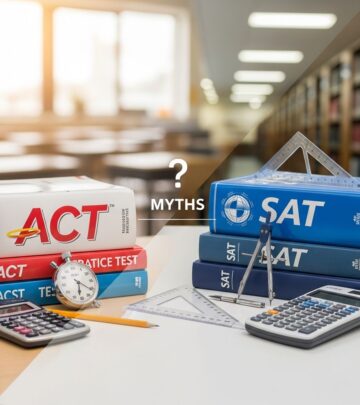
Always Guess on ACT and SAT: Boost Your Score
Discover why filling every bubble on the ACT and SAT is your smartest move—no penalties mean zero risk and potential gains.
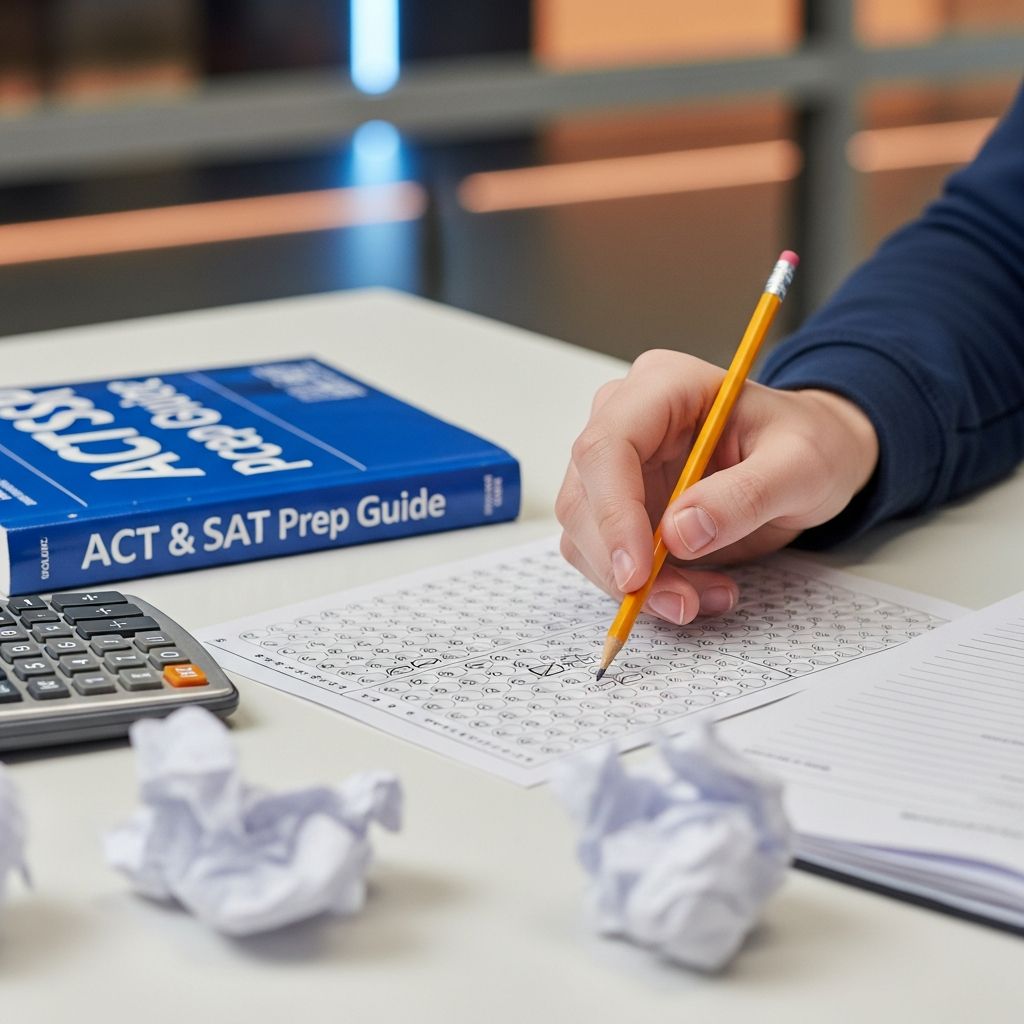
Standardized tests like the ACT and SAT reward every correct answer with points while imposing no deductions for incorrect ones, making it essential to provide a response for every question. This approach ensures you capitalize on potential lucky guesses, turning potential zeros into scoring opportunities.
Understanding Modern Scoring Systems
Both the ACT and SAT have evolved to eliminate guessing penalties, a shift that fundamentally changes test-taking strategy. On the current versions, your raw score derives solely from correct answers, with blanks equating to missed points and wrongs having neutral impact.
- ACT: Points awarded per correct response; no subtraction for errors or omissions.
- SAT: Similar model post-2016 redesign, aligning with ACT by removing the quarter-point deduction.
This no-penalty framework, confirmed across official guidelines, encourages comprehensive answering. Historical SAT versions deducted for wrongs to deter random guessing, but data showed students answered nearly everything anyway, prompting simplification for fairness and clarity.
Why Blanks Are Your Worst Enemy
Leaving a question unanswered guarantees zero points, whereas a guess offers a statistical edge. With multiple-choice formats typically featuring four or five options, random selection yields a 20-25% success rate—far better than nothing.
| Scenario | Expected Outcome | Points Gained/Lost |
|---|---|---|
| Leave Blank | 0% chance correct | 0 points |
| Random Guess (4 options) | 25% chance correct | Average +0.25 points |
| Educated Guess (2 options left) | 50% chance correct | Average +0.5 points |
As illustrated, even blind guesses improve expected value. Official College Board data from pre-2016 eras showed minimal blanks, underscoring that strategic guessing aligns with real-world behavior.
Strategic Time Allocation During the Test
Effective pacing prevents rushing while ensuring full coverage. Prioritize easier questions first to secure points, then circle back.
- Scan the section quickly to gauge difficulty.
- Answer confident questions immediately.
- Flag tough ones and proceed.
- Revisit flags with remaining time, eliminating implausible choices before guessing.
If seconds dwindle, fill all bubbles rapidly. Practice tests from official sources like collegeboard.org or act.org hone this rhythm, simulating real constraints.
Elevating Guesses from Random to Educated
Blind guesses work, but process of elimination amplifies odds dramatically. Wrong answers often contain extremes, absolutes, or mismatches—discard them systematically.
- Math sections: Plug in answer choices or estimate ranges.
- Reading: Eliminate options contradicting passage evidence.
- Science (ACT): Favor data-supported inferences over assumptions.
- Writing/English: Prioritize concise phrasing; ‘delete’ frequently correct.
For SAT Evidence-Based Reading and Writing, anchor choices to direct text quotes. These techniques, rooted in test design patterns, can double or triple guess accuracy.
ACT vs. SAT: Tailored Guessing Approaches
Though scoring aligns, sectional differences demand nuance.
| Aspect | ACT | SAT |
|---|---|---|
| Time Pressure | Tighter per question (e.g., 35 min/75 English) | More generous (65 min/52 Reading) |
| Question Variety | Science reasoning adds data interpretation | Math allows calculator throughout |
| Guessing Sweet Spot | Eliminate 1-2 for 33-50% odds | Process of elimination shines in paired passages |
ACT’s speed favors quick skips; SAT’s depth rewards deeper elimination. Both benefit from full answering.
Practice Drills to Build Guessing Confidence
Simulate test day with timed sections, forcing guesses on unknowns. Track metrics: blanks filled, educated vs. random, score uplift.
- Use official practice books (10+ full tests available free online).
- Review errors to spot elimination patterns.
- Alternate strategies: one test full random end-fill, next educated only.
Consistent drilling reveals guessing adds 50-200 points typically, per student reports and analyses.
Common Myths Debunked
Misconceptions linger from old rules.
- Myth: Guessing hurts more than helps. False—expected value positive.
- Myth: Only perfect tests count. No, curves reward relative performance.
- Myth: ACT/SAT detect patterns. Scores raw; no sophisticated anti-guess tech.
Parents recalling pre-2016 SAT penalties perpetuate hesitation, costing points.
Section-Specific Tactics
Math Mastery
Back-solving trumps grinding: test choices in equations. For no-calculator SAT, approximations rule.
Reading Comprehension Wins
Main idea questions? Predict before options. Vocabulary-in-context? Substitutes clarify.
ACT Science Edge
Skim figures first; questions reference directly. Conflicting viewpoints? Neutral tone prevails.
Final Minutes: The Bubble Blitz
As clocks tick down, patterns speed filling: alternate C-D for untouched, or per-section favorites (Math often B/C). Least, random beats blank.
Psychologically, committing boosts momentum, reducing anxiety.
Long-Term Score Improvement Roadmap
Guessing secures baseline; content mastery elevates. Pair with:
- Daily vocabulary (SAT root words, ACT synonyms).
- Weekly full practice tests.
- Error journals categorizing weaknesses.
Aim 3-6 months prep; guessing optimizes imperfect knowledge.
Frequently Asked Questions (FAQs)
Is there any risk to guessing?
No—wrongs neither add nor subtract, per official rules.
How many questions should I guess on?
All unanswered; even one correct guess nets a point.
Does the digital SAT change this?
No penalty persists in adaptive format.
ACT vs. SAT: Which favors guessing more?
Tie—both no-penalty, but ACT’s pace heightens its value.
What if I’m great at a section?
Still guess stragglers; perfection rare.
References
- Pro Tip: NEVER Leave an Answer Blank on the ACT/SAT — College Raptor. 2016 (approx.). https://www.collegeraptor.com/getting-in/articles/act-sat/pro-tip-never-leave-an-answer-blank-on-the-actsat/
- The Lesson I Learned from Hating on the SAT’s Guessing Policy — Math with Bad Drawings. 2014-09-10. https://mathwithbaddrawings.com/2014/09/10/the-lesson-i-learned-from-hating-on-the-sats-guessing-policy/
- Should You Guess On SAT & ACT? Check Guessing Penalty! — Testbook. Recent (post-2016). https://testbook.com/en-us/sat-exam/should-you-guess-on-the-sat-act
- Should you leave questions blank on the ACT® and SAT — UWorld College Prep. Recent. https://collegeprep.uworld.com/blog/should-you-leave-questions-blank-on-the-act-and-sat/
- Should you guess on the PSAT, ACT, or SAT? — Kaplan Test Prep. Recent. https://www.kaptest.com/study/sat/should-you-guess-on-the-psat-act-or-sat/
Similar Articles






Read full bio of medha deb