America’s Path into the Vietnam Conflict
Unraveling the Cold War fears, key incidents, and policy shifts that drew the United States into the Vietnam War.
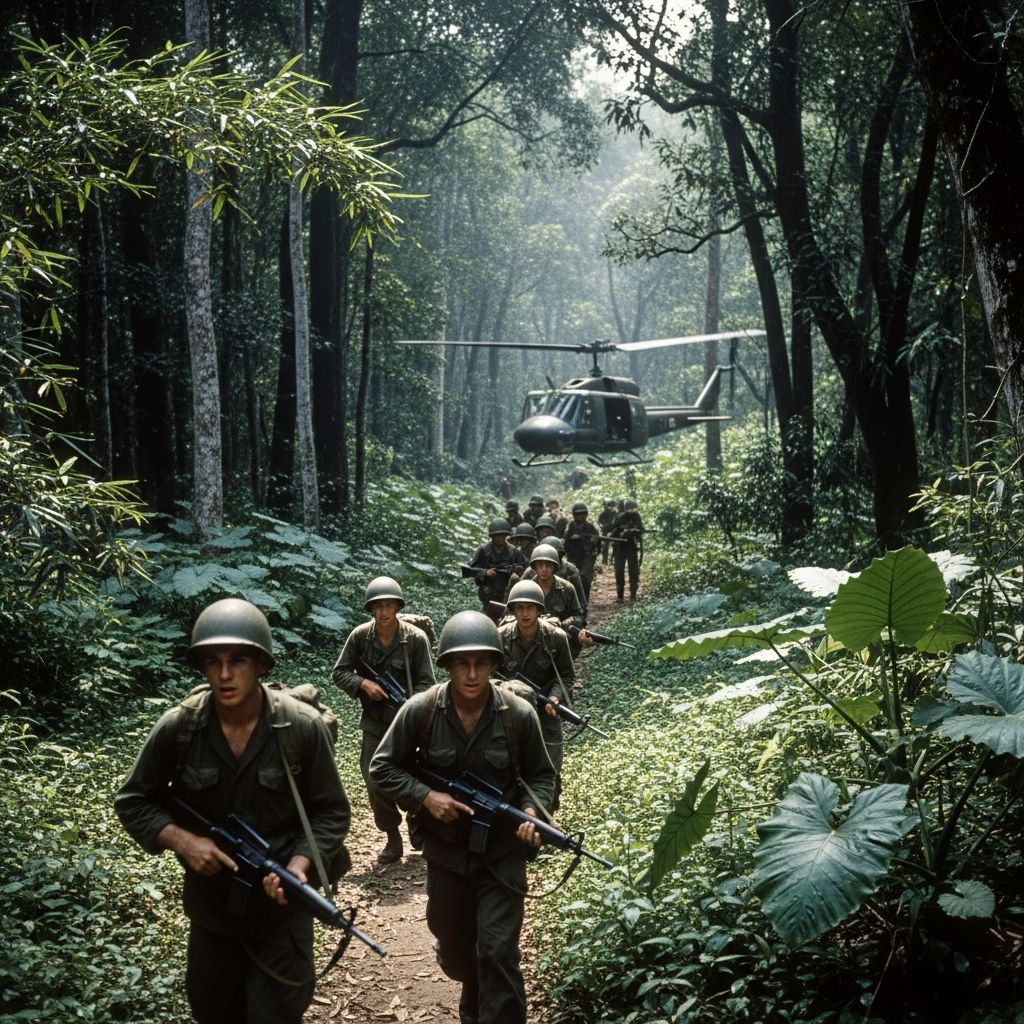
The United States’ involvement in Vietnam evolved from modest support against colonial powers to a massive military engagement, driven by Cold War imperatives and fears of global communist expansion. This deep dive explores the ideological foundations, pivotal events, leadership decisions, and international dynamics that propelled America into one of its most divisive wars.
Roots in Post-World War II Geopolitics
Following World War II, the global landscape shifted dramatically with the rise of the Soviet Union and communist China as ideological adversaries to the West. Vietnam, formerly part of French Indochina, became a flashpoint in this bipolar struggle. The First Indochina War (1946-1954) pitted French forces against the Viet Minh, led by Ho Chi Minh, who sought independence and aligned with communist powers for support.
U.S. engagement began under President Harry Truman in 1950, providing military advisors and aid to the French to prevent a communist victory, reflecting early containment policies. The decisive French defeat at Dien Bien Phu in 1954 led to the Geneva Accords, partitioning Vietnam at the 17th parallel: communist North under Ho Chi Minh and non-communist South under Ngo Dinh Diem, backed by the U.S.
- Key early motivations: Containing Soviet and Chinese influence in Southeast Asia.
- Initial U.S. role: Financial and advisory support rather than direct combat.
- Geneva Accords outcome: Temporary division, with elections planned but never held due to fears of a communist win.
The Domino Theory and Containment Doctrine
Central to U.S. strategy was the domino theory, popularized by President Dwight D. Eisenhower, positing that a communist takeover in Vietnam would trigger falls across Southeast Asia— Laos, Cambodia, Thailand, and beyond—threatening U.S. allies like Japan and the Philippines. This fear was rooted in the domino effect observed in Eastern Europe and China’s 1949 revolution.
Under President John F. Kennedy, involvement intensified amid South Vietnam’s instability. Diem’s repressive regime fueled Viet Cong insurgency, supported by North Vietnam. Kennedy expanded aid, sending over 16,000 advisors by 1963, aiming to foster a stable, democratic South Vietnam while avoiding overt war.
| President | Key Action | Troop Levels |
|---|---|---|
| Truman/Eisenhower | Aid to French, then South Vietnam | Advisors only |
| Kennedy | Expanded advisory mission | ~16,000 by 1963 |
| Johnson | Combat troops post-Tonkin | Peak 500,000+ in 1968 |
Crisis in South Vietnam: Diem’s Fall and Rising Insurgency
South Vietnam’s political turmoil accelerated U.S. commitment. Diem’s Catholic favoritism alienated Buddhist majority, sparking protests and military coups. His 1963 assassination, tacitly approved by the U.S., plunged the South into chaos, weakening it against Viet Cong guerrillas backed by Hanoi, Moscow, and Beijing.
Without stable leadership, communist forces gained ground. U.S. policymakers viewed this as a test of American resolve, fearing that abandonment would undermine credibility worldwide—from Europe to Asia. An internal 1965 memo by Assistant Secretary John McNaughton prioritized ‘credibility’ as the top objective.
The Gulf of Tonkin: Catalyst for Escalation
The turning point came in August 1964 with the Gulf of Tonkin incident. On August 2, North Vietnamese boats attacked the USS Maddox on a reconnaissance mission. Two days later, a reported second attack—later disputed as phantom—prompted President Lyndon B. Johnson to order retaliatory strikes and seek congressional backing.
Congress passed the Gulf of Tonkin Resolution on August 7, 1964, granting Johnson broad powers to ‘take all necessary measures’ without a formal war declaration. This ‘pre-dated declaration of war’ enabled rapid escalation, including Operation Rolling Thunder bombing campaign in 1965 and deployment of 3,500 Marines, growing to hundreds of thousands.
- Incident details: First attack confirmed; second unverified but used politically.
- Resolution impact: Effectively authorized full U.S. intervention.
- Johnson’s rationale: Defend South Vietnam and deter North aggression.
Full-Scale Commitment: Strategy and Allies
By 1965, U.S. forces shifted to combat roles under General William Westmoreland’s attrition strategy: wear down enemy forces through superior firepower. Troop levels peaked at over 500,000 in 1968, with operations in Laos and Cambodia.
America rallied allies via the ‘Many Flags’ program. Australia, New Zealand (ANZUS allies), South Korea, Thailand, and Philippines contributed troops, largely funded by U.S. aid. This coalition aimed to legitimize the effort as a collective stand against communism.
China and the Soviet Union bolstered North Vietnam massively: Beijing provided troops for logistics (its largest post-Korea effort) and pledged direct intervention if invaded; Moscow supplied arms. A 1965 Ho-Mao pact underscored this.
Domestic and Global Pressures
Johnson framed involvement as essential to U.S. honor: ‘Our reputation as a guarantor’ from Berlin to Thailand depended on Vietnam. Yet, escalating costs—58,000+ U.S. deaths, billions spent—ignited protests. The 1968 Tet Offensive, though a tactical defeat for communists, eroded public support by exposing war’s intractability.
Richard Nixon pursued ‘Vietnamization’: training South Vietnamese forces for self-reliance, paired with détente to pressure Hanoi via Moscow and Beijing. The 1973 Paris Accords withdrew U.S. troops, but Congress cut aid, leading to Saigon’s 1975 fall.
Long-Term Ramifications and Lessons
Vietnam’s unification under communism validated critics’ views of an unwinnable quagmire, boosting Soviet aggression elsewhere until their Afghan ‘Vietnam.’ It reshaped U.S. policy: War Powers Resolution (1973) curbed executive war-making; public skepticism endures.
Debates persist: Was it a necessary containment stand or misguided intervention? Sources affirm Cold War fears drove entry, but execution faltered against protracted guerrilla war.
Frequently Asked Questions (FAQs)
What was the main reason the U.S. entered Vietnam?
The primary driver was preventing communist domination of South Vietnam to halt domino-like spread in Southeast Asia, per containment doctrine.
How did the Gulf of Tonkin incident influence events?
It provided pretext for the 1964 Resolution, enabling Johnson to escalate without formal war declaration.
Did the U.S. have allies in Vietnam?
Yes, including Australia, New Zealand, South Korea, Thailand, and Philippines, under ‘Many Flags.’
Why did U.S. public support decline?
High casualties, draft resistance, media coverage like Tet Offensive, and no clear victory fueled anti-war movement.
What was the outcome for Vietnam?
North Vietnam conquered South in 1975, unifying under communist rule; U.S. forces exited via 1973 accords.
References
- Why we went to war in Vietnam — The American Legion. 2012-12-01. https://www.legion.org/information-center/news/magazine/2012/december/why-we-went-to-war-in-vietnam
- United States in the Vietnam War — Wikipedia (sourced from primary docs). 2023-01-15. https://en.wikipedia.org/wiki/United_States_in_the_Vietnam_War
- Why did the Vietnam War start? — Britannica. 2024-05-20. https://www.britannica.com/question/Why-did-the-Vietnam-War-start
- United States Enters the Vietnam War — EBSCO Research Starters. 2022-08-07. https://www.ebsco.com/research-starters/history/united-states-enters-vietnam-war
- The Vietnam War: An Overview — Vassar College. 2020-09-10. https://www.vassar.edu/the-wars-for-vietnam/vietnam-war-overview
Similar Articles







Read full bio of medha deb