Battery Disposal Guide: Trash or Recycle?
Learn essential rules for safely disposing batteries: when to recycle, trash laws by state, and eco-friendly options to protect the planet.
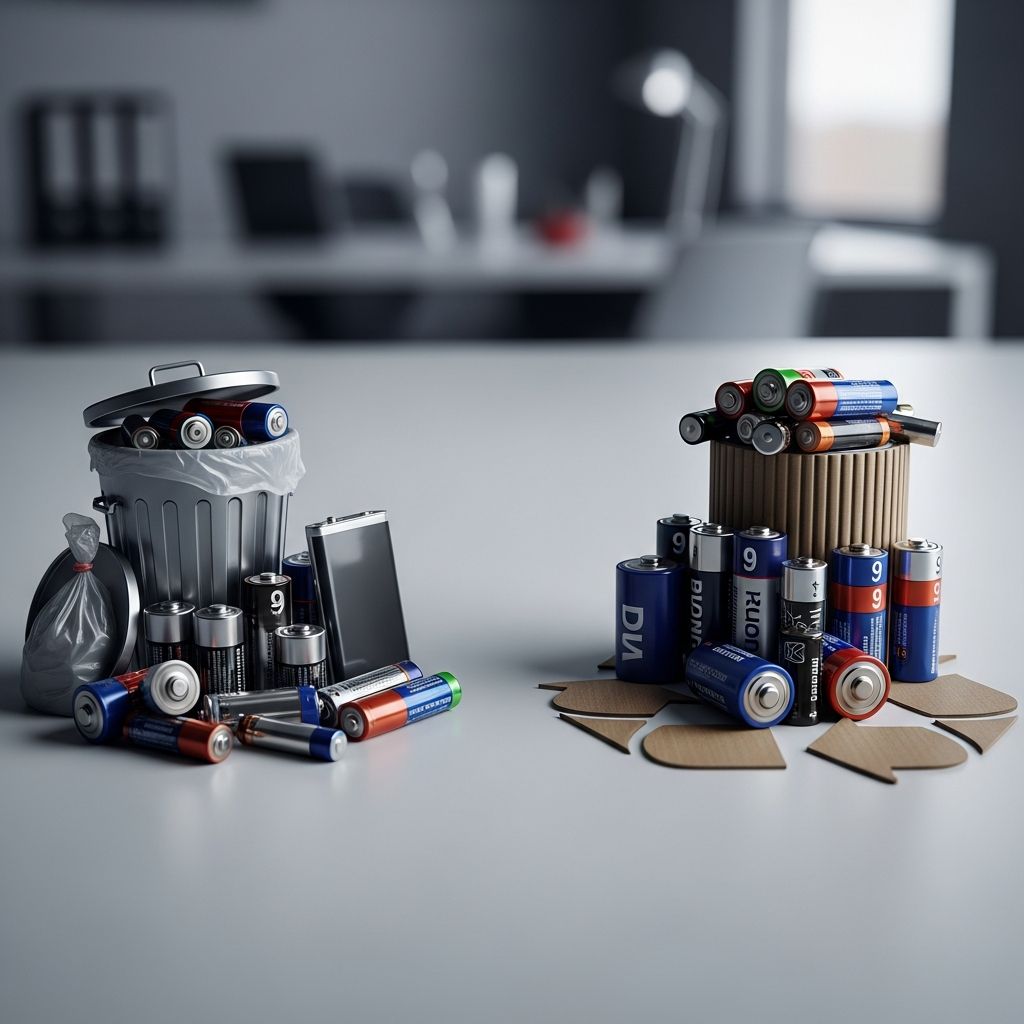
Every household accumulates used batteries from remotes, toys, tools, and devices. Proper disposal prevents environmental contamination, fires, and legal issues. This guide clarifies rules for alkaline and rechargeable types, state variations, and practical steps.
Understanding Battery Types and Risks
Batteries power modern life but pose hazards when discarded improperly. Alkaline batteries (AA, AAA, C, D, 9V) contain zinc, manganese, and steel—common metals now mercury-free since 1996 under federal law. Single-use rechargeables like Ni-Cd, Ni-MH, Li-ion, and Ni-Zn hold heavy metals (cadmium, nickel) or flammable lithium, risking leaks, explosions, or pollution in landfills.
- Alkaline: Low hazard; trash-legal in most U.S. states except California.
- Rechargeable: High risk; never trash—must recycle nationwide, with bans in states like Illinois.
- Button cells: Mercury-containing; treat as hazardous, recycle like rechargeables.
Crushed batteries in trash compactors can short-circuit, ignite, or release toxins into water supplies. Recycling recovers 95% of materials like cobalt and lithium for new products.
Legal Rules: State-by-State Breakdown
Federal guidelines via the EPA emphasize recycling rechargeables, but states enforce specifics. California bans all batteries from trash, including alkalines. Illinois mandates recycling of all household batteries since January 2025, prohibiting landfill disposal.
| Battery Type | Most States (e.g., excluding CA, IL) | California | Illinois |
|---|---|---|---|
| Alkaline (Single-Use) | Trash OK | Recycle Required | Recycle Required |
| Rechargeable (All Types) | Recycle Only | Recycle Only | Recycle Only (Law) |
| Button Cells | Recycle | Recycle | Recycle |
Check local ordinances; 25+ states restrict rechargeables. Fines apply for violations, and fires from lithium batteries have surged 50% in waste facilities.
Safe Handling Before Disposal
Prevent accidents with these steps:
- Store safely: Keep in cool, dry places away from kids/pets. Use plastic bags or cases.
- Tape terminals: Cover positive/negative ends with non-conductive tape (e.g., electrical) to avoid shorts, especially for Li-ion.
- Bag individually: Separate damaged/swollen batteries; contact manufacturers for Li-ion issues.
- Label chemistry: Note Ni-Cd, Li-ion, etc., for recyclers.
Damaged lithium batteries demand PPE and expert handling—never trash or puncture.
Recycling Rechargeable Batteries: Free and Easy
Rechargeables must recycle—it’s illegal in many areas and environmentally vital. Programs like Call2Recycle (nonprofit) partner with retailers for no-cost drop-offs. Accepted: up to 11 lbs, <300 watt-hours.
- Retailers: Home Depot, Best Buy, Lowe’s, Walgreens—bins at entrances.
- Events: Local solid waste districts host collections.
- Mail-in: Battery Solutions, Call2Recycle kits (prepaid, container included).
Process: Shredding separates plastics, metals for cobalt, nickel recovery—diverting toxins from soil/water. EPA lists sites for Ni-Cd, Li-ion, Ni-MH, Ni-Zn, lead-acid.
Options for Single-Use Alkaline Batteries
In 49 states (excl. CA), alkalines join household trash safely post-1996 mercury ban. Landfills accept them without leaching risks under normal conditions.
Yet, recycling is optimal:
- Local programs: Call solid waste district or Earth911 search.
- Mail-in kits: Call2Recycle, Battery Solutions—fill, ship prepaid.
- HHW facilities: Household hazardous waste sites (rarely needed).
California/Illinois residents: Mandatory recycling via above or authorized centers. Recycling zinc/manganese reduces mining needs.
Special Cases: Lithium, Button, and Device-Embedded
Lithium-ion (phones, laptops, vapes) fires have exploded—place in bags, tape ends. Non-removables: Recycle whole devices at e-waste sites.
Button cells (watches, hearing aids): Hazardous mercury; recycle universally.
Car/medium-format: Auto shops or Call2Recycle for lead-acid; Illinois law covers mediums.
Environmental and Safety Benefits of Recycling
Landfilled batteries leach cadmium (kidney damage), nickel (cancer links), leaching into groundwater. Recycling conserves resources: One ton yields steel for 500,000 cans.
Safety: U.S. waste fires rose with e-waste; proper handling cuts risks 90%. Globally, battery waste hits 6M tons/year—U.S. diverts 60% rechargeables via programs.
Future: EU mandates 70% collection by 2030; U.S. trends follow with EV boom.
Step-by-Step Household Recycling Plan
Implement easily:
- Inventory: Sort drawer batteries by type quarterly.
- Prep: Tape/bag as needed.
- Locate: Call2Recycle.org or Earth911.com zip search.
- Drop/mail: Every 6 months; track via apps.
- Educate: Share with family/neighbors.
Cost: Free at 90% sites. Incentives: Some states offer rebates.
Frequently Asked Questions (FAQs)
Can I throw AA batteries in the trash?
Yes, in most states except California and Illinois, where recycling is required.
Where to recycle rechargeable batteries near me?
Use Call2Recycle.org, Home Depot/Best Buy bins, or local HHW events—no cost.
Are lithium batteries explosive in trash?
Yes, crushing causes shorts/fires; always tape and recycle.
What’s the law in my state for batteries?
California: All recycle. Illinois: Household recycle. Others: Rechargeables only. Check EPA/local.
Do I need to pay for battery recycling?
No, most U.S. programs (Call2Recycle, retailers) are free.
Building Sustainable Habits
Shift to rechargeables cuts waste 10x. Buy recycled-content batteries. Apps track collections. Communities reduce 80% battery landfill via education.
Global impact: Recycling prevents 50B lbs CO2 yearly equivalent. Act now—small steps yield big planetary wins.
References
- How to Dispose of Old Batteries the Right Way — Cirba Solutions. 2023. https://www.cirbasolutions.com/news/dispose-old-batteries-right-way/
- How to dispose of batteries — Illinois Country Living Magazine. 2023. https://icl.coop/how-to-dispose-of-batteries/
- How to Dispose of Batteries — The Home Depot. 2024-01-15. https://www.homedepot.com/c/ab/how-to-dispose-of-batteries/9ba683603be9fa5395fab90124a115f1
- Know before you throw, new law expands free battery recycling options — University of Illinois Extension. 2025-01-01. https://extension.illinois.edu/news-releases/know-you-throw-new-law-expands-free-battery-recycling-options
- Illinois – The Battery Network — Battery Network. 2025. https://batterynetwork.org/state-recycling-laws/illinois/
- Used Household Batteries — US EPA. 2024-03-20. https://www.epa.gov/recycle/used-household-batteries
Similar Articles








Read full bio of Sneha Tete