Building a Fashion Brand on Your Own Terms
How one designer turned a college side project into a beloved clothing label without waiting for permission.
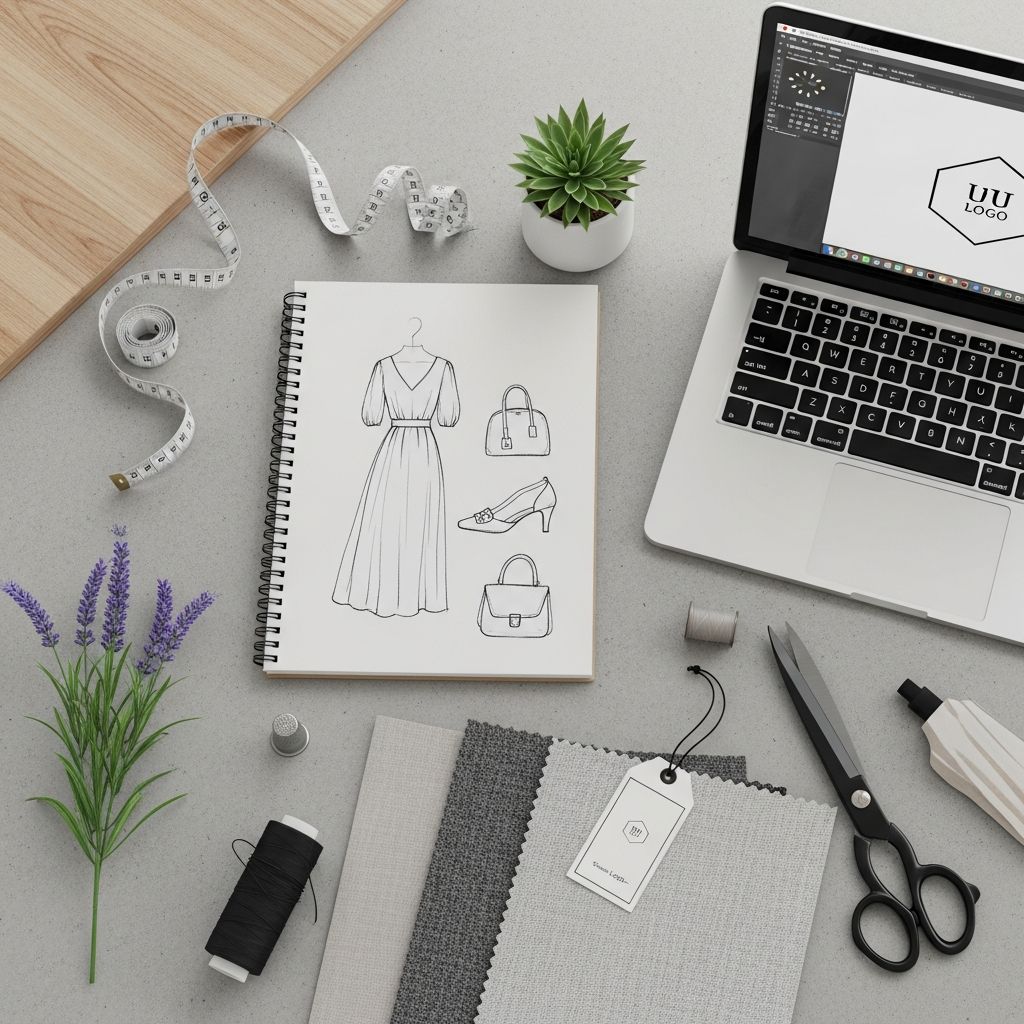
Pursuing a creative career often looks glamorous from the outside, but behind every independent fashion label is a complex story of risk, experimentation, and stubborn belief. This article explores how a designer can grow a clothing brand from an idea to a sustainable business, drawing inspiration from the journey of a Los Angeles–based founder who built her namesake label from her college sewing table.
Instead of following a traditional fashion-school-to-runway pipeline, she learned through trial, error, and customer feedback. Her story offers a roadmap for anyone who wants to turn a creative vision into a real career without giving up ownership of their voice or values.
From Passion Project to Paycheck
Many independent designers begin exactly where she did: creating pieces because nothing in stores feels quite right. What separates a hobby from a business is the decision to treat that urge as more than a pastime.
- Start small but serious: She began sewing clothes for herself and friends, then selling at local boutiques and markets.
- Test before you scale: Early reactions from real customers revealed what silhouettes and fabrics actually sold.
- Let demand lead: Once stores started reordering and customers requested more styles, it became clear there was space for a brand.
Research from the Kauffman Foundation shows that many successful small businesses emerge from side projects that grow gradually rather than overnight leaps into entrepreneurship, reflecting a pattern of testing, iteration, and incremental commitment.
Designing with Real Women in Mind
Instead of chasing runway trends, she built her label around how women actually live, move, and feel in their clothes. This grounded approach became the backbone of her brand identity.
Comfort as a Design Principle
She focused on soft fabrics, fluid silhouettes, and pieces that could transition from casual errands to dinners out. That focus aligns with broader consumer shifts toward functional, comfortable clothing documented in apparel industry analyses following the rise of athleisure.
- Stretch and drape matter as much as color.
- Garments are cut to flatter a range of body types rather than a runway sample size.
- Styles are meant to last beyond a single season.
Dressing Real Bodies, Not Just Models
Instead of designing for editorial shoots and then forcing customers to fit in, she reversed the process: listening to what women wanted to wear and then creating around that. Research on inclusive sizing indicates that brands which consider fit and comfort across sizes see stronger loyalty and repeat purchasing among women shoppers.
The Business Behind the Beautiful Clothes
Creative businesses often fail not because the work is bad but because the back end is ignored. She had to learn, largely on her own, how to run a company while still staying close to design.
Wearing Every Hat at the Beginning
In the early years she handled:
- Design and pattern development
- Sourcing fabrics and managing production
- Wholesale relationships with boutiques
- Customer service and returns
- Bookkeeping and cash flow
This type of multi-role workload is typical: according to the U.S. Small Business Administration, most small firms start as single-owner operations where the founder manages both operations and strategy.
Knowing Her Numbers
As demand grew, creative decisions increasingly had financial consequences. She had to understand:
- Unit cost: fabric, labor, trims, and shipping per garment
- Margins: how wholesale vs. direct-to-consumer pricing affected profitability
- Inventory risk: how many sizes and colors to produce without overstocking
Balancing art and numbers is a recurring challenge for designers, and small business research emphasizes that financial literacy significantly increases a firm’s odds of survival.
Growing the Team and Letting Go
No creative founder can do everything forever. At a certain point, the bottleneck becomes the founder herself. For this designer, learning to delegate was one of the hardest but most transformative steps.
| Stage | Founder Role | Key Hires |
|---|---|---|
| Solo phase | Handles all design, production, sales, and admin | Freelance patternmaker or sample sewer as needed |
| Early growth | Leads design, begins managing others | Production coordinator, part-time bookkeeper |
| Established brand | Creative director, strategic decisions | Operations manager, sales rep, marketing support |
Her willingness to bring in people who were stronger in logistics and finance freed her to focus more on silhouettes, fabrics, and long-term vision.
Finding Inspiration Without Burning Out
Creating collections season after season requires a well of ideas that doesn’t run dry. She learned to separate input from output and to build practices that kept both healthy.
Everyday Life as a Mood Board
Instead of relying solely on runway trends, she drew ideas from:
- Friends’ closets and what they reached for over and over
- Street style in Los Angeles neighborhoods and at the beach
- Vintage pieces that had survived decades of wear
By anchoring design in lived experience, she stayed close to her customer and avoided chasing fads.
Protecting Creative Energy
Running a business full time can easily crowd out the very creativity that launched it. She found it essential to:
- Block off undisturbed time in the studio only for sketching and draping
- Step away from social media when comparison began to dull her own voice
- Take breaks from production schedules to research fabrics, colors, and references
Psychological research on burnout among entrepreneurs highlights that those who create boundaries between deep work and administrative tasks report higher creativity and lower exhaustion.
Building a Brand That Reflects Personal Values
For her, success was never just about revenue or press. It was about whether the company she was building felt aligned with who she was as a person, a partner, and eventually a parent.
Work, Family, and Redefining Success
As her life changed, so did her definition of achievement.
- Early on, she measured success in store orders, press mentions, and revenue milestones.
- Later, she began to prioritize flexibility, time with family, and choosing collaborations carefully.
- She rebuilt her schedule to allow presence at home without abandoning the brand.
Surveys of women entrepreneurs show that many place a higher value on autonomy and work–life balance compared with traditional measures like firm size alone, reshaping how they design their careers.
Community and Representation
Her clothes became a way to celebrate diverse bodies and lifestyles. By photographing different women in her pieces and listening to fit feedback across sizes, she used design as a quiet form of representation and respect. This approach mirrors broader movements in fashion toward inclusivity and body-diverse marketing.
Practical Advice for Aspiring Designers
While every path will look different, her journey offers clear, actionable lessons for anyone dreaming of launching a line.
Validate Your Idea Early
Before investing heavily, look for proof that people who are not your friends will pay real money for what you make.
- Sell at local markets or online pop-ups.
- Approach small boutiques that support emerging designers.
- Track which pieces sell out and which linger.
Stay Close to Your Customer
Ask direct questions whenever possible:
- What do you wish this dress did that it doesn’t?
- Where do you wear this most often?
- How do you want to feel when you get dressed?
Customer-centric design is one of the strongest predictors of brand loyalty, especially in crowded markets like fashion.
Be Patient with Growth
Viral success makes headlines, but her experience looked more like:
- Slow but steady increases in orders season after season
- Deepening relationships with a handful of loyal retailers
- Gradual hiring as cash flow allowed
Industry data on small enterprises shows that sustainable growth often follows this incremental pattern rather than explosive spikes.
Common Misconceptions About Fashion Careers
Her story also helps clear up a few myths about what it really takes to work in design.
| Myth | Reality |
|---|---|
| You must attend an elite fashion school. | Many designers are self-taught or come from other disciplines, learning via apprenticeships, on-the-job training, and experimentation. |
| Success is all about luck and connections. | Relationships help, but persistence, consistent quality, and reliability are often more decisive over time. |
| Creative people cannot handle business. | Business skills can be learned; many creatives become strong entrepreneurs by necessity. |
| Owning a brand means nonstop glamour. | Behind the scenes are spreadsheets, shipping boxes, and production problems alongside the beautiful moments. |
Frequently Asked Questions
Q: Do I need a lot of money to start a clothing line?
A: Not necessarily. Many designers, including the one whose journey inspired this article, begin with very small runs, made-to-order pieces, or pre-sales to reduce upfront risk. Starting lean and reinvesting profits is a common path among small creative businesses, as highlighted by guidance from the U.S. Small Business Administration.
Q: How can I tell if my designs are good enough to sell?
A: Look for signals beyond compliments—specifically, whether people are willing to pay for your work. Test sales at markets or online, pay attention to repeat customers, and seek feedback from boutique buyers who understand their clientele.
Q: Is it possible to run a fashion brand and still have work–life balance?
A: It is challenging but possible if you intentionally design your schedule and boundaries. The designer featured here restructured her work after becoming a parent, delegating more and redefining success to include time and presence, not just profit. Studies on women entrepreneurs indicate that autonomy is a primary reason many pursue self-employment.
Q: How important is social media for an independent label?
A: Social media can amplify your story and help customers connect emotionally with your brand, but it is not the only path. Strong product, word-of-mouth, and relationships with retailers still matter. The key is consistency and authenticity rather than chasing every trend.
Q: What skills should I focus on if I want to follow a similar path?
A: Beyond design, prioritize learning about production, basic accounting, communication with vendors, and time management. Entrepreneurial research emphasizes that a blend of technical skill and soft skills such as negotiation and resilience is critical for small business owners.
References
- Small Business Facts: Spotlight on Women-Owned Employer Businesses — U.S. Small Business Administration, Office of Advocacy. 2022-10-01. https://advocacy.sba.gov/2022/10/
- Global Powers of Luxury Goods 2022 — Deloitte. 2022-06-15. https://www2.deloitte.com/global/en/pages/consumer-business/articles/gx-cb-global-powers-of-luxury-goods.html
- Women’s Entrepreneurship: Lessons and Good Practice — OECD. 2021-11-30. https://www.oecd.org/cfe/smes/women-entrepreneurship.htm
- The Business Case for Inclusive Design — World Bank Blogs. 2020-09-14. https://blogs.worldbank.org/transport/business-case-inclusive-design
- Burnout and the Brain — Drucker, T. Harvard Business Review. 2016-02-01. https://hbr.org/2016/02/beat-burnout
- Entrepreneurial Motivation and Business Performance — Carsrud, A., Brännback, M. International Journal of Entrepreneurship and Innovation Management. 2011-01-01. https://doi.org/10.1504/IJEIM.2011.040821
- The Anatomy of an Entrepreneur — Kauffman Foundation. 2009-07-01. https://www.kauffman.org/wp-content/uploads/2019/12/anatomy_of_entrepreneurship.pdf
Similar Articles







Read full bio of medha deb