The Chemistry of Flavor: Understanding Food Browning
Discover how heat transforms amino acids and sugars into delicious flavors and aromas.
Understanding the Chemical Transformation of Heat and Food
When you toast bread, sear a steak, or roast vegetables, something remarkable happens at the molecular level. The appetizing golden-brown color and the irresistible aroma that fills your kitchen aren’t simply the result of heat alone—they’re products of a sophisticated chemical process that has fascinated scientists for over a century. This process, known as the Maillard reaction, fundamentally transforms the basic ingredients in food into something far more complex and flavorful than the sum of its parts.
The Maillard reaction represents one of the most significant chemical phenomena in culinary science, yet many home cooks and even professional chefs don’t fully understand the mechanics behind it. By grasping how this reaction works, you can dramatically improve your cooking outcomes and create dishes with deeper, more nuanced flavors and more visually appealing presentations.
The Fundamentals of Amino Acid and Sugar Interaction
At its core, the Maillard reaction is a chemical process that occurs when amino acids—the building blocks of proteins—encounter reducing sugars in the presence of heat. This interaction doesn’t happen randomly or instantaneously; it requires specific conditions and follows a well-defined scientific pathway. When these two types of molecules meet in a heated environment, they begin a cascade of increasingly complex chemical reactions that continue for as long as the heat persists and the reactant molecules remain available.
The initial stage involves the formation of an unstable intermediary structure when amino acids collide with carbohydrates. This unstable compound doesn’t remain unchanged for long. Instead, it rearranges itself repeatedly, creating new molecular configurations in an ongoing chain reaction. Each reconfiguration produces different chemical compounds, and these compounds themselves become reactive, combining with other molecules to form even more complex structures. The result is a proliferation of hundreds of distinct molecular species, each contributing unique flavor and aroma characteristics to the food.
Temperature Requirements and Optimal Cooking Ranges
One of the most critical factors determining whether the Maillard reaction occurs is temperature. Unlike reactions that can happen at room temperature, the Maillard reaction demands substantial thermal energy to initiate. The accepted minimum threshold falls between 110 and 120 degrees Celsius (approximately 230 to 250 degrees Fahrenheit), below which the reaction proceeds so slowly as to be practically unobservable during normal cooking timeframes.
However, not all temperatures within the heating range produce equally desirable results. The optimal range for culinary purposes lies between 110 and 170 degrees Celsius (230 to 340 degrees Fahrenheit). Within this window, the reaction proceeds at a rate that creates desirable flavors and colors without generating excessive byproducts that might make the food taste unpleasant or potentially harmful.
Beyond 180 degrees Celsius (355 degrees Fahrenheit), a different set of chemical reactions—called pyrolysis—begins to dominate. Pyrolysis represents the breakdown of molecules through excessive heat, leading to the production of bitter compounds and charred flavors. While a small amount of char can add appealing complexity to certain dishes, excessive charring introduces compounds that may pose health concerns and typically creates undesirably harsh flavors.
The Role of Moisture and Drying in Reaction Acceleration
Water plays a dual role in the Maillard reaction—it’s both a necessary component of most foods and a factor that, paradoxically, slows the browning process. Water molecules hold significant thermal energy, and when water evaporates from the surface of food during cooking, it carries that heat energy away, preventing the food’s surface from reaching temperatures high enough for the Maillard reaction to proceed efficiently.
This explains why boiled foods never develop the characteristic brown color and complex flavors associated with the Maillard reaction. No matter how intense the heat source beneath a pot of boiling water, the temperature of the water-surrounded food cannot exceed 100 degrees Celsius—the boiling point of water at standard atmospheric pressure. As long as water remains the primary heat transfer medium, the food’s surface cannot achieve the temperature necessary for the reaction to occur.
In contrast, cooking methods that rapidly evaporate surface moisture—such as grilling, roasting, pan-searing, and frying—allow the food’s surface temperature to climb well above water’s boiling point. As water evaporates, the concentration of amino acids and sugars in the remaining food material increases, creating a higher density of reactant molecules. Simultaneously, the exposed surface climbs toward and potentially exceeds the optimal temperature range for the Maillard reaction. These two factors—increased molecular concentration and elevated temperature—work synergistically to accelerate the browning process dramatically.
The Cascade of Flavor and Aroma Compounds
While the brown color produced by the Maillard reaction certainly appeals to our visual senses, the true significance of this chemical process lies in the extraordinary diversity of flavor and aroma compounds it creates. Scientists have identified specific molecular families that emerge during Maillard browning, each contributing distinctive sensory characteristics to the cooked food.
Pyrazines contribute toasted and roasted flavor notes that characterize everything from roasted coffee to cooked meats. Furans provide meaty, savory dimensions to the flavor profile. Furanones introduce sweet undertones that complement the more robust flavors created by other molecular categories. These compounds, along with hundreds of others produced in smaller quantities, combine to create the complex flavor bouquets that distinguish a well-cooked steak from boiled beef, or a freshly toasted slice of bread from untoasted bread.
What makes this process particularly fascinating is that the specific aroma profile depends entirely on which amino acids and sugars are present in the food being cooked. The Maillard reaction occurring in bread produces a distinctly different aroma from that occurring in roasting meat, even though both involve identical fundamental chemistry. The unique amino acid and sugar compositions in different foods determine which specific flavor molecules emerge from the reaction, creating the characteristic scents we associate with particular foods.
Visual Browning Through Melanoidin Formation
The brown pigments that make cooked food visually appealing are complex polymeric molecules called melanoidins. These large molecular structures form when the numerous smaller molecules produced during the Maillard reaction link together into chains and three-dimensional networks. Melanoidins absorb and reflect light in ways that create the characteristic brown and golden-brown colors we recognize in cooked foods.
The intensity and specific shade of brown depend on how long the Maillard reaction has proceeded and at what temperature. Lightly browned toast appears golden because fewer melanoidin polymers have formed. Darkly browned toast appears deep brown because the reaction has continued for a longer period, allowing more melanoidin molecules to accumulate. This provides practical guidance for cooking: the longer you cook food at appropriate temperatures, the darker and more developed the browning becomes, up to the point where excessive heat produces the burnt appearance associated with pyrolysis.
Practical Applications Across Diverse Cuisines
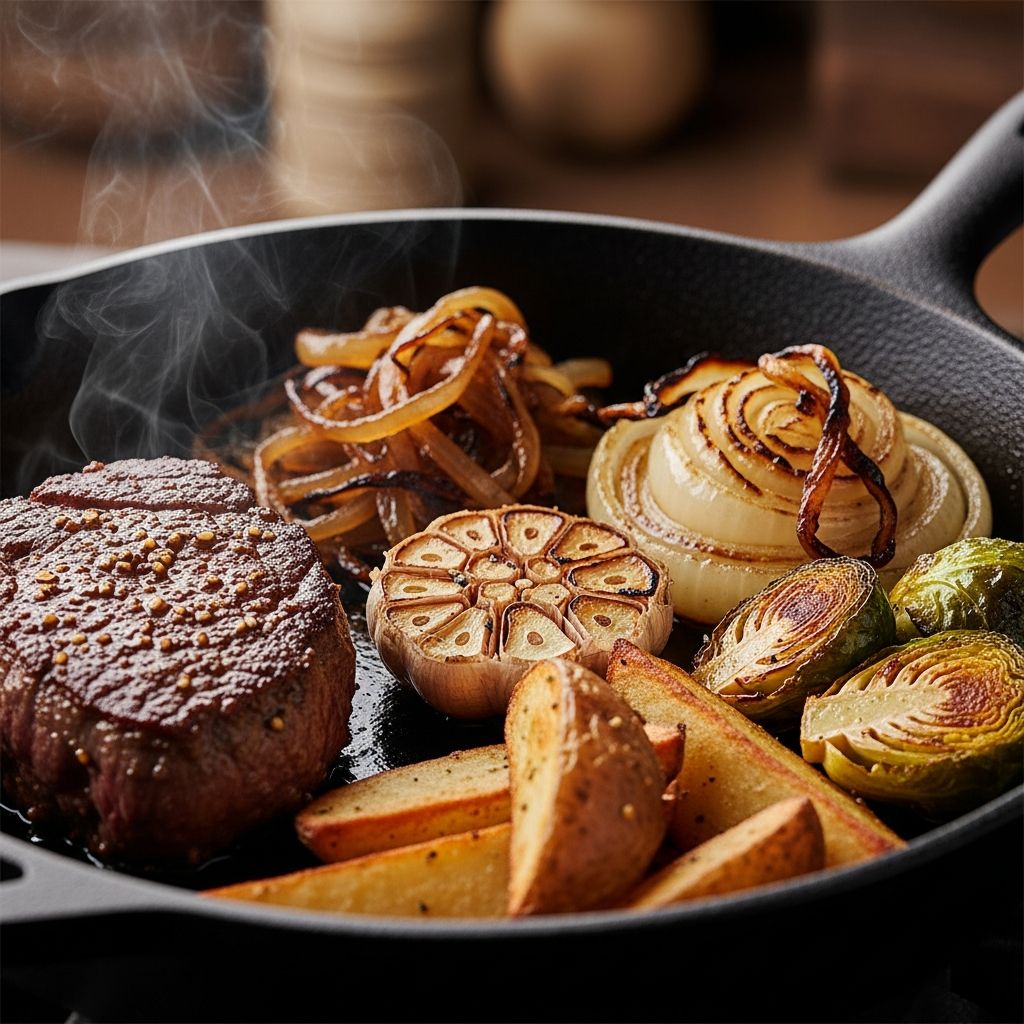
The Maillard reaction influences an astonishing variety of foods across virtually every global cuisine. When you sear meat in a hot pan, the reaction creates the flavorful crust that distinguishes pan-seared dishes from boiled alternatives. When bread bakes in a hot oven, the reaction produces the complex flavors and appealing crust of finished loaves. When potatoes roast at high temperature, the reaction transforms their flavor profile into something far more interesting and caramelized than steamed potatoes.
Roasted vegetables develop sweeter, more complex tastes through Maillard reactions. Fried onions achieve their distinctive deep flavor and appearance through this same process. Coffee beans develop their characteristic aroma and flavor profile during roasting, where the Maillard reaction is the primary mechanism responsible for transforming green beans into the fragrant, flavorful product we recognize. Even baked goods from cookies to pastries depend on controlled Maillard reactions occurring within the oven to develop their distinctive colors, flavors, and aromas.
Distinguishing Maillard Browning from Caramelization
A common source of confusion in culinary science involves the distinction between Maillard browning and caramelization. While both processes produce browning and new flavors, and while both result from heating, they involve fundamentally different chemistry.
Caramelization is exclusively a process involving sugars. When sugars alone are heated to sufficiently high temperatures, they break down through pyrolysis, forming brown polymers and numerous flavor compounds. This process doesn’t require any amino acids or proteins; pure sugar heated in a pan will eventually caramelize regardless of whether any proteins are present.
The Maillard reaction, in contrast, requires both amino acids (from proteins) and reducing sugars, and it produces different flavor profiles than caramelization alone. While both processes can occur in the same food simultaneously—for instance, when roasting meat that contains both proteins and sugars—they are distinct chemical pathways producing different molecular products. Understanding this distinction helps explain why meat develops flavors that pure sugar cannot produce, and why caramel tastes different from the flavors in roasted meat or baked bread.
Variables That Influence Maillard Reaction Speed
Temperature Effects
As temperature increases within the optimal range, the Maillard reaction accelerates significantly. Higher temperatures provide more molecular energy, allowing reactant molecules to collide more frequently and with greater force. However, excessively high temperatures shift the reaction balance away from desirable Maillard products and toward pyrolysis products instead.
Moisture Content
Lower surface moisture allows faster browning by permitting the food’s surface to reach higher temperatures. Drying the surface of food before cooking—for instance, by patting meat dry before searing—dramatically reduces browning time.
pH Level
Basic (alkaline) conditions accelerate the Maillard reaction. Adding baking soda or other basic ingredients can noticeably speed up browning in foods like onions. This principle explains why some recipes include these ingredients to promote faster and more efficient browning.
Time Duration
Given sufficient time and appropriate temperature, the reaction will continue producing more melanoidins and additional flavor compounds. Longer cooking times at proper temperatures produce progressively deeper browning and more developed flavors, up to the point where excessive cooking begins generating undesirable burnt flavors.
Frequently Asked Questions
Q: Why does grilled meat taste different from boiled meat?
A: Grilling achieves temperatures well above water’s boiling point, allowing the Maillard reaction to proceed on the meat’s surface. Boiling maintains the meat at or below 100°C, preventing the Maillard reaction from occurring, resulting in different flavors and no brown color development.
Q: Can the Maillard reaction occur in the absence of added sugars?
A: Yes. Many foods contain naturally occurring reducing sugars or carbohydrates. Meat contains glucose, and vegetables contain various sugars. These natural sugars are sufficient to support the Maillard reaction when combined with the amino acids present in proteins.
Q: Why does charred food sometimes taste bitter?
A: Excessive heat beyond 180°C triggers pyrolysis, which produces bitter compounds and acrid flavors. Some charring can add appealing complexity, but too much pyrolysis generates undesirably harsh tastes and potentially harmful burnt compounds.
Q: How can home cooks optimize the Maillard reaction in their cooking?
A: Use high-heat cooking methods like pan-searing, grilling, and roasting. Pat food surfaces dry before cooking. Avoid using water-based cooking methods. Maintain temperatures between 110–170°C for optimal results. For onions and similar vegetables, adding a pinch of baking soda accelerates browning.
Q: Does the Maillard reaction improve food nutritionally?
A: The Maillard reaction primarily enhances flavor and aroma. While it doesn’t substantially increase nutritional content, proper browning can reduce the need for added salt or fats to achieve satisfying flavors, which could have indirect nutritional benefits.
Q: Can you control the intensity of browning in recipes?
A: Yes. Browning intensity depends on temperature, cooking time, and initial moisture content. Lower temperatures or shorter cooking times produce lighter browning. Higher temperatures or longer cooking times produce darker browning. Adjusting these variables gives precise control over browning development.
References
- Maillard reaction — Wikipedia. Accessed 2026-04-05. https://en.wikipedia.org/wiki/Maillard_reaction
- The science of browning — BBC Good Food. https://www.bbcgoodfood.com/howto/guide/the-science-of-browning
- The Maillard Reaction — Modernist Cuisine. https://modernistcuisine.com/mc/the-maillard-reaction/
- What is the Maillard reaction? — BBC Science Focus Magazine. https://www.sciencefocus.com/science/what-is-the-maillard-reaction
- Maillard reactions change the tastes of your food — University of Illinois Extension. 2021-11-19. https://extension.illinois.edu/blogs/simply-nutritious-quick-and-delicious/2021-11-19-maillard-reactions-change-tastes-your-food
- Savor the Science: Maillard Browning — RENDER Food Magazine. 2014-04-15. http://www.renderfoodmag.com/blog/2014/4/15/savor-the-science-maillard-browning
Similar Articles







Read full bio of Sneha Tete