Choosing Between Pre-Tax and Roth Retirement Deferrals
Understand how traditional and Roth retirement deferrals work so you can build tax-smart savings that match your income, taxes, and long-term goals.
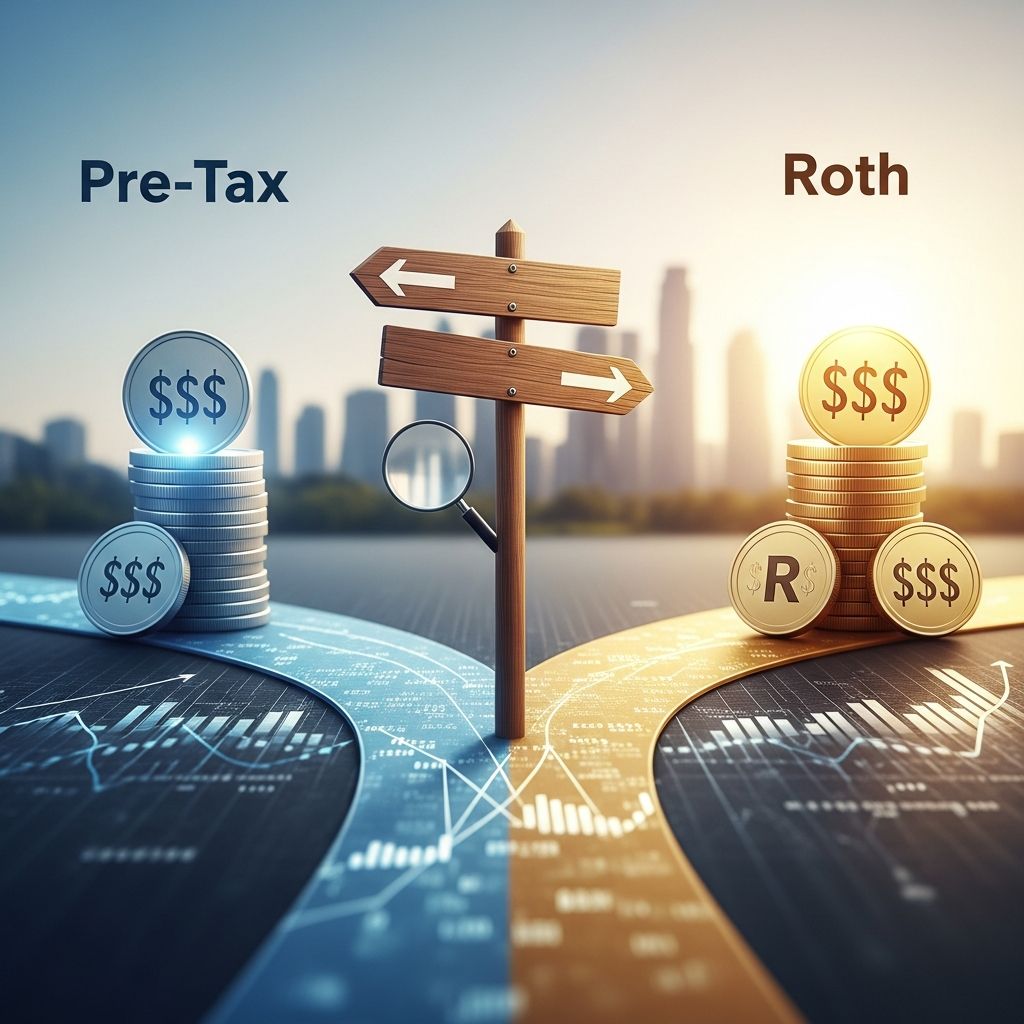
Pre-Tax vs Roth Deferrals: How to Pick the Right Retirement Strategy
When you sign up for a workplace retirement plan such as a 401(k), 403(b), or 457(b), you are often asked a deceptively simple question: Do you want to contribute pre-tax, Roth, or a mix of both? The answer can have a major impact on how much tax you pay over your lifetime and how flexible your retirement income will be.
This guide explains, in clear terms, how employee (pre-tax) deferrals and Roth deferrals work, how they are taxed, what rules apply, and how to decide which approach fits your situation.
Core Idea: Tax Now or Tax Later?
Both pre-tax and Roth contributions are simply different ways the tax code lets you save for retirement. The key distinction is when the IRS gets its share:
- Employee (pre-tax) deferral: You avoid tax now, but pay tax later on withdrawals.
- Roth deferral: You pay tax now, but qualified withdrawals later can be tax-free.
In both cases, money inside the account grows tax-advantaged over time.
What Is an Employee (Pre-Tax) Deferral?
An employee deferral usually refers to a salary contribution you choose to make from each paycheck into a retirement plan, such as a traditional 401(k), 403(b), or governmental 457(b). These contributions are generally made with pre-tax dollars.
Key characteristics of pre-tax deferrals:
- Reduce current taxable income: Contributions are deducted from your pay before federal income tax is calculated, which can lower your current income tax bill.
- Tax-deferred growth: Investment earnings in the account are not taxed each year; instead, taxes are postponed until withdrawal.
- Taxable withdrawals: Distributions in retirement are taxed as ordinary income.
- Subject to required minimum distributions (RMDs): Beginning at a certain age (set by law and periodically updated), you must generally start taking required withdrawals from traditional accounts.
Pre-tax deferrals are often attractive if you are in a relatively high tax bracket today and expect to be in a lower bracket when you retire.
What Is a Roth Deferral?
A Roth deferral is a contribution you make to a Roth account within a workplace plan (such as a Roth 401(k) or Roth 403(b)) or to a Roth IRA, using after-tax income. You do not get a tax deduction up front, but the payoff comes later.
Key characteristics of Roth deferrals:
- After-tax contributions: You pay income tax on your earnings as usual; then you contribute to the Roth account.
- Tax-free growth and qualified withdrawals: If certain conditions are met, both your contributions and earnings can be withdrawn tax-free.
- Five-year and age rules (for Roth earnings): Typically, to get tax-free treatment on earnings, you must have held any Roth in the same category for at least five tax years and be at least age 59½ (or meet another qualifying exception).
- RMD relief: Roth IRAs are generally not subject to lifetime RMDs under current law, and Roth 401(k) RMD rules have evolved to be more favorable, particularly after 2024 changes.
Roth deferrals can be especially compelling if you expect higher tax rates in the future or want to build a pool of tax-free income in retirement.
Side-by-Side Comparison: Pre-Tax vs Roth
| Feature | Pre-Tax Employee Deferral | Roth Deferral |
|---|---|---|
| When you pay income tax | Later – when you withdraw the money | Now – before you contribute |
| Tax break today | Yes, contributions reduce current taxable income | No, contributions do not reduce current taxable income |
| Tax on investment growth | Taxed as ordinary income when withdrawn | Tax-free if withdrawal is qualified |
| Effect on take-home pay | Smaller hit to paycheck for the same contribution amount | Larger hit to paycheck for the same contribution amount |
| Best when you expect | Lower tax bracket in retirement | Similar or higher tax bracket in retirement |
| RMD treatment | Subject to required minimum distributions | Roth IRAs have no lifetime RMDs; Roth 401(k) rules are more favorable after recent law changes |
Contribution Limits and Plan Types
U.S. tax law sets annual limits on how much you can defer into employer plans and IRAs. These limits apply across pre-tax and Roth contributions of the same type.
Employer Plans (401(k), 403(b), 457(b))
The Internal Revenue Service (IRS) publishes annual limits on elective deferrals to workplace plans. For each year:
- There is a single employee deferral limit that applies to the total of your pre-tax and Roth elective contributions across all 401(k), 403(b), and, in many cases, governmental 457(b) plans.
- Those age 50 and over may also be eligible for additional “catch-up” contributions.
- Employer matching and profit-sharing contributions are generally not counted against the employee deferral limit, but they may be subject to a separate overall limit for total contributions.
Many plans allow you to split your contribution between pre-tax and Roth buckets in any proportion, as long as your total does not exceed the IRS limit.
IRAs vs Workplace Plans
Roth IRAs and traditional IRAs have their own annual contribution limits and special rules, including income limits for Roth IRA eligibility. However, Roth 401(k) contributions inside an employer plan do not have the same income restrictions, provided the plan offers the Roth option.
Key Tax Rules You Need to Know
How Withdrawals Are Taxed
- Pre-tax contributions and earnings: Taxed as ordinary income when withdrawn; early withdrawals before a certain age may incur a penalty unless an exception applies.
- Roth contributions: You already paid tax on these dollars, so your original Roth contributions can typically be withdrawn tax- and penalty-free.
- Roth earnings: To be tax- and penalty-free, withdrawals must be qualified distributions. For Roth 401(k) and similar plans, that typically means you are at least age 59½ and the account has been open for at least five tax years, among other conditions.
Required Minimum Distributions (RMDs)
RMD rules are complex and change periodically, but in general:
- Traditional (pre-tax) accounts: You are required to begin taking minimum withdrawals at a specified age, and those withdrawals are taxable.
- Roth IRAs: Under current law, the original owner is not required to take RMDs during their lifetime.
- Roth 401(k) and other workplace Roth accounts: Historically subject to RMDs, but recent law changes have reduced or eliminated RMDs for many participants beginning in 2024 and beyond; details depend on plan type and regulations in effect.
Because rules can shift, it is wise to check current IRS guidance or speak with a tax professional before making decisions based on RMD expectations.
How to Decide: Factors to Weigh
There is no universal “right” answer. The better choice depends on your current finances and expectations about the future. Consider the following factors:
1. Current vs Future Tax Bracket
- Higher tax rate now, lower later: Pre-tax deferrals can be more appealing because you avoid high taxes today and potentially pay at a lower rate in retirement.
- Lower tax rate now, higher later: Roth deferrals may be advantageous, letting you lock in today’s relatively low rate and enjoy tax-free withdrawals when rates could be higher.
- Uncertain future: A blend of pre-tax and Roth can diversify your tax exposure and give you flexibility.
2. Cash Flow and Take-Home Pay
Because pre-tax contributions reduce your taxable income, they usually have a smaller impact on your paycheck than Roth contributions at the same nominal amount.
- If your budget is tight: Pre-tax contributions may help you save more without cutting as deeply into your current lifestyle.
- If you can handle a lower paycheck: Roth deferrals might be an opportunity to “prepay” taxes while rates are known and potentially low.
3. Length of Time Until Retirement
Time horizon affects how much tax-free or tax-deferred growth can compound:
- Long time horizon: Roth deferrals may be particularly appealing because decades of tax-free growth can magnify the benefit if you qualify for tax-free withdrawals.
- Shorter time horizon: The choice can hinge more on current versus expected future tax rates and income needs in early retirement.
4. Flexibility and Estate Planning
Roth assets can potentially offer more flexibility:
- Tax-free withdrawal options: Having a Roth bucket in retirement gives you more control over your taxable income in a given year.
- Legacy considerations: Because Roth IRAs do not require lifetime RMDs for the original owner, more of the account may remain invested for heirs, subject to current inheritance rules.
5. Employer Matching Contributions
Many employers match some portion of your contributions. Important details:
- Always aim to capture the full match: Employer matching is essentially additional compensation earmarked for your retirement.
- Employer match is usually pre-tax: Even if you contribute to a Roth 401(k), your employer’s matching contributions typically go into a traditional pre-tax account and will be taxable when withdrawn, according to common plan structures and IRS treatment.
When a Mixed Strategy Makes Sense
Many savers use a combination of pre-tax and Roth deferrals to balance risk and flexibility. This can be helpful if:
- You are unsure about what your future tax bracket will be.
- You want to maintain both taxable and tax-free income options in retirement.
- Your income fluctuates from year to year; you might favor Roth in low-income years and pre-tax in high-income years.
Some people also shift their emphasis over time—for example, starting with Roth early in their careers, then leaning more on pre-tax as their income and tax bracket rise.
Practical Steps to Choose and Adjust Your Deferrals
To translate these concepts into action, work through the following steps:
- Check what your plan offers. Confirm whether your employer provides pre-tax, Roth, or both options, and whether there are automatic enrollment features.
- Estimate your current marginal tax rate. Look at your recent tax return or use a reputable tax estimator to see how much tax you pay on each additional dollar of income.
- Project, cautiously, your retirement income sources. Consider Social Security, pensions, savings, and any part-time work to get a sense of future tax exposure.
- Decide on a starting split. For example, you might begin with 100% pre-tax, 100% Roth, or a 50/50 mix, depending on your analysis.
- Review annually. Revisit your strategy each year or when your income, tax law, or financial goals change.
When in doubt, consider consulting a tax professional or fiduciary financial planner to tailor the approach to your full financial picture.
Frequently Asked Questions (FAQs)
Q: Is a Roth deferral always better for young workers?
Not always. Younger workers often have lower incomes, so paying tax now in exchange for future tax-free withdrawals can be attractive. But if a younger worker expects their income to decline or move to a low-tax jurisdiction, pre-tax contributions could still be reasonable. The best choice depends on expected future tax rates, not just age.
Q: Can I split one paycheck between pre-tax and Roth contributions?
In many employer plans, yes. You can often designate a percentage for pre-tax and another for Roth, as long as the combined amount stays within IRS annual limits. Check your plan’s enrollment or change form to see what options are available.
Q: Do Roth 401(k) contributions affect my eligibility for a Roth IRA?
Roth 401(k) contributions themselves do not directly limit your ability to contribute to a Roth IRA. However, Roth IRA eligibility is based on your modified adjusted gross income, which may be influenced by your overall earnings and other factors as defined by IRS rules.
Q: What happens to my employer match if I choose Roth?
Your employer match usually continues regardless of whether you choose pre-tax or Roth, subject to plan rules. However, employer contributions are generally made to a traditional pre-tax account even when your own deferrals are Roth, and those employer dollars will be taxable when withdrawn.
Q: Should I change my strategy if tax laws change?
Major tax law changes can alter the relative benefits of pre-tax and Roth savings. It is sensible to review your contributions when such changes occur and to consult updated IRS guidance or a professional advisor to see whether adjustments are appropriate.
References
- Roth Comparison Chart — Internal Revenue Service. 2024-01-01. https://www.irs.gov/retirement-plans/roth-comparison-chart
- Roth vs. Traditional 401(k) Deferrals: Key Differences & Examples — Human Interest. 2023-10-05. https://humaninterest.com/learn/articles/roth-401k-vs-traditional-401k/
- Roth vs. Traditional 401(k) Contributions – How to Choose — Employee Fiduciary. 2023-02-22. https://www.employeefiduciary.com/blog/roth-vs-traditional-401k-contributions
- Pros and Cons of a Roth 401(k) — Fidelity Investments. 2023-04-18. https://www.fidelity.com/learning-center/personal-finance/roth-401k
- To Roth or Not to Roth, That is the Question — Dean Mead. 2014-06-01. https://www.deanmead.com/to-roth-or-not-to-roth-that-is-the-question/
Similar Articles








Read full bio of Sneha Tete