Cold Working Metals: Techniques and Benefits
Discover how cold working transforms metals into stronger, precise components essential for modern industry and engineering.
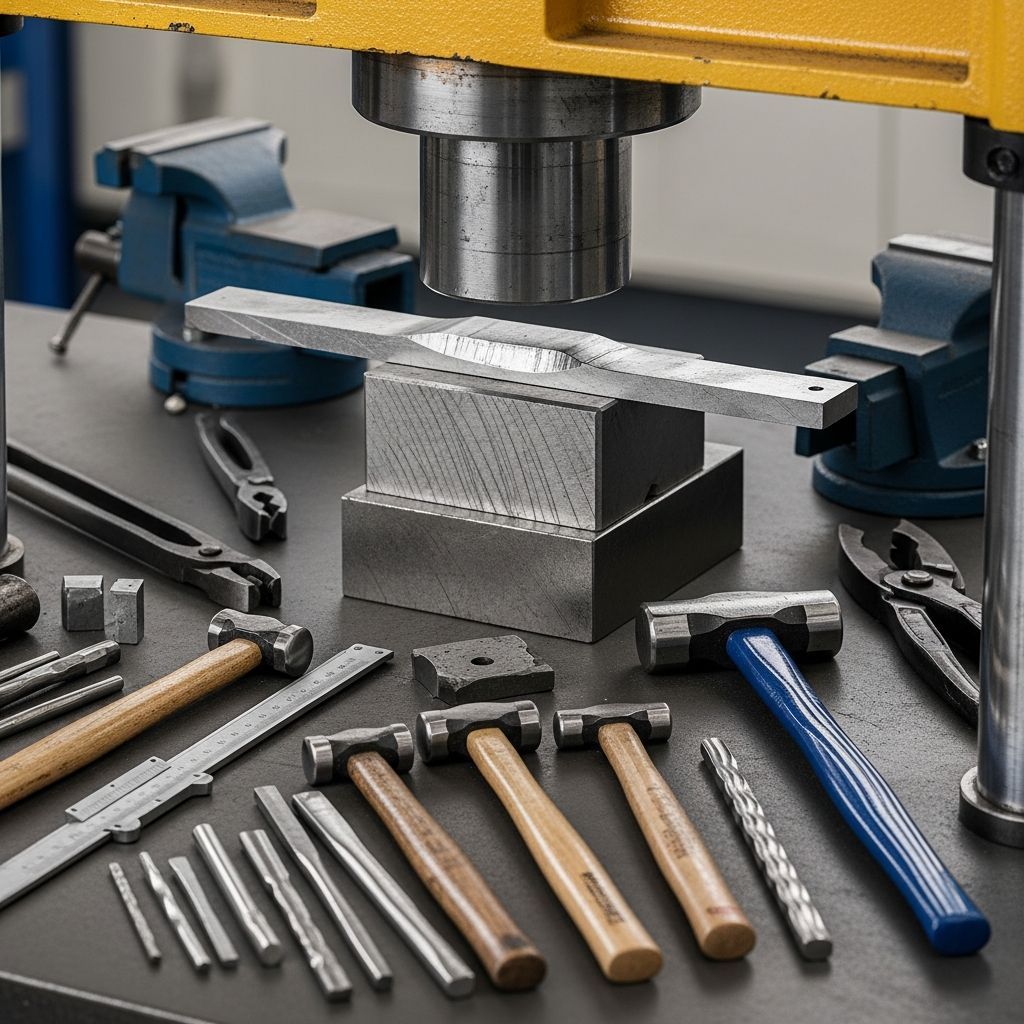
Cold working refers to the plastic deformation of metals at temperatures below their recrystallization point, typically near room temperature. This process fundamentally alters the microstructure of metals, leading to enhanced mechanical properties such as increased strength and hardness through strain hardening.
Understanding the Science Behind Cold Working
At its core, cold working induces plastic deformation in metals by applying mechanical force without significant heat input. This deformation causes dislocations—defects in the crystal lattice—to multiply and tangle, impeding further movement and thereby increasing the metal’s resistance to deformation. The result is a material with superior yield strength and tensile properties compared to its annealed state.
Unlike hot working, which allows recrystallization to relieve internal stresses, cold working preserves these stresses, contributing to work hardening. Research indicates that cold-worked metals can achieve up to 20% greater strength through processes like rolling. Grain refinement also occurs, elongating grains in the deformation direction and improving overall toughness in certain applications.
Primary Methods of Cold Working
Several distinct techniques fall under cold working, each suited to specific shapes and material requirements. These methods share the common goal of achieving precise dimensions and improved surface finishes.
- Cold Rolling: Involves passing metal sheets or strips through rollers to reduce thickness. This is the most prevalent method, enhancing surface smoothness—cold-rolled steel can be ten times smoother than hot-rolled in terms of roughness height.
- Cold Forging: Compresses bar stock or wire into dies at ambient temperatures, producing high-strength parts like fasteners and gears. It supports high-volume production exceeding 1,000 units per hour.
- Cold Drawing: Pulls metal through a die to refine diameter and surface quality, commonly used for wires and tubes.
- Cold Extrusion: Forces metal through a die opening to create complex profiles, ideal for hollow sections.
- Stamping and Bending: Employs presses to form sheet metal into desired shapes, leveraging compressive and tensile forces.
| Process | Key Application | Strength Gain | Surface Finish |
|---|---|---|---|
| Cold Rolling | Sheets, plates | Up to 20% | Excellent (10x smoother) |
| Cold Forging | Fasteners, shafts | High tensile | Superior |
| Cold Drawing | Wires, tubes | Moderate-high | Refined |
Mechanical Property Enhancements from Cold Working
Cold working significantly boosts key mechanical attributes. Yield strength and hardness increase due to dislocation density, while ductility may decrease, necessitating careful process control. For instance, cold-rolled steels exhibit optimized grain structures that resist wear and fatigue.
Benefits extend to surface quality, where cold processes eliminate oxidation scales common in hot working, yielding parts ready for immediate use or minimal finishing. Environmental advantages include reduced energy consumption—no furnaces required—and lower material waste through near-net-shape forming, achieving up to 70% scrap reduction versus machining.
Real-World Applications Across Industries
Cold-worked components are ubiquitous in demanding sectors. In automotive manufacturing, cold-forged gears and shafts provide durability under high loads. Aerospace relies on cold-rolled sheets for lightweight, high-strength airframes.
- Automotive: Bolts, pistons, and suspension parts benefit from enhanced fatigue resistance.
- Aerospace: Precision components where weight savings and reliability are critical.
- Electronics: Connectors and housings with fine tolerances.
- Medical Devices: Hypodermic needles and pacemaker parts stamped for sterility and precision.
- Construction: Rivets and structural fasteners.
These applications underscore cold working’s role in producing reliable, cost-effective parts that meet stringent standards.
Advantages Over Alternative Metal Forming Methods
Cold working outperforms hot working and machining in several ways:
- Cost Efficiency: Eliminates heating costs and reduces secondary operations.
- Speed and Scalability: Automated lines enable rapid production cycles.
- Material Versatility: Works with steels, aluminum, copper, and alloys.
- Sustainability: Lower energy use and waste.
- Precision: Tight tolerances without thermal distortion.
However, it demands powerful equipment due to higher flow stresses in work-hardened metals.
Challenges and Mitigation Strategies
While powerful, cold working introduces challenges like reduced ductility, risking cracks during severe deformation. Strain hardening limits the extent of working before annealing is needed—typically 20-50% reduction per pass.
Solutions include intermediate annealing to restore ductility, lubrication to minimize friction, and process design optimizing deformation paths. Modern automation, including robotics, enhances safety and consistency.
Material Selection for Cold Working
Not all metals suit cold working equally. Low-stack-hardening materials like aluminum and copper excel, while high-strength steels require staged processing. Factors include initial grain size, alloy composition, and purity—impurities exacerbate cracking.
| Material | Cold Workability | Typical Uses |
|---|---|---|
| Low-Carbon Steel | Excellent | Sheets, wires |
| Stainless Steel | Good | Fasteners, medical |
| Aluminum Alloys | Superior | Aerospace panels |
| Copper | High | Electrical components |
Future Trends in Cold Working Technology
Advancements like precision cold forging machines and AI-optimized process controls promise even greater efficiency. Hybrid processes combining cold working with additive manufacturing expand design possibilities, while sustainable lubricants reduce environmental impact.
Industry adoption of Industry 4.0 integrates sensors for real-time monitoring, minimizing defects and maximizing yield.
Frequently Asked Questions (FAQs)
What is the main difference between cold and hot working?
Cold working occurs below recrystallization temperature, strengthening via strain hardening; hot working is above it, allowing stress relief.
Can all metals be cold worked?
Most ductile metals can, but brittle ones like cast iron are unsuitable without prior modification.
How much strength increase can cold working provide?
Typically 20-100% in yield strength, depending on material and reduction amount.
Is cold working more expensive than hot working?
Often cheaper for high volumes due to energy savings and fewer steps, despite requiring stronger tooling.
What industries benefit most from cold working?
Automotive, aerospace, electronics, and medical devices rely heavily on its precision and strength gains.
References
- Understanding the Fundamentals of Metal Cold Working Processes — Domadia.net. 2023. https://domadia.net/understanding-the-fundamentals-of-metal-cold-working-processes/
- Types, Uses, Process & Benefits of Cold Forging — IQS Directory. 2024-01-15. https://www.iqsdirectory.com/articles/forging/cold-forging.html
- The Different Types of Cold Work Metalworking Processes — AZoM. 2022-05-10. https://www.azom.com/article.aspx?ArticleID=22119
- Types of Cold Working Processes: Definitions, Applications — Ulbrich. 2023. https://www.ulbrich.com/blog/types-of-cold-working-processes/
- What is Cold Working and its Impact on Materials — Saw Blade University. 2024. https://sawbladeuniversity.com/what-is-cold-working-and-its-impact-on-materials/
- Types of Cold Working Processes: A Comprehensive Guide — Grob Inc. 2023-11-20. https://grobinc.com/types-of-cold-working-processes-a-comprehensive-guide/
Similar Articles








Read full bio of medha deb