College Testing Policies: What To Know For 2025
Decode test-optional, test-flexible, and test-required policies in college admissions.
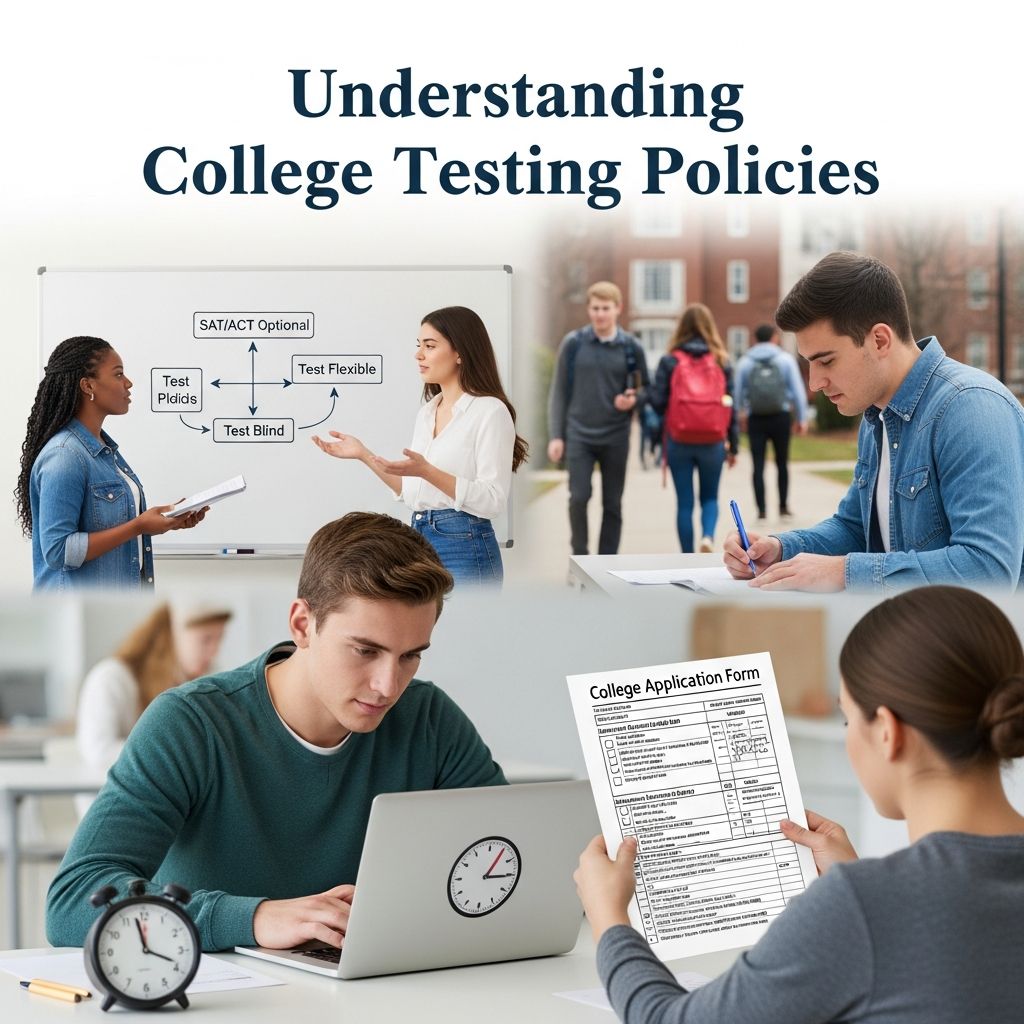
Understanding College Testing Policies: A Comprehensive Guide for Prospective Students
The landscape of college admissions has undergone a significant transformation in recent years, particularly regarding standardized testing requirements. Today’s prospective students face a bewildering array of testing policies across different institutions, each with its own rules and expectations. Whether you’re beginning your college search or refining your application strategy, understanding the distinction between test-optional, test-flexible, and test-required policies is essential to making informed decisions about which schools fit your profile and how to position your application most effectively.
The Evolution of College Testing Requirements
College admissions testing policies have shifted dramatically over the past several years. The traditional approach required all applicants to submit either SAT or ACT scores as a mandatory component of their applications. However, institutional perspectives on standardized testing have evolved significantly. Many colleges now recognize that a single test score cannot comprehensively measure a student’s potential for academic success or their readiness to thrive in a college environment. This philosophical shift has resulted in a diversification of testing policies designed to provide applicants with greater flexibility and to reduce barriers for students who face obstacles in accessing traditional standardized testing.
As of the current admissions landscape, more than 1,000 colleges have adopted policies that de-emphasize standardized tests through either test-optional or test-flexible approaches. This widespread adoption reflects a broader commitment among institutions to evaluate applications holistically, considering multiple dimensions of student achievement and potential.
What Test-Required Policies Mean
The traditional test-required policy represents the conventional approach to college admissions that has been in place for decades. Under this policy, all applicants must submit standardized test scores—specifically the SAT or ACT—as a non-negotiable component of their application. Schools operating under test-required policies do not provide exceptions or alternatives; submitting a test score is a prerequisite for consideration in the admissions process.
While fewer selective colleges have maintained strictly test-required policies in recent years, some institutions continue to employ this approach. These schools typically view standardized test scores as an important measure of academic preparation and academic potential. Test-required policies are particularly common at highly competitive institutions that believe standardized tests provide valuable information about how students compare across different high schools and educational systems.
Exploring Test-Optional Admissions Policies
A test-optional policy grants applicants complete discretion regarding whether to include standardized test scores in their applications. Under this framework, students choose whether or not to submit their SAT or ACT scores, and admissions officers consider scores only when applicants voluntarily provide them. Importantly, applications submitted without test scores face no penalty or disadvantage in the evaluation process.
Test-optional policies represent the most common approach among institutions that have de-emphasized standardized testing. Schools adopting this stance take a neutral position on test score submissions, focusing instead on other factors they believe are stronger predictors of student success. These may include high school transcripts, essay responses, letters of recommendation, extracurricular involvement, and demonstrated leadership.
Key Characteristics of Test-Optional Schools
- Students determine independently whether submitting test scores strengthens their application
- Admissions offices consider standardized test scores if provided, but applications without scores receive equal consideration
- No penalty exists for applicants who choose not to submit scores
- Some test-optional institutions may have exceptions for certain groups, such as scholarship applicants or homeschooled students
- Admissions committees evaluate academic strength through multiple lenses beyond test performance
The expansion of test-optional policies gained momentum during the COVID-19 pandemic, when many institutions temporarily suspended testing requirements to address accessibility challenges. Some colleges have maintained these policies through multi-year pilots or have announced extended timelines for remaining test-optional, recognizing the benefits of broader access and more equitable evaluation processes.
Understanding Test-Flexible Admissions Approaches
A test-flexible policy occupies a middle ground between strictly test-required and fully test-optional frameworks. Schools with test-flexible policies require applicants to submit standardized test scores but offer substantial flexibility regarding which types of tests satisfy this requirement. Rather than limiting students to the SAT or ACT, test-flexible institutions accept scores from Advanced Placement (AP) exams, International Baccalaureate (IB) examinations, or both, alongside traditional standardized tests.
The critical distinction between test-flexible and test-optional policies is that test-flexible schools prefer applicants to submit test scores—they simply expand the range of acceptable testing options. This approach acknowledges that students demonstrate their academic capabilities through various assessments and allows applicants to showcase their strengths through the testing format in which they perform best.
How Test-Flexible Policies Function
Institutions with test-flexible policies, such as Yale University and New York University, have clearly defined which test scores they accept. Applicants typically have the following options:
- Submit SAT or ACT scores taken within a specified timeframe
- Submit Advanced Placement examination results from any subject areas
- Submit International Baccalaureate exam scores
- Combine scores from multiple testing formats if desired
- Choose the specific scores that best represent their academic preparation
For students who completed AP or IB examinations before applying to college, test-flexible policies offer a significant advantage. Rather than investing time and resources in preparing for the SAT or ACT, applicants can leverage assessments they have already completed. This flexibility proves particularly valuable for students attending schools that emphasize AP or IB curricula or for those who have excelled in these rigorous academic programs.
Comparing the Three Testing Policy Models
| Policy Type | Submission Required | Accepted Tests | Student Choice | Examples |
|---|---|---|---|---|
| Test-Required | Yes, mandatory | SAT or ACT only | Choice of SAT or ACT; year of test | Some highly selective universities |
| Test-Optional | No, completely voluntary | SAT or ACT if submitted | Full discretion to submit or not | Most colleges and universities |
| Test-Flexible | Yes, required | SAT, ACT, AP, or IB | Choice of test type and scores | Yale, NYU, Auburn |
Strategic Considerations for Test-Flexible Schools
Applicants evaluating test-flexible institutions should carefully review each school’s specific requirements, as policies vary considerably. Some important factors to investigate include whether applicants must submit all completed AP or IB exams or whether they can select specific scores, how many tests must be submitted, and what minimum performance standards might apply.
Yale University’s test-flexible policy illustrates this variation. The university requires applicants choosing to submit AP or IB scores to include results from all subject exams completed before applying, though applicants selecting SAT or ACT may also optionally include AP or IB scores. This distinction emphasizes the importance of reading each institution’s testing policy in detail on their official admissions website rather than making assumptions based on general categories.
Special Circumstances and Policy Exceptions
Even within single policy categories, important exceptions frequently exist. Test-optional colleges may require test scores for certain academic programs, specialized scholarships, or specific student populations. International students, homeschooled applicants, and students applying for merit-based financial aid may face different testing requirements than typical domestic applicants.
These variations highlight why prospective students must thoroughly examine the complete testing policy on each college’s official admissions page rather than relying solely on broad policy classifications. A school’s general policy might indicate it is test-optional, but specific circumstances might necessitate test submission for your particular situation.
How Admissions Officers Evaluate Standardized Test Scores
Regardless of testing policy, schools that do consider standardized test scores evaluate them as one component within a comprehensive application review process. Admissions officers at highly selective institutions employ holistic evaluation methods, considering test scores alongside academic transcripts, personal essays, letters of recommendation, extracurricular involvement, work experience, and demonstrated character.
This holistic approach recognizes that no single factor—including standardized test scores—can fully capture a student’s academic preparation, intellectual curiosity, resilience, or potential contribution to a college community. Test scores provide information about how students compare to peers in academic fundamentals, but they represent only one piece of a comprehensive student profile.
Research on Test-Optional and Test-Flexible Outcomes
Research into the effects of test-optional and test-flexible policies provides valuable insights into how these approaches function in practice. Studies indicate that students who do not submit test scores to test-optional institutions frequently achieve academic performance in college comparable to or better than students who do submit scores. This finding suggests that non-test-submitters often possessed other indicators of academic capability that proved predictive of college success.
The success of non-submitting students demonstrates that standardized test scores, while potentially useful information, are not essential for identifying students capable of thriving in college-level coursework. High school grades, academic motivation, and demonstrated learning in actual classroom settings often provide equally valuable or superior indicators of college readiness.
Making Your Decision About Test Submission
When applying to test-optional institutions, students must determine whether submitting test scores strengthens or weakens their overall application profile. Consider submitting scores if your results are competitive relative to the middle 50 percent of admitted students at your target schools. Conversely, declining to submit scores may be strategically advantageous if your results fall significantly below the typical range for admitted students and if other components of your application demonstrate strong academic capability.
For test-flexible schools, determine which testing option best showcases your academic strengths. If you have completed rigorous AP or IB courses and performed well on those examinations, submitting those scores may be preferable to taking the SAT or ACT. Conversely, if you have not completed AP or IB coursework, the traditional SAT or ACT may represent your best option for meeting the testing requirement.
Frequently Asked Questions
Does Not Submitting Standardized Test Scores Hurt My Application to a Test-Optional School?
No. At genuinely test-optional institutions, applications without test scores face no penalty or disadvantage in the evaluation process. Admissions officers review and evaluate applications lacking test scores on equal footing with those that include scores.
Can I Submit Multiple Types of Test Scores to a Test-Flexible School?
Yes. Most test-flexible institutions allow applicants to submit scores from multiple testing formats. For example, Yale permits applicants who choose the SAT or ACT option to also optionally include AP or IB scores.
Are Test-Optional and Test-Flexible Policies Temporary?
While many policies were adopted initially as temporary responses to pandemic-related challenges, many institutions have signaled intentions to continue these approaches. NYU, for instance, has committed to remaining test-optional through the 2025-2026 application cycle.
Do Scholarship Programs Have Different Testing Requirements?
Frequently, yes. Even at test-optional colleges, merit-based scholarship programs may require test score submissions. Always investigate whether your targeted scholarship requires testing regardless of the institution’s general admissions policy.
Conclusion: Navigating the Current Testing Landscape
The diversification of college testing policies reflects a fundamental shift in how institutions conceptualize academic preparation and college readiness. Whether a school maintains a test-required, test-optional, or test-flexible policy, the broader message is clear: standardized test scores represent one among many factors contributing to a comprehensive understanding of student potential.
As you navigate the college application process, invest time in understanding each institution’s specific testing requirements and policy details. Use this information strategically to position your application in the strongest possible light, whether that means submitting carefully selected test scores or choosing not to submit at all. The flexibility now available in college admissions testing provides opportunities to showcase your academic capabilities through the formats and assessments that best represent your strengths and preparation.
References
- Standardized Testing Requirements & Policies | Yale College — Yale University. Accessed 2026. https://admissions.yale.edu/standardized-testing
- Test-Optional College Admission Policies: The Pros and Cons — Score Academy. https://www.score-academy.com/blogs/test-optional-college-admission-policies-the-pros-and-cons
- College Test Score Policies: Read Between the Lines — C2 Education. https://www.c2educate.com/trends-in-education/college-test-score-policies/
- Test Optional, Test Blind, Test Flexible: What’s the Difference — CollegeData. https://www.collegedata.com/resources/prepare-and-apply/test-optional-test-blind-whats-the-difference
- Test-Optional, Test-Flexible, Test-Blind: What’s the Difference — College Essay Advisors. https://www.collegeessayadvisors.com/test-optional-test-flexible-test-blind-whats-the-difference/
- Standardized Tests — New York University Admissions. https://www.nyu.edu/admissions/undergraduate-admissions/how-to-apply/standardized-tests.html
- How Do Test-Optional or Test-Flexible Policies Affect Access and Opportunity — Ithaka S+R. https://sr.ithaka.org/blog/how-do-test-optional-or-test-flexible-policies-affect-access-and-opportunity/
Similar Articles







Read full bio of Sneha Tete