Common App Colleges: Complete Guide For 2025
Discover how the Common App simplifies applications to over 1,000 colleges, saving time and effort for aspiring students nationwide.
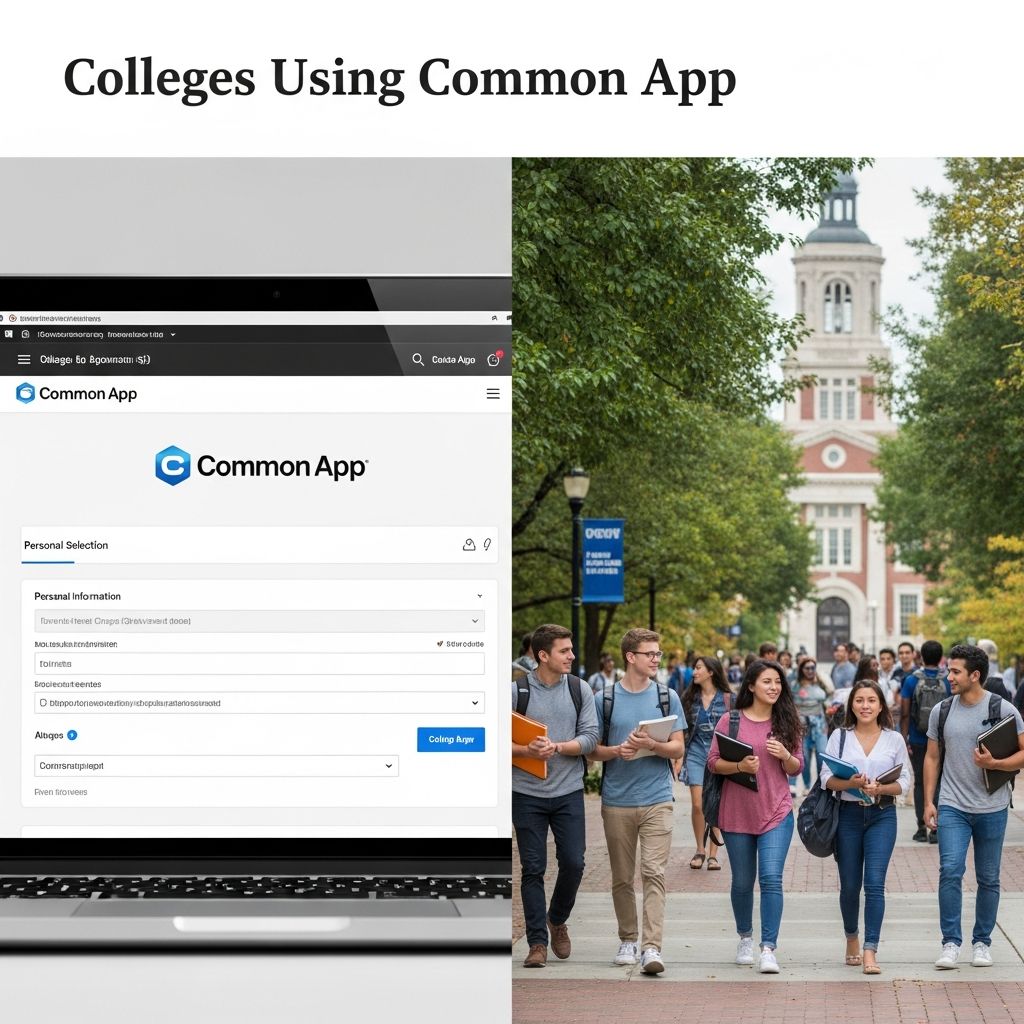
Colleges Using Common App
The Common Application, widely known as the
Common App
, revolutionizes the college admissions landscape by enabling students to submit a single set of core materials to numerous institutions. Over 1,000 colleges and universities across the U.S. and abroad participate, drastically reducing repetitive data entry and administrative burdens.Understanding the Common App Platform
This centralized system collects essential personal, academic, and extracurricular details once, then distributes them to selected schools. It includes tools for tracking deadlines, submitting supplements, and inviting recommenders, making the process more organized and less stressful. The platform is free, though individual colleges impose their own fees, typically ranging from $30 to $75, with waivers available for eligible students.
Key advantages include superscoring for tests like the ACT, where the highest section scores across attempts are considered, and a dashboard for monitoring progress with green checkmarks on completed sections. Students create a profile using just an email, then search and add schools based on filters like location, size, and financial aid options.
How to Get Started with Your Application
Launching your Common App journey involves straightforward steps designed for efficiency:
- Create a profile: Sign up at commonapp.org, answer basic questions about your role (student, counselor, etc.), and set up login credentials.
- Build your college list: Use search tools to find participating schools, reviewing their deadlines, fees, test policies, and supplement needs before adding them.
- Complete core sections: Fill out profile, family, education, testing, activities, writing, and courses/grades tabs meticulously.
- Handle school-specific requirements: Address unique essays, questions, or additional forms via the dashboard.
- Submit and track: Review everything, pay fees if applicable, and submit; monitor status post-submission.
Gathering documents upfront—transcripts, test scores, Social Security number, extracurricular lists—prevents delays. The process suits first-year and transfer applicants alike, with tailored guides available.
Major Requirements Across Common App Schools
While the core form unifies basics, requirements vary. Universally needed are high school transcripts, parent/guardian education and work details, and activity lists showcasing clubs, jobs, hobbies, and responsibilities.
| Requirement | Description | Common App Section |
|---|---|---|
| Academic History | Grades, courses, transcript self-report | Education & Courses/Grades |
| Standardized Tests | SAT/ACT scores (test-optional at many) | Testing |
| Extracurriculars | Up to 10 activities with descriptions | Activities |
| Personal Essay | 650-word prompt choice | Writing |
| Recommendations | Counselor/teacher letters | Recommenders & FERPA |
| Family Info | Parents’ occupations, education | Family |
Colleges may add supplements like “Why us?” essays or major-specific questions, revealed after selection. Testing policies differ: some mandate scores, others are flexible or optional.
Deadlines and Admission Cycles Explained
Timing is critical. Common cycles include:
- Early Action (EA)/Early Decision (ED): Non-binding (EA) or binding (ED) deadlines around November 1; decisions by mid-December.
- Regular Decision (RD): Primary deadline January 1, with some extending to February.
- Rolling Admissions: Ongoing until classes fill, often with priority dates.
Check each school’s page in the dashboard for exact dates, as they vary. Priority deadlines offer review advantages without commitment. International and transfer deadlines may differ.
Finding Your Ideal Common App Colleges
With over 1,000 members—from Ivies like Harvard to state flagships and liberal arts colleges—filter by region, enrollment size, minority-serving status, or aid generosity. Examples include public universities (e.g., University of Pittsburgh), privates (e.g., Princeton), and internationals.
Not all schools participate; some use proprietary systems (e.g., UC system, ApplyTexas). Verify acceptance before starting. The Common App’s search narrows options effectively.
Strategies for a Standout Application
To maximize impact:
- Tailor supplements: Research schools deeply for authentic responses.
- Leverage activities: Highlight impact over hours; include unique responsibilities.
- Seek fee waivers: Available for financial need.
- Engage recommenders early: Use the dashboard to invite them.
- Proofread rigorously: Errors undermine credibility.
For essays, select prompts aligning with your story; reuse adaptable content across schools via “super essay” methods. Track everything to avoid missing pieces.
Common Pitfalls and How to Avoid Them
Applicants often overlook varying requirements, submit late, or neglect FERPA release for recommendations. Double-check test policies and deadlines per school. International students note higher fees and potential visa docs.
Time estimates vary: simple apps take hours, supplement-heavy ones (e.g., Stanford) days or weeks. Start early, ideally summer before senior year.
FAQs About the Common App
Q: Is the Common App required for all colleges?
A: No, only participating schools; others have separate portals.
Q: Can I apply to non-Common App schools too?
A: Yes, maintain separate applications alongside.
Q: What if a school requires its own app?
A: Some allow both; confirm policies.
Q: How many schools can I add?
A: Up to 20 per cycle.
Q: Does it handle financial aid?
A: No, use FAFSA/CSS Profile separately.
Q: Is it mobile-friendly?
A: Yes, fully accessible via app or browser.
Why Choose Common App Schools?
Participation signals efficiency and broad accessibility. Schools benefit from a diverse applicant pool; students gain streamlined access to top programs. As enrollment evolves, the platform adapts with features like digital transcripts.
Ultimately, the Common App empowers proactive students to focus on crafting compelling narratives rather than paperwork, paving the way to their dream campuses.
References
- Guide to the Common Application — The Princeton Review. 2023. https://www.princetonreview.com/college-advice/common-application
- The Common App: A How-to Guide — College Essay Guy. 2023. https://www.collegeessayguy.com/blog/common-app
- Application guide for first-year students — Common App. 2025-02-01. https://www.commonapp.org/apply/first-year-students
- 5 Things You Need to Know About the Common App — ACT. 2024. https://www.act.org/content/act/en/students-and-parents/college-planning-resources/applying-to-college/5-things-you-need-to-know-about-the-common-app.html
- How to apply to college with Common App — Common App. 2025-02-01. https://www.commonapp.org/apply
- How to Apply to Colleges: Tips to Get Started — BigFuture College Board. 2024. https://bigfuture.collegeboard.org/plan-for-college/apply-to-college/college-applications-how-to-begin
- Apply to college with Common App — Common App. 2025-02-01. https://www.commonapp.org
Similar Articles






Read full bio of medha deb