Defining Language: Essence of Human Communication
Explore the core definition of language, its key properties, forms across cultures, and vital role in society and cognition.
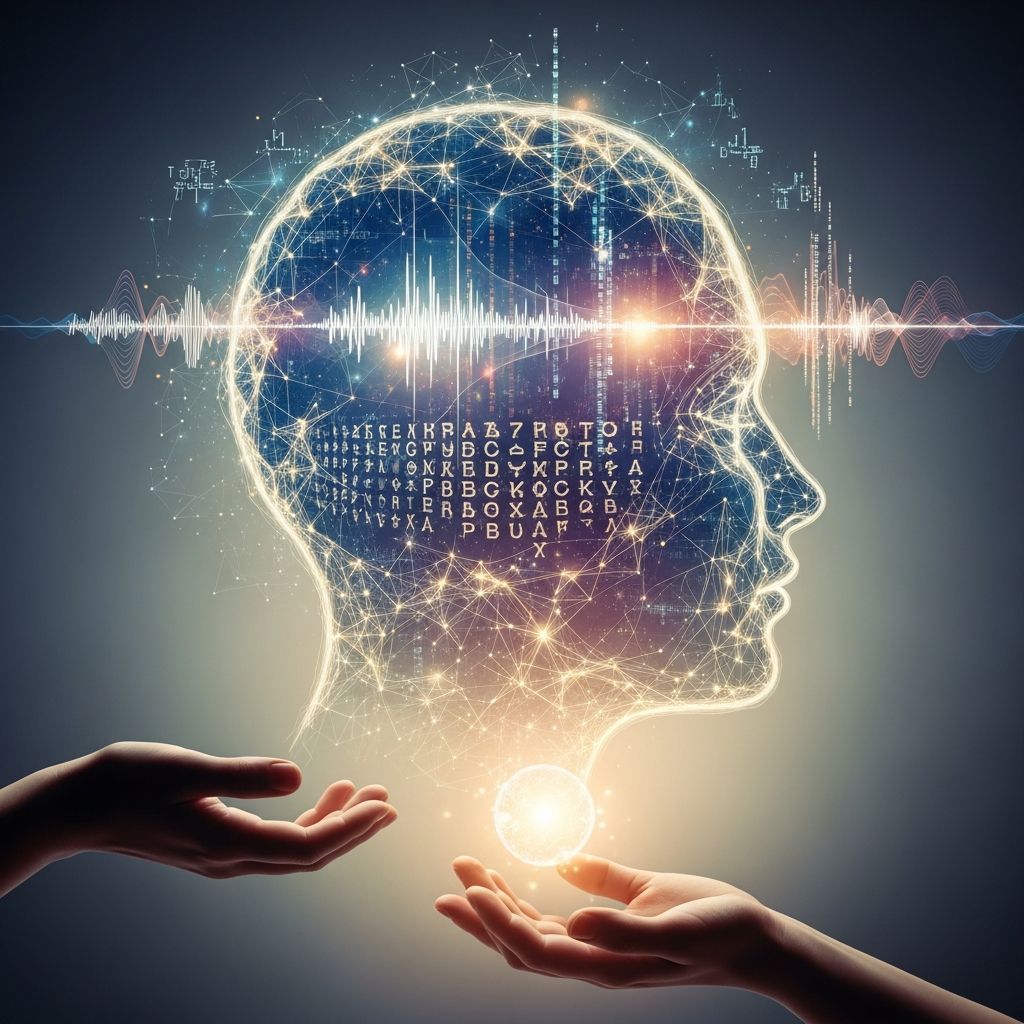
Language stands as the cornerstone of human interaction, enabling the exchange of ideas, emotions, and knowledge across generations and cultures. At its core, it is a structured system of conventional symbols—spoken, signed, or written—that humans use to convey meaning within social groups.
Core Elements of Language
Every language comprises fundamental building blocks: sounds or gestures organized by grammar and vocabulary. Grammar dictates how these elements combine into meaningful units, while vocabulary provides the lexicon for expression. This systematic arrangement allows for infinite creativity in communication.
- Sounds and Symbols: In spoken forms, phonemes (basic sound units) form words; signed languages use hand shapes, movements, and facial expressions.
- Grammar Rules: Syntax structures sentences, morphology shapes word forms, and semantics assigns meanings.
- Vocabulary: Evolving collections of words reflecting cultural nuances and innovations.
Key Properties That Distinguish Human Language
Human languages exhibit unique traits setting them apart from other communication forms. These properties, identified by linguists, underscore language’s power and flexibility.
| Property | Description | Example |
|---|---|---|
| Productivity | Ability to generate endless novel sentences from finite rules. | Creating ‘The quantum cat pondered existential voids’ spontaneously. |
| Displacement | Referencing absent or hypothetical events. | Discussing ancient history or future plans. |
| Arbitrariness | No inherent link between symbol and meaning. | ‘Tree’ evokes the plant but sounds unrelated globally. |
| Duality of Patterning | Meaningless sounds combine into meaningful units. | Phonemes /k/ /æ/ /t/ form ‘cat’. |
| Cultural Transmission | Learned socially, not purely innate. | Children acquire ambient language, not instinctually. |
These features enable abstract thought, storytelling, and complex societies.
Forms of Language: Beyond Spoken Words
Language transcends speech. Signed languages, like American Sign Language (ASL), function equivalently with their own grammar, proving visual-gestural systems are full languages.
- Written Systems: Alphabets, syllabaries, or logographs preserve spoken language.
- Non-Verbal Cues: Gestures, facial expressions, and body language complement verbal forms.
- Animal Communication: Differs lacking full productivity or displacement; e.g., bee dances signal location but not abstract concepts.
How Humans Acquire Language
Language acquisition unfolds rapidly in childhood, a marvel studied extensively. Infants progress from babbling to fluent speech by age five, mastering complex structures.
- Pre-Linguistic Stage (0-12 months): Cooing, babbling mimic sounds.
- Holophrastic Stage (12-18 months): Single words convey whole ideas.
- Two-Word Stage (18-24 months): Basic combinations emerge.
- Telegraphic Speech (2-3 years): Key words form sentences.
- Full Competence (3+ years): Adult-like grammar.
Theories diverge: Noam Chomsky posits an innate ‘universal grammar’; others emphasize social learning and input. Evidence from feral children shows critical periods for acquisition.
Global Diversity: Thousands of Tongues
Approximately 7,000 languages exist worldwide, though many face extinction. They cluster into families like Indo-European (English, Hindi) or Sino-Tibetan (Mandarin, Tibetan) based on shared origins.
- Major Families: Niger-Congo (2,000+ languages), Austronesian, Trans-New Guinea.
- Isolates: Unrelated languages like Basque.
- Pidgins/Creoles: Emerge from contact, evolving full grammars.
Diversity reflects migration, isolation, and adaptation, enriching human heritage.
The Science of Language: Linguistics Overview
Linguistics dissects language scientifically across subfields:
- Phonetics/Phonology: Sound production and patterns.
- Morphology: Word formation.
- Syntax: Sentence structure.
- Semantics/Pragmatics: Meaning in context.
- Sociolinguistics: Language in society.
- Psycholinguistics: Mental processing.
Recent MIT research affirms language primarily serves communication, not solitary thought, challenging ‘language-of-thought’ hypotheses.
Language’s Societal and Cognitive Impact
Language shapes identity, fosters cooperation, and drives innovation. It expresses culture, reinforces social bonds, and enables emotional catharsis.
Cognitively, it structures perception—Sapir-Whorf hypothesis suggests language influences worldview, e.g., color terms affect discrimination.
In technology, programming languages mirror human ones structurally, facilitating machine instructions.
Challenges in Defining Language Precisely
No single definition suffices; some emphasize biology (innate faculty), others social function (symbol exchange). Henry Sweet viewed it as ‘ideas via speech-sounds’; Bloch and Trager as ‘arbitrary vocal symbols for cooperation.’ These capture facets but oversimplify.
Debates persist: Is language uniquely human? Emerging AI systems mimic syntax but lack true semantics or cultural embedding.
Frequently Asked Questions (FAQs)
What is the simplest definition of language?
A structured system of symbols for conveying meaning among humans.
How many languages are spoken today?
Roughly 5,000-7,000, with many endangered.
Is sign language a real language?
Yes, with full grammar and vocabulary equivalent to spoken forms.
Can animals use language?
No, their systems lack key properties like productivity.
Why do children learn language so quickly?
Through a mix of innate capacity and environmental exposure during critical periods.
Preserving Linguistic Diversity
With globalization, half of languages may vanish by 2100. Revitalization efforts, like Maori immersion schools, demonstrate success through community commitment. Understanding language’s essence aids preservation, sustaining cultural tapestries.
References
- Language and Linguistics | Research Starters — EBSCO. 2023. https://www.ebsco.com/research-starters/language-and-linguistics/language
- Language — Wikipedia. 2026-04-01. https://en.wikipedia.org/wiki/Language
- LANGUAGE Definition & Meaning — Merriam-Webster. 2026. https://www.merriam-webster.com/dictionary/language
- Language | Definition, Types, Characteristics, Development, & Facts — Encyclopædia Britannica. 2025-10-15. https://www.britannica.com/topic/language
- What is a language? – YouTube — YouTube (Linguistics Channel). 2022-05-10. https://www.youtube.com/watch?v=gpEq0uiVFL4
- What is language for? — MIT News. 2024-07-03. https://news.mit.edu/2024/what-is-language-for-0703
Similar Articles







Read full bio of Sneha Tete