Demonstrating Air’s Volume: Simple Science Experiments
Unlock the invisible world of air through hands-on experiments that reveal its volume, mass, and physical properties in everyday settings.
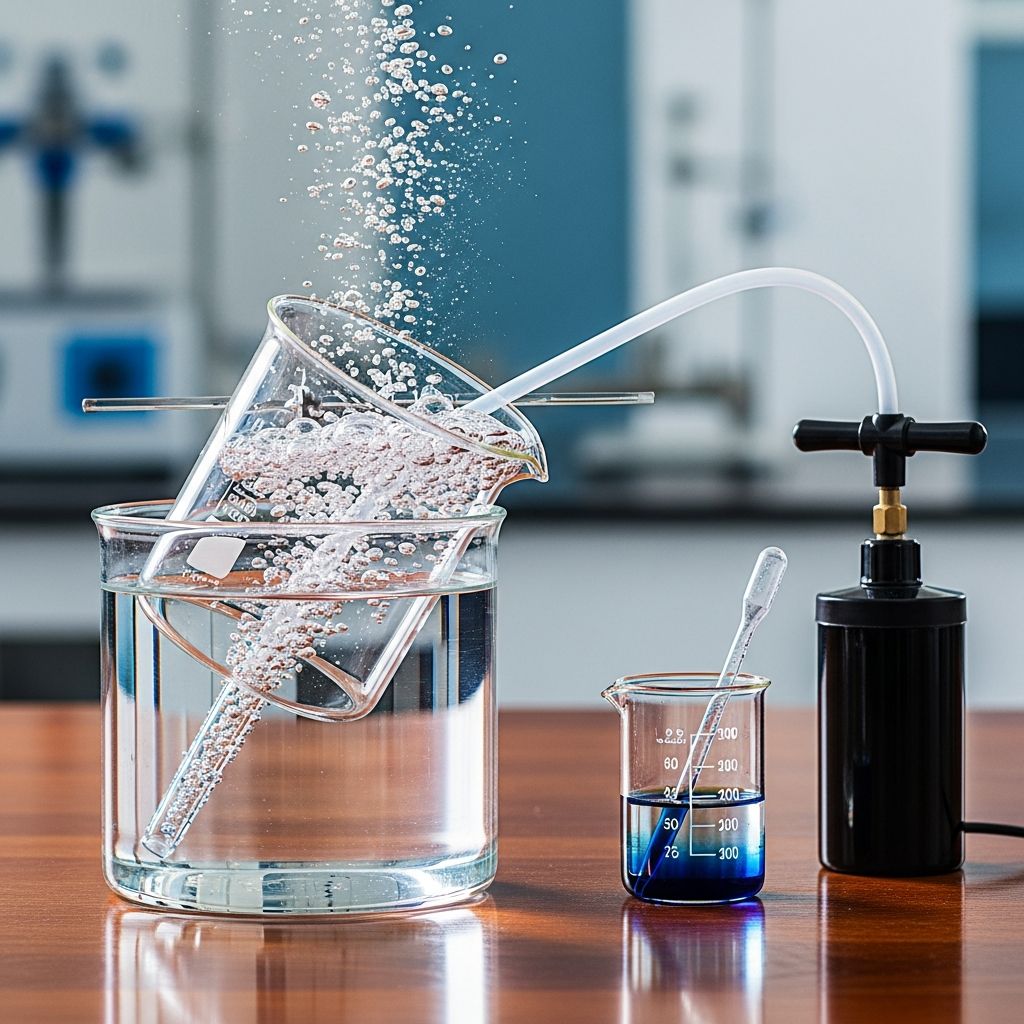
Air surrounds us constantly, yet its physical properties often go unnoticed because it is invisible and intangible to the touch. However, air is a real substance with
volume
,mass
, and the ability to exertpressure
. Understanding these characteristics is fundamental to grasping concepts like atmospheric pressure, buoyancy, and even weather patterns. This article explores hands-on experiments that clearly demonstrate air’s volume using everyday materials, making abstract science accessible and exciting for students, teachers, and curious minds at home.Why Air’s Volume Matters in Everyday Science
Air molecules are in constant motion, filling any available space and resisting compression until extreme forces are applied. This behavior explains why a tire feels firm when inflated or why your ears pop during airplane ascents. Scientifically, volume refers to the amount of three-dimensional space an object occupies. For gases like air, this volume is dynamic but measurable under controlled conditions. Recognizing air’s volume helps demystify phenomena such as why boats float or how lungs expand during breathing.
In educational settings, proving air’s existence counters common misconceptions that air is ‘nothing.’ Experiments provide empirical evidence, fostering critical thinking and scientific inquiry. These demonstrations align with physics principles outlined in university curricula, where air is treated as a fluid with weight and spatial occupancy.
Experiment 1: The Inverted Glass and Napkin Test
This classic demonstration vividly shows air displacing water, proving it occupies space. Gather a clear glass, a dry paper napkin or tissue, a basin of water, and optionally a wooden stick or spoon for pushing.
- Fill a basin with water to a depth of several inches.
- Fold a dry napkin and push it gently to the bottom of the upside-down glass using a stick, ensuring it stays flat against the glass’s interior.
- Submerge the glass completely into the water, mouth downward.
- Slowly lift the glass straight up while keeping it inverted.
- Turn the glass right-side up and remove the napkin.
Observe: The napkin remains dry! If the glass were truly empty, water would fill it and soak the napkin. Instead, air trapped inside prevents water entry, demonstrating air’s
volume
. The air forms a pocket equal to the glass’s capacity, exerting enough pressure to block water.This works because atmospheric pressure pushes water up against the air’s resistance. At sea level, this pressure is about 101,325 Pascals, sufficient to hold the water at bay. Variations include using colored water for visibility or a taller container to accentuate the effect.
Experiment 2: Funnel Submersion to Reveal Air Pockets
A simple funnel highlights air’s resistance to water intrusion, reinforcing volume concepts. Materials: a funnel with a stem, a basin of water.
- Submerge the funnel’s wide end in water.
- Place your finger firmly over the stem’s narrow opening.
- Lift the funnel while keeping your finger sealed.
Result: Water stays out of the funnel. Removing your finger allows water to rush in, filling the space. The air inside the funnel occupies the entire volume, compressed slightly but not enough to let water enter under normal conditions. This experiment, detailed in government educational resources, proves air is a substance with tangible space occupancy.
| Step | Action | Observation |
|---|---|---|
| 1 | Finger on stem, submerge | Air trapped, no water entry |
| 2 | Lift funnel | Air pocket visible as bubble space |
| 3 | Release finger | Water fills instantly |
This table summarizes the process, ideal for classroom worksheets.
Experiment 3: Balloon Balance to Show Air’s Mass and Indirect Volume
While focusing on volume, this ties in mass, as denser air (more molecules in fixed volume) increases weight. Items: two identical balloons, a stick or ruler, tape, string, a balance or hanger.
- Tape uninflated balloons to each end of a stick.
- Tie string to the stick’s center and suspend it; it balances.
- Inflate one balloon with air and reattach.
The inflated side dips down, proving added air has
mass
. Since balloons have fixed maximum volume, inflation packs more air molecules, increasing density and weight. This demonstrates air’s substance nature, with the volume constraint making mass gains evident.Experiment 4: Pressurized Bottle Mass Increase
For precise measurement, use a pump cap (like Fizzkeeper), 1-2 liter bottle, digital scale. From Colorado State University protocols:
- Weigh empty bottle with pump cap attached.
- Pump air in (10-20 pumps), feel increased rigidity.
- Re-weigh; note 0.1-0.5g gain per several pumps.
More pumps add molecules without changing bottle volume significantly, raising mass and internal pressure. Safety: Release pressure sideways, slowly. This quantifies air’s mass in a fixed volume, linking to atmospheric weight—10 tons per square meter column.
Advanced Insights: Air in the Atmosphere
Beyond demos, air’s volume scales globally. You’re submerged in a 100km-deep air ocean, with pressure from overlying mass. Scuba divers feel analogous water pressure. These experiments scale: napkin glass mimics atmospheric hold on water surfaces.
Table comparing experiments:
| Experiment | Materials | Key Principle | Age Suitability |
|---|---|---|---|
| Napkin Glass | Glass, napkin, water | Displacement | 5+ |
| Funnel | Funnel, water | Sealed volume | 7+ |
| Balloon Balance | Balloons, stick | Mass via density | 8+ |
| Pump Bottle | Bottle, pump, scale | Quantifiable mass | 10+ |
Safety Guidelines for Air Experiments
- Supervise children; avoid over-pressurizing bottles.
- Use eye protection for pumps.
- Release pressure away from people.
- Clean spills immediately.
Common Misconceptions About Air
- Myth: Air is weightless. Fact: Air column over 1m² weighs ~10,000kg.
- Myth: Vacuum in glass. Fact: Air fills space.
- Myth: Gases incompressible. Fact: Compressible but resist under normal pressure.
Frequently Asked Questions (FAQs)
What household items prove air has volume?
Use a glass and napkin: submerge inverted glass with napkin inside; it stays dry due to air pocket.
Does air really have mass?
Yes, balloon balance or pump bottle shows weight increase from added air molecules.
Why doesn’t water enter the inverted glass?
Air’s volume and atmospheric pressure create a barrier equal to the glass’s capacity.
Can these experiments be done without scales?
Yes, napkin and funnel demos require no tools, just observation.
How does this relate to real-world applications?
Explains barometers, weather balloons, and scuba diving pressure changes.
Extending Experiments for Deeper Learning
Try temperature effects: Warm air expands (helium balloons rise). Measure volumes with water displacement in graduated cylinders. Discuss ideal gas law: PV = nRT, where volume V is key. For classrooms, graph mass vs. pumps from bottle experiment, calculating air density (~1.2 kg/m³ at STP).
Incorporate history: Evangelista Torricelli’s barometer (1643) proved air pressure via mercury column, akin to napkin demo. Modern apps include altimeters sensing air density changes.
Challenge: Compare sea-level vs. altitude effects using partially filled bottles. This builds quantitative skills.
References
- Does Air Have Mass? — Colorado State University, Department of Biochemistry and Molecular Biology. 2021-06. https://www.bmb.colostate.edu/wp-content/uploads/sites/6/2021/06/doesairhavemass.pdf
- Properties of Air: The First Demonstration – Proof that Air is a Substance — AirNow.gov (U.S. EPA). 2020-10. https://www.airnow.gov/sites/default/files/2020-10/properties_of_air.pdf
Similar Articles






Read full bio of Sneha Tete