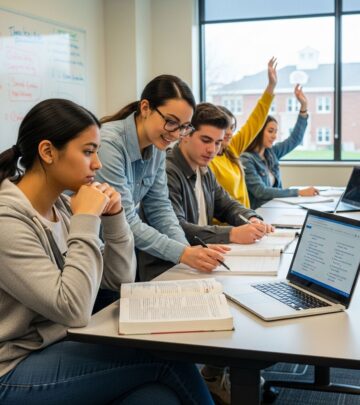
Digital Learning Tools for Academic Success
Master your studies with essential online platforms designed for modern college learners.

Elevating Your Academic Performance Through Strategic Digital Learning Resources
The modern college experience extends far beyond the traditional classroom setting. Today’s learners have unprecedented access to a vast ecosystem of digital tools and platforms designed to enhance academic performance, foster collaborative learning, and support independent study. These resources span multiple categories—from note-taking and organization systems to comprehensive course libraries and interactive learning platforms—each addressing specific aspects of the student journey. Understanding how to leverage these tools effectively can significantly impact your ability to manage coursework, retain information, and achieve your educational goals.
The Evolution of Student-Centered Digital Tools
Educational technology has transformed dramatically over the past decade. What began as simple note-taking applications has evolved into sophisticated ecosystems that integrate artificial intelligence, collaborative features, and adaptive learning algorithms. Modern students benefit from platforms that recognize diverse learning styles—visual, auditory, kinesthetic—and provide customized experiences accordingly. These tools address fundamental student challenges: information overload, time management, procrastination, and the need to synthesize information from multiple sources into coherent knowledge structures.
The democratization of educational content has been particularly transformative. Where previous generations relied heavily on expensive textbooks and limited library resources, contemporary students can access university-level coursework, expert lectures, and specialized knowledge repositories at minimal or no cost. This shift has fundamentally altered how students approach independent learning and skill development.
Visual Learning Platforms and Conceptual Mapping Tools
For students whose brains process information most effectively through visual representation, specialized platforms offer powerful advantages. These tools transform abstract concepts into interconnected visual networks, enabling learners to see relationships between ideas and build comprehensive mental models of complex subjects.
Mind mapping technology serves as a cornerstone for visual learners. By breaking down broad subjects into hierarchical structures, these platforms help students understand how individual topics connect within larger frameworks. This approach proves particularly valuable when studying subjects with intricate relationships between concepts—such as biology, history, or philosophy. Visual mapping also facilitates memory retention by engaging multiple cognitive pathways simultaneously.
Beyond static mind maps, modern platforms incorporate interactive elements including flashcard systems, customizable quiz generation, and collaborative study spaces. Users can create personalized study materials or draw from community-created resources developed by thousands of educators and learners worldwide. This collaborative dimension transforms individual learning into a social endeavor, allowing students to benefit from diverse perspectives and study methodologies.
The ability to track learning progress adds another critical dimension. Built-in analytics show retention rates, identify knowledge gaps, and recommend targeted review sessions. This data-driven approach to studying enables students to allocate study time strategically rather than engaging in passive or inefficient review sessions.
Comprehensive Note Management and Digital Organization
The challenge of managing information across multiple classes, formats, and platforms represents a significant pain point for contemporary students. Centralized note management systems address this by creating unified digital workspaces where all academic information coexists harmoniously.
Modern note-taking platforms transcend simple text capture. They accommodate multiple media types—images, audio recordings, web clippings, PDF annotations—within single, organized structures. This multimedia integration proves invaluable when studying subjects that combine textual, visual, and auditory information. A biology student, for instance, can compile lecture notes, annotated diagrams, research article excerpts, and video lecture clips in one searchable repository.
Synchronization across devices represents another critical feature. Students can begin note-taking during lectures on a laptop, continue reviewing those notes on a tablet during transit, and access the same information on a smartphone while studying at the library. This seamless cross-device experience ensures learning continuity regardless of location or circumstance.
Collaborative note-taking features enable group study sessions and shared research projects. Multiple students can contribute to the same note structure simultaneously, with version control ensuring that contributions are tracked and previous iterations remain accessible. For team-based coursework and group research projects, this capability streamlines coordination and ensures comprehensive documentation of the collaborative process.
Interactive Flashcard Systems and Spaced Repetition Learning
Flashcard technology has been revolutionized through digital implementation. Rather than static paper cards, modern flashcard platforms employ sophisticated algorithms grounded in cognitive science research. These systems implement spaced repetition methodology—a learning technique wherein material is reviewed at increasing intervals based on demonstrated mastery levels.
Users can create custom flashcard sets for any subject or import pre-existing sets created by other learners and educators. The platform analyzes individual performance patterns and automatically schedules reviews for cards requiring additional reinforcement. This personalized approach proves far more efficient than traditional uniform review schedules.
Gamification elements enhance engagement and motivation. Interactive games, matching exercises, and timed challenges transform rote memorization into enjoyable learning activities. Progress tracking provides visible evidence of improvement over time, fostering motivation and reinforcing positive study habits.
Mobile accessibility ensures that students can maximize small pockets of time throughout their day for productive learning. Waiting for class to begin, commuting to campus, or taking a study break between assignments become opportunities for meaningful review and knowledge reinforcement rather than wasted time.
Comprehensive Course Libraries and Supplementary Learning Platforms
Access to university-level coursework extends far beyond students’ home institutions. Global platforms now aggregate courses from leading universities, making specialized content available to learners worldwide. These platforms democratize access to expert instruction and advanced subject matter.
Video-based learning represents a dominant modality within these platforms. Pre-recorded lectures, demonstrations, and explanations can be paused, rewound, and reviewed as needed—a flexibility impossible in live classroom settings. Students struggling with particular concepts can replay explanations multiple times without embarrassment or time pressure. Those already familiar with material can skip ahead, accelerating their learning pace.
Interactive elements accompanying video content enhance learning outcomes. Embedded quizzes test comprehension immediately after concept introduction, providing instant feedback and identifying knowledge gaps. Practice problems with detailed solutions allow students to apply learned principles in varied contexts. Discussion forums enable peer learning and expert-student interaction, transforming solitary video watching into a social learning experience.
Certification options add practical value to course completion. While these certificates typically lack the institutional weight of formal degrees, they demonstrate specialized knowledge acquisition and can strengthen professional portfolios and employment applications. The accumulation of multiple certificates provides concrete evidence of continuous learning and skill development.
Project Management and Task Organization Systems
College success requires sophisticated organizational skills. Managing multiple classes, assignments, group projects, and personal commitments demands systematic tracking and strategic planning. Specialized project management tools designed specifically for student workflows address this critical need.
Modern project management systems for students offer visual organization methods including kanban boards, timeline views, and calendar integrations. Tasks can be assigned to specific projects, assigned deadlines, linked to related materials, and prioritized according to urgency and importance. This multilayered organization prevents important assignments from slipping through the cracks while ensuring that time management efforts align with academic obligations.
Collaboration features enable seamless group project coordination. Team members can assign tasks, track progress, attach relevant documents, and communicate directly within the platform. This centralized coordination eliminates scattered email threads and ensures all team members maintain current awareness of project status and individual responsibilities.
Integration with other academic tools creates a unified digital ecosystem. Importing calendars, synchronizing with note-taking applications, and connecting to document repositories ensures that all relevant information flows to the central project management hub. This integration reduces context-switching between applications and minimizes the cognitive load associated with maintaining mental connections between fragmented information sources.
Writing Support and Academic Communication Tools
Clear, correct academic writing represents a fundamental skill across disciplines. Automated writing assistance tools help students improve communication quality while maintaining their unique voice and analytical perspective.
Grammar and style checking extends beyond basic spell-checking to analyze sentence structure, tone consistency, vocabulary precision, and logical flow. Real-time suggestions as students type provide immediate feedback and accelerate the learning curve for developing more sophisticated writing skills. Explanations accompanying suggestions help students understand underlying grammar principles rather than blindly accepting corrections.
Specialized writing resources address discipline-specific conventions. Citation format guidelines, academic tone standards, and subject-specific terminology guidance help students conform to disciplinary expectations. This targeted support proves particularly valuable for students transitioning between different academic contexts or new to specific fields of study.
Plagiarism detection and prevention tools help students maintain academic integrity while understanding proper attribution practices. By checking drafts against extensive content databases, these tools identify potential unintentional plagiarism while educating students about appropriate paraphrasing and citation techniques.
Specialized Subject Resources and Multimedia Learning Libraries
Beyond general learning platforms, countless resources provide deep, specialized content for particular subject areas. These platforms aggregate videos, lectures, textbooks, and interactive tools focused on specific disciplines.
Math and science education receives particularly robust support through platforms offering step-by-step problem solutions, visual explanations of abstract concepts, and practice problems with immediate feedback. The ability to see multiple solution approaches for the same problem strengthens conceptual understanding and develops flexible problem-solving strategies.
Language learning platforms employ adaptive algorithms that adjust difficulty based on demonstrated proficiency. Interactive dialogues, immersive lessons, and cultural content help students develop practical communication skills rather than merely memorizing vocabulary and grammar rules. Immediate pronunciation feedback and conversation practice with native speakers accelerate language acquisition.
History and humanities subjects benefit from platforms aggregating primary sources, multimedia documentaries, and scholarly analyses. Access to digitized historical documents, archival photographs, and expert commentary enriches traditional textbook learning with authentic materials and diverse perspectives.
Productivity Enhancement and Distraction Mitigation Tools
Sustained concentration represents a significant challenge in today’s environment. Specialized tools help students create focus-friendly environments and maintain productivity during study sessions.
Ambient sound and background music applications provide personalized acoustic environments optimized for concentration. Users can select from nature sounds, atmospheric music, coffee shop ambience, and countless other audio options that enhance focus while remaining unobtrusive. Research indicates that appropriately selected background sounds can improve concentration and reduce procrastination tendencies.
Website blocking and app restriction tools help students eliminate tempting distractions during designated study periods. By preventing access to social media, entertainment sites, and gaming applications, these tools create artificial boundaries that support intentional focus. The psychological effect of explicit barrier-raising often proves more effective than relying on willpower alone.
Time management applications using structured work-interval approaches help students maintain consistent productivity while preventing burnout. Breaking study sessions into focused intervals punctuated by restorative breaks creates sustainable work rhythms. Cumulative time tracking provides visible progress indicators that reinforce positive behaviors and motivate continued effort.
Collaborative Learning and Peer Support Ecosystems
While academic resources provide individual learning support, collaborative platforms recognize that peer interaction significantly enhances understanding and retention. Community-driven learning environments connect students across geographic boundaries, enabling discussion, debate, and collective problem-solving.
Discussion forums and study groups allow students to articulate questions, encounter alternative explanations, and help peers understand challenging material. The act of explaining concepts to others reinforces the explainer’s understanding while the listener benefits from peer-generated explanations often closer to their own conceptual level than expert instruction.
Virtual study groups transcend geographic limitations, enabling students to form learning communities based on interests and academic goals rather than mere institutional proximity. Asynchronous participation allows flexibility for students across time zones and with varying schedules. This accessibility broadens community membership and enriches discussions through diverse perspectives.
Frequently Asked Questions About Digital Learning Resources
Q: Are free online learning platforms as effective as paid educational content?
A: Free platforms offer exceptional value and often provide equally rigorous content to paid alternatives. Effectiveness depends more on individual learning commitment, resource selection alignment with personal learning style, and consistent engagement than on whether content carries a price tag. Many students benefit from combining free foundational resources with selectively chosen paid premium tools addressing specific needs.
Q: How can students determine which digital tools best suit their learning style?
A: Experimentation and self-reflection prove essential. Students should try multiple platforms, assess their engagement and retention outcomes, and honestly evaluate whether tools support their natural learning preferences. Visual learners should prioritize platforms with strong visual organization features. Those preferring structured sequences benefit from linear course platforms. Collaborative learners thrive within community-focused environments.
Q: Do digital learning tools replace traditional classroom instruction?
A: Digital resources supplement rather than replace classroom learning. They excel at individualized pacing, concept reinforcement, and targeted skill development. Classroom environments offer irreplaceable benefits including real-time instructor feedback, peer interaction, and structured accountability. Optimal learning combines classroom participation with strategic supplementary digital resource utilization.
Q: How much time should students allocate to learning outside formal classes?
A: Educational research suggests that for every hour spent in class, students should dedicate two to three hours to independent study, assignments, and concept reinforcement. Digital tools help students use this time efficiently through targeted review, concept mastery, and skill development. Time allocation should adapt based on course difficulty, individual learning pace, and assessed knowledge gaps.
Q: Can digital learning tools effectively support group projects and collaborative assignments?
A: Yes, collaborative digital platforms specifically designed for group work facilitate project coordination, task distribution, and shared resource management. Features including real-time document collaboration, progress tracking, and integrated communication ensure efficient teamwork across distributed teams.
Maximizing Your Digital Learning Investment
Successfully leveraging digital learning resources requires intentional strategy beyond simply accessing available tools. Begin by clearly identifying your specific academic challenges—whether organizational chaos, retention difficulties, conceptual confusion, or time management issues. Different tools address different problems. Next, evaluate available options that directly target your identified challenges rather than attempting to master every available platform simultaneously.
Dedicate time to genuinely learning how tools function rather than superficially exploring features. Most platforms contain hidden capabilities that emerge only through deliberate investigation. Integration represents another key consideration—tools that seamlessly connect with your existing digital ecosystem reduce friction and increase adoption likelihood.
Maintain flexibility regarding tool selection. As your academic journey progresses, optimal resource combinations may shift based on changing coursework, evolving learning preferences, and emerging tools better serving your needs. Viewing digital learning resources as an evolving ecosystem rather than a fixed set of tools enables continuous optimization of your learning environment.
References
- 10 Helpful Online Resources For College Students — eLearning Industry. Retrieved from https://elearningindustry.com/online-resources-college-students
- 20 FREE Online Study Tools and Apps for College Students — College Raptor. Retrieved from https://www.collegeraptor.com/find-colleges/articles/tips-tools-advice/10-free-online-study-tools/
- 12 Study Tools for Online College Students — Purdue Global. Retrieved from https://www.purdueglobal.edu/blog/online-learning/tech-tools-online-college-students/
- Spaced Repetition Learning — Research demonstrates that spaced repetition significantly improves long-term retention compared to massed practice. Scientific reports and cognitive psychology literature support this evidence-based learning approach.
Similar Articles






Read full bio of medha deb