El Niño: Ocean’s Warm Pulse and Global Weather Shifts
Discover El Niño's origins, mechanisms, worldwide impacts, and its role in reshaping global climate patterns every few years.
The phenomenon known as
El Niño
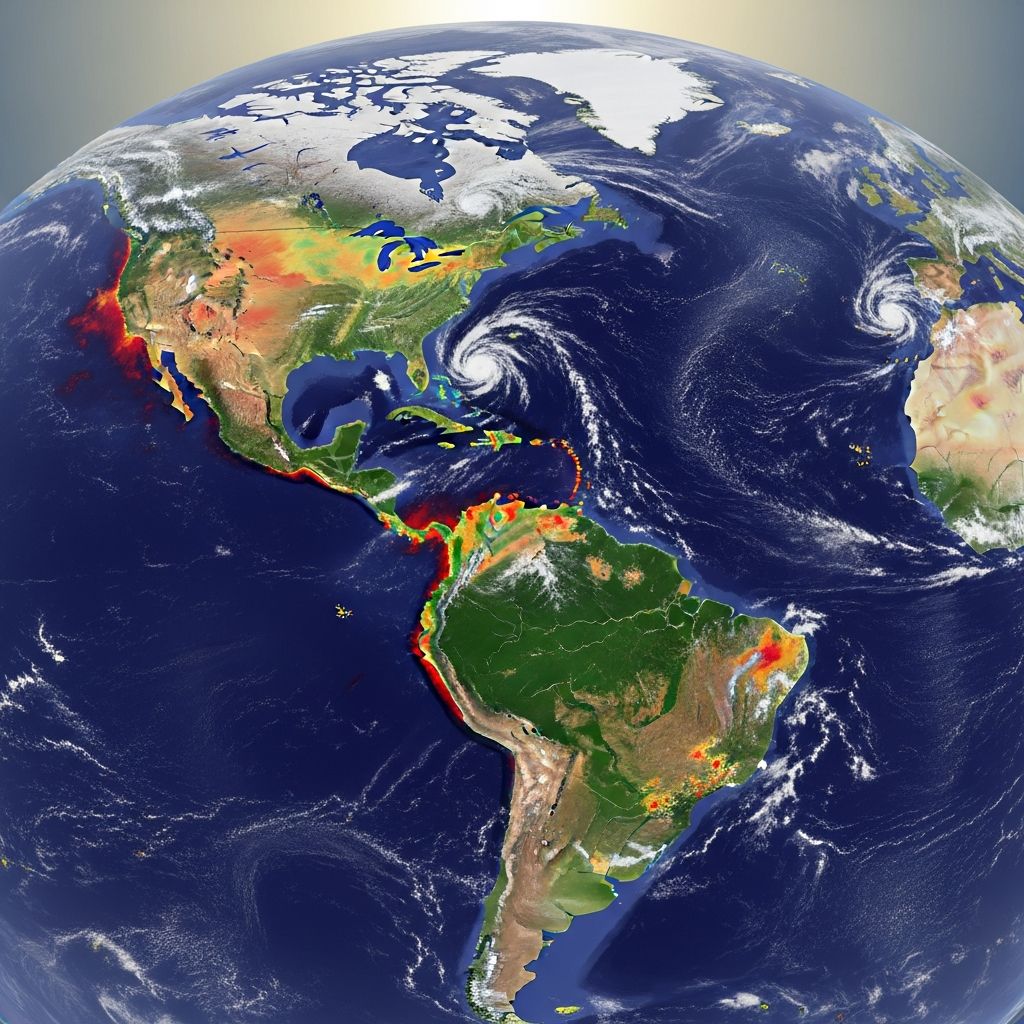
represents a profound disruption in the equatorial Pacific Ocean’s normal state, where trade winds weaken and warm surface waters shift eastward. This triggers cascading effects on atmospheric circulation, rainfall, and temperatures across the globe, making it a cornerstone of climate variability.Normal Conditions in the Equatorial Pacific
Under typical circumstances, steady trade winds blow westward along the equator, piling up warm surface water in the western Pacific near Asia and Australia. This process, called upwelling, draws nutrient-rich cold water from ocean depths to the surface off South America’s coast, fueling rich marine ecosystems and fisheries.
The ocean-atmosphere interplay maintains this balance, with higher atmospheric pressure in the eastern Pacific and lower pressure in the west driving the winds. These conditions support predictable weather: heavy rains in Indonesia and drought-like scenarios in parts of South America.
How El Niño Emerges and Evolves
El Niño begins when these trade winds falter or reverse. Warm water, no longer confined westward, spreads toward the Americas, suppressing upwelling and elevating sea surface temperatures (SSTs) in the central and eastern equatorial Pacific by 0.5°C or more above average.
This warming alters the Walker circulation—a key atmospheric loop over the equator—shifting convection eastward. Thunderstorms brew over the central Pacific instead of the west, reshaping jet streams and global weather teleconnections.
Events typically last 9 to 12 months, peaking in winter, though strong episodes like 1997-1998 or 2015-2016 can persist longer, amplifying disruptions.
El Niño’s Counterpart: La Niña
Opposing El Niño,
La Niña
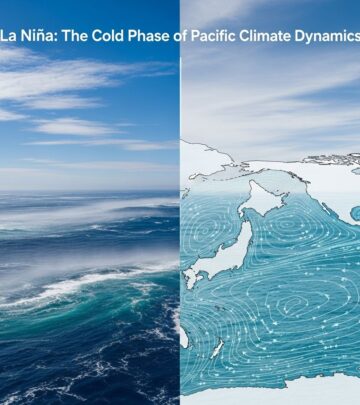
intensifies trade winds, pushing even more warm water westward and boosting upwelling of cold water off South America. SSTs drop below average in the eastern Pacific, strengthening high pressure there and low pressure over Indonesia.Together with neutral phases, these form the El Niño-Southern Oscillation (ENSO) cycle, fluctuating every 2-7 years. La Niña often brings opposite weather effects: intensified droughts in the tropics and wetter conditions along South America’s coasts.
| Aspect | El Niño | La Niña |
|---|---|---|
| Trade Winds | Weaken or reverse | Strengthen |
| Eastern Pacific SST | Warmer than average | Colder than average |
| Upwelling off Americas | Suppressed | Enhanced |
| Rainfall in Indonesia | Drier | Wetter |
| Global Temperature Impact | Often warmer globally | Often cooler globally |
Historical Roots and Discovery
Peruvian fishermen in the 1600s first observed warm coastal waters around Christmastime, dubbing it “El Niño de Navidad”—the Christ Child—due to its timing.
By the 19th century, scientists linked these events to broader Southern Oscillation patterns in atmospheric pressure. Jacob Bjerknes in the 1960s unified ocean and atmosphere dynamics, naming ENSO. Modern monitoring via NOAA’s buoy network tracks conditions precisely.
Ancient records suggest El Niño influenced civilizations, from Moche collapses in Peru to Inca disruptions, via extreme floods or droughts.
Worldwide Weather and Climate Disruptions
El Niño’s reach is vast, altering patterns hemispheres away:
- South America: Heavy rains flood Peru and Ecuador; fisheries crash from nutrient loss.
- North America: Wet winters in California, snow in Southwest U.S.; milder, drier southern states.
- Asia-Pacific: Droughts parch Indonesia, Australia; wildfires rage in Southeast Asia.
- India and Africa: Weak monsoons reduce crops; East African floods intensify.
- Global: Boosts average temperatures, exacerbating heatwaves when overlaid on climate change.
Conversely, La Niña flips these: Atlantic hurricanes surge, U.S. Southwest dries further.
Impacts on Marine Life and Fisheries
The collapse of upwelling starves surface waters of nutrients, decimating plankton, fish stocks like anchovies and sardines off Peru. This cascades to seabirds, sea lions, and commercial fisheries, causing economic losses in billions.
Warmer waters shift species ranges, stressing coral reefs sensitive to bleaching. Recovery takes years post-event.
Economic and Societal Consequences
Agriculture suffers: Indonesian rice yields drop 10-20% from drought; Peruvian crops drown in floods. Insurance claims spike, as in California’s 1998 storms eroding highways.
Energy sectors face droughts curbing hydropower or floods damaging infrastructure. Globally, strong El Niños correlate with $20-50 billion in annual damages.
Monitoring and Forecasting Advances
NOAA’s Tropical Atmosphere Ocean (TAO) array of 70 buoys measures SST, winds, and currents in real-time. Satellites, models like CFSv2 predict events 6-12 months ahead, aiding preparedness.
Indices like Niño 3.4 (SST anomaly in a key Pacific box) classify event strength: weak (+0.5°C), moderate (+1.0°C), strong (+1.5°C), very strong (+2.0°C).
El Niño in a Changing Climate
While ENSO persists naturally, climate change may intensify extremes: warmer baselines amplify El Niño rainfall, potentially pushing global temperatures past 1.5°C thresholds temporarily.
Projections vary; some models suggest more frequent strong events, others no clear trend. Understanding triggers—what flips winds—remains elusive.
Frequently Asked Questions (FAQs)
What causes El Niño to start?
It arises from weakening trade winds allowing warm water to pool eastward, but initial triggers like atmospheric waves are still under study.
How often does El Niño occur?
Roughly every 2-7 years, with variable strength and duration from 9 months to over a year.
Does El Niño always bring the same weather changes?
No, intensity varies; weak events have mild effects, strong ones like 2015-16 cause extremes worldwide.
Can we predict El Niño accurately?
Forecasts succeed 70-80% for strong events up to a year ahead via buoys, satellites, and models.
Is El Niño getting worse due to global warming?
Evidence suggests stronger rainfall extremes, but frequency trends are unclear; it overlays human warming.
References
- What are El Niño and La Niña? — NOAA National Ocean Service. 2023-10-20. https://oceanservice.noaa.gov/facts/ninonina.html
- What is El Niño? — NOAA Pacific Marine Environmental Laboratory. 2024-01-15. https://www.pmel.noaa.gov/elnino/what-is-el-nino
- El Niño–Southern Oscillation — Wikipedia (citing primary sources). 2026-04-01. https://en.wikipedia.org/wiki/El_Ni%C3%B1o%E2%80%93Southern_Oscillation
- What is El Niño? — UC San Diego Today. 2023-11-10. https://today.ucsd.edu/story/what-is-el-nino
- El Niño — NASA Science. 2024-02-28. https://science.nasa.gov/earth/explore/el-nino/
- El Niño & La Niña (ENSO) — NOAA Climate.gov. 2026-03-15. https://www.climate.gov/enso
- What is “El Niño” and what are its effects? — USGS.gov. 2023-05-05. https://www.usgs.gov/faqs/what-el-nino-and-what-are-its-effects
Similar Articles







Read full bio of medha deb