ENTP Strengths and Weaknesses: A Deep Dive
Explore the most common strengths and blind spots of ENTP personalities and learn how to turn both into long-term advantages.
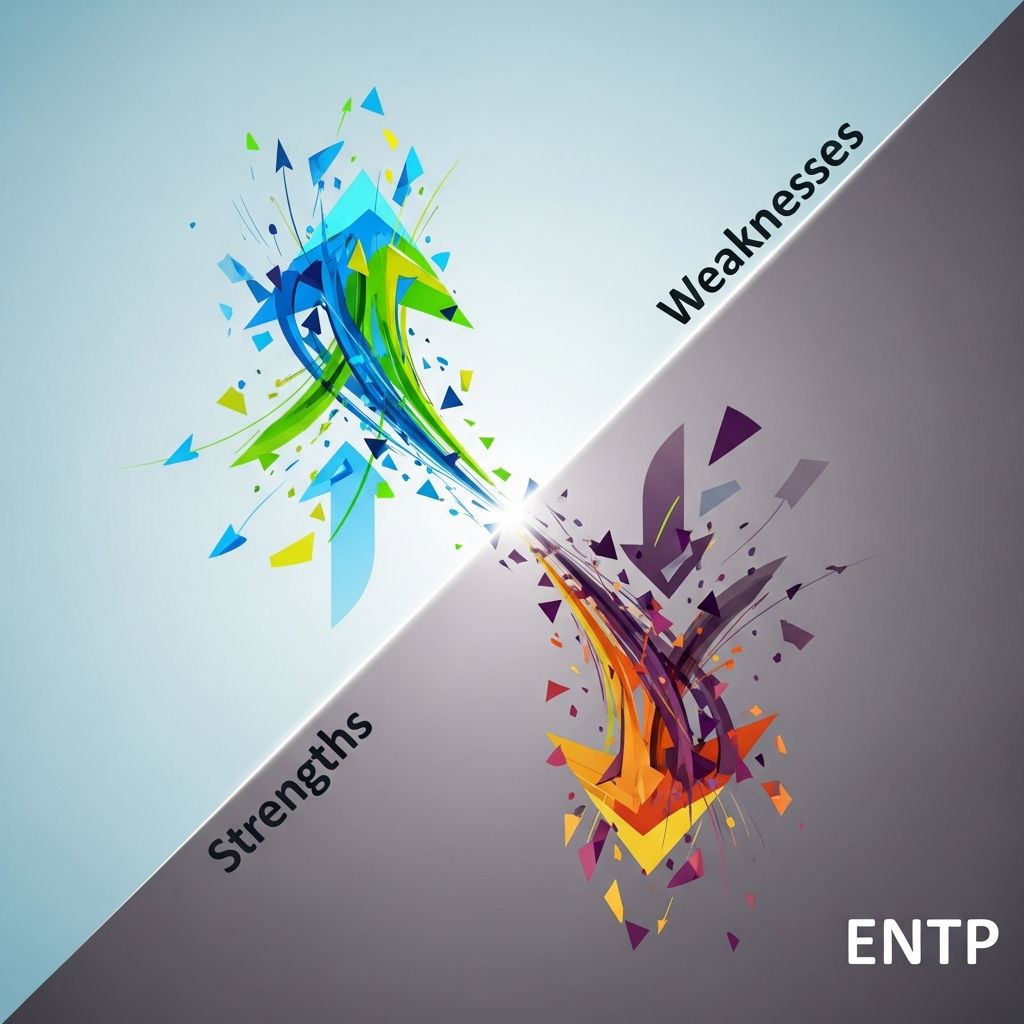
ENTPs are often described as quick-thinking innovators who question everything, challenge assumptions, and bring a contagious sense of possibility into any room they enter. At their best, they are catalysts for change; at their worst, they can be scattered, argumentative, and inconsistent. This article unpacks the core strengths and weaknesses of ENTPs and offers practical, research-informed suggestions for growth.
Understanding the ENTP Personality
The ENTP personality is based on four key preferences from the Myers–Briggs Type Indicator (MBTI): Extraversion, Intuition, Thinking, and Perceiving. In plain language, most ENTPs tend to:
- Gain energy from interaction and conversation with others (Extraversion)
- Focus on patterns, ideas, and future possibilities more than present details (Intuition)
- Prioritize logic and objective analysis when making decisions (Thinking)
- Prefer flexibility and spontaneity to strict plans and routines (Perceiving)
Research on personality suggests that traits related to openness to experience, cognitive flexibility, and extraversion are linked with creativity, idea generation, and adaptability — qualities that strongly overlap with common descriptions of ENTPs.
Signature Strengths of ENTPs
Like any personality type, ENTPs are more than a list of traits. Still, several strengths appear again and again in descriptions, research, and self-reports.
1. Idea Generation and Innovation
ENTPs are often energized by brainstorming and problem reframing. They excel at:
- Spotting unusual connections between concepts
- Seeing alternative angles when others feel stuck
- Imagining future scenarios and potential disruptions
This lines up with their dominant cognitive process, often described as extraverted intuition (Ne), which favors possibilities, patterns, and novel combinations of information. Studies on divergent thinking and creativity have consistently associated openness, cognitive flexibility, and tolerance for ambiguity with higher creative output, which closely matches typical ENTP preferences.
2. Verbal Agility and Persuasion
ENTPs frequently come across as articulate, witty, and persuasive. They tend to:
- Enjoy debate and see it as a sport or intellectual game
- Use humor and wordplay to make complex ideas engaging
- Think on their feet in discussions and presentations
Because they value logical consistency and argument quality, they often argue multiple sides of an issue just to test it, or to sharpen their own thinking. In team settings, this can drive better decision-making by forcing the group to examine assumptions, a behavior often associated with healthy task conflict in organizational research.
3. Adaptability in Changing Environments
ENTPs are typically comfortable with uncertainty and rapid change. They may even prefer dynamic environments over predictable ones. Common patterns include:
- Adjusting quickly to new information or shifting priorities
- Revising plans without strong emotional attachment to the original idea
- Embracing experimentation rather than waiting for perfect data
Research on personality and work behavior suggests that people high in traits linked with openness and extraversion often adapt more easily to organizational change and may be more willing to explore novel solutions.
4. Strategic Problem-Solving
While ENTPs may resist routine tasks, they can be impressive strategic thinkers when a problem engages their curiosity. They often:
- Map out multiple pathways to a goal
- Quickly identify weak spots in existing systems or arguments
- Design creative workarounds when resources are limited
Their preference for logical analysis (Thinking) means that, once they commit to solving a problem, they look for evidence, models, and rational principles to guide their approach.
5. Social Curiosity and Network-Building
Even though ENTPs are more oriented toward ideas than emotions, they often build wide networks almost naturally. Many:
- Enjoy meeting people from very different backgrounds
- Ask probing questions about how others think
- Use mutual interests and shared projects to stay connected
Because they are energized by conversation, they often become informal connectors between different groups or disciplines — a role that research on innovation has linked with higher rates of idea cross-pollination.
Core ENTP Weaknesses and Growth Challenges
The same traits that make ENTPs exciting collaborators can also create friction and stress for them and for the people around them. Below are some of the most common challenges.
1. Difficulty with Follow-Through
One of the most frequently reported struggles for ENTPs is sticking with projects once the initial excitement fades. Typical patterns include:
- Starting many initiatives but finishing only a few
- Losing interest once a problem feels “solved in theory”
- Feeling boxed in by long-term, repetitive tasks
From a research perspective, this reflects a lower preference for conscientiousness-related behaviors such as order and persistence, which are strongly linked to long-term goal completion in personality studies.
2. Argumentativeness and Insensitivity
Because ENTPs enjoy debate, they may unintentionally come across as confrontational or dismissive. This can show up as:
- Challenging ideas in ways that feel personal to others
- Prioritizing being right over preserving rapport
- Underestimating how emotionally invested others are in a topic
Many ENTPs develop emotional awareness later, as they become more experienced with social consequences. Psychological research emphasizes that perspective-taking and empathic communication are learnable skills that can substantially improve conflict outcomes even for highly analytical personalities.
3. Resistance to Structure and Authority
ENTPs often have a strong internal drive for autonomy, which can look like rule-challenging behavior in rigid environments.
- Disliking detailed procedures and strict schedules
- Questioning policies that seem arbitrary or outdated
- Clashing with supervisors who expect unquestioning compliance
While critical thinking about systems is valuable, it can create career friction if not balanced with an understanding of organizational constraints. Workplace studies indicate that people who can both challenge and work within existing structures tend to be more effective change agents than those who resist every constraint.
4. Overextension and Mental Fatigue
ENTPs’ enthusiasm for new ideas and opportunities can lead to overcommitment and eventual burnout, especially when they underestimate the time and energy required to execute their ideas. Common signs include:
- Saying “yes” to too many projects at once
- Jumping between tasks without clear priorities
- Feeling restless yet exhausted, with many unfinished obligations
Research on multitasking and cognitive load shows that frequent task-switching reduces efficiency and increases stress, even for people who feel they are good task jugglers. ENTPs may be particularly tempted to multitask because variety feels stimulating.
5. Struggles with Emotional Nuance
Many ENTPs care deeply about people but are more fluent in ideas than emotions. This can lead to:
- Difficulty recognizing subtle emotional cues
- Offering logical solutions when others want empathy
- Appearing detached or uncaring during emotionally charged discussions
Studies in emotional intelligence suggest that skills like emotion recognition, self-awareness, and regulation can be systematically developed and are strongly associated with better relationship quality and workplace effectiveness.
ENTP Strengths vs. Weaknesses at a Glance
| ENTP Pattern | When It Works as a Strength | When It Becomes a Weakness |
|---|---|---|
| Love of debate | Improves decisions by surfacing hidden assumptions and alternatives | Creates interpersonal conflict when others feel attacked or invalidated |
| Focus on possibilities | Generates innovative solutions and long-term strategies | Leads to neglect of practical details and immediate responsibilities |
| Flexibility and spontaneity | Adapts quickly to change and seizes emerging opportunities | Makes it hard to maintain routines and follow through consistently |
| Logical decision-making | Supports objective, evidence-based choices under pressure | Can feel cold or unfeeling to those who prioritize relational harmony |
| High energy and enthusiasm | Motivates others and brings momentum to new initiatives | Leads to overextension, burnout, or scattered focus if unmanaged |
Growth Strategies for ENTPs
Personality preferences are not fixed destinies. Research-backed approaches to habit change, emotional intelligence, and self-regulation can help ENTPs harness their strengths while softening their rough edges.
1. Build Systems That Protect Your Energy
Instead of trying to “become a completely structured person,” ENTPs usually benefit more from lightweight, flexible systems that support follow-through. Examples include:
- Using a single capture tool (digital or paper) for ideas and tasks
- Setting short, timed work sprints for less interesting tasks
- Limiting the number of active projects at any given time
Research in behavioral science indicates that simple, consistent cues and constraints (such as limiting options or using checklists) can substantially improve completion rates without requiring major personality changes.
2. Practice Collaborative, Not Competitive, Debate
ENTPs rarely intend harm when arguing, but intent and impact can differ. To keep debate constructive:
- Explicitly frame discussions as joint problem-solving, not winning
- Ask permission before challenging sensitive topics
- Summarize the other person’s view accurately before presenting your own
Conflict research shows that focusing on shared goals and validating others’ perspectives reduces defensiveness and improves outcomes, even when disagreements remain.
3. Strengthen Emotional Literacy
Developing emotional skills does not require abandoning logic. Helpful practices include:
- Regularly naming your own emotional state in simple terms
- Asking close friends or partners how your communication style feels to them
- Pausing before offering solutions and asking, “Do you want advice or just understanding right now?”
Studies on emotional intelligence training have found that straightforward interventions — such as labeling emotions, perspective-taking exercises, and reflective journaling — can measurably increase empathy and relationship satisfaction.
4. Pair Vision with Implementation Partners
In work and long-term projects, ENTPs often thrive when they collaborate with people who enjoy structure. To make the most of this:
- Clarify roles: who generates ideas, who creates plans, who tracks progress
- Respect the value of detail-oriented work, even if you don’t enjoy it
- Offer strategic guidance and creative input in return for logistical support
Organizational research on complementary skill sets suggests that teams combining visionary and detail-focused members are more likely to innovate successfully while still meeting deadlines and quality standards.
5. Create Checkpoints for Long-Term Commitments
Because ENTPs’ motivation can fluctuate, it helps to design periodic reviews into long-term commitments:
- Set calendar reminders to reassess ongoing projects every few weeks
- Define what “done” looks like before you begin
- Allow yourself limited, pre-decided exit points rather than impulsively quitting
Habit research indicates that clear criteria and scheduled reflection points improve persistence and help people adjust strategies rather than abandon goals outright.
ENTPs in Work and Relationships
At Work
ENTPs often shine in environments that reward innovation, persuasion, and adaptability — such as entrepreneurship, consulting, strategy, design, or roles involving negotiation and problem-solving.
They tend to be most satisfied when they can:
- Explore new ideas and challenge the status quo
- Interact with diverse people and disciplines
- Maintain a high degree of autonomy in how they work
They may struggle in roles that emphasize strict routines, detailed rule enforcement, or long periods of solitary, repetitive work without visible impact.
In Relationships
In close relationships, ENTPs are often:
- Playful and mentally stimulating companions
- Loyal to partners who appreciate their independence and curiosity
- Motivated to solve relational problems through honest discussion
However, their tendency to debate and their comfort with ambiguity can stress partners who value certainty, emotional reassurance, and stability. Learning to express affection in more direct, consistent ways and to recognize emotional needs even when they are not stated logically can significantly improve relational satisfaction.
Frequently Asked Questions About ENTP Strengths and Weaknesses
Q: Are ENTPs naturally good leaders?
Many ENTPs have leadership potential because they are visionary, persuasive, and comfortable with complexity. Research on leadership and personality highlights extraversion and openness — traits often associated with ENTPs — as modest but reliable predictors of leadership emergence. However, long-term leadership effectiveness also requires conscientiousness and empathy, areas where some ENTPs need deliberate development.
Q: Why do ENTPs start so many projects they never finish?
ENTPs are energized by novelty and by the intellectual challenge of solving problems. Once a project feels mentally “decoded,” their interest can drop sharply, even if no practical results have been delivered yet. This is less about laziness and more about shifting motivation. External structures, clear end points, and collaborative partnerships can help convert ideas into consistent execution.
Q: Are ENTPs incapable of routine and organization?
No. ENTPs are capable of being organized, but rigid, highly detailed systems often feel draining. They tend to do better with simple, outcome-focused structures that preserve flexibility — for example, broad time blocks instead of minute-by-minute schedules, or a short list of top priorities rather than exhaustive task catalogs.
Q: Do ENTPs care about people or only about ideas?
Many ENTPs care deeply about people, but they naturally approach relationships through the lens of understanding and improving systems or perspectives. This can look detached or overly analytical, especially under stress. As they develop emotional insight and communication skills, their genuine concern often becomes more obvious to others.
Q: Can ENTP weaknesses really be changed?
Personality research suggests that basic traits are relatively stable over time, but habits, skills, and typical behaviors are highly adjustable. ENTPs are often particularly responsive to growth efforts because they enjoy experimentation and conceptual frameworks for self-improvement. With consistent practice, they can learn to manage impulsivity, increase follow-through, and communicate with greater emotional nuance without losing their core strengths.
References
- ENTP Personality Type: Debater — Simply Psychology. 2023-08-15. https://www.simplypsychology.org/entp-personality.html
- This Is the ENTP Personality Type: The Flexible, Formidable Socialite — PsychCentral. 2021-10-04. https://psychcentral.com/health/entp-persontality-type
- 10 characteristics of the debater personality type (ENTP) — Calm. 2022-06-10. https://www.calm.com/blog/entp
- ENTP: MBTI® personality profile — The Myers-Briggs Company. 2020-05-01. https://eu.themyersbriggs.com/en/tools/MBTI/MBTI-personality-Types/ENTP
- Personality and Job Performance: The Big Five Revisited — Barrick, Mount & Judge, Journal of Applied Psychology. 2001-02-01. https://doi.org/10.1037/0021-9010.87.1.1
- Trait Emotional Intelligence and Personality — Petrides et al., European Journal of Personality. 2007-01-01. https://doi.org/10.1002/per.682
Similar Articles







Read full bio of medha deb