Goal Setting For Kids: 5 Kid-Friendly SMART Steps
Empower your children with proven strategies to set, pursue, and achieve meaningful goals for lifelong success and confidence.
Goal Setting for Kids: Building Foundations for Future Success
Teaching children the art of goal setting equips them with essential life skills that promote self-discipline, resilience, and a growth mindset. By introducing structured approaches early, parents and educators can help kids transform vague aspirations into tangible achievements, leading to higher confidence and better academic performance.
Why Goal Setting Matters for Young Minds
Goal setting cultivates persistence and responsibility in children, directly linking to improved grades and long-term well-being. Research shows that students who master realistic goal achievement experience lower dropout rates and greater life satisfaction in adulthood. It encourages kids to take ownership of their learning, turning passive participants into proactive learners.
From a psychological perspective, goals provide direction and motivation, helping children navigate challenges with a sense of purpose. When kids see progress, they build intrinsic motivation, reducing reliance on external rewards. This process also strengthens executive functions like planning and self-regulation, critical for success in school and beyond.
Understanding the Basics of Child-Friendly Goals
Start by explaining goals in simple terms: a goal is something a child wants to accomplish, like improving in math or learning a new sport. Use relatable examples to spark interest, such as “I will read three books by the end of summer.” This “I will + what + when” formula empowers kids by making objectives clear and personal.
- Discuss what excites them: sports, hobbies, or school subjects.
- Emphasize that goals should feel important to the child, not imposed by adults.
- Highlight the joy of small wins to build momentum.
Introducing the SMART Framework for Kids
The
SMART
goal framework—Specific, Measurable, Achievable, Relevant, Time-bound—transforms fuzzy ideas into actionable plans. For children, adapt it to be fun and visual, ensuring goals are challenging yet realistic.| SMART Element | Description | Kid-Friendly Example |
|---|---|---|
| Specific | Clear and well-defined | “Practice piano 20 minutes daily” instead of “Get better at music” |
| Measurable | Trackable progress | “Finish 5 math worksheets per week” |
| Achievable | Realistic with effort | “Run 1 mile” if they can already run half |
| Relevant | Matters to the child | “Improve soccer skills to join the team” |
| Time-bound | Has a deadline | “By end of month” |
Guide kids through this by brainstorming together. Vague goals like “Pay more attention in class” fail because they’re untrackable; refine them to “Raise hand 3 times per lesson this week”.
Breaking Down Big Dreams into Manageable Steps
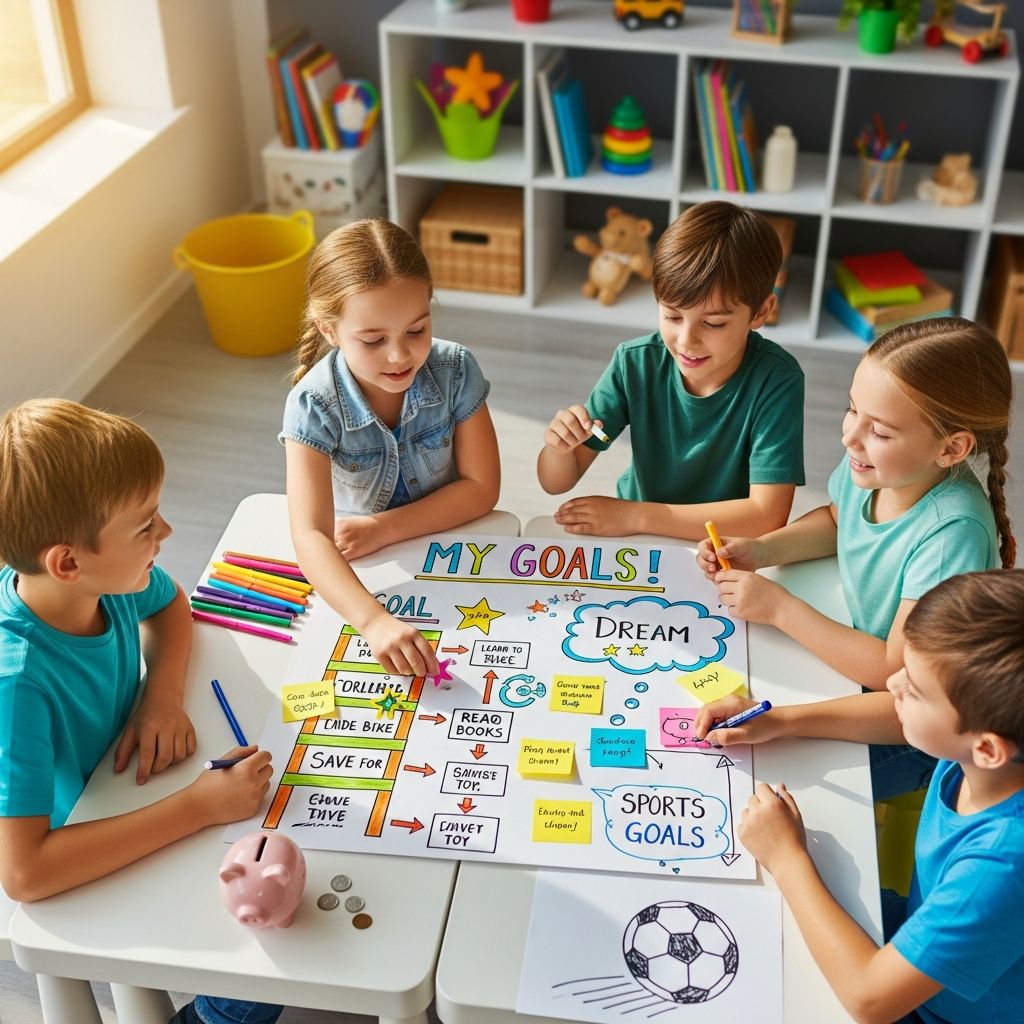
Large goals can overwhelm children, so teach them to divide them into smaller tasks. This “goal ladder” method starts with the end vision at the top and lists steps downward, creating a visual path to success.
For example, if a child’s big goal is “Learn to ride a bike”:
- Watch a parent ride.
- Practice with training wheels.
- Pedal while held.
- Ride alone for 5 minutes.
Each completed rung brings accomplishment and motivation. Regularly review progress during family check-ins to celebrate advances and adjust as needed.
Practical Activities to Make Goal Setting Fun
Engage kids with hands-on activities that blend creativity and structure.
- Vision Boards: Cut pictures from magazines representing dreams; glue onto a board and add steps below.
- Goal Jars: Write tasks on slips, draw one daily, and add marbles for completions toward a reward.
- Progress Charts: Use colorful posters to color in sections as milestones hit, making tracking visual and exciting.
- Role-Play Challenges: Act out obstacles and solutions, like pretending to fall off the bike and trying again.
Incorporate these into daily routines, such as morning goal-setting sessions where kids plan their day and reflect at night.
Overcoming Obstacles: Building Resilience
Setbacks are inevitable, so prepare kids with obstacle planning: “If [problem] happens, then I will [solution].” Common hurdles include frustration or the urge to quit; counter with positive self-talk like “I can do this” or stories of perseverance, such as Thomas Edison’s 10,000 attempts for the lightbulb.
Parents model this by sharing personal goals and struggles aloud. Normalize failure as learning: “What didn’t work? What can we try next?” This fosters a growth mindset, where effort trumps innate talent.
Tracking Progress and Celebrating Wins
Visibility boosts accountability—display goals on walls or apps. Studies indicate tracking raises achievement by 32%, with self-reported expectations showing even higher impact. Weekly reviews help kids see patterns and stay motivated.
Rewards should tie to effort, not just outcomes: a family outing after consistent practice. Writing goals down increases success odds by 42%.
The Power of Modeling and Classroom Integration
Children learn best by imitation, so parents and teachers must demonstrate goal setting daily. Share your “I will + what + when” goals, like “I will exercise 30 minutes three times this week,” and update progress.
In classrooms, make it cultural: class goals like “Read 50 books by spring,” student personal goals reviewed regularly, and reflection time. This builds a community of motivated learners.
Age-Appropriate Strategies Across Development
Tailor approaches by age:
- Ages 4-6: Simple picture-based goals, like drawing stars for tasks done.
- Ages 7-10: Introduce SMART with fun tools; focus on one goal.
- Ages 11+: Independent planning, obstacle forecasting, long-term projects.
Adjust for individual needs, ensuring goals stretch but don’t discourage.
Frequently Asked Questions (FAQs)
How do I motivate a child who gives up easily?
Break goals smaller, use positive self-talk, and share failure stories. Plan for quits in advance with “If I feel like stopping, I’ll take 5 deep breaths and try one more time.”
What’s the best age to start goal setting?
As early as 4, with visuals; by 7, introduce structure. Early habits yield lifelong benefits.
Should rewards be part of goal setting?
Yes, for effort-based milestones, but phase out to build intrinsic drive.
How often should we review goals?
Daily for short-term, weekly for longer ones, adjusting as needed.
Can goal setting help with ADHD or learning challenges?
Absolutely; small steps and visuals aid executive function, with tracking providing clear feedback.
Long-Term Benefits and Final Thoughts
Consistent goal setting instills habits for academic excellence, emotional strength, and adaptability. Kids become self-directed, ready for life’s complexities. Start small today—your guidance lays the groundwork for their triumphs tomorrow.
References
- 5 Ways to Cultivate Goal-Directed Learners in the Classroom — Novak Education. 2023. https://www.novakeducation.com/blog/goal-directed-expert-learners
- 10 Ways to Help Children Learn Goal Setting Skills — Cook Center. 2023. https://cookcenter.org/10-ways-to-help-children-learn-goal-setting-skills/
- 4 Steps for Helping Your Child Set Effective Goals — Big Life Journal. 2023. https://biglifejournal.com/blogs/blog/goal-setting-for-kids
- SMART Goals for Kids and Teens | Goal Setting for Students — Mental Health Center Kids (YouTube). 2023. https://www.youtube.com/watch?v=Q5hR34g3kLc
- Teaching kids effective goal-setting — University of Illinois Extension (.edu). 2023-01-09. https://extension.illinois.edu/blogs/our-illinois-4-h-story/2023-01-09-teaching-kids-effective-goal-setting
Similar Articles








Read full bio of Sneha Tete