Guiding Children to Craft Gratitude Notes
Unlock the power of handwritten gratitude: practical strategies to teach kids thank-you notes that build character and lasting habits.
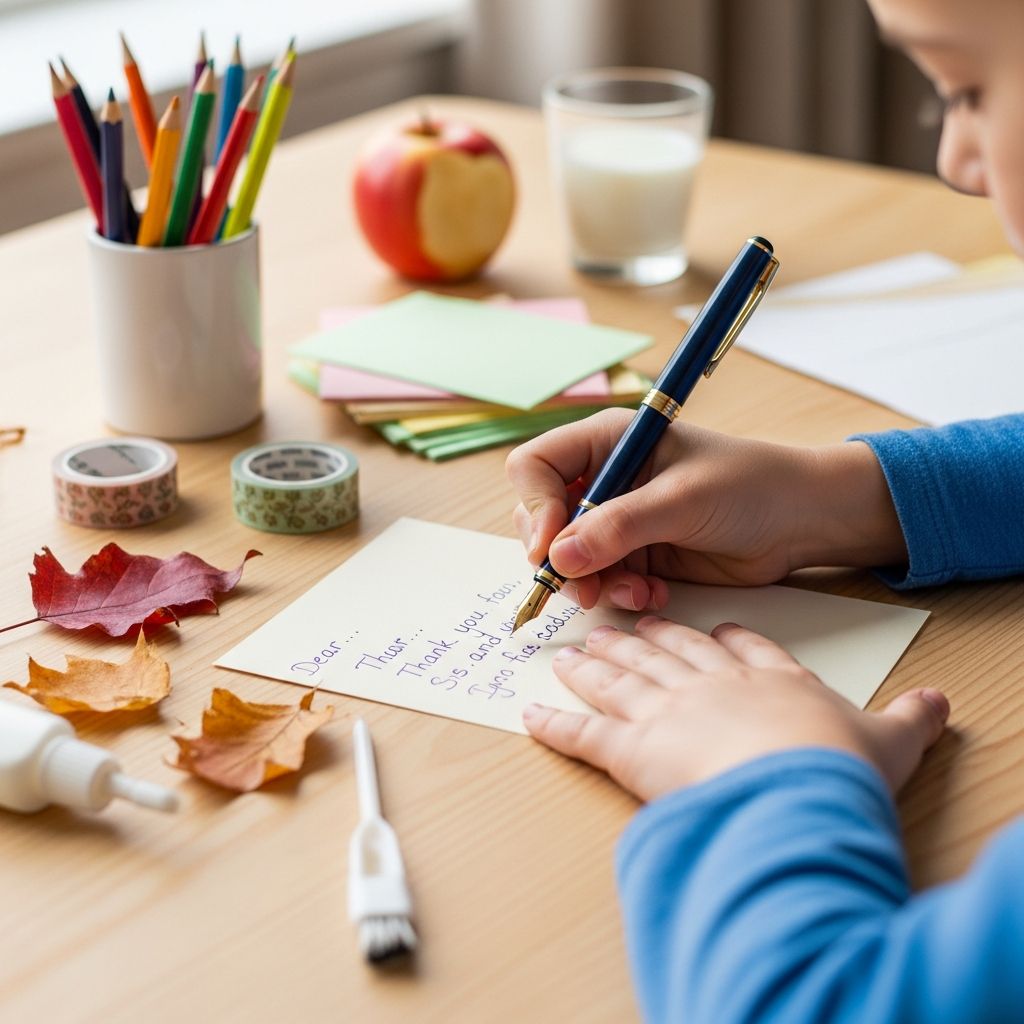
Instilling the habit of writing thank-you notes in children nurtures a profound sense of appreciation and politeness that extends beyond childhood. This simple practice not only refines their communication abilities but also reinforces emotional intelligence by encouraging reflection on kindness received. Parents play a pivotal role in making this a joyful routine rather than a chore, adapting techniques to match each child’s developmental stage.
The Lasting Value of Gratitude in Writing
Handwritten notes of thanks serve as tangible expressions of joy and recognition, strengthening relationships and teaching reciprocity. Research from child development experts highlights how such activities enhance empathy and social awareness, as children learn to articulate specific reasons for their appreciation. In a digital age dominated by quick texts, these personal messages stand out, leaving a memorable impact on recipients like grandparents or teachers.
Moreover, this skill builds foundational writing proficiency. Young learners practice structure, vocabulary, and penmanship while internalizing the importance of follow-through. Families who prioritize this often report improved manners and a heightened awareness of others’ generosity, turning occasional gifts into opportunities for growth.
Establishing Family Rules for Prompt Appreciation
Begin by setting clear household expectations: thank-you notes must be composed soon after receiving a gift or kind gesture. This immediacy keeps the excitement fresh and prevents procrastination. For instance, link the completion of the note to enjoying the gift, such as playing with a new toy only after mailing the note. This natural incentive motivates even reluctant writers.
- Post-event timing: Aim for notes within 48 hours of birthdays, holidays, or visits to capture vivid details.
- Visual reminders: Use a dedicated gratitude board to list recipients and track progress.
- Collective family sessions: Gather everyone to write together, modeling the process and sharing the load.
Tailored Approaches for Young Toddlers
For the youngest children who cannot yet write, focus on creative, non-verbal expressions that convey thanks authentically. These methods build enthusiasm without frustration, laying the groundwork for future literacy.
Encourage drawing as the primary medium. Provide paper divided into art and small writing spaces, where kids illustrate themselves enjoying the gift—a red truck or a favorite doll. Pair this with dictation: let them narrate their thoughts, transcribing exactly as spoken to preserve their unique voice, like “Fank you for da ball, it bounces high!”.
Another engaging option involves photography. Snap pictures of the child with the gift right after the event, print them on cardstock, add the dictated message, and send as postcards. Insist on a personal scribble signature to foster ownership. Stockpile generic drawings in a folder for quick use during busy seasons.
Strategies for Emerging Writers
Children transitioning to basic writing benefit from supportive scaffolds that boost confidence without overwhelming them. Fill-in-the-blank templates simplify the task: prepare cards with phrases like “Dear ___, Thank you for the ___. I love it because ___. Love, ___” allowing personalization of key details.
Supply word banks or prompts on a whiteboard, listing descriptors such as “sparkly,” “fast,” or “cozy.” This aids spelling and idea generation for multiple notes. Rotate prompts per gift to maintain relevance, turning a stack of obligations into manageable steps.
| Template Element | Example Fill-Ins | Benefit |
|---|---|---|
| Greeting | Dear Grandma, | Practices names and politeness |
| Thanks Statement | Thank you for the puzzle. | Directly expresses gratitude |
| Personal Touch | It helps me learn shapes! | Encourages specific reflection |
| Closing | Best wishes, | Teaches formal structure |
Empowering Independent Young Authors
As skills advance, shift to open-ended composition with enticing materials. Offer colorful stationery, gel pens, stickers, and craft supplies to transform writing into a creative adventure. Children often eagerly dive in when they can select scrapbook paper or embellish edges.
Provide structural guidance: remind them of essential parts—greeting, thanks, specific like/reason, closing, and signature. Suggest content ideas, such as future uses for the gift (“I’ll read it every night”) to deepen sincerity. For group thanks, like family-wide appreciation, let each child contribute a line to a shared card.
Advanced Techniques for School-Age Kids and Teens
Older children can handle full notes but may need motivation. Involve them in selecting supplies or themes, like seasonal designs, to increase buy-in. Set rewards, such as a treat post-completion, tailored to their preferences.
Embrace digital alternatives for tech-savvy teens: typed emails, speech-to-text apps, or e-cards with photos. Emphasize specificity—recall a teacher’s patient explanation or a coach’s encouragement—to make messages meaningful. Model by writing your own notes visibly, demonstrating enthusiasm.
- Email template: Subject: Heartfelt Thanks! Body mirrors handwritten structure.
- Video thanks: Short clips showing gift in use, followed by mailed card.
- Group projects: Class notes to sponsors, dividing tasks.
Overcoming Resistance and Building Habits
Common hurdles include boredom or perfectionism. Counter with short sessions, fun music playlists, and paired writing where you compose alongside. Track progress visually and celebrate mailings as milestones.
Expand beyond gifts: thank teachers, librarians, or playdate hosts. Maintain a running list to heighten awareness of daily kindnesses, fostering a grateful mindset. Consistency yields independence; soon, children initiate notes unprompted.
Sample Note Progressions by Age
| Age Group | Key Method | Example Note |
|---|---|---|
| 2-4 Years | Drawing + Dictation | Picture of toy + “Tank you! Fun!” |
| 5-7 Years | Fill-in-Blanks | “Dear Aunt, Thank you for the book. I like the pictures. Love, Sam” |
| 8+ Years | Free Write | “Hi Uncle! The bike is awesome—can’t wait to ride it with friends. Thanks!” |
Frequently Asked Questions
What if my child refuses to write notes?
Start small with one note, use incentives, and model the joy yourself. Gradually increase expectations as they experience positive feedback.
Are digital notes acceptable?
Yes, especially for teens; they maintain sincerity if personalized. Combine with handwritten for special occasions.
How many notes are enough?
Prioritize meaningful ones—gifts, hospitality, help. Quality trumps quantity.
Can this improve school writing?
Absolutely; it practices structure, vocabulary, and purpose-driven composition.
When to start?
As early as age 2 with drawings, evolving with skills.
Long-Term Benefits for Character Development
Regular practice cultivates lifelong gratitude, better relationships, and resilience. Children who master this art become thoughtful adults, perpetuating the cycle. Families report stronger bonds and prouder moments when kids independently express thanks.
References
- Teaching Kids to Write Thank You Notes — The Unlikely Homeschool. 2012-07-01. https://www.theunlikelyhomeschool.com/2012/07/teaching-kids-to-write-thank-you-notes.html
- How to Teach Kids the Art of Writing Thank You Notes — Parent Cue. N/A. https://theparentcue.org/how-to-teach-kids-the-art-of-writing-thank-you-notes/
- The Unexpected Magic of Thank You Notes: 9 Strategies to Help Kids Get Started — MGH Clay Center. N/A. https://www.mghclaycenter.org/parenting-concerns/thank-you-notes-strategies-to-help-kids-get-started/
- How to Teach Kids Write Thank-You Notes — Connections Academy. N/A. https://www.connectionsacademy.com/support/resources/article/how-to-teach-kids-write-thank-you-notes/
- Should Your Kids Send Thank You Notes?: The Joy/Job of Gratitude — Lucie’s List. N/A. https://www.lucieslist.com/should-your-kids-send-thank-you-notes-the-joy-job-of-gratitude/
Similar Articles





Read full bio of Sneha Tete