Human Body Cells: Types and Functions
Discover the diverse cell types in the human body, their unique structures, and vital roles in maintaining life and health.
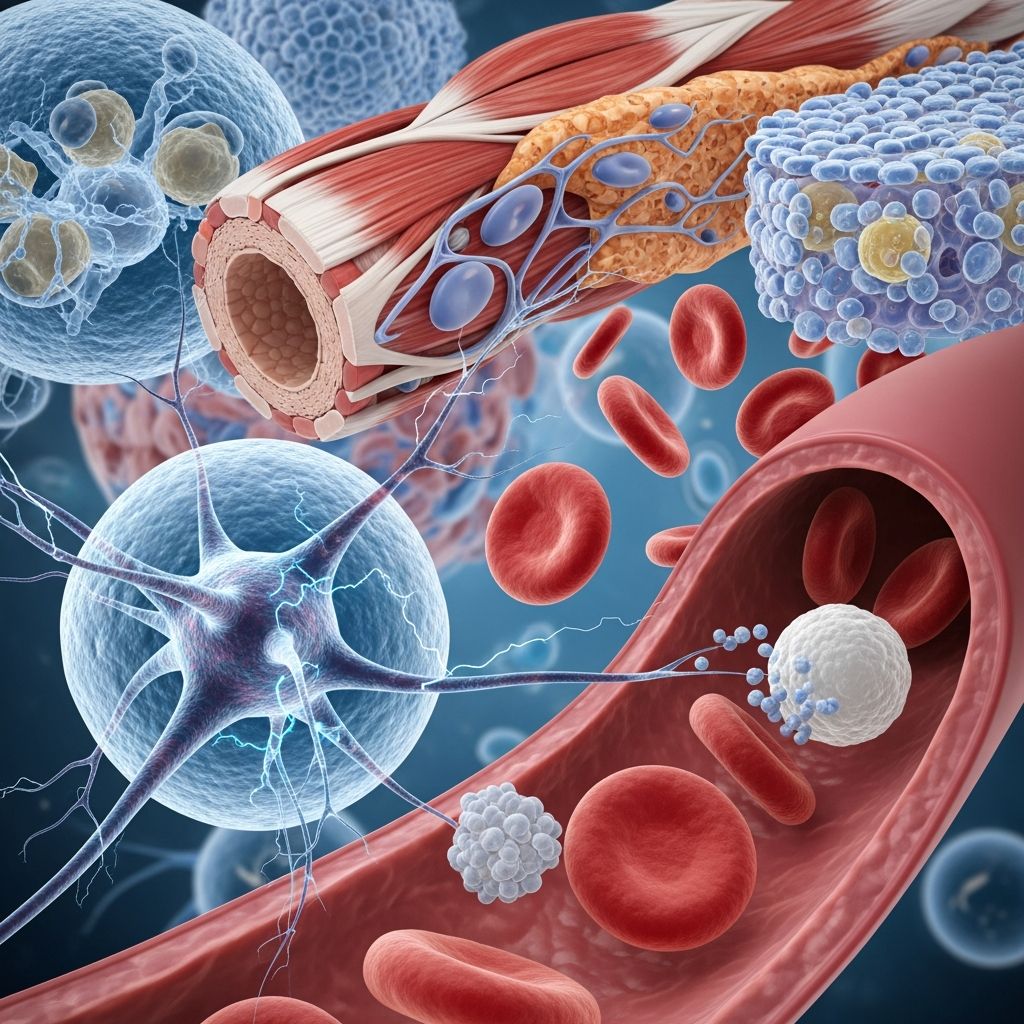
The human body contains trillions of cells, estimated at around 30 trillion, organized into approximately 200-215 distinct types that perform specialized tasks to sustain life. These cells form the foundation of all tissues and organs, working together in harmony to enable breathing, movement, thinking, and defense against threats. Understanding these cellular building blocks reveals the intricate machinery behind human physiology.
Foundational Cells: Stem Cells and Their Versatility
At the core of cellular diversity are
stem cells
, which possess the remarkable ability to develop into multiple specialized cell types. There are primarily two categories: embryonic stem cells, derived from early-stage embryos, and adult stem cells, found in various tissues throughout the body. Embryonic stem cells are pluripotent, meaning they can differentiate into any cell type, making them invaluable for research into regenerative medicine. Adult stem cells, often multipotent, reside in bone marrow, skin, and other organs, replenishing damaged or lost cells to maintain tissue integrity.These cells are crucial for growth, repair, and regeneration. For instance, hematopoietic stem cells in the bone marrow continuously produce blood cells, ensuring a steady supply for oxygen transport and immune responses. Recent studies highlight their potential in treating conditions like leukemia through bone marrow transplants, underscoring their therapeutic promise.
Blood Cells: Carriers of Life and Immunity
**Blood cells** dominate the body’s cellular population, with erythrocytes (red blood cells) comprising about 84% of all cells, totaling around 25 trillion. These biconcave discs, lacking nuclei, are optimized for oxygen transport via hemoglobin, traveling through veins and arteries to nourish tissues. Their short lifespan of 120 days necessitates constant renewal in the bone marrow.
Complementing them are
white blood cells
(leukocytes), numbering about 1.5% of total cells, which form the immune system’s frontline. Divided into granulocytes (neutrophils, eosinophils, basophils) and agranulocytes (lymphocytes, monocytes), they combat infections. Neutrophils, the most abundant at 65%, phagocytose bacteria, self-destructing after action. Lymphocytes, including T-cells and B-cells, orchestrate adaptive immunity by targeting specific pathogens.**Platelets**, cell fragments from megakaryocytes, account for 4.9% of cells and are essential for clotting, preventing blood loss from injuries. Disruptions in these cells lead to anemias, immunodeficiencies, or bleeding disorders, highlighting their critical balance.
Muscle Cells: Engines of Movement and Contraction
**Muscle cells**, or myocytes, enable motion, heartbeat, and organ function through contraction via actin and myosin proteins. There are three main types: skeletal, cardiac, and smooth.
| Type | Location | Characteristics | Function |
|---|---|---|---|
| Skeletal | Attached to bones | Multinucleated, striated, voluntary control | Body movement |
| Cardiac | Heart walls | Branched, striated, involuntary, intercalated discs | Pumping blood |
| Smooth | Organs (e.g., intestines, blood vessels) | Spindle-shaped, non-striated, involuntary | Peristalsis, vessel constriction |
Skeletal muscle cells, like slow-twitch red fibers for endurance and fast-twitch white for power, derive from mesoderm. Cardiac cells ensure rhythmic contractions via gap junctions, while smooth cells regulate digestion and blood flow. Damage here contributes to conditions like heart failure or digestive disorders.
Nervous System Cells: Communication and Support
The nervous system relies on
neurons
andneuroglial cells
. Neurons, about 0.6% of body cells alongside glia, transmit electrical impulses across vast networks. Composed of a cell body, dendrites, and axon, they facilitate sensation, thought, and action.Outnumbering neurons 10:1, glial cells provide structural support, insulation (myelin from oligodendrocytes), and nourishment. Astrocytes regulate the blood-brain barrier, while microglia act as phagocytes, clearing debris. These cells enable rapid signaling essential for reflexes and cognition.
Skeletal and Connective Tissue Cells: Structure and Strength
**Bone cells** maintain the skeleton’s rigidity and mineral balance. Osteoblasts build bone matrix, osteoclasts resorb it for remodeling, osteocytes sense stress to trigger growth, and lining cells manage calcium release. This dynamic equilibrium supports weight-bearing and protects organs.
**Cartilage cells** (chondrocytes) produce flexible matrices in joints and airways, resisting compression. Disruptions lead to osteoporosis or arthritis. Fat cells, or adipocytes, store energy: white for long-term reserves, brown for heat generation.
Skin and Barrier Cells: Protection and Sensation
**Skin cells** form the body’s largest organ. Keratinocytes produce keratin for waterproofing, melanocytes pigment for UV protection, Merkel cells sense touch, and Langerhans cells present antigens. Epidermal cells make up 0.5% of total.
**Endothelial cells** line blood vessels (2.1% of cells), regulating flow and permeability. Epithelial cells cover cavities, aiding absorption and secretion.
Reproductive and Specialized Cells: Continuity and Secretion
**Sex cells** ensure reproduction: spermatozoa (sperm) with flagella for motility, and ova (eggs), large nutrient-rich spheres. Glandular cells secrete hormones or enzymes; endocrine types release into blood (e.g., thyroid), exocrine via ducts (e.g., sweat glands).
Sensory cells in eyes, ears detect stimuli, converting to nerve signals. Phagocytic cells like macrophages engulf pathogens, while ion-transporting cells maintain electrolyte balance.
Cell Abundance and Distribution
Cell counts vary dramatically: erythrocytes dominate at 84%, followed by platelets (4.9%), bone marrow (2.5%), and endothelial (2.1%). Hepatocytes (liver, 0.8%) detoxify, bronchial cells aid respiration. This distribution reflects functional demands.
Frequently Asked Questions (FAQs)
What is the most common cell type in the human body?
Red blood cells (erythrocytes) are the most abundant, making up 84% of all cells due to their role in oxygen transport.
How many different cell types exist in humans?
Experts estimate around 200-215 types, categorized into tissues like epithelial, connective, muscle, and nervous.
What do stem cells do?
Stem cells differentiate into specialized cells for growth, repair, and regeneration, with embryonic types being pluripotent and adult multipotent.
Why are white blood cells important?
They defend against infections via phagocytosis (neutrophils) and adaptive immunity (lymphocytes).
How do muscle cells contract?
Actin and myosin filaments slide past each other in a process described by the sliding filament theory.
Advances in Cell Research and Future Implications
Modern histology and genomics reveal cellular intricacies, fueling therapies like CAR-T cells for cancer, targeting tumors via engineered lymphocytes. Induced pluripotent stem cells (iPSCs) bypass ethical issues, reprogramming adult cells for personalized medicine. Understanding cell categories—stem, phagocytic, contractile—paves the way for regenerative treatments for diabetes (beta islet cells) or neurodegeneration (dopaminergic neurons).
Challenges remain, including senescence (cell aging) and malignancies, where uncontrolled division disrupts harmony. High-resolution imaging and single-cell sequencing continue to map this diversity, promising breakthroughs in longevity and disease eradication.
References
- Types of cells in the human body: Histology — Kenhub. 2023. https://www.kenhub.com/en/library/anatomy/types-of-cells-in-the-human-body
- List of human cell types — Wikipedia (informed by primary sources). 2023-10-01. https://en.wikipedia.org/wiki/List_of_human_cell_types
- Different Cells of the Human Body: Categories and Morphological — PMC (NCBI). 2022-06-28. https://pmc.ncbi.nlm.nih.gov/articles/PMC9272693/
- Cells – Special Subjects — Merck Manual Consumer Version. 2023. https://www.merckmanuals.com/home/special-subjects/the-human-body/cells
- The cell: Types, functions, and organelles — Medical News Today. 2023-05-12. https://www.medicalnewstoday.com/articles/320878
- Cell Structure — SEER Training (National Cancer Institute). 2023. https://training.seer.cancer.gov/anatomy/cells_tissues_membranes/cells/structure.html
- The Wide World of Cells — Cedars-Sinai. 2022. https://www.cedars-sinai.org/stories-and-insights/innovation-and-research/wide-world-of-cells
Similar Articles








Read full bio of Sneha Tete