ISFP Strengths and Weaknesses Unpacked
Explore the core strengths and blind spots of ISFP personalities, and learn how Adventurers can use both for growth.
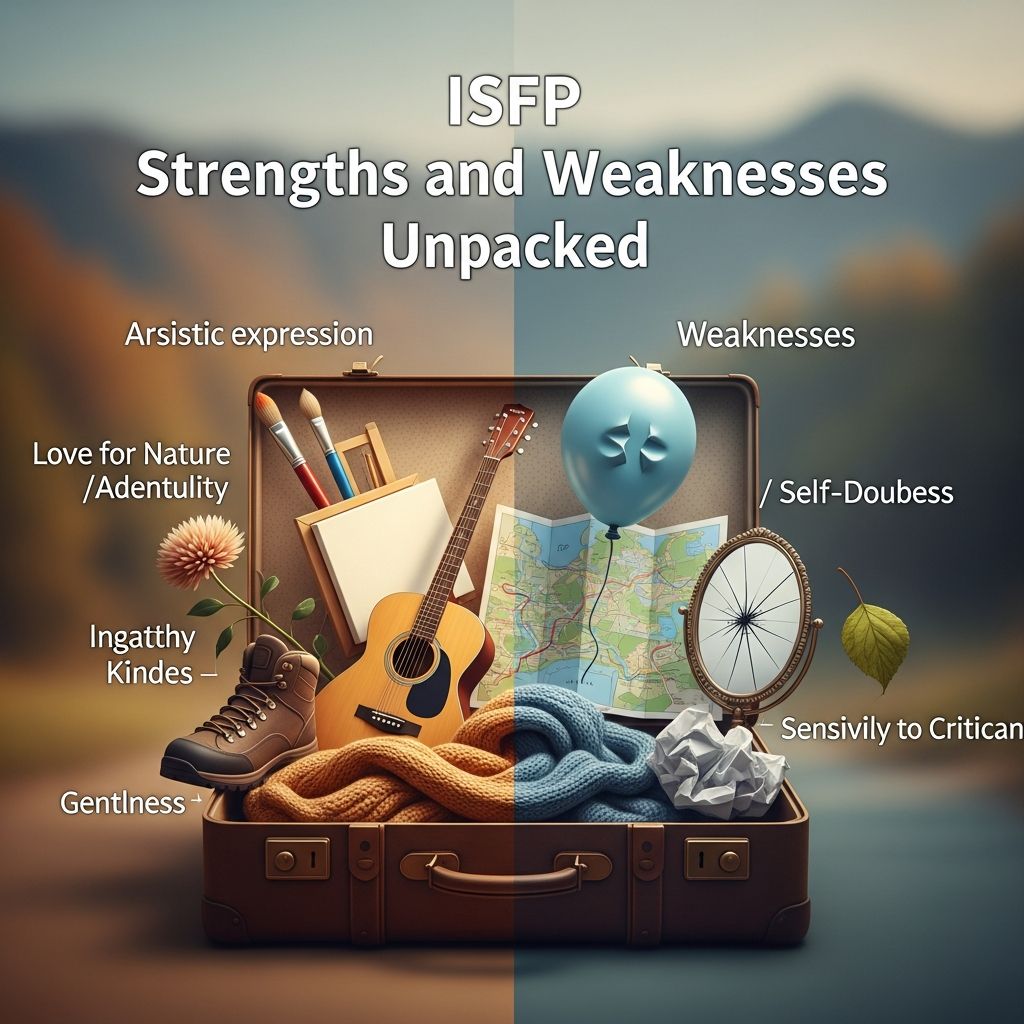
ISFP Strengths and Weaknesses: A Practical Guide for Adventurers
ISFP personalities, often called Adventurers, blend quiet sensitivity with a vivid inner creativity. They are typically gentle, observant, and present-focused, with a strong desire to live authentically and in harmony with their values. This article explores the major strengths and weaknesses of ISFPs and shows how these traits play out in daily life, work, and relationships.
Understanding the ISFP Blueprint
The ISFP type comes from the Myers–Briggs framework and stands for Introverted, Sensing, Feeling, Perceiving. While the model is not a clinical tool, it is widely used in career development and self-reflection.
- Introverted (I): Energized by solitude and reflection; social but in measured doses.
- Sensing (S): Attuned to concrete details, sensory experiences, and the here-and-now.
- Feeling (F): Prioritizes personal values, harmony, and the emotional impact of decisions.
- Perceiving (P): Prefers flexibility, spontaneity, and keeping options open rather than strict plans.
Together, these preferences often create a person who is gentle, adaptable, observant, and deeply value-driven.
Core ISFP Strengths
ISFP strengths often center around their warm hearts, artistic eye, and flexible approach to life. These gifts can make them powerful contributors in relationships, creative work, and people-focused roles.
1. Deep Sensitivity and Empathy
ISFPs are typically attuned to the emotions of others and notice subtle shifts in tone, body language, and atmosphere. This sensitivity allows them to offer support in ways that feel respectful and non-intrusive.
- They often sense unspoken needs and respond with quiet, practical help rather than big speeches.
- They value fairness and kindness, striving to avoid causing harm or discomfort.
- Their nonjudgmental stance can make them safe confidants for friends and colleagues.
2. Creative and Aesthetic Insight
ISFPs often have a strong aesthetic sense and a desire to bring beauty, harmony, or personal meaning into their surroundings. This does not always mean traditional “artistic” careers; it can appear in how they cook, decorate, dress, or solve problems.
- They tend to notice colors, textures, sounds, and subtle sensory details that others overlook.
- They often experiment—trying new approaches, designs, or experiences simply because they feel inspired.
- They are good at making abstract values tangible, for example through design, music, or thoughtful gestures.
3. Adaptability and Flexibility
ISFPs usually prefer to stay open and respond to the moment rather than lock themselves into rigid plans.
- They can adjust to changing circumstances and are often calm under day-to-day disruptions.
- They are comfortable exploring different paths rather than insisting on a single fixed method.
- Their easygoing nature can reduce tension in teams and relationships.
4. Quiet Courage and Strong Personal Values
Despite their gentle demeanor, many ISFPs have firm internal standards. They may not argue loudly, but they care deeply about authenticity, fairness, and respect.
- They are often willing to walk away from situations that violate their core values, even at personal cost.
- They prefer to live in alignment with what feels right rather than simply following convention.
- They tend to respect differences, making them inclusive and open-minded.
5. Practical Care and Support
ISFPs often show love through concrete, hands-on help rather than long explanations.
- They may cook a favorite meal, run errands, or fix something small to ease another person’s burden.
- They enjoy being useful in down-to-earth ways, especially for people they care about.
- This blend of practicality and warmth makes them well-suited to helping professions such as healthcare or service roles.
Key ISFP Weaknesses and Blind Spots
The same traits that make ISFPs compassionate and flexible can also create challenges. Understanding these patterns helps ISFPs and those around them respond with more clarity and less frustration.
1. Dislike of Structure and Long-Term Planning
Many ISFPs strongly prefer freedom and spontaneity over detailed planning and strict rules.
- They may resist schedules, procedures, or policies that feel limiting or impersonal.
- They can struggle with long-term commitments that require consistent, structured effort.
- Important tasks—like financial planning, career progression, or long-range projects—may be postponed until they become urgent.
Over time, this can create avoidable stress in areas like finances, study, or career development.
2. Difficulty with Conflict and Criticism
Because ISFPs are emotionally sensitive, criticism or tension can feel intensely personal.
- They may interpret blunt feedback as rejection, even when the intent is constructive.
- They often avoid open conflict, choosing to withdraw rather than confront problems directly.
- Unresolved issues can quietly accumulate until they feel overwhelmed or suddenly leave a situation.
3. Tendency to Keep Feelings Private
Although ISFPs feel deeply, they often share selectively and only after trust is established.
- Others may misread their quietness as disinterest or emotional distance.
- They may expect loved ones to just know what they are feeling without clearly stating it.
- Important needs can remain unspoken until frustration or burnout appears.
4. Living Too Much in the Present
ISFPs excel at experiencing the current moment, but this strength can turn into a weakness when the future is consistently neglected.
- They may prioritize what feels meaningful now over obligations that pay off later, such as savings or formal qualifications.
- They can lose interest quickly in routines that lack immediate significance.
- Opportunities may quietly pass by because they delay key decisions.
5. Risk of Stress, Overwhelm, or Shutdown
Under sustained pressure, ISFPs may feel emotionally overloaded and shut down to protect themselves.
- They may become unusually withdrawn, irritable, or indecisive.
- Creativity and warmth can temporarily disappear, replaced by numbness or pessimism.
- Highly competitive, fast-paced, or confrontational environments are particularly draining.
How ISFP Strengths and Weaknesses Interact
Many ISFP traits are two sides of the same coin. The table below shows how a strength can become a liability when taken to an extreme.
| Core Trait | When It Works as a Strength | When It Becomes a Weakness |
|---|---|---|
| Emotional sensitivity | Deep empathy, thoughtful support, and strong moral awareness. | Taking criticism personally, avoiding necessary conflict. |
| Present-moment focus | Ability to enjoy life now, notice details, and stay grounded. | Neglecting long-term planning, procrastinating on future-oriented tasks. |
| Flexibility | Adaptable, easygoing, and responsive to change. | Difficulty committing, inconsistency with goals or habits. |
| Loyalty to personal values | Authenticity, integrity, and quiet courage. | Walking away rather than negotiating, struggling in value-clashing workplaces. |
| Practical helpfulness | Hands-on support and reliable care for others. | Overextending themselves, neglecting their own needs. |
Using ISFP Strengths Intentionally
When ISFPs consciously lean into their gifts, they can create environments that suit their temperament and values.
- Leverage sensory awareness: Work in roles where attention to detail, aesthetics, or hands-on skill is valued (e.g., design, crafts, healthcare, hospitality).
- Build value-aligned routines: Connect daily habits (like budgeting or studying) to what matters emotionally—such as independence, helping others, or creative freedom.
- Use empathy in leadership: Even in informal roles, ISFPs can set a tone of respect and gentleness that improves group morale.
Managing Common ISFP Challenges
A few targeted strategies can help ISFPs balance their natural style with practical realities.
1. Add Gentle Structure to a Flexible Life
- Create lightweight systems—simple checklists, calendar reminders, or short daily planning sessions.
- Think in short time frames (today, this week) rather than very long-range plans, then repeat consistently.
- Pair up with a friend or partner who enjoys planning and can help with accountability.
2. Practice Direct but Kind Communication
- Use “I” statements: “I feel overwhelmed when…” instead of blaming language.
- Start with small, low-stakes conversations to build confidence in speaking up.
- Write thoughts down before difficult discussions to clarify what really matters.
3. Protect Emotional Energy
- Schedule regular alone time to decompress after social or work demands.
- Identify early signs of overload (tension, irritability, numbing out) and slow down when they appear.
- Seek environments with collaborative, low-drama cultures whenever possible.
4. Grow Comfort with Feedback
- Mentally separate your worth from your performance in a given task.
- Ask clarifying questions: “Can you give a concrete example?” to transform vague criticism into usable information.
- Remember that thoughtful feedback can protect your values by making your work more effective.
ISFP Strengths and Weaknesses at Work
Research from organizations that publish and apply the MBTI framework suggests that ISFPs tend to enjoy supportive, people-oriented, and practical work environments.
- They often thrive in roles involving direct service, healthcare, or hands-on craftsmanship, where they can help others in tangible ways.
- They dislike workplaces that are highly competitive, rigidly structured, or focused only on metrics without regard for people.
Common workplace strengths include:
- Building trust quietly over time.
- Creating a calm, human atmosphere in their teams.
- Noticing practical improvements that make life easier for colleagues or customers.
Common challenges include:
- Discomfort with strict deadlines and heavy bureaucracy.
- Reluctance to compete for promotions or advocate for themselves.
- Strain in roles that require constant verbal persuasion, confrontation, or high-pressure sales.
Relationships: How Strengths and Weaknesses Show Up
In close relationships, ISFPs are typically warm, loyal, and attentive, but they also need space and emotional safety.
- They show care through small, thoughtful acts more than through long verbal declarations.
- They value mutual respect, low drama, and acceptance of each person’s individuality.
- They may withdraw if a relationship becomes controlling, critical, or chronically conflictual.
Partners, friends, and family can support ISFPs by:
- Offering feedback gently and privately.
- Allowing alone time without taking it personally.
- Encouraging—but not forcing—discussions about feelings and future plans.
Frequently Asked Questions about ISFP Strengths and Weaknesses
Q1: Are all ISFPs artistic or creative?
Not all ISFPs work in the arts, but many express creativity in some form—through style, hobbies, problem-solving, or how they shape their environment. Creativity for ISFPs is often about making something feel more authentic, beautiful, or humane, whether or not it is labeled as “art.”
Q2: Why do ISFPs sometimes seem indecisive?
ISFPs often like to keep options open and respond to how they feel in the moment rather than commit too early. This can look like indecision, especially around long-term plans, but internally they may be weighing how each option aligns with their values and desired lifestyle.
Q3: Are ISFP weaknesses permanent, or can they change?
ISFP preferences are relatively stable, but behaviors are very flexible. With awareness and practice, ISFPs can learn skills such as planning, assertive communication, and stress management while still honoring their natural style. The goal is not to become a different type but to use their strengths more deliberately and soften the impact of their blind spots.
Q4: What kinds of careers make good use of ISFP strengths?
ISFPs often thrive where they can help others directly, work with tangible results, and have some flexibility—such as healthcare, social services, design, skilled trades, and certain roles in education or hospitality. Supportive cultures that value cooperation over cut-throat competition tend to fit them best.
Q5: How can someone support an ISFP partner or friend during stress?
Offer calm presence, practical help, and a judgment-free space to decompress. Avoid pressuring them for instant decisions. Gentle questions, quiet time together, and small, concrete gestures of support usually help more than intense problem-solving conversations at first.
References
- ISFP Personality Type: 10 Characteristics of the Adventurer — Calm. 2023-03-15. https://www.calm.com/blog/isfp
- Strengths & Weaknesses: ISFP Personality (Adventurer) — 16Personalities. 2023-05-10. https://www.16personalities.com/isfp-strengths-and-weaknesses
- ISFP Personality (Adventurer) — 16Personalities. 2023-05-10. https://www.16personalities.com/isfp-personality
- ISFP Personality Type Characteristics, Careers and Tips — MBTIonline (The Myers-Briggs Company). 2022-11-01. https://www.mbtionline.com/en-US/MBTI-Types/ISFP
- ISFP: MBTI Personality Profile — The Myers-Briggs Company (EU). 2022-10-10. https://eu.themyersbriggs.com/en/tools/MBTI/MBTI-personality-Types/ISFP
- All About the ISFP Personality Type — Truity. 2022-08-20. https://www.truity.com/blog/personality-type/isfp
Similar Articles








Read full bio of medha deb