Mastering Love in Japanese Kanji: Ai, Koi and Beyond
Unlock the nuances of expressing love through Japanese kanji like 愛 and 恋, with stroke orders, vocabulary, and cultural insights for learners.
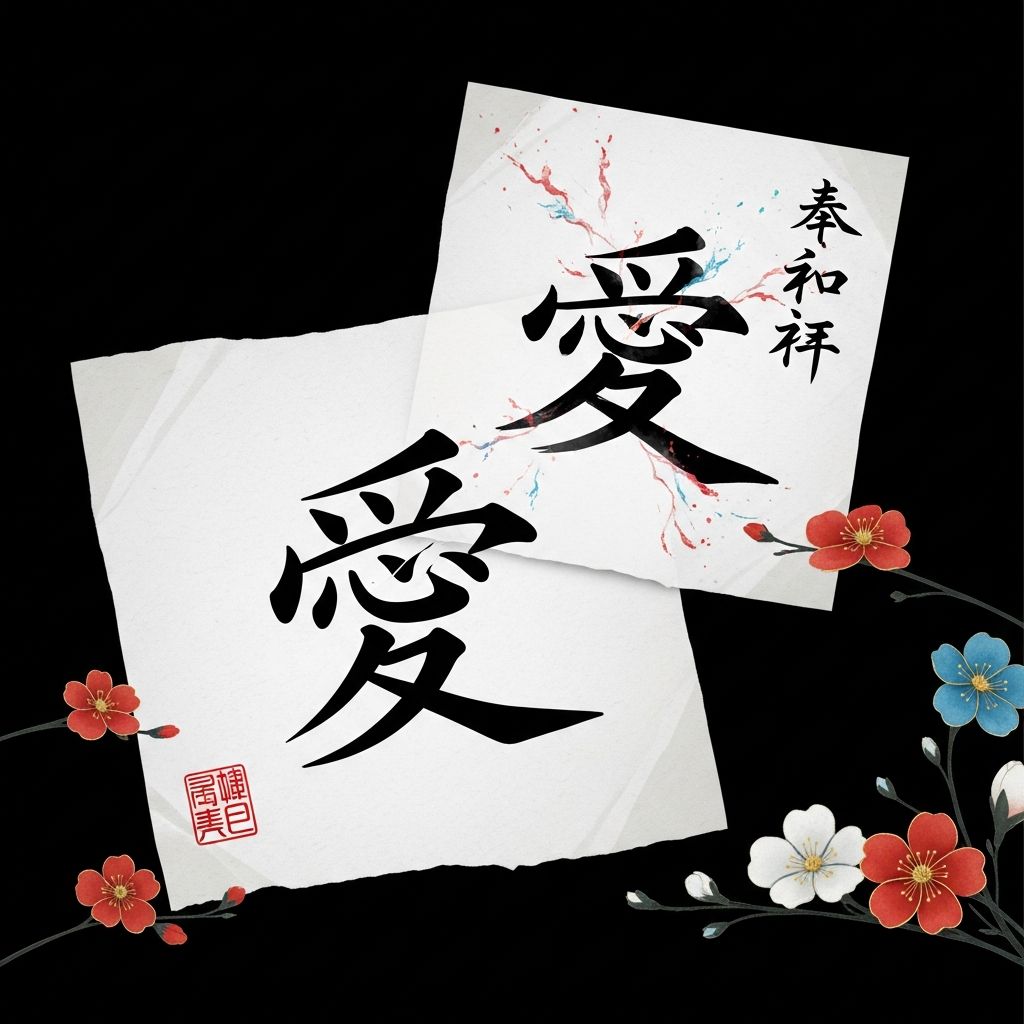
Japanese offers a rich palette of characters to convey emotions, particularly love, through its kanji system. Unlike English’s singular ‘love,’ Japanese distinguishes between casual liking, passionate romance, and profound affection using specific kanji like 愛, 恋, and related terms. This guide explores their origins, stroke orders, readings, vocabulary, and cultural roles, helping learners express heartfelt sentiments accurately.
The Essence of Love Kanji in Japanese Culture
Love in Japan transcends simple romance; it encompasses familial bonds, national pride, and personal passions. Kanji like 愛 (ai) represent enduring care, while 恋 (koi) captures fleeting desire. These characters appear in literature, tattoos, names, and daily speech, reflecting Japan’s nuanced emotional vocabulary.
Historically, kanji evolved from Chinese pictographs, adapted to Japanese sensibilities. Love-related kanji often incorporate the ‘heart’ radical (心), symbolizing emotional depth. Understanding these helps learners avoid mistranslations, such as confusing casual ‘suki’ with deep ‘ai.’
Dissecting 愛: The Kanji for Deep, Enduring Love
愛 (ai) stands as the primary kanji for profound, unconditional love. Comprising 13 strokes, it ranks as the 287th most common kanji, taught in grade 4 and essential for JLPT N3. Its structure blends elements suggesting protection and nurturing.
Stroke Order and Composition of 愛
Writing 愛 requires precision for balance. Follow this 13-stroke sequence:
- Start with the top crown-like cover (冖).
- Add the left claw (爪).
- Draw the central heart (心).
- Finish with the bottom winter radical (夂), curving gently rightward.
This composition evokes cradling something precious in one’s heart, shielded carefully over time. Practice with thin upstrokes and thick downstrokes for calligraphic elegance, as shown in tutorials.
Readings and Core Meanings
愛 has on’yomi ‘ai’ and kun’yomi ‘itoshii’ (beloved). It denotes love, affection, and desire.
| Reading | Meaning | Example |
|---|---|---|
| アイ (ai) | Love, affection | 愛 (ai) – pure love |
| いとしい (itoshii) | Lovely, dear | 愛しい人 (itoshii hito) – dear person |
Exploring 恋: The Fire of Romantic Passion
恋 (koi) signifies intense, often short-lived romantic love, evoking passion and longing. With fewer strokes, it’s simpler yet vivid.
Breakdown and Stroke Order for 恋
Built from ‘red’ (赤) atop ‘heart’ (心), 恋 symbolizes flushed cheeks of infatuation. Stroke count: 10. Order:
- Horizontal then vertical for top ‘red.’
- Dot above heart.
- Vertical through heart center.
- Final horizontal base.
The red hue links to arousal, contrasting 愛’s steady warmth.
Readings and Romantic Vocabulary
On’yomi: rei/ren; kun’yomi: koi. Key words include:
| Kanji Compound | Reading | Translation |
|---|---|---|
| 恋 | koi | Romance, infatuation |
| 恋人 | koibito | Lover, partner |
| 恋愛 | ren’ai | Romantic relationship |
| 片思い | kataomoi | Unrequited love |
好き (Suki): Casual Affection and Everyday ‘Like’
好 (suki) expresses preference or mild love, versatile for people, food, or hobbies. It’s not true romance but foundational for confessions like ‘kimi no koto ga suki’ (I like you).
好 combines ‘woman’ (女) and ‘child’ (子), implying joy in another’s presence. Use ‘suki da’ for bold liking, but reserve ‘aishiteru’ for deep commitment.
| Expression | Romaji | Context |
|---|---|---|
| 君のことが好きだ | kimi no koto ga suki da | Confession (like/love you) |
| 好き嫌い | sukikirai | Likes and dislikes |
Blending Kanji: Common Phrases for Love
Combine these for expressive phrases:
- 恋に落ちる (koi ni ochiru): Fall in love.
- 愛する (aisuru): To love deeply.
- 家族愛 (kazoku ai): Familial love.
- 愛国心 (aikokushin): Patriotism.
- 友愛 (yuai): Friendship love.
These extend beyond romance, enriching conversations.
Cultural Contexts: Love Kanji in Japan
愛 appears in names (e.g., Aiko), businesses, and media, symbolizing care. 恋 fuels J-drama romance tropes like unrequited kataomoi. Unlike Western directness, Japanese favors subtlety; ‘suki’ confessions mark milestones, while ‘ai’ is rare verbally.
In tattoos or art, these kanji convey permanence. Valentine’s Day uses 恋 for chocolate gifts, White Day responds with 愛-infused reciprocation.
Practice Tips for Writing and Pronunciation
Master strokes via repetition: use grid paper, start slow. Apps simulate calligraphy. Pronounce distinctly: ‘ai’ soft, ‘koi’ clipped.
- Daily: Write 10 times each kanji.
- Flashcards: Pair with phrases.
- Speak: Use in sentences.
Frequently Asked Questions
What is the difference between 愛 and 恋?
愛 (ai) means deep, lasting love for family or partners; 恋 (koi) is passionate, romantic longing, often temporary.
How do you say ‘I love you’ in Japanese?
Casually: 好きだ (suki da). Deeply: 愛してる (aishiteru), used sparingly.
Can these kanji be used in names?
Yes, 愛 is common in female names like Ai or Aiko, implying beloved.
Is 好 (suki) kanji for love?
It means ‘like’ or preference, not deep love, but used in romantic contexts.
What’s the stroke order for 愛?
13 strokes: crown, claws, heart, winter base.
Advanced Usage: Love in Literature and Media
In haiku, 恋 evokes cherry blossom transience; novels use 愛 for epic bonds. Anime subtitles often gloss nuances poorly, so native knowledge shines.
Expand with compounds: 愛犬 (aiken, beloved dog), 悲愛 (hiai, tragic love from kun readings).
References
- Understanding Japanese Love Expressions: Suki, Koi, and Ai — Migaku. 2023. https://migaku.com/blog/japanese/the-japanese-kanji-for-love
- Kanji for Love: How and When to Use 愛 and 恋 — Hirakan. 2023. https://hirakan.com/blogs/japanese/kanji-for-love
- 愛 Kanji Detail — Kanshudo. 2023. https://www.kanshudo.com/kanji/%E6%84%9B
- How to write Love in Japanese with stroke order — YouTube (Shodojin). 2023. https://www.youtube.com/watch?v=_fAu_xAlvBg
- #kanji 愛 — Jisho.org. 2023. https://jisho.org/search/%23kanji%20%E6%84%9B
- Japanese Calligraphy Tutorials – Writing Kanji #11 – 愛 LOVE — YouTube (Esteban Martinez). 2023. https://www.youtube.com/watch?v=-FpErOTJ_eQ
Similar Articles







Read full bio of Sneha Tete