Jim Crow Laws: Legacy of Segregation
Uncovering the origins, enforcement, and dismantling of Jim Crow laws that defined racial division in America for decades.
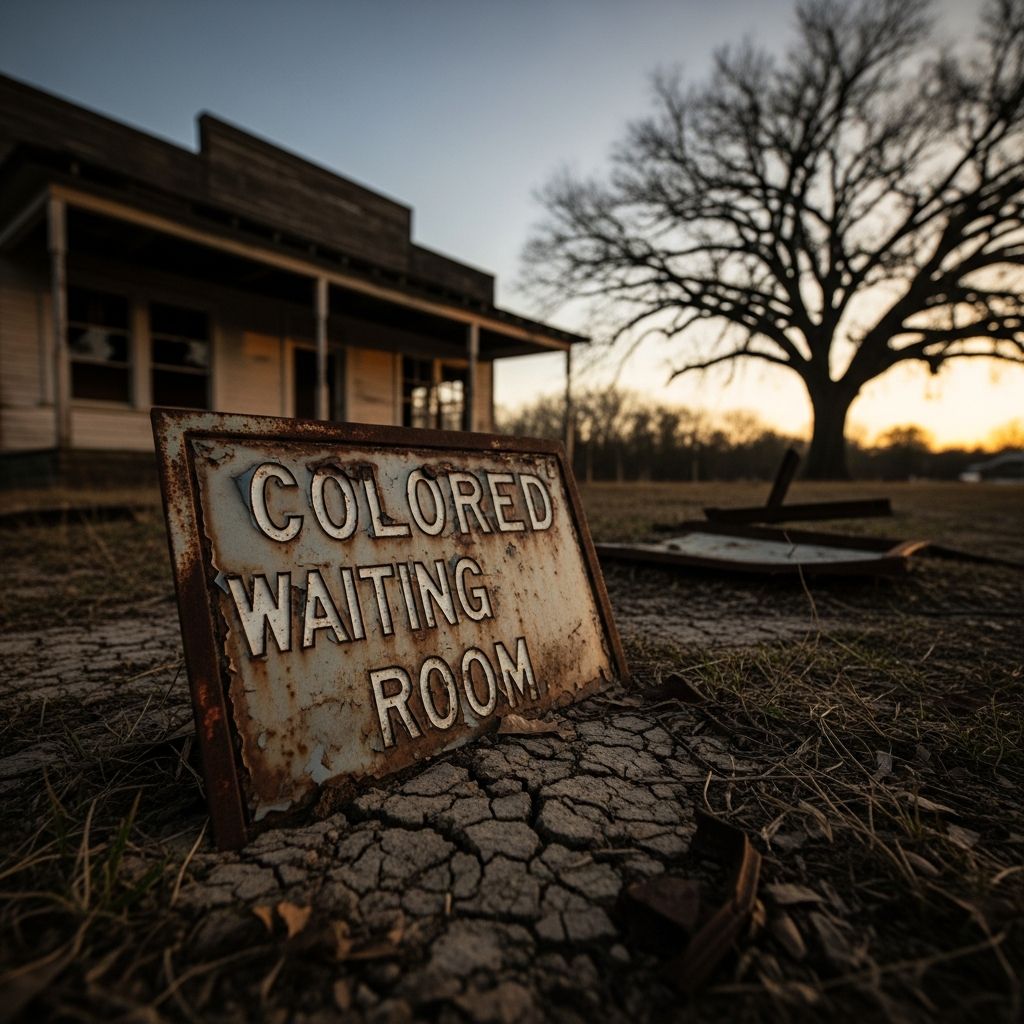
Jim Crow laws represented a systematic effort to enforce racial segregation in the United States, primarily in the South, from the late 19th century until the mid-20th century. These statutes and ordinances mandated separation between white and Black Americans in nearly every aspect of public and private life, perpetuating white supremacy under the guise of ‘separate but equal’ facilities.
Historical Roots After the Civil War
The end of the Civil War in 1865 and the passage of the 13th, 14th, and 15th Amendments promised equality for newly freed African Americans. However, the Reconstruction era (1865-1877) faced fierce resistance from Southern whites. Federal troops enforced civil rights temporarily, but the Compromise of 1877 withdrew these forces, allowing white Democrats, known as ‘Redeemers,’ to regain control of Southern state governments.
Immediately following emancipation, Southern states enacted Black Codes—precursor laws to Jim Crow—that restricted Black mobility, employment, and rights. These included vagrancy laws leading to convict leasing, effectively re-enslaving many through forced labor. By the 1880s, these evolved into comprehensive Jim Crow legislation, named after a derogatory minstrel character popularized in the 1830s by Thomas Dartmouth ‘Daddy’ Rice.
Legal Foundation: The ‘Separate but Equal’ Doctrine
The U.S. Supreme Court’s 1896 decision in Plessy v. Ferguson provided the cornerstone for Jim Crow. Homer Plessy, a mixed-race man, challenged Louisiana’s railroad segregation law, but the Court ruled 7-1 that ‘separate but equal’ accommodations did not violate the 14th Amendment. Justice John Marshall Harlan dissented, arguing the Constitution was ‘color-blind.’
This ruling legitimized segregation nationwide, though it was most rigorously applied in the South. Facilities for Black Americans were rarely equal, consistently inferior in quality and maintenance.
Scope of Segregation in Daily Life
Jim Crow laws permeated every facet of existence, from birth to death. Public transportation required separate rail cars, streetcars, and waiting rooms. Restaurants, theaters, parks, and even cemeteries were divided.
- Education: Schools were segregated since Reconstruction, with Black institutions underfunded and overcrowded.
- Public Facilities: Separate water fountains, restrooms, and entrances marked ‘Colored’ vs. ‘White.’
- Healthcare and Services: Hospitals, elevators, and libraries maintained racial divisions.
- Recreation: In 1935 Oklahoma, boating together was prohibited; Georgia mandated separate parks in 1905.
Even trivial activities faced regulation: Birmingham, Alabama, banned Black and white people from playing checkers together in 1930.
Disenfranchisement Tactics
Beyond physical separation, Jim Crow stripped political power. Despite the 15th Amendment, Southern states imposed poll taxes, literacy tests, grandfather clauses, and property requirements to exclude Black voters. These mechanisms reduced Black voter registration from over 90% in some areas during Reconstruction to near zero by 1900.
| Method | Description | Impact |
|---|---|---|
| Poll Taxes | Annual fees required to vote | Disproportionately affected poor Blacks and whites |
| Literacy Tests | Complex reading and comprehension exams | Admins could arbitrarily fail applicants |
| Grandfather Clauses | Exempted those whose grandfathers voted pre-1867 | Excluded freed slaves’ descendants |
| White Primaries | Democratic primaries open only to whites | Effectively controlled elections in one-party South |
These tools ensured white dominance, fostering a climate of intimidation via lynchings and violence.
Economic Exploitation and Social Control
Jim Crow extended to labor, with sharecropping trapping Black families in debt peonage. Convict leasing funneled minor offenders into private labor camps, mirroring slavery. Social norms enforced subservience: Black men were compelled to address whites as ‘sir’ or ‘ma’am,’ while eye contact was discouraged.
Interracial marriage was criminalized, and any perceived violation of racial etiquette could lead to violence. This system not only separated but dehumanized, reinforcing pseudoscientific notions of racial inferiority.
Resistance and the Road to Abolition
Despite oppression, Black communities built parallel institutions—churches, schools, businesses—like the ‘Black Wall Street’ in Tulsa, Oklahoma, before its 1921 destruction. Early challenges included Ida B. Wells’ anti-lynching crusade and the Niagara Movement, precursor to the NAACP.
The Great Migration (1910-1970) saw millions flee South for Northern opportunities, weakening the system demographically. World War II highlighted hypocrisy: Black soldiers fought fascism abroad amid segregation at home.
Key Milestones in Dismantling Jim Crow
The civil rights movement accelerated change:
- 1954: Brown v. Board of Education – Overturned school segregation, declaring ‘separate but equal’ inherently unequal.
- 1955-1956: Montgomery Bus Boycott – Sparked by Rosa Parks, ended bus segregation.
- 1964: Civil Rights Act – Banned discrimination in public accommodations and employment.
- 1965: Voting Rights Act – Eliminated discriminatory voting practices.
These federal interventions, bolstered by activism from Martin Luther King Jr. and others, ended legal Jim Crow by 1965.
Lasting Impacts on American Society
Though laws are gone, legacies persist: wealth gaps, educational disparities, and incarceration rates trace to Jim Crow. The system’s psychological toll fostered internalized racism, while mass incarceration echoes convict leasing.
Modern debates on voting rights and affirmative action reflect ongoing struggles against its remnants. Understanding Jim Crow illuminates America’s racial dynamics today.
Frequently Asked Questions (FAQs)
What exactly were Jim Crow laws?
Jim Crow laws were state and local statutes enforcing racial segregation in public facilities, transportation, education, and voting from 1877 to the 1960s, primarily in the South.
Why is it called ‘Jim Crow’?
The term derives from a 19th-century minstrel show character, ‘Jump Jim Crow,’ a caricature of Black people that became synonymous with segregation.
When did Jim Crow laws end?
Legal Jim Crow ended with the Civil Rights Act of 1964 and Voting Rights Act of 1965, though effects lingered.
How did Plessy v. Ferguson affect segregation?
The 1896 ruling upheld ‘separate but equal,’ enabling widespread Jim Crow laws until overturned by Brown v. Board in 1954.
Did Jim Crow only affect the South?
Primarily Southern, but de facto segregation existed nationwide; laws were strictest in former Confederate states.
References
- Jim Crow laws – Wikipedia — Wikipedia contributors. 2023-10-01. https://en.wikipedia.org/wiki/Jim_Crow_laws
- Jim Crow law | History, Facts, & Examples — Encyclopædia Britannica. 2024-01-15. https://www.britannica.com/event/Jim-Crow-law
- Jim Crow Laws and Racial Segregation — Social Welfare History Project, Virginia Commonwealth University. 2022-05-20. https://socialwelfare.library.vcu.edu/eras/civil-war-reconstruction/jim-crow-laws-andracial-segregation/
- The Rise of Jim Crow, 1877–1900 — New-York Historical Society. 2023-08-10. https://blackcitizenship.nyhistory.org/the-rise-of-jim-crow/
- The Jim Crow Era — American Battlefield Trust. 2024-02-28. https://www.battlefields.org/learn/articles/jim-crow-era
Similar Articles







Read full bio of medha deb