Powering Southern California: Inside Life at Southern California Edison
Discover how Southern California Edison blends clean energy innovation, community impact, and long-term careers.
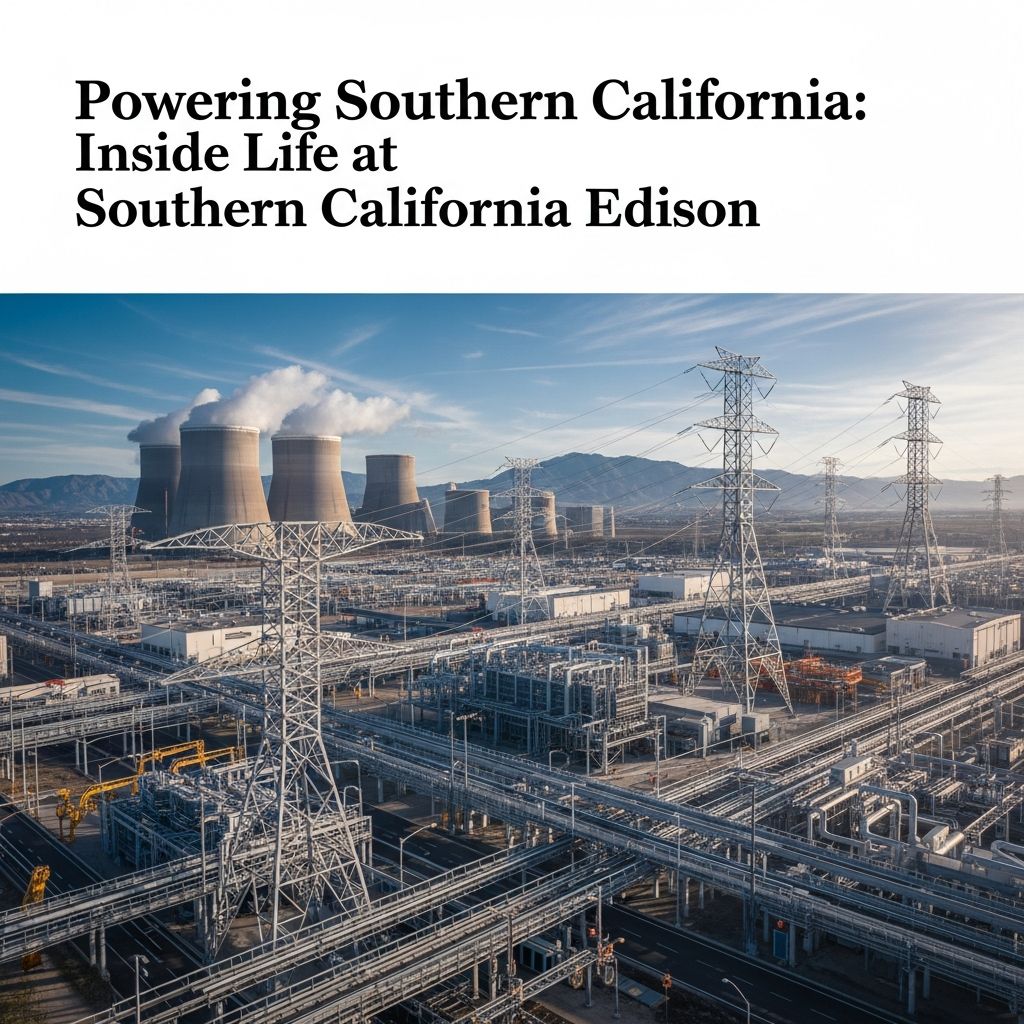
Southern California Edison (SCE) is more than an electric utility; it is a long-standing force behind the growth, resilience, and clean energy transition of one of the most dynamic regions in the United States. For job seekers, it offers a chance to combine stable, long-term work with a mission that directly affects millions of people every day.
Who Southern California Edison Serves and Why It Matters
SCE is the primary investor-owned electric utility for much of Southern California, delivering power to about 15 million people across roughly 50,000 square miles (about 130,000 square kilometers). Its service territory spans coastal cities, sprawling suburbs, agricultural communities, and mountain and desert regions, making its work both complex and highly visible in people’s daily lives.
For employees, this scale has several implications:
- Every role has impact: From field crews to data scientists, the work directly affects public safety, comfort, and economic activity.
- Exposure to diverse challenges: Urban grids, wildfire-prone rural systems, coastal infrastructure, and critical facilities all rely on SCE’s network.
- Long-term regional presence: With roots dating back to 1886 and incorporation in 1909, SCE has been part of Southern California’s growth from early electrification to the present clean energy era.
A Century of Innovation: From Early Grids to a Clean Energy Future
SCE’s identity is tightly connected to its history of innovation and infrastructure development:
- Early electrification: Predecessor companies began supplying power in the late 19th century, later consolidating into Southern California Edison in 1909.
- Major hydroelectric projects: Large-scale hydropower developments, such as the Big Creek system, helped drive regional industrialization and urban growth.
- Iconic facilities: SCE’s former headquarters in downtown Los Angeles, now known as The CalEdison, was among the first buildings in the city to be fully heated and cooled with electricity.
- Research and demonstration: The company has a history of piloting new technologies, from energy storage concepts to advanced grid designs, often in collaboration with public agencies and research partners.
Today, SCE and its parent company Edison International describe their vision as leading the transition to a clean energy future, which involves expanding renewable generation, modernizing the grid, and promoting beneficial electrification of transportation and buildings.
Core Mission: Reliable, Cleaner, and Safer Power
At its core, SCE focuses on delivering reliable electricity while shifting to cleaner resources and managing emerging environmental and climate risks. This mission shapes the work environment and the kinds of roles the company emphasizes.
| Mission Element | What It Means in Practice | Typical Employee Contributions |
|---|---|---|
| Reliability | Keeping power flowing to homes, businesses, and critical infrastructure with minimal outages. | System planning, operations centers, field maintenance, grid monitoring, emergency response. |
| Clean Energy | Integrating renewable resources, demand-side programs, and electrification solutions. | Energy policy, regulatory teams, sustainability experts, engineers, program managers. |
| Safety & Resilience | Reducing wildfire risks, reinforcing infrastructure, and protecting workers and communities. | Vegetation management, asset inspection, system hardening projects, safety professionals. |
Business Areas and Career Paths
SCE’s size and scope create a wide range of career paths, from hands-on technical roles to strategic and analytical functions. While titles vary, most jobs fall under several broad domains.
1. Grid Operations and Field Work
These teams build, operate, and maintain the physical network that carries electricity across Southern California.
- Lineworkers and crews, who construct and repair transmission and distribution lines.
- Substation technicians, who install and maintain equipment that manages voltage, routing, and system protection.
- System and dispatch operators, who monitor grid conditions and coordinate switching, outages, and restoration.
Roles in this area are often outdoors, physically demanding, and critical during storms, heatwaves, and wildfire-related shutoffs.
2. Engineering and Grid Modernization
Engineers at SCE work on modernizing and redesigning an increasingly complex grid that must accommodate high levels of renewable energy, distributed resources, and advanced communications.
- Electrical engineers focused on planning, protection systems, and reliability improvement.
- Civil and structural engineers supporting substations, poles, and other infrastructure.
- Grid modernization and automation specialists working on sensors, control systems, and data integration.
3. Clean Energy, Sustainability, and Policy
California’s clean energy policies require utilities to reduce greenhouse gas emissions, increase renewable energy, and support electrification of vehicles and buildings. SCE teams involved in this work include:
- Energy policy and regulatory affairs staff who help shape and implement state and federal energy rules.
- Program managers for energy efficiency, demand response, and distributed energy resource initiatives.
- Sustainability and climate strategy professionals focused on long-term decarbonization and reporting.
4. Corporate Functions and Technology
Behind the scenes, SCE operates like a large, complex enterprise with extensive support functions.
- Information technology and cybersecurity to protect critical infrastructure and data.
- Data analytics for forecasting, asset management, customer insights, and risk modeling.
- Finance, legal, HR, and communications that sustain the business, manage risk, and keep stakeholders informed.
Company Culture: Mission, Stability, and Responsibility
Working at SCE typically appeals to people who care about public service, infrastructure, and long-term regional impact. Several cultural themes stand out:
- Mission-driven work: Employees know their work keeps hospitals, schools, transit, and businesses running.
- Emphasis on safety: As a utility handling high-voltage systems, SCE places heavy emphasis on safety training, procedures, and continuous improvement.
- Long-term orientation: Large infrastructure projects, regulatory processes, and grid planning can span many years, rewarding people who value stability and steady progress.
- Public visibility and accountability: As a regulated utility, SCE operates under close oversight from state agencies and the public, especially in areas like wildfire risk, reliability, and environmental performance.
Environmental Stewardship and Community Engagement
SCE’s environmental responsibilities have grown over time, encompassing both habitat and species protection as well as the preservation of historically significant infrastructure.
- Historic built environment: The company documents and preserves historic facilities and structures associated with early electrification and grid development.
- Ecological considerations: Transmission and distribution projects often incorporate measures to protect sensitive habitats and species.
- Community programs: Utilities like SCE typically support local education, workforce development, and emergency preparedness efforts, particularly in areas they serve.
For employees, this can mean opportunities to contribute to projects where engineering, cultural heritage, and environmental science intersect.
Challenges and Responsibilities in a Changing Climate
Utility work in California now takes place in the context of more frequent extreme weather, drought, and wildfire conditions. Regulators have increased scrutiny of utilities’ maintenance and vegetation management practices, particularly in high fire-risk areas.
This environment creates several realities for SCE’s workforce:
- Greater focus on risk reduction: Inspection, vegetation management, and system hardening have become central priorities.
- Operational complexity: Public safety power shutoffs and rapid response to wildfire threats add operational challenges.
- Continuous improvement: Teams must respond to new rules, technologies, and lessons learned from events across the state.
For professionals interested in resilience, climate adaptation, and infrastructure risk management, these challenges can be a key motivator.
Working Style: Who Thrives at Southern California Edison?
SCE can be a strong fit for professionals who value a mix of technical rigor, public impact, and stability. Common traits among those who thrive include:
- Systems thinking: Comfort with complex, interconnected systems and long planning horizons.
- Commitment to safety and procedure: Willingness to follow detailed protocols and regulatory requirements.
- Collaboration: Ability to work with regulators, contractors, partners, and communities.
- Resilience under pressure: Readiness to contribute during emergencies and high-demand periods.
Because of the range of functions, SCE can appeal both to early-career candidates seeking training and to experienced professionals looking for large-scale, mission-driven work.
Preparing for a Career at a Major Utility
For job seekers considering roles at SCE or similar companies, several preparation steps are especially useful:
- Build relevant technical skills in electrical engineering, data science, construction trades, or IT and cybersecurity.
- Understand energy policy basics, particularly California’s clean energy goals, emission reduction targets, and reliability standards.
- Emphasize safety and responsibility in your experience, including any work involving regulations, critical infrastructure, or high-risk environments.
- Highlight community or public service to show alignment with the company’s regional mission.
Frequently Asked Questions (FAQs)
Q: What does Southern California Edison do day to day?
A: On a daily basis, SCE operates and maintains the electric grid that serves about 15 million people in Southern California, manages power flows, responds to outages, supports customer programs, and advances projects that modernize and decarbonize the system.
Q: How is SCE different from a typical tech or corporate employer?
A: While SCE uses advanced technology and analytics, it is fundamentally an infrastructure and service organization with a regulated mandate to provide reliable, safe, and increasingly clean electricity, rather than a consumer-tech or product-focused company.
Q: What kinds of backgrounds does SCE hire?
A: The company hires people from diverse backgrounds, including skilled trades and apprenticeships, engineering disciplines, IT and cybersecurity, environmental science, finance, law, communications, and policy and regulatory fields, reflecting the complexity of running a large utility.
Q: How does SCE contribute to California’s clean energy transition?
A: SCE works within California’s policy framework to integrate more renewable resources, support electrification of vehicles and buildings, and deploy programs that reduce greenhouse gas emissions and improve air quality, while maintaining reliability for its customers.
Q: Is working at a utility still relevant as technology changes?
A: Yes. The shift toward clean energy, distributed resources, electric vehicles, and smarter grids increases the need for professionals who can blend engineering, data, operations, and policy expertise in a critical infrastructure environment.
References
- Southern California Edison — Wikipedia. 2024-04-05. https://en.wikipedia.org/wiki/Southern_California_Edison
- 100-Year-Old Businesses: Edison International — Los Angeles Business Journal. 2024-02-26. https://labusinessjournal.com/energy-2/100-year-old-businesses-edison-international/
- Southern California Edison – Urban Benchmark — World Benchmarking Alliance. 2023-07-01. https://www.worldbenchmarkingalliance.org/publication/urban/companies/southern-california-edison-2/
- Our History | Edison International — Edison International. 2022-11-15. https://www.edison.com/about-us/our-history
- About SCE — Southern California Edison. 2023-09-10. https://www.sce.com/about-sce
- The CalEdison — Los Angeles Conservancy. 2019-06-01. https://www.laconservancy.org/learn/historic-places/the-caledison/
- Historic Built Environment — Southern California Edison. 2021-05-20. https://www.sce.com/about-us/environment/protecting-our-environment/historic-built-environment
Similar Articles






Read full bio of Sneha Tete