Managing Carpenter Bees: Effective Strategies
Discover proven methods to identify, prevent, and eliminate carpenter bees from your property without harming beneficial pollinators.
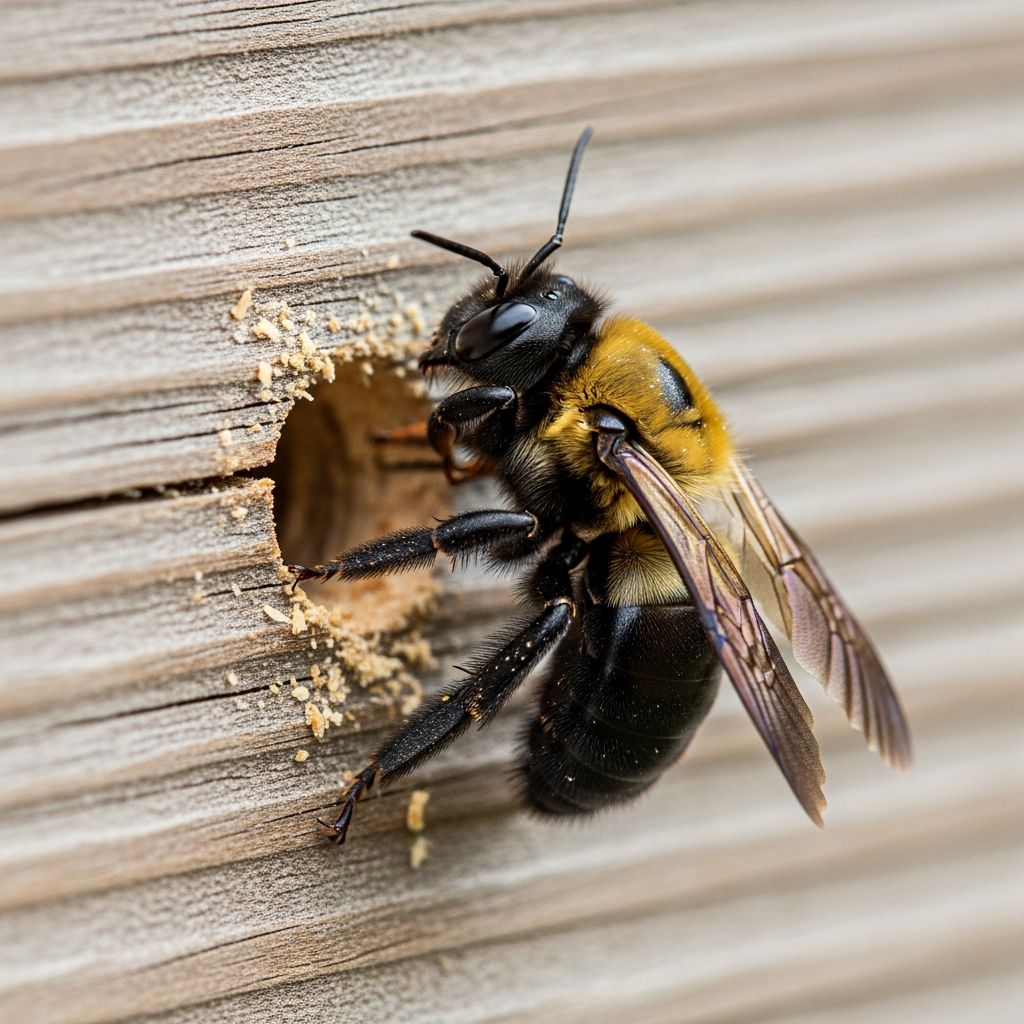
Carpenter bees are large, solitary insects that bore into wood to create nests, potentially causing structural damage to homes, decks, and fences. Unlike honeybees, they do not live in hives but drill perfect round holes in untreated wood surfaces. While they play a role in pollination, their tunneling can weaken wooden structures over time. This guide provides homeowners with practical, safe methods to deter these pests, combining prevention, non-toxic options, and targeted treatments.
Understanding Carpenter Bee Biology and Behavior
Carpenter bees, primarily Xylocopa virginica in North America, are shiny black or metallic blue bees about one inch long. Males are territorial and hover aggressively but cannot sting; females possess stingers but rarely use them unless handled. They target soft, weathered woods like cedar, pine, redwood, and cypress for nesting, preferring unpainted surfaces.
Activity peaks in spring when females drill 1/2-inch diameter tunnels, up to 6-10 inches deep, provisioning them with pollen for larvae. A second generation emerges in summer. Overwintering adults return to the same or nearby sites annually, exacerbating damage if unchecked.
- Nesting preferences: Unfinished eaves, decks, railings, fences, and pergolas.
- Signs of infestation: Round, clean-edged holes (not oval like those of smaller bees); sawdust (frass) below; hovering males.
- Life cycle: Eggs laid in spring/summer; larvae develop over weeks; adults overwinter inside tunnels.
Prevention: Stopping Infestations Before They Start
The most reliable long-term solution is preventing access to preferred wood. Carpenter bees avoid painted, varnished, or pressure-treated surfaces, as these lack the texture and scent they seek.
| Method | Materials Needed | Effectiveness | Pros/Cons |
|---|---|---|---|
| Exterior Painting/Staining | Oil-based paint, varnish, polyurethane | High | Protects wood long-term; requires reapplication every 1-2 years. |
| Material Substitution | Hardwoods (oak, maple), vinyl siding, metal | Very High | Permanent; higher initial cost for replacements. |
| Seal Cracks/Depressions | Caulk, wood filler | Moderate | Quick fix; must combine with painting. |
Apply these measures in late fall or early winter after bees vacate. For existing structures, pressure washing removes weathering that attracts them.
Non-Chemical Control Methods
Environmentally friendly options prioritize deterrence and physical removal, preserving bees’ pollination benefits where possible.
Natural Repellents
Bees dislike strong scents from essential oils. Mix 1 part citrus, almond, lavender, or tea tree oil with 10 parts water in a spray bottle. Apply daily around potential nesting sites in spring. Reapply after rain. These disrupt pheromones without killing bees.
Traps and Decoys
Commercial or DIY traps mimic nests: wooden boxes with entry funnels leading to soapy water or one-way exits. Hang near active holes; bees enter but cannot leave. Success rates improve when placed 10-15 feet above ground. Fake wasp nests (brown paper bags) exploit bees’ aversion to wasps.
Noise and Vibration Deterrents
Hang wind chimes or play music near nests. Vibrations annoy females, prompting relocation after 3-5 days. Effective for small infestations.
Providing Alternative Nesting
Place scrap softwood blocks with pre-drilled holes away from structures. This redirects bees, allowing pollination benefits without home damage.
Chemical and Mechanical Treatments
For active infestations, targeted applications minimize environmental impact. Treat in early spring (pre-emergence) or late summer (post-larvae).
- Inspect and locate all holes.
- Vacuum adults during foraging (midday).
- Apply dust: Insecticidal dusts (pyrethrin, borate like Tim-bor, deltamethrin) via bulb duster into holes. Bees track it inside, killing larvae.
- Leave open 2-3 days for returning bees to contact residue.
- Seal: Steel wool + caulk, dowels + putty, then paint.
Aerosol sprays work for surface control but lack depth penetration. Avoid broadcast spraying.
Seasonal Action Plan
Spring (March-May): Monitor for new holes; apply repellents/traps; dust early emergents.
Summer (June-August): Treat larvae; seal vacated holes.
Fall (September-November): Fill overwintering sites with wire-probed dust; paint all wood.
Winter: Repair and protect surfaces.
Professional Pest Control Services
Severe or recurrent issues warrant experts. Professionals inspect thoroughly, use integrated pest management (IPM), and ensure compliance with local regulations. They deploy dusts precisely and monitor for reinfestation. Expect initial treatment plus follow-ups.
Frequently Asked Questions (FAQs)
Are carpenter bees dangerous?
Males cannot sting; females rarely do. They are not aggressive but defend nests.
Do carpenter bees die after stinging?
No, unlike honeybees, their stingers are smooth and reusable.
How long do treatments last?
Repellents: 1-2 weeks; paints: 1-2 years; dusts: season-long if sealed properly.
Can I remove nests myself?
Yes for small numbers; wear protective clothing and treat at dusk.
Why encourage rather than eradicate them?
They pollinate gardens effectively; targeted control balances ecology.
Long-Term Wood Protection Tips
Beyond bees, protect against rot and other pests:
- Annual inspections.
- UV-resistant finishes.
- Screened soffits to block access.
- Landscaping to reduce bee-attracting debris.
Combining methods yields 90%+ reduction in activity.
References
- Carpenter Bees: Habits, Facts, Prevention & Removal — Arrow Exterminators. 2023. https://www.arrowexterminators.com/learning-center/pest-library/stinging/carpenter-bees
- How to Get Rid of Carpenter Bees — The Home Depot. 2023. https://www.homedepot.com/c/ab/how-to-get-rid-of-carpenter-bees/9ba683603be9fa5395fab90feb70005
- How to Get Rid of Carpenter Bees | Bee Facts — Orkin. 2023. https://www.orkin.com/pests/stinging-pests/bees/carpenter-bees
- 8 Simple Ways to Prevent Carpenter Bees — Crown Bees. 2023. https://crownbees.com/blogs/news/8-simple-ways-to-prevent-carpenter-bees
- Controlling Carpenter Bees — National Association of Home Builders (NAHB). 2020. https://www.nahb.org/subsites/log-homes/library-pages/controlling-carpenter-bees
- Carpenter Bees — UC IPM (University of California Agriculture and Natural Resources). 2023. https://ipm.ucanr.edu/home-and-landscape/carpenter-bees/
Similar Articles








Read full bio of Sneha Tete