Mastering Chinese Characters: From Ancient Origins to Modern Literacy
Discover the fascinating evolution and structure of Chinese characters, from oracle bones to digital text.
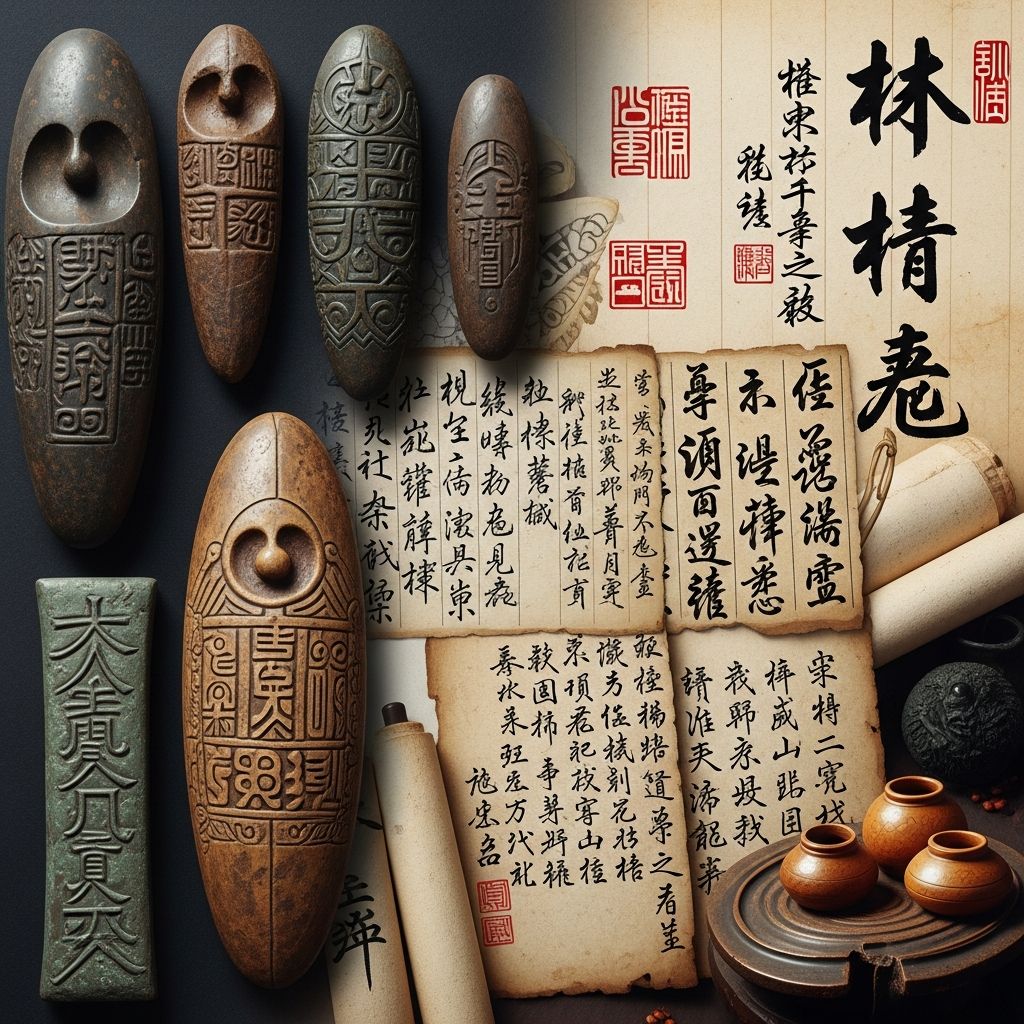
The Evolution of Written Chinese: A Journey Through Millennia
The Chinese writing system represents one of humanity’s most remarkable intellectual achievements, standing as the world’s oldest continuously used written language. Unlike alphabetic systems that encode sounds, Chinese characters function as logographs, each representing units of meaning known as morphemes. This fundamental distinction shapes not only how the language is written but also how it is learned and understood by both native speakers and language learners worldwide.
To read contemporary Chinese texts comfortably, learners typically need to master approximately 2,000 to 3,500 characters, depending on the context and reading material. However, the total universe of documented Chinese characters is far more expansive. Modern digital standards have identified and catalogued more than 100,000 distinct characters, representing centuries of linguistic variation, regional dialects, and historical development. This vast repository demonstrates how the writing system has accumulated complexity and nuance across its three-thousand-year documented history.
Tracing Origins: From Divine Legend to Archaeological Evidence
Chinese tradition weaves a mythical narrative about the origins of written Chinese. According to ancient legend dating to the 27th century BCE, the Yellow Emperor commissioned his historian Cangjie to develop a writing system. As Cangjie sat contemplating by a riverbank, he observed the patterns of nature surrounding him—animal footprints, leaf shapes, and cloud formations. By distilling these observations into simplified representations, Cangjie purportedly created the foundation of Chinese writing.
While this origin story carries cultural significance, archaeological evidence points to a more concrete beginning. Scholars have traced the earliest documented Chinese characters to the Shang Dynasty, spanning from approximately 1600 to 1050 BCE. These primitive inscriptions, known as oracle bone script or jiǎgǔwén (甲骨文), were etched onto animal bones and tortoise shells. Archaeological evidence suggests these early characters served ritualistic and divinatory purposes, with priests using them to record questions posed to ancestors and deities. The physical act of inscribing characters into bone created a permanent record of these spiritual consultations, elevating writing from mere documentation to a sacred practice.
Understanding Character Formation: The Building Blocks of Meaning
Modern linguistic analysis has identified several fundamental principles governing how Chinese characters are constructed and how meaning is conveyed. Recognizing these principles transforms the seemingly chaotic appearance of complex characters into an intelligible system with internal logic and consistency.
Pictographic Characters: Direct Visual Representation
The most intuitive category of Chinese characters comprises pictographs, which directly depict the objects or concepts they represent. These characters maintain visible connections between their form and meaning. The character for “tree” (木, mù) visually resembles a tree with its trunk and branches. Similarly, the character for “person” (人, rén) abstracts the human form into a simplified silhouette. These foundational characters demonstrate that Chinese writing emerged from realistic representation rather than arbitrary symbolic assignment.
Even within the modern writing system, many pictographic characters retain their visual logic. The character for mountain (山) clearly evokes three peaks, while characters related to water often incorporate the water radical (氵), which itself derives from the pictographic representation of flowing liquid.
Ideographic Characters: Abstraction and Conceptual Meaning
Beyond simple visual representation, Chinese characters express abstract concepts through ideographic principles. An ideogram conveys meaning through symbolic logic rather than pictorial accuracy. The character for “up” or “above” (上) is represented by a line positioned above a baseline, establishing a visual hierarchy that corresponds to the spatial concept it represents. This symbolic approach allowed the writing system to expand beyond concrete nouns to encompass the full spectrum of language, including directional, temporal, and philosophical concepts.
Phono-Semantic Compounds: The Majority Strategy
Approximately eighty-five percent of Chinese characters employ a phono-semantic compound structure, combining a semantic component that hints at meaning with a phonetic component that suggests pronunciation. This hybrid approach solved a critical problem in character development: how to represent the expanding vocabulary of an increasingly complex society without creating an unwieldy proliferation of new symbols.
Consider the character for “mother” (妈), which combines the radical for “woman” (女) with a phonetic component (马, meaning “horse”). The woman radical provides semantic context, while the horse character contributes its pronunciation, allowing readers to infer both meaning and sound from the combined components. This elegant solution enabled the character inventory to grow systematically rather than exponentially, as new words could be formed by pairing established radicals with phonetic elements.
Radicals: The Organizational Principle Behind Character Complexity
Central to understanding Chinese character structure is the concept of radicals, the fundamental semantic and organizational building blocks that constitute individual characters. Traditional Chinese dictionaries recognize 214 radicals, though modern usage frequently emphasizes approximately 100 to 150 commonly encountered ones. Each radical carries semantic significance related to a particular domain of meaning, appearing consistently across multiple characters that share conceptual connections.
The water radical (氵or 水), for instance, appears in characters denoting aquatic concepts: river (河), sea (海), and liquid (液). The mouth radical (口) consistently appears in characters related to communication and consumption: speaking (说), eating (吃), and singing (唱). By learning radicals systematically, learners gain access to a decoding mechanism that renders thousands of seemingly arbitrary characters comprehensible and memorizable.
Radicals serve not merely as learning aids but as the organizational foundation of traditional Chinese dictionaries. When seeking an unfamiliar character, readers first locate its radical, then count the remaining strokes to narrow their search within the radical category. This system predates modern digital search by centuries, yet remains remarkably effective for organizing the vast inventory of characters.
Stroke Structure and Writing Mechanics
Every Chinese character, regardless of complexity, comprises basic strokes combined according to established principles. The writing system recognizes six primary strokes, along with four combining strokes and twenty-nine compound stroke formations. These fundamental units combine in specific sequences to create characters, with stroke order following conventional rules taught in schools and formalized in modern character standards.
Stroke order represents more than merely an arbitrary convention. The standardized sequence facilitates character recognition during rapid writing, creates visual balance within the character’s composition, and ensures legibility when characters are written by hand. Learning proper stroke order also aids memorization, as the kinesthetic experience of writing characters in the correct sequence strengthens neural pathways associated with character recognition and production.
The Transition from Ancient to Contemporary Written Forms
Chinese characters have undergone dramatic transformations across the millennia separating oracle bone script from modern standardized forms. Early characters bore closer resemblance to their pictographic origins, displaying obvious visual connections to their referents. Successive dynasties introduced stylistic variations: the clerical script of the Han Dynasty, the elegant cursive forms valued in calligraphy, and eventually the simplified character set officially adopted in mainland China during the twentieth century.
These transformations reflected practical necessities. As brush technology evolved and writing materials changed, characters adapted to accommodate new techniques and materials. The standardization of simplified characters in modern times represented a deliberate policy choice aimed at increasing literacy rates by reducing the cognitive burden of learning thousands of complex traditional forms. This ongoing evolution demonstrates that despite their ancient roots, Chinese characters remain a living system responsive to the needs of contemporary users.
Character Function and Linguistic Classification
Modern linguistic scholarship has developed comprehensive frameworks for understanding how Chinese characters function within the broader linguistic system. Scholars recognize that characters operate according to distinct functional principles that extend beyond the simple pictographic-ideographic-phono-semantic classification.
Semantographs represent characters whose forms maintain direct relationships to their meanings, regardless of the specific method by which meaning was originally depicted. Phonographs incorporate phonetic components that guide pronunciation, allowing the character to transcend its original semantic root. Loangraphs encompass characters that have been borrowed to represent other words, their original meanings superseded by their phonetic utility. Additionally, scholars acknowledge the existence of pure signs—characters that function primarily as markers or indicators without substantial semantic or phonetic loading.
Practical Learning Strategies for Character Mastery
Understanding the structure of Chinese characters dramatically accelerates learning efficiency compared to approaches that treat characters as arbitrary visual patterns. Several evidence-based strategies facilitate character acquisition:
- Radical-Based Organization: Group new characters by their constituent radicals. Learning five characters sharing the same radical proves more efficient than memorizing five unrelated characters, as the shared semantic component creates conceptual connections that strengthen retention.
- Stroke Order Practice: Engaging in repeated handwriting using correct stroke order activates motor memory alongside visual recognition, creating multiple neural pathways that reinforce character recall.
- Component Analysis: Decompose complex characters into constituent parts before attempting full memorization. Understanding how a complicated-looking character assembles from familiar components renders it psychologically more manageable.
- Contextual Usage: Encounter characters within meaningful sentences and phrases rather than in isolation. This approach mirrors how native speakers acquire written proficiency and creates associations between characters and practical communication needs.
- Comparative Study: Examine characters sharing components but bearing different meanings. This reveals how minor modifications—a single radical substitution or stroke addition—fundamentally alter meaning, illustrating the systematic logic underlying the writing system.
Beyond Individual Characters: Words and Meaning-Making
While mastering individual characters constitutes an essential foundation, contemporary Chinese relies overwhelmingly on multi-character words rather than single-character terms for expression. The word for China (中国, zhōngguó) combines two characters—middle (中) and country (国)—creating a compound meaning that neither character fully conveys independently. This compounding principle extends throughout the language, with the majority of common words comprising two or more characters arranged in juxtaposition.
Understanding individual character components therefore facilitates inferential comprehension of novel multi-character combinations. Encountering an unfamiliar compound word, readers can analyze its constituent characters and deduce probable meaning from their combined semantic contributions. This capacity for meaning-deduction through character analysis represents one of the most practical benefits of character-centered learning.
Character Advantages in Language Acquisition
Research comparing learning outcomes across different pedagogical approaches has consistently demonstrated that learners who invest effort in understanding Chinese character structure outperform those relying primarily on phonetic romanization systems like Pinyin. This advantage extends beyond reading ability into vocabulary acquisition, retention, and listening comprehension.
The character-based approach strengthens vocabulary retention because each character’s structural components encode semantic information, creating multiple retrieval cues. Rather than memorizing isolated sound-meaning pairings, learners develop rich conceptual networks linking visual form, pronunciation, meaning, and related concepts. When encountering character sequences in listening contexts, familiarity with written character associations activates semantic knowledge that enhances comprehension.
Digital Representation and Modern Standardization
The digitization of Chinese characters required developing comprehensive standards for character encoding, ensuring consistent representation across different computing platforms and applications. The Unicode Standard has become the primary international framework for character encoding, incorporating more than 100,000 identified Chinese characters within its specifications. This digital standardization has expanded access to written Chinese globally while preserving the full historical and regional character inventory.
Linguistic Properties Unique to Chinese
The character-based writing system contributes to several distinctive features of Chinese language structure. Unlike Romance languages, Chinese employs no grammatical gender and requires no verb conjugations. The character for “eat” (吃, chī) remains invariant whether applied to singular or plural subjects, reflecting past or present actions, or indicating first, second, or third person. This grammatical simplicity at the morphological level contrasts sharply with character-level complexity, creating a distinctive balance within the overall linguistic system.
Frequently Asked Questions
Q: How many characters must I learn to read Chinese fluently?
A: Approximately 2,000 to 3,500 characters enable reading of contemporary Chinese materials comfortably. Specialized or classical texts may require familiarity with additional rare or archaic characters.
Q: What is the difference between simplified and traditional Chinese characters?
A: Simplified characters represent a modernized, streamlined version adopted in mainland China featuring fewer strokes and simplified forms. Traditional characters maintain more complex original forms and remain in use in Taiwan, Hong Kong, and among diaspora communities.
Q: Can understanding one character help me understand another?
A: Yes, significantly. Shared radicals and components provide semantic clues, allowing learners to infer meanings of unfamiliar characters based on familiar components.
Q: Why is stroke order important when learning to write characters?
A: Correct stroke order creates proper character balance, facilitates rapid handwriting, aids memorization through motor memory, and ensures legibility and recognition by other writers.
Q: Are Chinese characters more difficult to learn than alphabetic systems?
A: Character learning requires sustained effort and systematic approach, but understanding their underlying structural logic renders them manageable and even elegant compared to memorizing arbitrary alphabetic correspondence rules.
References
- Chinese characters — Wikipedia. Accessed 2025. https://en.wikipedia.org/wiki/Chinese_characters
- How to Read Chinese Characters: A Beginner’s Guide — WrittenChinese.com. https://www.writtenchinese.com/how-to-read-chinese-characters-a-beginners-guide/
- The secret behind how Chinese characters work — TED-Ed. YouTube. https://www.youtube.com/watch?v=U0EySK4T2aY
- Understanding Chinese Characters: the Basics You Need to Know — Mandarin Blueprint. https://www.mandarinblueprint.com/blog/chinese-characters/
- How Chinese Characters Work — Everyday Hanzi. YouTube. https://www.youtube.com/watch?v=NryURgnLdlw
- Chinese Alphabet Explained: How the Writing System Works — Migaku. https://migaku.com/blog/chinese/chinese-alphabet-explained
- The building blocks of Chinese, part 1: Chinese characters and words in a nutshell — Hacking Chinese. https://www.hackingchinese.com/the-building-blocks-of-chinese-part-1-chinese-characters-and-words-in-a-nutshell/
- Understanding Chinese Characters — National Museum of Asian Art, Smithsonian Institution. https://asia-archive.si.edu/wp-content/uploads/2020/06/LP11-Understanding-Chinese-Characters-FA2.pdf
Similar Articles







Read full bio of medha deb