Punctuation Guide: Commas, Colons, And Dashes Explained
Clear, confident punctuation: how to use dashes, colons, and commas correctly in professional writing.
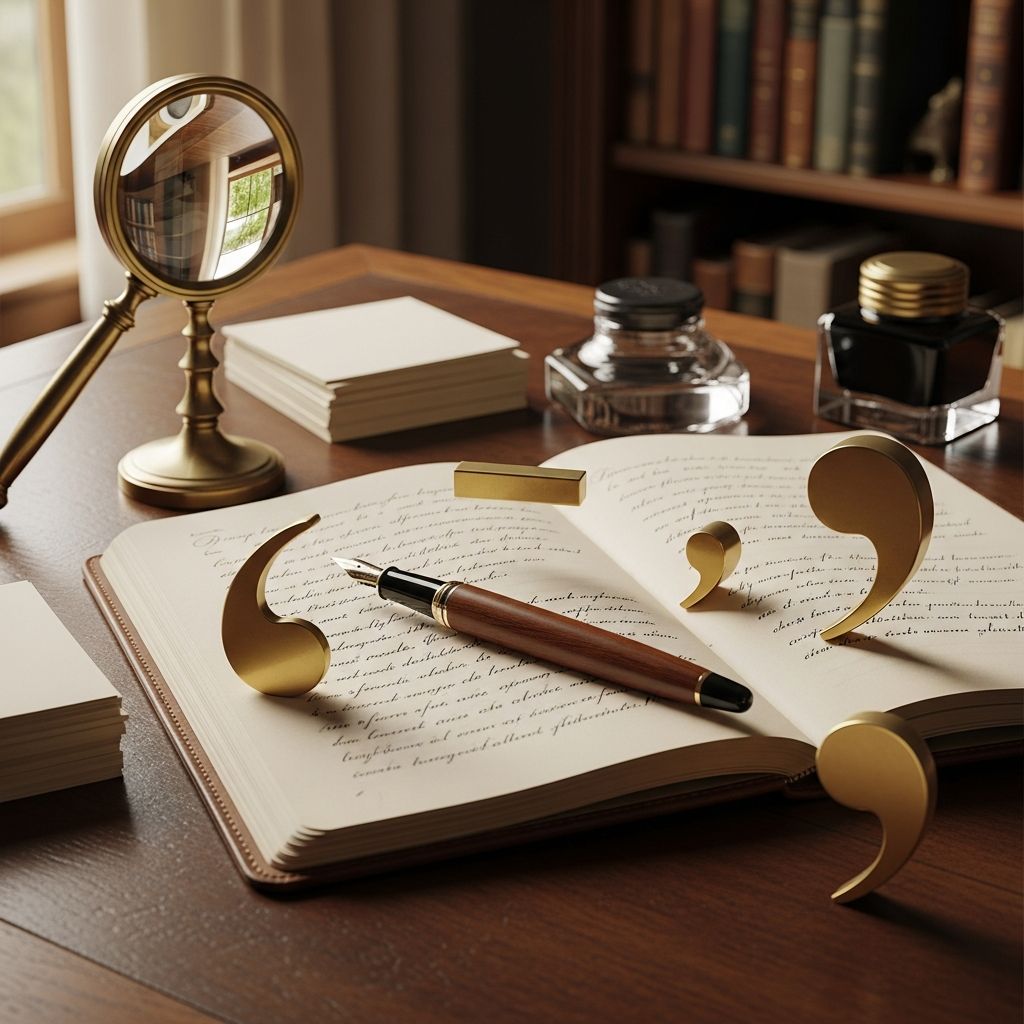
Why Punctuation Matters More Than You Think
Good writing isn’t just about vocabulary and structure—it’s about precision. Punctuation marks like dashes, colons, and commas are the traffic signals of language. They tell readers when to pause, when to expect more information, and how ideas are connected. Misuse them, and even a well-crafted sentence can confuse or mislead.
Many people treat these marks as interchangeable, especially in fast-paced digital communication. But in professional emails, reports, essays, and formal documents, the right punctuation strengthens your credibility. It shows you’re in control of your message, not just hoping the reader will figure it out.
The Comma: Your Most Frequent (and Tricky) Ally
The comma is the workhorse of punctuation. It appears in almost every sentence, but that frequency makes it easy to overuse or misuse. At its core, a comma signals a brief pause and helps separate elements so the sentence remains clear.
When to Use a Comma
- Separating items in a list: Use commas between three or more items in a series. For example: She packed her laptop, charger, notebook, and passport. The comma before and (the Oxford comma) is optional in many styles but often improves clarity.
- After introductory elements: When a sentence begins with a dependent clause, phrase, or transition, a comma usually follows. For example: After the meeting ended, we reviewed the action items. or However, the results were inconclusive.
- Before coordinating conjunctions joining independent clauses: When two complete thoughts are joined by and, but, or, so, yet, for, nor, a comma typically comes before the conjunction. For example: The deadline is tight, but the team is confident.
- Setting off nonessential information: Extra details that could be removed without changing the core meaning are often set off with commas. For example: My colleague, who has worked here for ten years, led the presentation.
Common Comma Mistakes to Avoid
- Comma splices: Never join two independent clauses with only a comma. For example, It’s raining, we should reschedule. is incorrect. Use a period, semicolon, or add a conjunction: It’s raining, so we should reschedule.
- Over-punctuating: Avoid inserting commas wherever you’d naturally pause in speech. Stick to the rules: lists, clauses, and nonessential elements.
- Missing commas in compound sentences: If two independent clauses are joined by a coordinating conjunction, the comma is usually required for readability.
The Colon: A Signal for What Comes Next
The colon is more deliberate than the comma. It doesn’t just separate; it introduces. Think of it as a spotlight operator: it says, “Pay attention—here comes the important part.” Because of this, it’s best used sparingly and with purpose.
When to Use a Colon
- Before a list that follows a complete sentence: A colon only works when what comes before it is an independent clause. For example: The agenda includes three topics: budget, staffing, and timelines. If the clause before the colon isn’t complete, a colon is usually wrong.
- Before an explanation, example, or elaboration: Use a colon to introduce a clause that explains or expands on the first part. For example: She had one clear goal: to launch the product by Q2. or The data revealed a surprising trend: sales increased despite the economic downturn.
- In formal writing to introduce a quotation: In academic or professional contexts, a colon can introduce a full sentence quotation. For example: The report concluded: “Customer satisfaction has improved by 18%.”
When Not to Use a Colon
- After a verb or preposition that introduces a list. For example, avoid: We discussed the following: budget, staffing, and timelines. Instead, write: We discussed the budget, staffing, and timelines.
- After an incomplete thought. For example, Items needed for the trip: sunscreen, hat, and water bottle. is acceptable in informal notes but not in formal writing. In formal contexts, make the first part a complete sentence: The trip requires several items: sunscreen, a hat, and water.
The Dash: Emphasis, Interruption, and Flexibility
The dash—specifically the em dash (—)—is the most expressive of these three marks. It’s bolder than a comma and more dramatic than a colon. It can replace commas, parentheses, or even colons, but it always adds emphasis and a slight break in the flow.
When to Use an Em Dash
- To set off strong interruptions or afterthoughts: Dashes work well for sudden shifts or emphatic additions. For example: She finally agreed to the proposal—after three rounds of revisions.
- To replace parentheses for emphasis: If the information in parentheses is important, dashes can highlight it. For example: The project was delayed—due to supply chain issues—not lack of effort.
- To introduce a dramatic or climactic element: A dash can build anticipation. For example: After months of preparation, the launch day arrived—finally.
- To clarify an appositive that contains commas: When the extra information itself has commas, dashes can prevent confusion. For example: The team—Sarah, the lead designer; James, the developer; and Priya, the project manager—met weekly.
When to Avoid or Limit Dashes
- In very formal or academic writing: Dashes are less common in scholarly work, where parentheses or commas are preferred for a more neutral tone.
- Overuse: Too many dashes make writing feel choppy and overly dramatic. Use them deliberately, not as a default for any pause.
- Confusing with hyphens: A hyphen (-) joins words (e.g., well-known), while an em dash (—) separates sentence elements. Don’t substitute one for the other.
How to Choose: A Practical Decision Framework
Instead of memorizing every rule, think in terms of function and tone. Ask yourself these questions when deciding between a comma, colon, or dash:
Is this a simple pause or separation?
- If yes, and it’s within a list or between clauses, a comma is usually correct.
- If the pause is for a nonessential detail, commas (or parentheses) are typically better than dashes unless you want strong emphasis.
Am I introducing something important?
- If you’re about to list items, give an example, or explain a point, a colon is often the right choice.
- If the introduction feels too abrupt or dramatic, consider whether a comma or rewording might be smoother.
Do I want to emphasize, interrupt, or add drama?
- If the answer is yes, an em dash is usually the best option.
- If the tone should remain neutral or formal, stick with commas or parentheses.
Side-by-Side Comparison: When Each Mark Fits Best
| Function | Best Punctuation | Example |
|---|---|---|
| Separating items in a simple list | Comma | We need pens, paper, and folders. |
| Introducing a list after a complete sentence | Colon | The presentation covers three areas: strategy, execution, and metrics. |
| Adding a strong afterthought or interruption | Em dash | He accepted the offer—after negotiating the terms. |
| Setting off nonessential information (neutral tone) | Comma or parentheses | My manager (who recently transferred) approved the request. |
| Setting off nonessential information (emphatic tone) | Em dash | My manager—who recently transferred—approved the request. |
| Explaining or elaborating on the first clause | Colon | There’s one condition: you must submit by Friday. |
Common Scenarios and How to Handle Them
Introducing a list
If the sentence before the list is complete, use a colon. For example: The workshop will cover three skills: writing, editing, and proofreading. If the list is part of a larger sentence without a complete clause before it, use commas instead.
Adding extra information
For minor, background details, commas or parentheses are usually best. For information that’s important or surprising, an em dash can highlight it. For example: The results were clear—customer satisfaction had doubled.
Explaining a point
When the second part of the sentence explains, illustrates, or restates the first, a colon is ideal. For example: She had one priority: meeting the client’s deadline.
FAQs: Quick Answers to Common Questions
Q: Can I use a dash instead of a colon?
Yes, but only when you want more emphasis and a slightly dramatic tone. A dash feels more conversational and urgent than a colon. In formal writing, stick to the colon for introducing lists or explanations.
Q: Is it wrong to use a comma before a list?
It depends. If the list follows a complete independent clause, a colon is usually correct. A comma before a simple list (e.g., I bought apples, oranges, and bananas) is fine, but a comma after an incomplete clause before a list is often incorrect in formal writing.
Q: How many dashes should I use in a sentence?
Use dashes sparingly. One or two per paragraph is usually enough. Overusing them makes writing feel fragmented and overly emphatic.
Q: Can I use a colon after words like “including” or “such as”?
Generally, no. Words like including and such as already introduce the list, so a colon is redundant. Use commas instead: The report covers several topics, including budget, staffing, and timelines.
Q: What’s the difference between a hyphen and a dash?
A hyphen (-) joins words (e.g., well-known). An en dash (–) shows ranges (e.g., pages 10–15). An em dash (—) separates sentence elements for emphasis or interruption. Don’t use a hyphen where a dash is needed.
Final Tips for Confident Punctuation
- Read your sentences aloud: If a pause feels natural and the structure is clear, the punctuation is likely correct.
- Check for complete clauses: Before using a colon, make sure the part before it can stand as a sentence on its own.
- Use dashes for impact, not convenience: If you’re tempted to use a dash every time you want a pause, reconsider. Often, a comma or rewording is better.
- Be consistent within a document: Once you choose a style (e.g., Oxford comma, dash usage), stick with it throughout the piece.
- When in doubt, simplify: Rewriting a sentence to avoid complex punctuation is often the clearest solution.
References
- Merriam-Webster: How to Use Em Dashes, En Dashes, and Hyphens — Merriam-Webster. Accessed 2025. https://www.merriam-webster.com/grammar/em-dash-en-dash-how-to-use
- Grammarly: When to Use Semicolons, Colons, and Dashes — Grammarly Blog. 2023. https://www.grammarly.com/blog/punctuation-capitalization/semicolon-vs-colon-vs-dash/
- University of Lynchburg: A Quick Guide to Punctuation — University of Lynchburg Writing Center. 2024. https://www.lynchburg.edu/academics/academic-offices-and-services/writing-center/grammar/a-quick-guide-to-punctuation/
Similar Articles







Read full bio of medha deb