Mastering ‘Great’ in French: Synonyms and Slang
Unlock dozens of ways to express 'great' in French, from formal adjectives to casual slang for everyday conversations.
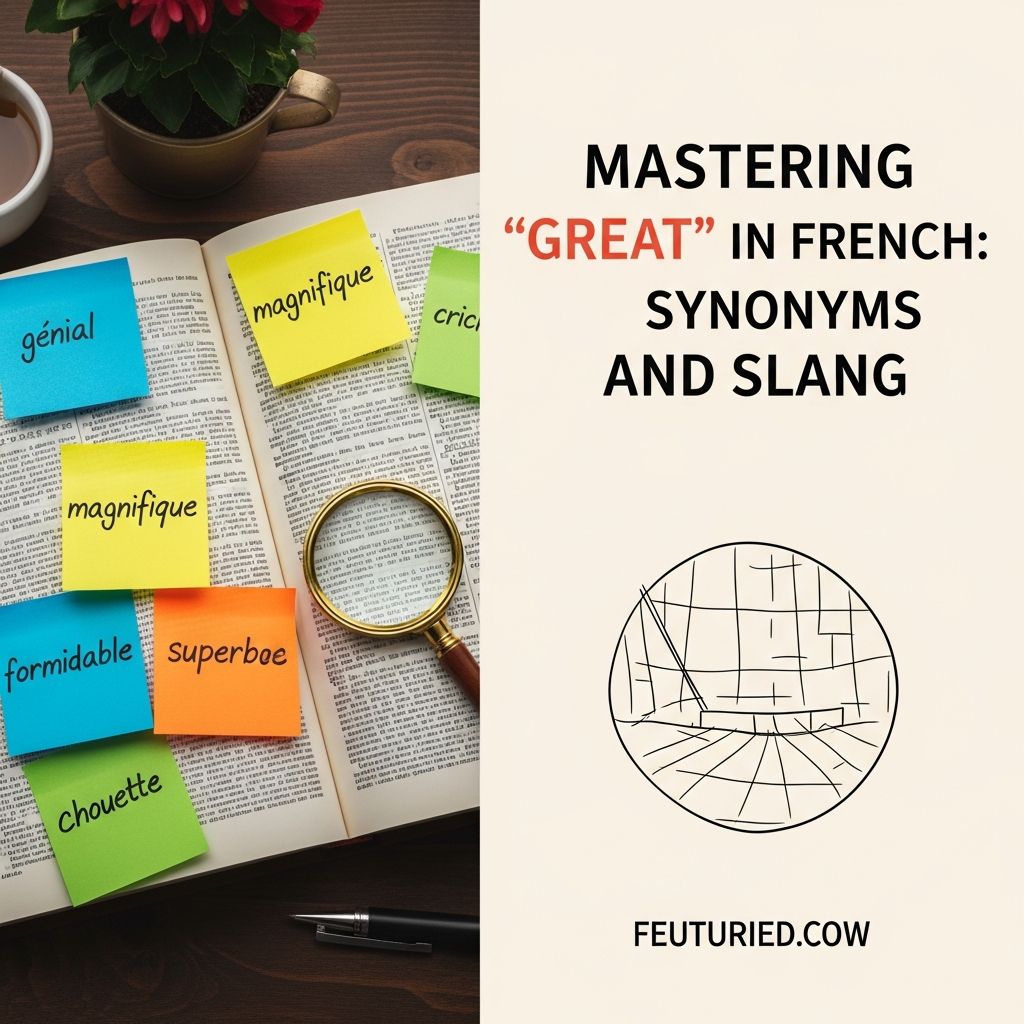
Expressing enthusiasm is key in any language, and French offers a rich palette of words beyond the basic bon. Whether you’re praising a meal, complimenting a friend, or reacting to exciting news, knowing varied synonyms for “great” elevates your speech from beginner to fluent. This guide explores formal adjectives, playful slang, context-specific phrases, and pronunciation tips drawn from authentic French usage.
Why Expand Your Vocabulary for ‘Great’?
Repetition dulls conversation. French speakers switch between registers—formal for professional settings, casual for friends—to sound natural. Mastering these terms helps you adapt, impress natives, and avoid sounding robotic. Studies from language institutes like the Alliance Française emphasize synonym variety for conversational fluency.
Formal Ways to Say ‘Great’ in French
Start with polished options suitable for writing, business, or polite interactions. These adjectives appear in literature, news, and formal speech.
- Excellent: Pronounced /ɛk.sɛ.lɑ̃/, means top-quality. Example: Ce rapport est excellent. (This report is excellent.)
- Fantastique: /fɑ̃.tas.tik/, for something amazing. Example: Un voyage fantastique. (A fantastic trip.)
- Superbe: /sy.pɛʁb/, elegant and impressive. Example: Une vue superbe. (A superb view.)
These build a strong foundation. Practice by describing daily objects formally.
Challenging Adjectives for Advanced Learners
Some words trip up learners due to spelling or sounds. Break them down for confidence.
| Adjective | Pronunciation (IPA) | Meaning | Example |
|---|---|---|---|
| Extraordinaire | /ɛk.stʁa.ɔʁ.di.nɛʁ/ | Extraordinary | Une opportunité extraordinaire. |
| Merveilleux | /mɛʁ.vɛ.jø/ | Marvelous | Un cadeau merveilleux. |
| Magnifique | /ma.ɲi.fik/ | Magnificent | Le palais est magnifique. |
Deconstruct: Extraordinaire as ek-stra-or-dee-nair; merveilleux as mair-vay-yuh; magnifique as ma-nyee-feek. Audio resources from sites like Forvo aid repetition.
Casual Slang: Sound Like a Native
Informal French thrives on borrowed words and shortenings. Use these with friends or youth.
- Chouette: /ʃuɛt/, surprisingly means ‘cool’ despite translating to ‘owl.’ Example: C’est chouette! (That’s cool!)
- Super: /sy.pɛʁ/, versatile like English ‘super.’ Example: Super idée!
- Top: /tɔp/, from English, means ‘fantastic.’ Example: Il est top! (He’s fantastic!)
- Nickel: /ni.kɛl/, ‘perfect’ or ‘spot-on.’ Example: Nickel, ça marche! (Perfect, it works!)
Slang evolves; ‘top’ surged in popularity post-2000s via media.
Expressing ‘Great’ for People and Appearance
Compliments boost connections. Tailor to gender (add -e for feminine).
- Rayonnant(e): /ʁɛ.jɔ.nɑ̃/, ‘radiant.’ Example: Tu es rayonnante ce soir! (You look radiant tonight!)
- Formidable: /fɔʁ.mi.dabl/, ‘awesome.’ Example: Tu es formidable! (You’re awesome!)
- Sensas: /sɑ̃.sas/, short for ‘sensationnel,’ trendy. Example: Sensas, ce look! (Brill, that outfit!)
- Génial(e): /ʒe.njal/, all-purpose ‘great.’ Example: Idée géniale! (Great idea!)
Context matters: Use ‘rayonnante’ for glowing vibes, ‘sensas’ for stylish flair.
Praising Food: Delicious Expressions
French culture reveres cuisine. Ditch plain bon for vivid praise.
- Délicieux(se): /de.li.sjøz/, ‘delicious.’ Example: Ce plat est délicieux!
- Trop bon: /tʁo bɔ̃/, ‘too good.’ Example: C’est trop bon!
- Que c’est bon!: Exclamatory delight. Example: At dinner: Que c’est bon!
- Il faut la recette!: /il fɔ la ʁə.sɛt/, ‘I need the recipe!’ Shows enthusiasm.
Pair with gestures for authenticity; French meals are social rituals.
Fun and Modern Expressions
Youth slang adds spice. From verlan (back-slang) to anglicisms:
- Kiffe: /kif/, ‘love it,’ from Arabic via banlieues. Example: Je kiffe ce film! (I love this movie!)
- Puissant: /pɥi.sɑ̃/, ‘powerful/great’ in skills. Example: Tu es puissant en maths!
- Brill: /bʁil/, short for ‘brillant,’ ‘brilliant.’
These shine in casual chats, music, or social media.
Pronunciation Guide and Practice Tips
Listen and mimic via apps like YouTube or podcasts. Key challenges:
- Nasal vowels: Superbe (sy-pehrb).
- Liaison: Idée géniale links ‘e’ to ‘g’.
- Silent letters: Ignore final consonants often.
Record yourself; tools like Speechling provide feedback.
Common Mistakes to Avoid
- Overusing bon: Sounds basic.
- Gender errors: Génial (masc.), géniale (fem.).
- Context mix-ups: Slang in job interviews flops.
Frequently Asked Questions (FAQs)
What’s the most common way to say ‘great’ casually?
Super or top work everywhere informal.
Is ‘chouette’ outdated?
No, it’s timeless for ‘cool,’ especially among all ages.
How do I compliment someone’s looks?
Try Tu es rayonnant(e)! or sensas for style.
Best for food praise?
Délicieux or trop bon never fails.
Where to practice these?
Language exchanges on Tandem or French films on Netflix.
Putting It All Together: Sample Dialogues
At a party: Ce soirée est géniale! Tu es top dans cette robe!
Restaurant: Ce dessert est extraordinaire. Trop bon!
With friends: Le match était nickel. Sensas!
Integrate gradually; fluency comes with use.
References
- 20 Ways to Say GREAT in French — Simply French Online. 2023-04-25. https://www.simplyfrenchonline.com/blog/20-ways-to-say-great-in-french
- 20 Ways to say GREAT in French — YouTube/Simply French Online. Accessed 2026. https://www.youtube.com/watch?v=d-Qe2c6UNe4
- French Word of the Day – Génial – Géniale (Great) — The Perfect French. Accessed 2026. https://theperfectfrench.com/french-word-of-the-day/genial-geniale/
- 3 Ways to Say ‘Great’ 1 in French — Memrise. Accessed 2026. https://www.memrise.com/en-us/learn-french/french-course/1/basics/74821/3-ways-to-say-great-1
Similar Articles







Read full bio of medha deb