Mastering Growth Strategies with the Ansoff Matrix
Unlock sustainable business expansion using the Ansoff Matrix to balance risk and opportunity across markets and products.
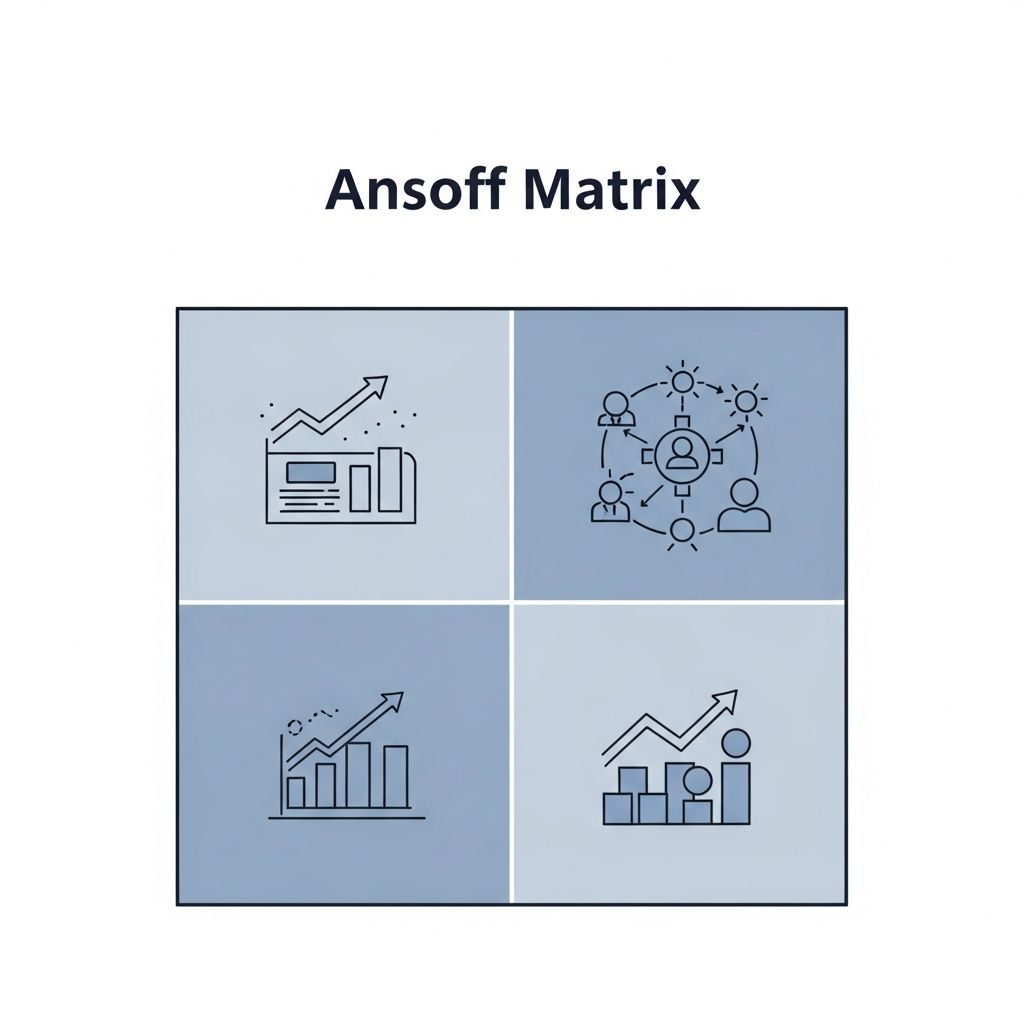
The Ansoff Matrix stands as a cornerstone in strategic planning, offering a clear framework for businesses aiming to expand. Developed by H. Igor Ansoff and introduced in the Harvard Business Review in 1957, this tool categorizes growth options based on products and markets, helping leaders assess risks and opportunities systematically.
Understanding the Framework’s Foundations
At its core, the Ansoff Matrix is a 2×2 grid plotting existing versus new products on one axis and existing versus new markets on the other. This simple structure reveals four distinct paths: market penetration, market development, product development, and diversification. Each quadrant carries escalating risk levels, from safest to most adventurous, guiding resource allocation.
Businesses use this matrix alongside tools like SWOT analysis or Porter’s Five Forces to inform decisions. It forces teams to confront whether to deepen roots in familiar territory or venture into uncharted areas, ensuring growth aligns with capabilities.
Strategy 1: Strengthening Market Penetration
Market penetration targets increasing sales of current products in established markets. As the lowest-risk option, it capitalizes on known customer bases and proven offerings, minimizing uncertainty.
Key tactics include:
- Enhancing promotional efforts through targeted advertising or loyalty programs.
- Adjusting pricing strategies, such as discounts or bundling, to boost volume.
- Expanding distribution channels within the same geography or segment.
- Improving product visibility via better merchandising or digital marketing.
For instance, a snack food brand might ramp up in-store promotions and social media campaigns to capture more shelf space from competitors in grocery stores. While growth potential may cap in saturated markets, this approach yields quick wins by leveraging existing strengths.
Strategy 2: Pursuing Market Development
Market development involves taking existing products to new markets, such as untapped geographies, demographics, or channels. Risk rises moderately since products are battle-tested, but new audiences introduce variables like cultural differences or logistics.
- Geographic expansion, e.g., entering emerging economies.
- Targeting new customer segments, like shifting from B2C to B2B.
- Exploring alternative distribution, such as online platforms for physical goods.
Athleisure giant Lululemon exemplifies this by aggressively pushing its popular lines into Asia-Pacific regions, building on proven demand while investing in local supply chains. Success hinges on market research to validate demand.
Strategy 3: Innovating with Product Development
Product development means creating new offerings for current markets. Here, risk stems from R&D investments and uncertain acceptance, though loyal customers provide a safety net.
Approaches encompass:
- Line extensions, like adding flavors to a core product.
- Technological upgrades enhancing features.
- Customized solutions based on customer feedback.
Consider a hair care brand popular with young women launching a complementary skincare line; brand loyalty encourages trials, but innovation must meet expectations. Feedback loops and prototyping are vital.
Strategy 4: Navigating Diversification Risks
Diversification, the highest-risk quadrant, launches new products into new markets. It promises substantial rewards but demands heavy investment and carries failure potential due to dual unknowns.
Subtypes include:
- Related diversification: Builds on synergies, e.g., an auto maker entering electric bikes using design expertise.
- Unrelated diversification: Spreads risk across unrelated areas, like a shoe firm venturing into packaged goods.
Prior assessments of synergies, financial readiness, and exit strategies are crucial. Coca-Cola’s foray into snacks illustrates related diversification leveraging distribution networks.
Visualizing the Ansoff Matrix
| Existing Markets | New Markets | |
|---|---|---|
| Existing Products | Market Penetration (Low Risk) | Market Development (Medium Risk) |
| New Products | Product Development (Medium Risk) | Diversification (High Risk) |
This table highlights risk progression, aiding quick strategic visualization.
Benefits and Limitations of the Approach
The matrix excels in simplicity, promoting structured discussions and risk awareness. It integrates with broader analyses for holistic planning and supports portfolio balancing.
Yet, it overlooks external factors like competition intensity or economic shifts. Overemphasis on one quadrant can neglect synergies, and qualitative nature demands quantitative validation.
Step-by-Step Implementation Guide
- Assess current position: Map products and markets accurately.
- Brainstorm options: Generate ideas per quadrant.
- Evaluate risks/rewards: Score feasibility using data.
- Prioritize and plan: Select strategies with timelines.
- Execute and monitor: Track KPIs and adjust dynamically.
Real-World Applications Across Industries
Tech firms like Apple use product development for iterative iPhone updates in core markets. Retailers like Amazon pursue market development via international e-commerce expansion. Conglomerates opt for diversification to hedge volatility.
In manufacturing, a leather goods producer might penetrate via pricing tweaks, develop markets in new regions, innovate materials for products, or diversify into accessories.
Integrating with Other Strategic Tools
Pair the Ansoff Matrix with BCG’s Growth-Share Matrix for portfolio prioritization or PESTEL for external scanning. This combo refines growth modeling for valuations.
Frequently Asked Questions (FAQs)
What is the safest Ansoff strategy?
Market penetration, as it builds on familiar products and markets with minimal change.
How does diversification differ from other strategies?
It involves both new products and markets, amplifying risk but offering independence from core business cycles.
Can small businesses use the Ansoff Matrix?
Yes, it scales well; startups often start with penetration before scaling.
What metrics track Ansoff success?
Sales growth, market share, ROI, customer acquisition costs, tailored per strategy.
Is the matrix still relevant today?
Absolutely, its timeless logic adapts to digital disruptions and global markets.
Overcoming Common Challenges
Resistance to change? Involve stakeholders early. Resource constraints? Start small in low-risk areas. Measurement gaps? Define clear KPIs upfront. Continuous adaptation counters market shifts.
References
- Ansoff Matrix – Overview, Strategies and Practical Examples — Corporate Finance Institute. 2023. https://corporatefinanceinstitute.com/resources/management/ansoff-matrix/
- The Ansoff Matrix: A Powerful Tool for Business Strategy and Growth — The Strategy Institute. 2023. https://www.thestrategyinstitute.org/insights/the-ansoff-matrix-a-powerful-tool-for-business-strategy-and-growth
- Five Powerful Consulting Frameworks: MECE, 7S, Porter’s Five Forces… — StrategyU. 2023. https://strategyu.co/consulting-frameworks/
Similar Articles








Read full bio of medha deb