Mastering Dates in Japanese: Months, Days, and Weeks
Unlock the essentials of Japanese timekeeping: learn months, days of the week, and dates with pronunciation guides and cultural insights for confident conversations.
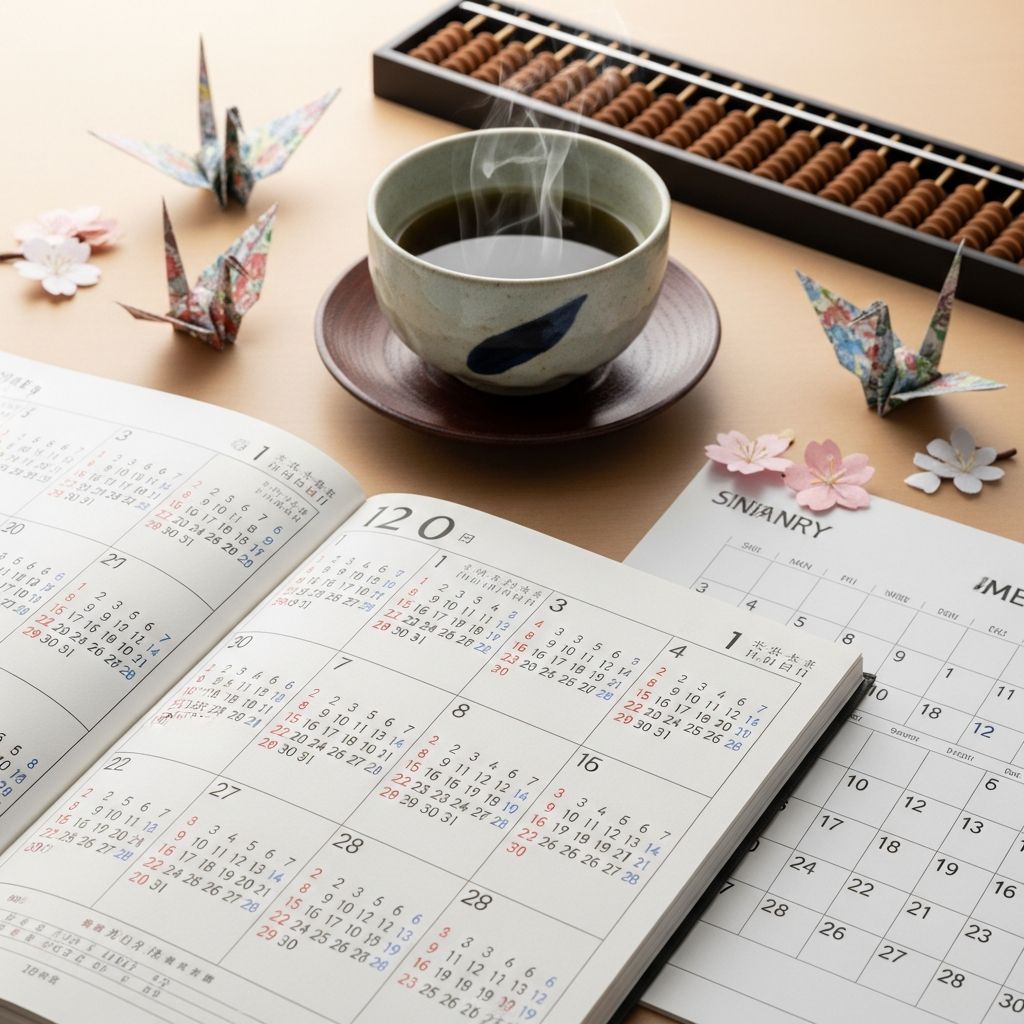
Navigating the Japanese calendar requires understanding unique pronunciation rules and counters distinct from English. Japanese dates combine numbers with specific suffixes like gatsu for months and nichi for days, often featuring irregular readings for clarity and tradition.
Understanding the Japanese Calendar System
The Japanese calendar blends Gregorian structure with native counters. Years use nen (年), months gatsu (月), days nichi (日), and weekdays youbi (曜日). A full date like April 5, 2026, reads as 2026 nen shigatsu muika youbi, emphasizing kanji and hiragana for precision.
Cultural significance influences usage: cherry blossom season aligns with specific months, and festivals tie to dates. Mastering these builds conversational fluency for travel, business, or study.
Months of the Year: Pronunciation and Exceptions
Japanese months form by prefixing numbers 1-12 to gatsu (月), meaning ‘month.’ Unlike general counting, months favor certain readings to avoid unlucky homophones—shi for 4 (not yon), shichi for 7 (not nana), and ku for 9 (not kyuu).
| English | Kanji | Hiragana | Romaji |
|---|---|---|---|
| January | 一月 | いちがつ | ichigatsu |
| February | 二月 | にがつ | nigatsu |
| March | 三月 | さんがつ | sangatsu |
| April | 四月 | しがつ | shigatsu |
| May | 五月 | ごがつ | gogatsu |
| June | 六月 | ろくがつ | rokugatsu |
| July | 七月 | しちがつ | shichigatsu |
| August | 八月 | はちがつ | hachigatsu |
| September | 九月 | くがつ | kugatsu |
| October | 十月 | じゅうがつ | jūgatsu |
| November | 十一月 | じゅういちがつ | jūichigatsu |
| December | 十二月 | じゅうにがつ | jūnigatsu |
Practice tip: Repeat shigatsu and shichigatsu aloud, as these trip up learners due to everyday number preferences.
Days of the Month: Irregular Readings and Counters
Days append nichi (日) to numbers 1-31, but irregularities arise for 1st, 20th, and others for euphony. The 1st is tsuitachi (ついたち), not ichinichi; 2nd futsuka (ふつか).
| Date | Kanji | Hiragana | Romaji |
|---|---|---|---|
| 1st | 一日 | ついたち | tsuitachi |
| 2nd | 二日 | ふつか | futsuka |
| 3rd | 三日 | みっか | mikka |
| 4th | 四日 | よっか | yokka |
| 5th | 五日 | いつか | itsuka |
| 6th | 六日 | むいか | muika |
| 7th | 七日 | なのか | nanoka |
| 8th | 八日 | ようか | yōka |
| 9th | 九日 | ここのか | kokonoka |
| 10th | 十日 | とおか | tōka |
| 11th | 十一日 | じゅういちにち | jūichinichi |
| 20th | 二十日 | はつか | hatuka |
| 21st | 二十一日 | にじゅういちにち | nijūichinichi |
| 30th | 三十日 | さんじゅうにち | sanjūichi |
| 31st | 三十一日 | さんじゅういちにち | sanjūichinichi |
From 11th-19th and 21st+, use standard nichi; teens simplify to ~ninichi. These patterns reflect phonetic harmony.
Days of the Week: Planetary Names and Kanji
Weekdays end in youbi (曜日), prefixed by celestial kanji: Sun (日), Moon (月), Fire (火), Water (水), Wood (木), Gold (金), Earth (土).
- Monday: Getsuyoubi (月曜日, 月曜) – Moon Day
- Tuesday: Kayoubi (火曜日, 火曜) – Fire Day
- Wednesday: Suiyoubi (水曜日, 水曜) – Water Day
- Thursday: Mokuyoubi (木曜日, 木曜) – Wood Day
- Friday: Kin’youbi (金曜日, 金曜) – Gold Day
- Saturday: Doyoubi (土曜日, 土曜) – Earth Day
- Sunday: Nichiyoubi (日曜日, 日曜) – Sun Day
Abbreviations using single kanji appear in schedules and media for brevity.
Forming Complete Dates and Common Phrases
Assemble dates as [Year] nen [Month] gatsu [Day] nichi [Weekday] youbi. Example: 2026 nen shigatsu itsuka getsuyoubi (April 5, 2026, Monday).
Key phrases:
- Today: kyou (今日)
- Tomorrow: ashita (明日)
- Yesterday: kinou (昨日)
- What date is it?: Ima nan-nichi desu ka? (今何日ですか?)
- My birthday is…: Watashi no tanjoubi wa [date] desu
Birthdays often omit year for privacy.
Counting Periods: Months, Weeks, and Duration
Distinguish counters: gatsu names months; kagetsu (ヶ月) or tsuki (月) counts durations. Ik-kagetsu (one month), ni-kagetsu (two months); use nana for 7+ in counters.
| Duration | Romaji (Kagetsu) | Hiragana |
|---|---|---|
| 1 month | ikkagetsu | いっかげつ |
| 2 months | nikagetsu | にかげつ |
| 3 months | sankagetsu | さんかげつ |
| 4 months | yonkagetsu | よんかげつ |
| 6 months | rokkagetsu | ろっかげつ |
| 7 months | nanakagetsu | ななかげつ |
Tsuki suits traditional counts up to three: hitotsuki, futatsuki.
Cultural Contexts and Practical Applications
Months link to events: sangatsu (March) for graduation, shigatsu (April) new school year, kugatsu (September) respect-for-aged day. Paydays often getsuyoubi no futsuka (2nd Monday).
In business, schedules use abbreviated kanji. Tourists ask dates at stations; apps reinforce learning via audio.
Common Pitfalls and Learning Strategies
Avoid yongatsu or nanagatsu—stick to prescribed forms. Practice with calendars, labeling days. Apps simulate dialogues: “Kyou wa nan-youbi desu ka?” (What day is today?).
- Record pronunciations, comparing to natives.
- Flashcards for irregularities like kokonoka.
- Daily journaling in Japanese dates.
Frequently Asked Questions (FAQs)
What is the Japanese word for January?
Ichigatsu (一月, いちがつ), combining ‘one’ and ‘month.’
Why is April ‘shigatsu’ not ‘yongatsu’?
Tradition prefers shi for months to distinguish from counting; yon is casual numbers only.
How do you say the 1st of the month?
Tsuitachi (一日, ついたち), a special irregular form.
What counter for ‘two months’ duration?
Nikagetsu (二ヶ月, にかげつ) using Sino-Japanese numbers.
How to ask today’s date?
Ima nan-nichi desu ka? (今何日ですか?) or include weekday: Nan-youbi desu ka?
References
- A Guide to The Months in Japanese — Busuu. 2023. https://www.busuu.com/en/japanese/months
- Learn using Japanese Numbers to give Days, Months and Days of the Week — Learn Japanese Adventure. 2022-10-15. https://www.learn-japanese-adventure.com/japanese-numbers-day-month-week.html
- Japanese Calendar Dates: Reading Dates in Japanese and More — JapanesePod101. 2019-12-20. https://www.japanesepod101.com/blog/2019/12/20/dates-in-japanese/
- Date and Time — Tofugu. 2023-05-12. https://www.tofugu.com/japanese-grammar/date-and-time/
- Months in Japanese, がつ or つき or かげつ? — Smile Nihongo. 2024-01-08. https://smilenihongo.com/months-in-japanese
Similar Articles







Read full bio of medha deb