Mastering Pronouns: Effective Teaching Strategies
Unlock the power of pronouns in language learning with proven, step-by-step strategies for children and educators.
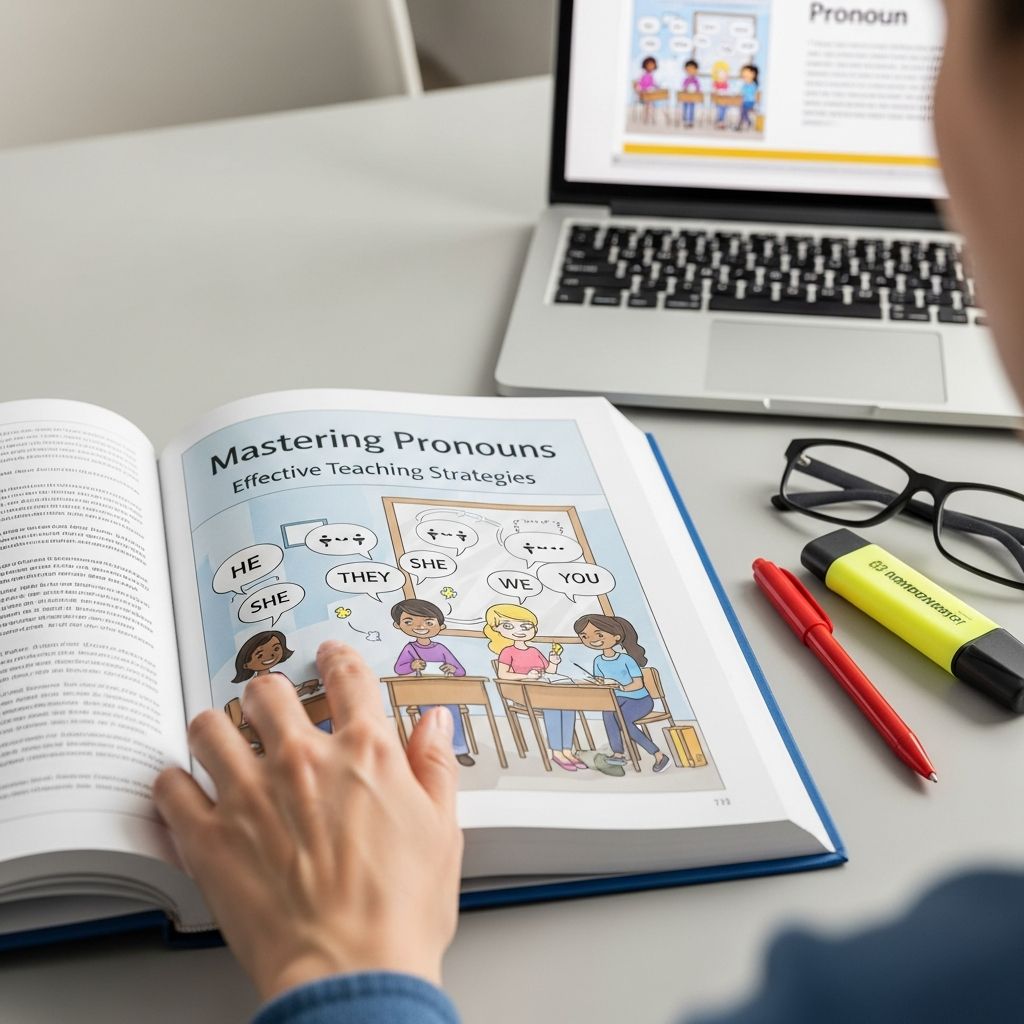
Pronouns are fundamental building blocks of language that replace nouns to make communication smoother and more efficient. Teaching them requires a thoughtful approach that builds from basic recognition to fluent usage. This guide outlines original strategies drawn from child development principles, ensuring learners progress naturally without frustration.
Understanding the Basics of Pronoun Development
Children typically begin grasping pronouns around age 2-3, starting with simple ones like “I” and “me,” before tackling subject pronouns such as “he,” “she,” and “they.” This progression aligns with cognitive growth, where kids first identify themselves and familiar people before generalizing to others. Delays can occur due to confusion between speaker-listener perspectives, like mixing “I” and “you.” Early intervention through play-based methods strengthens neural pathways for language.
Key to success is distinguishing
receptive
(understanding) fromexpressive
(using) skills. Receptive mastery precedes expressive, preventing errors that reinforce bad habits. For instance, ensuring a child points to the right picture when hearing “he runs” sets a solid foundation.Building Foundational Receptive Skills
Start with visual aids to teach pronoun recognition. Use mirrors for self-referential pronouns: have the child touch their reflection while saying “that’s me,” reinforcing personal identity. Progress to photos of family or characters, asking them to point to “him” or “her” based on gender cues—generally boys as “he,” girls as “she.”
- Display paired images: one boy jumping, one girl jumping. Say “Point to she jumping,” guiding gently if needed.
- Incorporate books: Pause at illustrations and query “Who is happy? He is?” to link emotions and pronouns, fostering empathy.
- For plurals, show groups: “They are playing” while pointing to multiple figures.
Avoid overwhelming with “I/you” initially, as these shift based on perspective. Real-life demos work best later.
Transitioning to Expressive Phrases
Once receptive skills solidify, encourage short phrases. Use object play: Hold toys and ask “Who wants the ball?” Prompt “He does” for a boy doll or “She does” for a girl.
| Pronoun | Activity Example | Target Phrase |
|---|---|---|
| He/She | Show boy/girl pics with objects | “He wants it” |
| They | Group photos running | “They run” |
| I/You | Hold items together | “I have it / You have it” |
| We | Joint activity like stacking blocks | “We build” |
Repeat back errors intonationally: If child says “Her run,” respond “She runs?” then model “Yes, she runs”. This subtle correction builds confidence without direct criticism.
Crafting Full Sentences with Pronouns
Advance to descriptive sentences using photo albums or printed scenes. Present a boy biking: “Tell me about him.” Guide to “He rides his bike”. Introduce possessives naturally: “That’s her bike.”
- Family photos: “What is she doing?”
- Magazine cutouts: Describe actions like “They eat ice cream.”
- Real-life: During play, narrate “You throw the ball high!”
For reversals, question gently: “Him riding? Is it a boy or girl?” This prompts self-correction. Gradually add object pronouns: “Give it to her.”
Integrating Pronouns into Stories and Daily Routines
Elevate learning by embedding pronouns in narratives. Read picture books, pausing for retells: “What does he do next?” Ensure varied characters for practice.
Daily integration: During meals, say “Pass it to me,” modeling object forms. Scavenger hunts: Find objects and describe “I see her book.”
Scaffold complexity:
- Sight word recognition: Flashcards for “he/she/they.”
- Sorting: Pictures/names into bins.
- Sentence building: Replace nouns with pronouns.
- Passage reading: Underline pronouns in short stories.
Overcoming Common Challenges
Reversals like “you/me” stem from egocentrism; counter with role-play switching roles. Gender-neutral cases require context: Stick to general rules initially. For advanced learners, tackle reflexives like “himself” via mirror games: “He sees himself.”
Track progress with checklists:
- Receptive: 80% accuracy pointing.
- Expressive: Uses in 5 spontaneous phrases daily.
- Generalization: Applies in conversations.
Activities for Home and Classroom Reinforcement
Action Games: Pass toys saying “Give to him/her.”
Fill-in-Blanks: “She ___ the ball to me.”
Sorting Tasks: Categorize images by pronoun, progressing to names only.
Story Creation: Use puppets: “What does she say?”
Incorporate tech: Apps with interactive stories, but prioritize hands-on.
Frequently Asked Questions (FAQs)
What age should pronoun teaching begin?
Around 2-3 years, starting receptively. Adjust for individual pace.
How to fix pronoun reversals?
Model correctly with emphasis and real-life role switches.
Are visual aids essential?
Yes, they clarify abstract concepts like perspective.
Can games replace formal lessons?
Games are ideal for naturalistic learning, supplemented by structure.
What about non-binary pronouns?
Introduce later with inclusive stories, focusing on context.
Long-Term Benefits of Pronoun Mastery
Proficient pronoun use enhances storytelling, social interactions, and reading comprehension. It reduces cognitive load in sentences, aiding academic success. Consistent practice yields fluent communicators by school age.
Parents and educators should collaborate: Share progress notes and home activities. Patience is key—celebrate small wins to motivate.
References
- Pronoun Acquisition | Child Development — TherapyWorks. 2023. https://therapyworks.com/blog/language-development/speech-strategies/pronoun-acquisition/
- Teaching Pronouns – Speech Therapy | “He”, “She”, “They” — Speech And Language Kids. 2022. https://www.speechandlanguagekids.com/5-steps-to-teach-he-and-she/
- How to Teach Pronouns to Kids | An Easy Guide for Parents — Genie Academy. 2024. https://www.genieacademy.com/blog/how-to-teach-pronouns
- How to Strategically Teach Pronouns In Speech Therapy — The Gift of Gab. 2023. https://the-gift-of-gab.com/teaching-pronouns-in-speech-therapy/
- Inclusive Teaching: Gender Pronouns and Teaching — College of DuPage Library. 2025. https://library.cod.edu/guide_inclusive/pronouns
Similar Articles








Read full bio of medha deb