Mastering the Spanish Verb Comer: Forms and Usage
Unlock the full potential of 'comer' – your guide to conjugations, expressions, practical Spanish eating vocabulary.
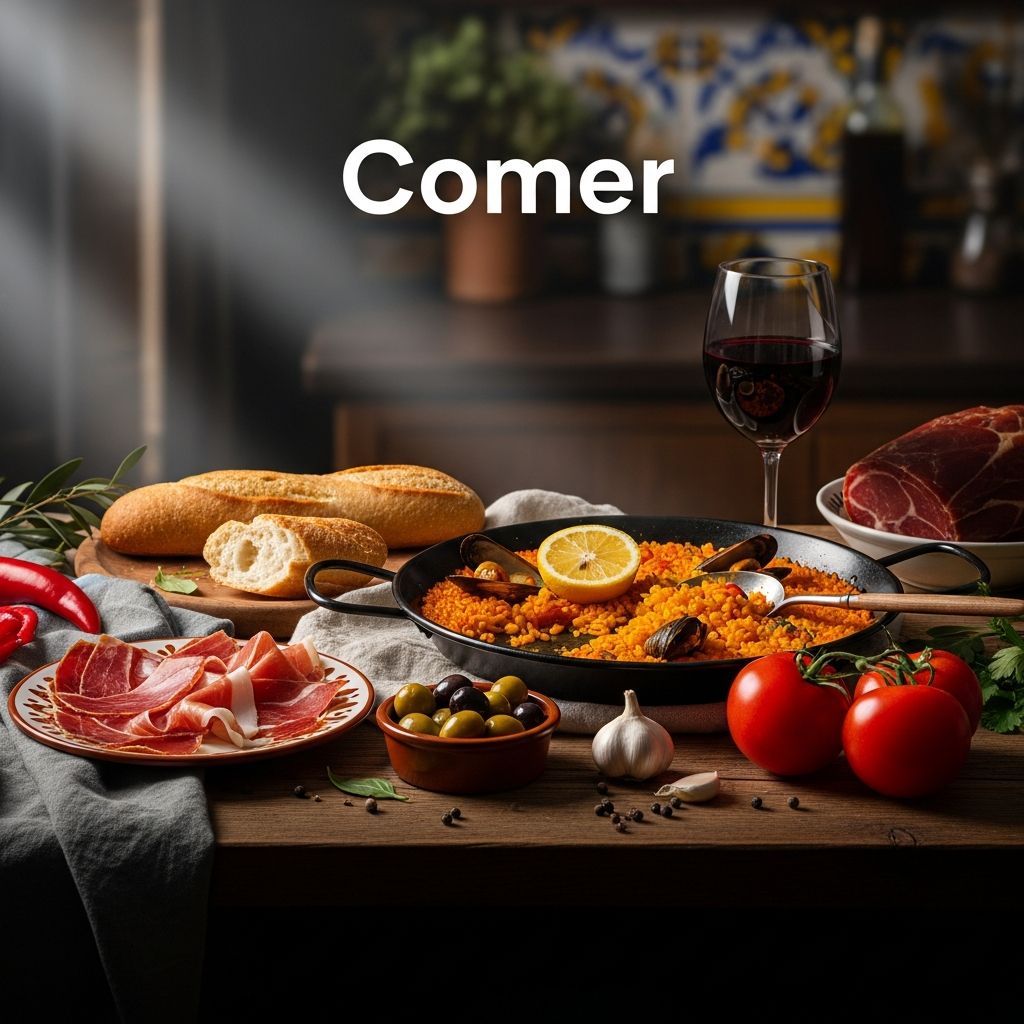
The Spanish verb comer, meaning ‘to eat,’ stands as one of the most frequently used verbs in daily conversation. As a regular -er verb, it follows predictable patterns across tenses, making it an excellent starting point for language learners. This guide explores its conjugations, contextual applications, idiomatic expressions, and strategies for integration into spoken and written Spanish.
Understanding the Basics of Comer
At its core, comer describes the act of consuming food. It appears in everything from casual chats about meals to formal discussions on nutrition. Unlike irregular verbs like ser or ir, comer maintains consistency, with changes primarily in vowel sounds and endings. Mastering it builds confidence for tackling other -er verbs such as beber (to drink) and aprender (to learn).
Native speakers employ comer over 50 times daily in informal settings, according to linguistic studies from the Real Academia Española. Its versatility extends beyond literal eating to metaphorical uses, like ‘devouring’ a book.
Present Tense Conjugation: Everyday Eating Habits
In the present tense, comer expresses current or habitual actions. Here’s the full conjugation:
| Pronoun | Conjugation | Example |
|---|---|---|
| Yo | como | Yo como pizza los viernes. (I eat pizza on Fridays.) |
| Tú | comes | Tú comes muy rápido. (You eat very fast.) |
| Él/Ella/Usted | come | Él come ensalada. (He eats salad.) |
| Nosotros | comemos | Nosotros comemos juntos. (We eat together.) |
| Vosotros | coméis | Vosotros coméis tapas. (You all eat tapas.) |
| Ellos/Ellas/Ustedes | comen | Ellos comen carne. (They eat meat.) |
Use this tense for routines: Desayuno a las ocho y como al mediodía (I have breakfast at eight and eat at noon).
Preterite Tense: Recounting Past Meals
The preterite handles completed actions in the past. Conjugations shift to emphasize finality:
- Yo comí (I ate)
- Tú comiste (You ate)
- Él/Ella/Usted comió (He/She/You formal ate)
- Nosotros comimos (We ate)
- Vosotros comisteis (You all ate)
- Ellos/Ellas/Ustedes comieron (They/You all ate)
Example: Ayer comí paella en Valencia (Yesterday I ate paella in Valencia). This tense suits narratives about specific dining experiences.
Imperfect Tense: Ongoing or Habitual Past Eating
Contrastingly, the imperfect describes ongoing or repeated past actions:
- Yo comía
- Tú comías
- Él/Ella/Usted comía
- Nosotros comíamos
- Vosotros comíais
- Ellos/Ellas/Ustedes comían
Cuando era niño, comía dulces todos los días (When I was a child, I used to eat sweets every day). Pair it with time expressions like siempre or a menudo.
Future and Conditional: Planning and Hypotheticals
For future intentions: comería (conditional, I would eat) or comeré (future, I will eat).
| Future | Conditional | |
|---|---|---|
| Yo | comeré | comería |
| Tú | comerás | comerías |
| Él/Ella/Usted | comerá | comería |
| Nosotros | comeremos | comeríamos |
| Vosotros | comeréis | comeríais |
| Ellos/Ellas/Ustedes | comerán | comerían |
Si tuviera hambre, comería ahora (If I were hungry, I would eat now).
Subjunctive Mood: Wishes, Doubts, and Emotions
The subjunctive adds nuance for uncertainty. Present subjunctive:
- Yo coma, tú comas, él coma, nosotros comamos, vosotros comáis, ellos coman
Imperfect subjunctive: comiera/comiese forms. Example: Espero que comas bien (I hope you eat well). Use after triggers like quiero que or ojalá.
Commands: Directing Dining Choices
Affirmative imperatives: Come ahora (Eat now, tú), Comamos (Let’s eat). Negative: No comas tanto (Don’t eat so much).
- Formal: Coma usted (Eat, formal).
- Plural: Comed (Eat, vosotros).
Reflexive Comer: Emotional and Habitual Nuances
Comerse implies enjoyment or thoroughness: Me comí la torta entera (I ate the whole cake – with relish). It conveys ‘to eat up’ or ‘devour’.
Compound Tenses with Haber
Perfect tenses use haber + past participle comido:
- Present perfect: He comido (I have eaten).
- Past perfect: Había comido (I had eaten).
These denote actions relative to another point in time.
Idiomatic Expressions with Comer
Spanish thrives on idioms:
- Comer de gorra: Eat for free.
- Comer como un lobo: Eat like a wolf (voraciously).
- Estar comido: Be doomed (lit. be eaten).
- Comerse a alguien con los ojos: Devour someone with one’s eyes (stare lustfully).
- No tener qué comer: Go hungry.
Incorporate these for natural fluency.
Regional Variations Across Spanish-Speaking World
Usage varies: In Mexico, comer pairs with antojitos; in Argentina, with asado. Latin America favors vos forms like comés.
Common Mistakes and Pro Tips
Avoid confusing preterite/imperfect: Use preterite for one-time events, imperfect for background. Practice with food journals: Describe daily meals using different tenses.
- Tip 1: Pair with adjectives like sabroso (tasty), picante (spicy).
- Tip 2: Listen to podcasts on Spanish cuisine for immersion.
- Tip 3: Use apps to conjugate on-the-go.
Frequently Asked Questions (FAQs)
Is ‘comer’ regular in all tenses?
Yes, comer is fully regular, with no stem changes except in subjunctive forms shared by -er verbs.
How does ‘comerse’ differ from ‘comer’?
Comerse adds an emphatic, often pleasurable connotation, like fully indulging in food.
What’s the gerund and past participle?
Gerund: comiendo (eating). Past participle: comido (eaten).
Can ‘comer’ be used for animals?
Yes, e.g., El perro come huesos (The dog eats bones).
Practice Exercises for Reinforcement
Fill in blanks:
- Yo _____ (comer) manzanas diariamente.
- Ayer nosotros _____ (comer) en un restaurante.
- Si llueve, _____ (comer) en casa.
Answers: 1. como, 2. comimos, 3. comeremos/comeríamos.
References
- Real Academia Española Dictionary — Real Academia Española. 2023-01-15. https://dle.rae.es/comer
- Nueva gramática de la lengua española — Real Academia Española. 2009-12-15. https://www.rae.es/obras-academicas/gramatica
- Spanish Verb Tenses by Penguin — Penguin Random House. 2022-06-01. https://www.penguinrandomhouse.com/books/
- Conjugaciones verbales — Instituto Cervantes. 2024-03-10. https://cvc.cervantes.es/
- 501 Spanish Verbs — Barron’s Educational Series. 2021-11-20. https://www.barronseduc.com/
Similar Articles







Read full bio of Sneha Tete