Medieval Majesty: Understanding Gothic Architecture
Discover how pointed arches and soaring heights defined medieval European architectural innovation.
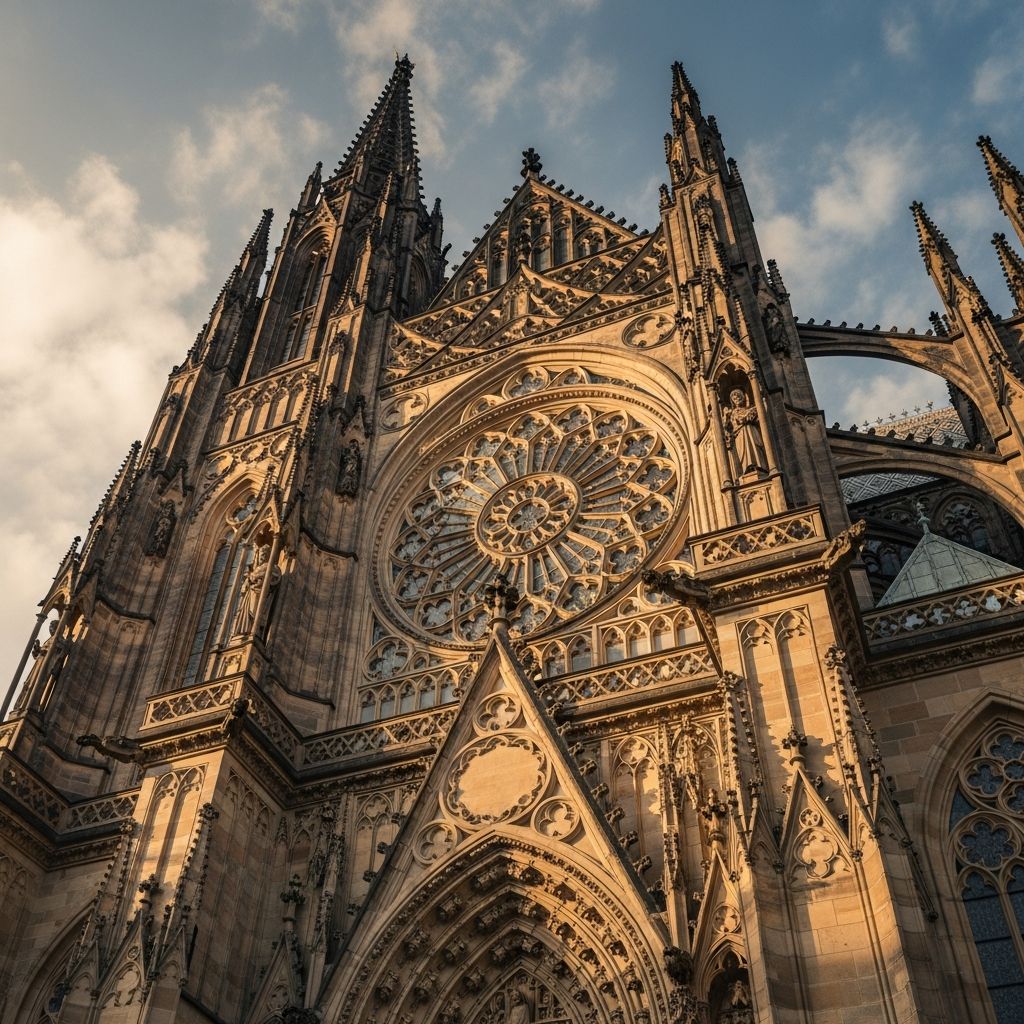
The architectural landscape of medieval Europe underwent a dramatic transformation beginning in the 12th century, as builders and architects developed innovative techniques that would fundamentally change how structures could be designed and constructed. This revolutionary building style emerged from a desire to create spaces filled with divine light and soaring heights that inspired awe and spirituality. The result was an architectural movement that not only dominated the European continent for centuries but also established design principles that continue to influence building design today.
The Rise of a Revolutionary Building Style
Between the mid-12th and early 16th centuries, a distinct architectural style emerged that would define the aesthetic and structural capabilities of medieval construction. This period marked a significant departure from the heavy, fortress-like characteristics of the preceding architectural tradition, which had emphasized thick stone walls and limited fenestration. The new approach reflected a confluence of cultural factors including increased prosperity, relative peace in many regions, and a flourishing of religious devotion that manifested in ambitious building projects.
The transformation began in northern France during the early 12th century and rapidly disseminated throughout Europe, with each region adapting the core principles to reflect local preferences and materials. What made this style particularly revolutionary was not a single innovation but rather a combination of interrelated structural and aesthetic developments that worked together to create unprecedented possibilities for vertical construction and interior illumination.
Foundational Structural Elements
The innovation that most clearly distinguishes this architectural movement from its predecessors is the
pointed arch
. Scholars suggest this architectural feature likely originated from Islamic building traditions visible in Spain during the medieval period. The geometric properties of the pointed arch fundamentally altered how weight distributed through building structures. Unlike the rounded arch common in previous styles, the pointed configuration directed force more directly downward along the supporting columns, reducing lateral thrust and stress on surrounding structural components.This single modification unlocked a cascade of possibilities. By reducing the stress imposed on supporting columns and piers, architects could reduce their diameter and height-to-width ratio, creating more slender vertical elements. Columns could now extend dramatically skyward, and this vertical continuity integrated them directly into the vaulting systems above, creating an unprecedented sense of unity and height.
The Ribbed Vault System
Another essential structural innovation was the development of ribbed vaulting, which replaced the solid barrel and groin vaults that had characterized earlier construction. In this system, the ceiling surface was divided into geometric sections by a framework of diagonal arched ribs. These ribs acted as permanent internal support, carrying the weight of the stone vault webbing between them. As designers gained confidence with the technique, they introduced increasingly complex variations including lierne ribs and tieceron ribs that created elaborate sculptural patterns in stone.
The ribbed vault served multiple purposes simultaneously. Structurally, it efficiently distributed weight and reduced the amount of stone required for ceiling construction, thereby reducing overall building mass. Aesthetically, the complex web of ribs created dramatic internal spaces that drew the eye upward and suggested infinite height.
Flying Buttresses and External Support
Perhaps the most visually distinctive innovation was the flying buttress—a structural element that extended outward from the upper portions of exterior walls. These external arches functioned as a system of external support, carrying the horizontal thrust from the vaults and roof structures away from the main walls and directing it to free-standing stone columns and pinnacles positioned outside the building perimeter.
This external support system represented a conceptual breakthrough in medieval engineering. By removing the need for massive internal walls to contain and resist horizontal forces, architects could eliminate these walls entirely in many locations and replace them with expanses of windows. The result was a radical transformation in how interior space could be illuminated and perceived.
Light as Sacred Architecture
The structural innovations described above ultimately served a singular purpose: to maximize the penetration of natural light into interior spaces. Early religious buildings relied on thick walls punctuated by small openings that restricted illumination. The new structural systems eliminated this constraint by removing the need for load-bearing walls in many locations.
Large expanses of the exterior wall could now be replaced with windows, and these openings were filled with colored glass panels that transformed sunlight into dynamic, chromatic interior effects. The brilliant colors and biblical narratives depicted in stained glass windows served both spiritual and didactic functions, communicating sacred stories to a largely illiterate congregation while transforming the interior atmosphere into something transcendent and otherworldly.
Window design itself evolved dramatically during this period. From the mid-13th century onward, window configurations became progressively more complex and elaborate, incorporating geometric patterns and tracery that demonstrated both engineering sophistication and aesthetic refinement.
The Defining Aesthetic Language
Beyond the structural elements, this architectural tradition developed a distinctive visual vocabulary that became immediately recognizable:
- Verticality and Height: Buildings soared upward dramatically, with emphasis on the vertical dimension that suggested transcendence and divine aspiration
- Elaborate Decorative Programs: Complex sculptural embellishments adorned arches, piers, and exterior surfaces, often depicting biblical narratives and religious figures
- Ornamental Tracery: Intricate geometric patterns decorated windows, walls, and ceiling surfaces with delicate stone filigree
- Gargoyle and Chimera Sculptures: Fantastical stone figures perched on exterior walls, serving both drainage functions and supernatural protective roles
- Rose Windows: Massive circular window designs filled with radiating geometric patterning that became iconic focal points
Geographic Spread and Regional Variations
Although this architectural style originated in northern France around 1140, particularly at the abbey of Saint-Denis under Abbot Suger, who pioneered its innovative features, the tradition rapidly disseminated across Europe. Each region developed distinctive local characteristics while maintaining fidelity to the core principles.
Britain and France emerged as primary centers of architectural development, where ambitious cathedral and church construction projects provided opportunities for architects and masons to experiment with increasingly complex and daring designs. Major ecclesiastical institutions competed to construct ever-more impressive structures, driving continuous innovation in structural engineering and ornamental sophistication.
While religious buildings dominated the tradition, the style extended beyond ecclesiastical architecture to encompass secular structures. Many medieval civic buildings, fortifications, and residential structures incorporated Gothic design principles, though these often featured timber-frame construction combined with Gothic aesthetic elements.
Monumental Examples and Their Significance
The style produced some of humanity’s most recognizable and historically significant buildings. Notre-Dame Cathedral in Paris, begun in 1163, exemplifies the tradition’s defining characteristics and immediately influenced cathedral construction across Europe. Its enormous rose windows, extensive stained glass installations, flying buttresses, and decorative gargoyles represent the culmination of structural innovation and aesthetic ambition.
These massive undertakings required centuries to complete and represented the coordinated efforts of generations of craftspeople and architects. The extended construction timelines allowed designs to evolve and incorporate new technical discoveries, making major cathedrals archaeological records of medieval architectural development.
Distinguishing Features and Building Characteristics
| Architectural Element | Function | Visual Impact |
|---|---|---|
| Pointed Arch | Directs weight downward; reduces lateral thrust | Creates vertical emphasis; allows taller structures |
| Ribbed Vault | Distributes ceiling weight; reduces stone mass | Creates complex geometric ceiling patterns |
| Flying Buttress | External support for walls and vaults | Distinctive silhouette; enables large windows |
| Large Windows | Maximize natural illumination | Interior filled with colored light and biblical imagery |
| Stained Glass | Filtered light; narrative and decorative function | Transforms interior atmosphere with color and story |
| Tracery | Structural support for windows; ornamental framework | Delicate geometric patterns in stone |
Transition and Historical Context
This architectural tradition emerged from and succeeded earlier building styles. The preceding Romanesque period, roughly from the 6th to 11th centuries, had established many foundational architectural principles and construction techniques. However, the new style represented a conscious departure from Romanesque aesthetics and engineering approaches. Where Romanesque buildings emphasized massive walls, barrel vaults, and fortress-like strength, the new tradition prioritized height, light, and delicate structural elegance.
The tradition itself eventually gave way to different architectural movements during the Renaissance period, as cultural values shifted and new aesthetic principles influenced building design. However, the structural innovations and design principles established during this medieval period fundamentally altered architecture’s trajectory and remain influential in contemporary design.
Structural Problem-Solving and Innovation
The 12th and 13th centuries witnessed unprecedented engineering challenges as architects attempted to construct increasingly massive buildings while maintaining interior brightness and openness. These challenges drove systematic problem-solving and continuous technical innovation. Each successful project provided knowledge that influenced subsequent construction efforts, creating a cycle of experimentation and refinement that lasted centuries.
The solutions developed to address these challenges—particularly the combination of pointed arches, ribbed vaults, and flying buttresses—represented genuine breakthroughs in structural engineering. These elements worked synergistically to enable vertical dimensions and internal spaces that would have been impossible using earlier construction methods.
Frequently Asked Questions
Q: What is the most distinctive feature of this architectural tradition?
A: The pointed arch is widely considered the defining element, as its unique geometry allows for efficient weight distribution and enables taller, more slender structural components.
Q: Why were large windows so important in medieval cathedral construction?
A: Stained glass windows served spiritual, didactic, and aesthetic purposes. They filled interior spaces with divine light transformed into color, communicated biblical narratives to illiterate congregants, and created transcendent atmospheres that reinforced religious experience.
Q: How long did it typically take to construct these buildings?
A: Major cathedral projects often required a century or more to complete. Some took centuries, allowing architectural styles to evolve throughout construction and making them living records of medieval architectural development.
Q: Was this architectural style used for buildings other than churches?
A: While religious buildings dominated the tradition, the style also appeared in civic structures, fortifications, and residential buildings, though these often incorporated timber-frame construction alongside Gothic aesthetic elements.
Q: Where did the architectural innovations originate?
A: The style originated in northern France during the early 12th century, with major developments at the abbey of Saint-Denis under Abbot Suger around 1140. The pointed arch itself was likely borrowed from Islamic architectural traditions seen in medieval Spain.
References
- Gothic architecture — Wikipedia. Retrieved from https://en.wikipedia.org/wiki/Gothic_architecture
- Exploring the Majestic Realm of Gothic Architecture — Linvisibile. Retrieved from https://linvisibile.com/news/gothic-architecture-exploration/
- The Origins and Evolution of Gothic Architecture — ArchDaily. Retrieved from https://www.archdaily.com/983605/the-origins-and-evolution-of-gothic-architecture
- Gothic architecture, an introduction — Smarthistory. Retrieved from https://smarthistory.org/gothic-architecture-an-introduction/
- A Guide to English Gothic Architecture — The Historic England Blog. Retrieved from https://heritagecalling.com/2022/05/05/what-is-gothic-architecture/
- Gothic architecture — Britannica. Retrieved from https://www.britannica.com/art/Gothic-architecture
- The Gothic style – an introduction — Victoria and Albert Museum. Retrieved from https://www.vam.ac.uk/articles/the-gothic-style-an-introduction
Similar Articles








Read full bio of medha deb