Meiji Restoration: Japan’s Path to Modernity
Discover how the Meiji Restoration transformed feudal Japan into a global powerhouse through radical reforms and Western-inspired modernization.
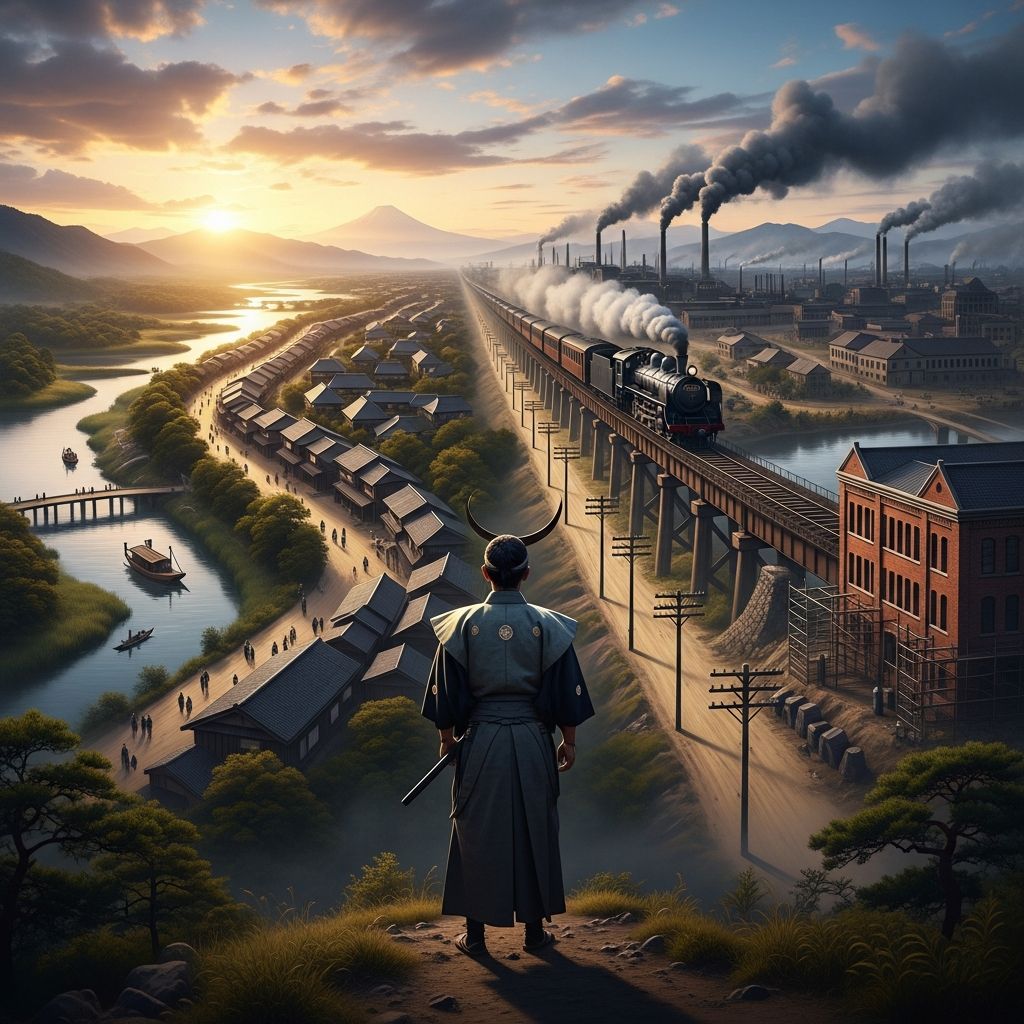
The Meiji Restoration stands as one of the most transformative events in modern history, marking Japan’s swift transition from a secluded feudal society to a industrialized nation capable of rivaling Western powers. Beginning in 1868, this political upheaval dismantled centuries of shogunal rule and centralized authority under Emperor Meiji, setting the stage for unprecedented economic, social, and military advancements.
Historical Context: The Decline of the Tokugawa Era
Before the Meiji Restoration, Japan labored under the Tokugawa shogunate, a military government that had dominated since 1603. This period, known as the Edo era, enforced a policy of sakoku—strict national isolation—to preserve social order and prevent foreign influence. Samurai warriors held privileged status, while rigid class structures confined merchants, farmers, and artisans to their roles.
Economic strains mounted as population growth outpaced resources, leading to famines and peasant uprisings. Samurai stipends dwindled amid inflation, fostering discontent among the warrior class. The arrival of Commodore Matthew Perry’s U.S. fleet in 1853 shattered Japan’s isolation, forcing unequal treaties that granted extraterritorial rights to Western nations. These humiliations exposed the shogunate’s weaknesses, igniting calls for reform from domains like Satsuma and Choshu.
- Key pressures on the shogunate: Internal economic woes, samurai dissatisfaction, and foreign encroachment.
- Perry’s impact: Opened ports, symbolizing the end of sakoku and urgency for modernization.
The Turning Point: Overthrow of the Shogunate
On January 3, 1868, imperial loyalists staged a coup in Kyoto, proclaiming the restoration of power to 15-year-old Emperor Mutsuhito, who adopted the reign name Meiji—meaning ‘enlightened rule.’ This event, far from bloodless, sparked the Boshin War (1868-1869), pitting shogunate forces against imperial troops backed by progressive samurai.
The conflict ended with shogunate leader Tokugawa Yoshinobu’s surrender, consolidating imperial control. The Charter Oath of 1868 outlined the new government’s vision: deliberative assemblies, unity across classes, knowledge-seeking globally, and rejection of outdated customs. This document symbolized Japan’s pivot toward modernity while invoking imperial legitimacy.
| Event | Date | Outcome |
|---|---|---|
| Perry’s Arrival | 1853 | Forced opening of Japan |
| Imperial Declaration | Jan 3, 1868 | Restoration proclaimed |
| Boshin War Ends | 1869 | Shogunate defeated |
Political Overhaul: Building a Centralized State
The new Meiji government abolished the feudal domain system in 1871, replacing daimyo lords with prefectural governors appointed by Tokyo. This centralized authority, streamlining administration and taxation. The samurai class was dissolved through stipends that were later commuted to bonds, culminating in the 1876 samurai rebellion suppression.
A constitution was promulgated in 1889, establishing a bicameral Diet with limited male suffrage, blending Western parliamentary models with imperial sovereignty. These reforms fostered national unity under the slogan ‘rich country, strong army’ (fukoku kyōhei).
Economic Transformation: From Agrarian to Industrial Power
Japan’s economy underwent rapid industrialization. The government spearheaded infrastructure: railroads connected Tokyo to Yokohama by 1872, telegraphs spanned the nation by 1875, and modern banking emerged. State-owned enterprises in steel, shipbuilding, and textiles were privatized to zaibatsu conglomerates like Mitsubishi and Mitsui.
Agricultural reforms freed peasants from feudal dues, introducing land taxes that funded development. By 1900, Japan boasted a thriving export economy in silk and tea, laying foundations for heavy industry. This ‘state-guided capitalism’ propelled GDP growth, transforming Japan from feudal backwater to economic contender.
- Railroad mileage: From 0 in 1868 to over 7,000 km by 1914.
- Industrial output: Coal production rose 30-fold in three decades.
Social Reforms: Education and Class Mobility
Universal education became a cornerstone, with compulsory schooling enacted in 1872. By 1900, literacy neared 90%, fueling a skilled workforce. Curricula blended Japanese ethics with Western sciences, producing engineers and bureaucrats.
Class barriers crumbled: Samurai lost privileges, commoners gained opportunities. Conscription in 1873 created a citizen army, democratizing military service. Urbanization accelerated as factories drew rural migrants, though it sparked social tensions like the 1877 Satsuma Rebellion. Women saw limited gains, with education access but persistent patriarchal norms.
Military Modernization: From Isolation to Empire
Japan built a conscript army modeled on Prussia and navy on Britain, emphasizing discipline and technology. Victory in the First Sino-Japanese War (1894-1895) gained Taiwan and influence over Korea, while the Russo-Japanese War (1904-1905) shocked the world with Japan’s naval triumph at Tsushima.
These successes revised unequal treaties by 1894, affirming Japan as an equal power. Military prowess secured colonies and resources, underpinning imperial expansion.
Cultural Shifts: Balancing Tradition and Westernization
Similar Articles







Read full bio of medha deb