New Hampshire Primary: Gateway to the Presidency
Discover why New Hampshire's first-in-the-nation primary shapes presidential races and tests candidates like no other contest.
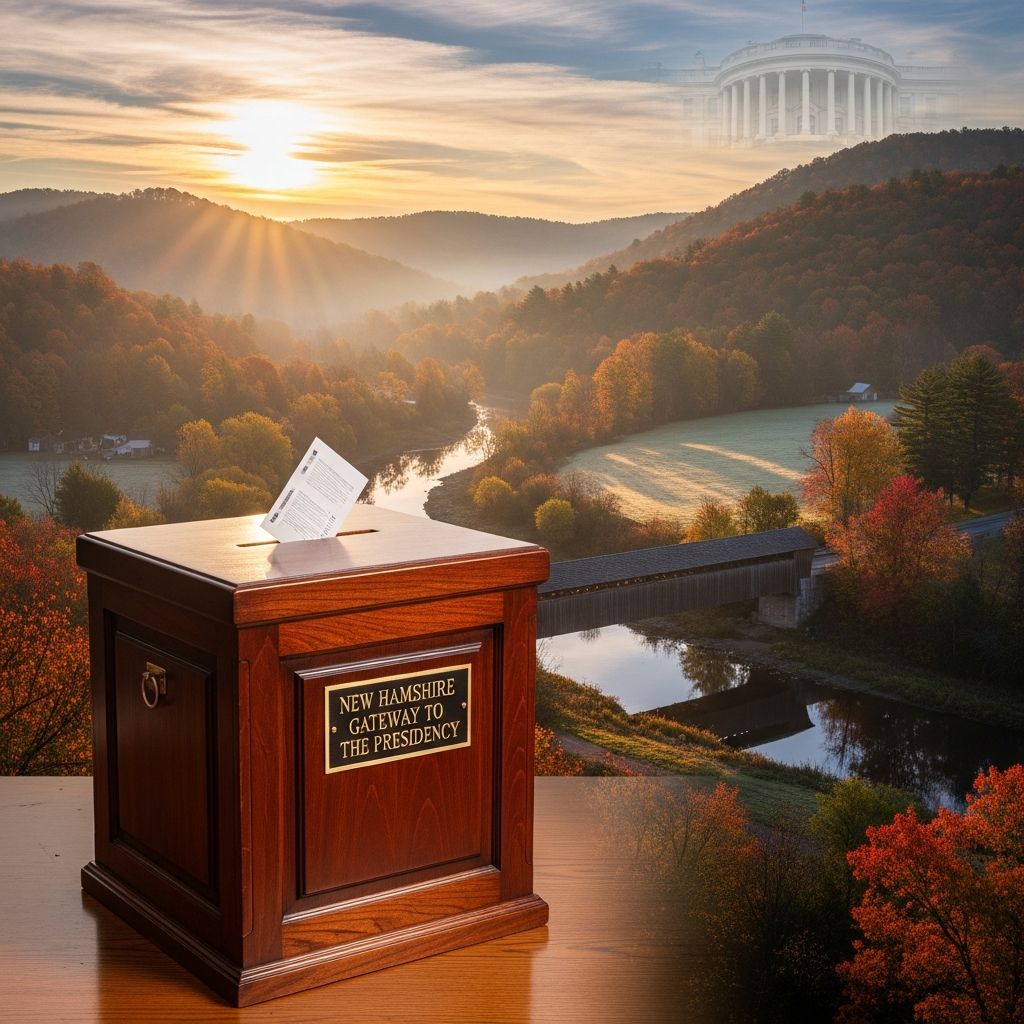
The New Hampshire presidential primary stands as a cornerstone of American electoral politics, serving as the first binding vote in the race for the White House. This small New England state, with its modest population and limited electoral votes, wields outsized influence by providing the initial real-world verdict on presidential hopefuls.
Historical Foundations of a Political Powerhouse
New Hampshire’s journey to electoral prominence began in the progressive era of the early 20th century. The state pioneered direct primaries for local and state offices in 1910, reflecting a national push for democratic reforms that included women’s suffrage. By 1916, it extended this system to presidential preferences, a novelty at the time when party bosses dominated conventions.
In 1920, New Hampshire conducted the nation’s earliest presidential primary, a position it has defended ever since. This timing aligned with the state’s traditional Town Meeting Day on the first Tuesday in March, giving it a natural head start over other states. The 1948 legislative changes boosted voter participation by allowing direct candidate votes, and the 1952 primary marked the contest’s emergence as a national spectacle.
The modern era’s structure solidified post-1968, when the Democratic Party’s McGovern-Fraser Commission reformed delegate selection to prioritize primaries over backroom deals. New Hampshire capitalized on this, evolving from a regional curiosity to a mandatory proving ground.
Legal Arsenal Protecting First-in-the-Nation Status
What elevates New Hampshire above competitors is not chance but statute. New Hampshire Revised Statutes § 653:9 mandates the primary on the second Tuesday in March or at least seven days before any other state’s similar election, explicitly to “protect the tradition of the New Hampshire first-in-the-nation presidential primary”.
This law has teeth. In 2008, when Florida and Michigan defied national party calendars, both faced delegate penalties, reinforcing New Hampshire’s primacy. The state’s voters and leaders vigilantly guard this role, viewing it as a point of pride and economic boon. Hotels in Manchester command premium rates, restaurants overflow, and local businesses thrive during primary season.
| Year | Event | Impact |
|---|---|---|
| 1910 | State adopts local primaries | Lays groundwork for direct voter input |
| 1916 | First presidential primary held | Initiates national preference voting |
| 1920 | Becomes first in nation | Establishes enduring tradition |
| 1948 | Direct candidate voting law | Boosts turnout and significance |
| 1968-72 | Post-convention reforms | Amplifies media and candidate focus |
Position Relative to Iowa: Primary vs. Caucus Dynamics
While Iowa’s caucuses precede New Hampshire by about a week, the primary holds distinct advantages. Caucuses demand extended in-person commitment, yielding lower turnout and less representative results. New Hampshire’s secret-ballot primary mirrors general elections, offering a purer viability test.
Media historically downplayed Iowa’s caucuses until recently, but New Hampshire’s format garners broader coverage. Scholars note that a New Hampshire win boosts a candidate’s national primary share by 27 percentage points, underscoring its predictive power.
Voter Profile: Independents and High Engagement
New Hampshire’s electorate is uniquely equipped to scrutinize candidates. Nearly 40% are independents, unregistered with either major party, allowing them to cross over and vote in either primary. This undeclared bloc demands retail politics: town halls, diner chats, and doorstep meets.
Turnout soars, often hitting 70%—far above general election norms elsewhere. Voters pride themselves on thorough vetting, ignoring national polls and favoring authenticity over polish. This intensity creates a meritocracy where underdogs can surge and frontrunners falter.
- High independent participation: Forces broad appeal.
- Face-to-face campaigning: Rewards organization and charisma.
- Elevated turnout: Validates results as serious indicators.
Economic and Media Surge: The Primary’s Ripple Effects
The primary injects vitality into New Hampshire’s economy. Campaigns spend millions on ads, travel, and staff; Manchester hotels fetch $800 nightly peaks; taxis and eateries face shortages. This quadrennial windfall fosters local support for the tradition.
Media frenzy amplifies everything. Thousands of journalists converge, turning local venues into global stages. This spotlight can make or break candidacies before Super Tuesday.
Proven Track Record: Winners, Losers, and Surprises
History brims with New Hampshire’s sway. In 1952, Dwight Eisenhower’s write-in victory propelled his nomination. Eugene McCarthy’s 1968 near-miss forced Lyndon Johnson out. Jimmy Carter’s 1976 win built momentum; Gary Hart’s 1984 triumph faded later, but Bill Clinton’s 1992 second-place “comeback kid” finish revived him.
Underdogs thrive: Pat Buchanan upset Bob Dole in 1996; John McCain triumphed in 2000. Incumbents beware—George H.W. Bush barely survived Pat Buchanan in 1992, and no sitting president has lost since. Statistically, strong showings predict national success.
Challenges and Criticisms: Diversity and Fairness Debates
Critics decry New Hampshire’s homogeneity—predominantly white, rural-leaning—for skewing toward unrepresentative candidates. Calls for rotation or diversity quotas persist, yet the state’s intimacy yields insights larger contests miss.
Defenders argue its scale enables genuine voter-candidate interaction, weeding out phonies early. While not demographically perfect, it tests electability fundamentals.
Strategic Essentials for Candidates
Ascendant hopefuls invest early. Top staff embed months ahead; budgets prioritize Granite State ads. Poor finishes trigger donor flight, as viability hinges on momentum. Winners gain fundraising surges and poll boosts.
- Build local teams year-round.
- Master intimate events.
- Court independents.
- Secure endorsements from figures like Sen. Jeanne Shaheen.
Future Outlook: Enduring or Evolving?
Despite DNC pushes for change, New Hampshire’s law and resolve endure. Recent cycles saw South Carolina and Nevada elevated for Democrats, but the primary remains pivotal. As elections nationalize, its retail focus offers a counterbalance, likely preserving its role.
Frequently Asked Questions (FAQs)
Why does New Hampshire go before other states?
State law ensures it holds the first primary, at least seven days ahead of competitors, a tradition since 1920.
How does it differ from Iowa?
As a secret-ballot primary, it features higher turnout and broader participation than Iowa’s caucuses.
Can independents vote?
Yes, they choose either party’s ballot, comprising a key swing force.
Does winning guarantee nomination?
No, but it boosts chances significantly; a 27-point national lift per studies.
Is the primary still relevant today?
Absolutely, shaping fields amid compressed calendars.
References
- Why is New Hampshire the first primary in the nation? — Brookings Institution. 2016-02-08. https://www.brookings.edu/articles/why-is-new-hampshire-the-first-primary-in-the-nation/
- The Importance Of New Hampshire’s Presidential Primary — Hotel Concord NH. Accessed 2026. https://www.hotelconcordnh.com/concord-nh-hotel-blog/importance-new-hampshires-presidential-primary
- Why is the New Hampshire primary such a big deal? — CBS News. 2024-01-23. https://www.cbsnews.com/boston/news/question-everything-why-is-new-hampshire-primary-such-a-big-deal/
- New Hampshire presidential primary — Wikipedia (sourced from official records). Accessed 2026. https://en.wikipedia.org/wiki/New_Hampshire_presidential_primary
- The First Primary: Why New Hampshire? — Carsey School of Public Policy, University of New Hampshire. 2020-01-15. https://carsey.unh.edu/publication/first-primary-why-new-hampshire
- Why Iowa and New Hampshire go first — National Constitution Center. 2020-01-29. https://constitutioncenter.org/blog/why-iowa-and-new-hampshire-go-first
- New Hampshire: A Proven Primary Tradition — New Hampshire Historical Society. Accessed 2026. https://www.nhhistory.org/Research/Online-Exhibitions/New-Hampshire-A-Proven-Primary-Tradition
Similar Articles








Read full bio of medha deb