Pioneering Women Who Transformed Modern Science
Discover the groundbreaking contributions of female scientists who revolutionized research and discovery.
Trailblazing Women Reshaping the Scientific Landscape
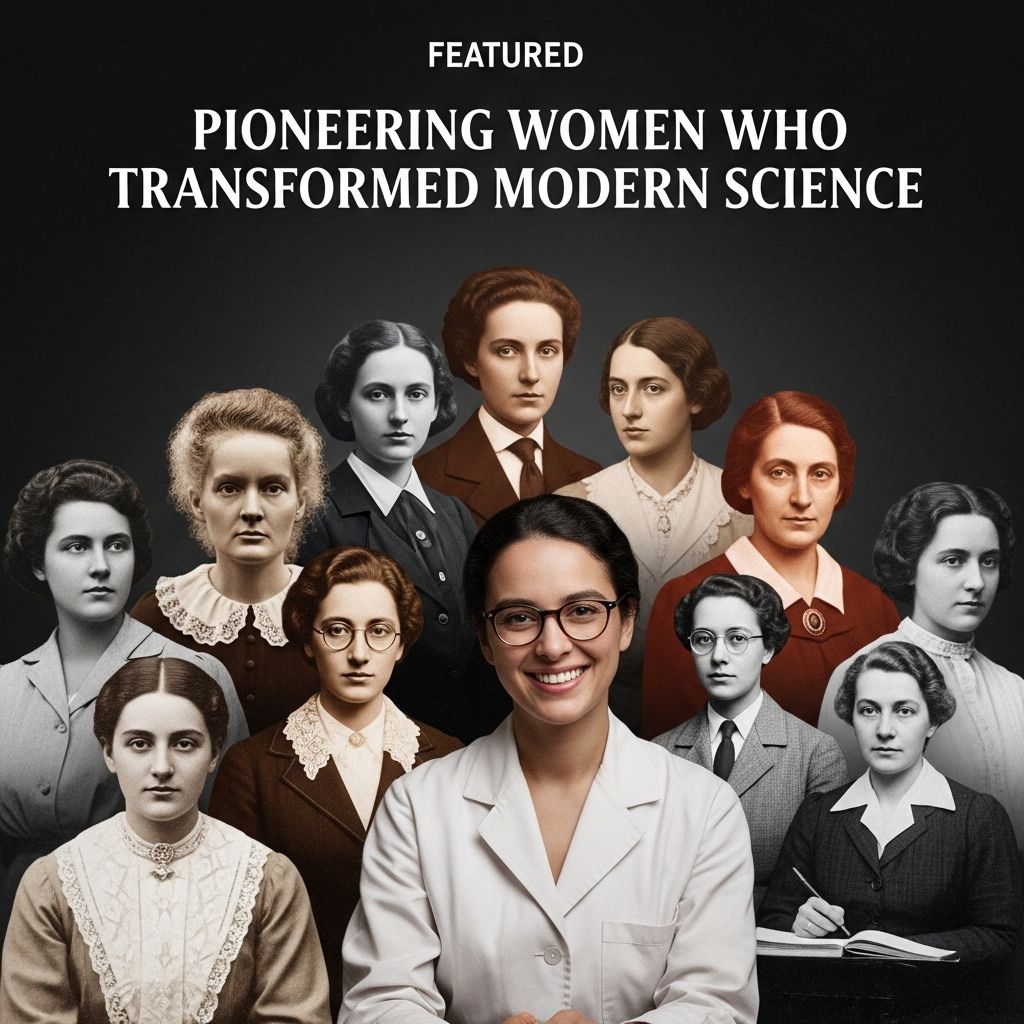
Throughout history, women have made extraordinary contributions to scientific advancement, yet their achievements often remain overshadowed in mainstream narratives. From unlocking the secrets of genetic material to charting previously unknown celestial bodies, female scientists have fundamentally transformed our understanding of the natural world. These remarkable individuals overcame societal barriers, institutional resistance, and systemic discrimination to pursue their passions and leave indelible marks on their respective fields. Their legacies extend far beyond individual discoveries, inspiring subsequent generations to pursue scientific inquiry without limitation.
Pioneers in Fundamental Physics and Chemistry
The foundation of modern physics owes an immeasurable debt to women who challenged the status quo and advanced our understanding of matter and energy. These scientists operated during eras when women faced explicit exclusion from academic institutions and professional opportunities, yet their determination produced discoveries that continue to shape contemporary research.
Revolutionary Work in Radioactivity and Atomic Theory
Marie Curie stands as one of history’s most influential scientists, whose work fundamentally changed how we understand radioactivity and atomic structure. Working during the early 1900s, she pursued advanced studies at the Sorbonne in Paris, eventually becoming the head of its physics laboratory at a time when European universities rarely employed women as faculty members. Her groundbreaking research in radioactivity, conducted alongside her husband Pierre, earned them joint recognition through a Nobel Prize in 1903, making her the first woman to achieve this distinction. Beyond her scientific achievements, Curie’s career demonstrated that rigorous intellectual capability transcends gender, challenging prevailing assumptions about women’s capacity for complex scientific thinking.
Maria Goeppert Mayer exemplified perseverance in pursuing scientific inquiry despite systemic obstacles. Born in Germany in 1906, she immigrated to the United States during the Great Depression and studied at Johns Hopkins University. Despite her exceptional credentials, mainstream universities refused to employ her, yet she continued her investigations into atomic structure independently. Her persistent work yielded a landmark discovery: the nuclear shell model of the atomic nucleus, for which she received the Nobel Prize in 1963. Her achievement remains particularly significant because it occurred without institutional support or traditional academic employment, underscoring how institutional barriers could not suppress intellectual genius.
Breakthroughs in Particle Physics
Sau Lan Wu, a Hong Kong-born physicist, made transformative contributions to particle physics that fundamentally expanded our comprehension of matter at subatomic levels. Wu’s research career encompasses discoveries of charm quarks and gluons, particles whose existence had been theoretically predicted but required experimental verification. Her most celebrated achievement came through her instrumental role in discovering the Higgs boson particle, one of the most significant physics discoveries of the modern era. This elusive particle, predicted by theory decades earlier, remained the subject of intensive research efforts across the globe until Wu and her collaborators provided experimental evidence of its existence. Her work continues generating insights that advance particle physics research.
Genetic Sciences and Molecular Biology Revolutionaries
Women scientists have driven revolutionary developments in genetics and molecular biology, uncovering mechanisms that govern heredity, cellular function, and the very structure of life itself. Their discoveries opened entirely new research domains and therapeutic possibilities.
DNA Structure and Genetic Mechanisms
Rosalind Franklin made indispensable contributions to understanding DNA structure through her sophisticated X-ray crystallography work. As a British biophysicist, Franklin employed cutting-edge analytical techniques to visualize molecular architecture at unprecedented resolution. Her crystallographic data provided crucial evidence for DNA’s helical structure, though she did not receive recognition during her lifetime for this pivotal contribution. Franklin’s work exemplifies how institutional acknowledgment sometimes lags behind actual scientific achievement, as her role in elucidating DNA structure became widely recognized only after her death in 1958. Beyond DNA research, Franklin spent her final years investigating plant virus structures, continuing her innovative approach to understanding life’s molecular foundations.
Barbara McClintock revolutionized genetic science through her meticulous studies of corn genetics, discovering that genes possess the remarkable ability to move between positions on chromosomes—a phenomenon she termed genetic transposition. Her findings contradicted prevailing genetic theory, which held that genes maintained fixed positions. Through careful experimentation and observation, McClintock demonstrated genetic flexibility that fundamentally altered genetic understanding. The scientific community eventually recognized the profound implications of her work, awarding her the Nobel Prize in Physiology or Medicine in 1983. McClintock’s career demonstrates how rigorous empirical investigation can overturn established theoretical frameworks, advancing science through evidence-based discovery rather than adherence to existing paradigms.
Molecular Engineering and Biotechnology
Lydia Villa-Komaroff pioneered molecular biology techniques with profound practical applications. Despite facing discouragement from academic advisors who explicitly stated that women did not belong in chemistry, Villa-Komaroff persevered and redirected her focus toward biology. Her significant breakthrough came in 1978 when she published findings demonstrating that bacteria could be engineered to produce human insulin. This discovery opened revolutionary possibilities for pharmaceutical production, enabling the development of recombinant insulin that transformed diabetes treatment. Villa-Komaroff’s achievement exemplifies how overcoming institutional prejudice through sheer determination can yield innovations benefiting millions of people globally.
Jennifer Doudna represents contemporary scientific leadership in genetic engineering. As a professor at UC Berkeley, Doudna co-developed CRISPR technology, a revolutionary genetic-editing method enabling precise modifications to DNA sequences. CRISPR’s potential applications span multiple domains: from eradicating hereditary diseases including sickle cell anemia, cystic fibrosis, and Huntington’s disease to treating persistent infections like HIV. The technology simultaneously raises profound ethical questions regarding genetic modification in human populations, making Doudna not only a scientific innovator but also an important voice in bioethical discussions. Her work exemplifies how contemporary female scientists shape not just scientific understanding but also crucial conversations regarding technology’s responsible implementation.
Medicine and Public Health Innovators
Female scientists have transformed medical science and public health through their discoveries, establishing new treatment approaches and expanding healthcare access to underserved populations.
Pioneering Medical Education and Healthcare Access
Elizabeth Blackwell, born in 1821, achieved a historic milestone by becoming the first woman to graduate from medical school in the United States, attending Geneva Medical College in New York. Beyond this personal accomplishment, Blackwell demonstrated sustained commitment to expanding healthcare access for economically disadvantaged women. She became a vocal advocate for poor women’s health, recognizing that disease did not discriminate while medical care predominantly served wealthy populations. Subsequently, Blackwell founded a medical school dedicated exclusively to women, institutionalizing pathways for female physicians at a time when most medical schools rejected female applicants. Her legacy encompasses both individual achievement and systemic change, as she deliberately worked to expand opportunities for women entering medical professions.
Pharmaceutical Innovation
Gertrude Elion, born in 1918, advanced pharmaceutical science through her development of medications treating serious diseases. As a biochemist and pharmacologist, Elion created drugs combating leukemia, one of the most devastating cancers affecting children and adults. Additionally, her research produced medications preventing kidney transplant rejection, expanding the possibilities for organ transplantation by reducing immunological complications. Her pharmaceutical innovations saved countless lives while demonstrating how laboratory research directly translates into clinical benefit. Elion received the Nobel Prize recognizing her contributions to medical science, cementing her place among history’s most impactful biomedical researchers.
Engineering and Technological Innovation
Women engineers have overcome extraordinary barriers to establish themselves as leaders in technological fields, often being the first women to achieve prominence in their specialties.
Electrical Engineering Foundations
Edith Clarke blazed trails in electrical engineering during the early twentieth century, when engineering remained almost exclusively male-dominated. Before modern computers and electronic calculators existed, scientists and engineers employed individuals called “computers” to perform complex mathematical calculations. Clarke worked in this capacity, mastering sophisticated calculations essential for electrical engineering applications. Recognizing her capabilities and driven by determination to advance, Clarke became the first professionally employed female electrical engineer in the United States in 1922. Her persistence in pursuing engineering despite systemic barriers paved pathways for subsequent female engineers. Clarke’s achievements received recognition through her induction into the National Inventors Hall of Fame in 2015, acknowledging her pioneering role in establishing women’s presence in engineering disciplines.
Contemporary Aerospace Engineering
Tiera Guinn represents the contemporary generation of female scientists pushing boundaries in aerospace engineering. At just twenty-one years old while still completing her MIT undergraduate degree, Guinn works as a Rocket Structural Design and Analysis Engineer for Boeing’s Space Launch System project, a program developing one of NASA’s most powerful rockets ever constructed. Maintaining a perfect 5.0 grade point average while conducting cutting-edge aerospace engineering, Guinn exemplifies how young women are not only entering STEM fields but excelling at the highest levels of technical complexity. Her career trajectory suggests that contemporary barriers for women in engineering have diminished significantly compared to previous generations, though persistent work remains necessary to ensure equitable opportunities throughout STEM disciplines.
Space Exploration and Astronomy
Female scientists have fundamentally expanded humanity’s understanding of the cosmos and our place within it, from discovering exoplanets to mapping the universe’s invisible architecture.
Discovering New Worlds and Cosmic Phenomena
Sara Seager, born in 1971, has discovered an astonishing 715 planets orbiting distant stars through her work with NASA’s Kepler Space Telescope. Her discoveries revolutionized astronomical understanding by demonstrating that planetary systems are remarkably common throughout the galaxy. Each discovery expands the possibilities for finding habitable worlds and understanding planetary formation mechanisms. Seager’s prolific research output has fundamentally reshaped twenty-first-century astronomy, establishing her as one of contemporary science’s most productive and impactful researchers.
Vera Rubin, born in 1928, made observations that resolved one of cosmology’s greatest mysteries. By studying how galaxies rotate and analyzing gravitational effects, Rubin provided compelling evidence that invisible matter—subsequently termed dark matter—comprises the universe’s predominant mass component. Her observations demonstrated that visible matter (stars, planets, gas) accounts for merely a fraction of the universe’s total mass, with gravity from unseen dark matter predominantly governing cosmic structure. Rubin’s work transformed astronomy and physics by establishing dark matter as a central cosmological reality requiring new theoretical frameworks. President Clinton presented her with the National Medal of Science in 1993, recognizing her groundbreaking contributions. Following her death in 2016, the New York Times noted her cheerful demeanor, scientific clarity, and passionate advocacy for women in science, celebrating her legacy of expanding scientific knowledge while championing gender equity.
Theoretical Physics and the Invisible Universe
Katherine Freese continues expanding scientific frontiers through her theoretical physics research focusing on dark matter and dark stars—mysterious cosmic objects never directly observed but theoretically predicted to exist. As Director of Nordita, an institute for theoretical physics in Stockholm, Freese leads research investigating the universe’s fundamental architecture. Her work exemplifies contemporary female scientists’ roles in theoretical physics, a discipline traditionally dominated by men. Through her research, Freese contributes to fundamental physics while simultaneously demonstrating women’s essential contributions to theoretical science.
Biological Sciences and Natural History
Female naturalists and biologists transformed scientific understanding through dedicated observation and pioneering research methodologies in biological sciences.
Revolutionary Primate Research
Jane Goodall revolutionized primatology through her groundbreaking fieldwork observing chimpanzees in their natural habitats in Tanzania. Rather than studying animals exclusively through laboratory observation, Goodall immersed herself in chimpanzee communities, learning their behaviors through direct interaction and participation. She climbed trees, mimicked their movements, and gained their trust through patient observation. This innovative approach yielded discoveries about tool use, complex social hierarchies, and emotional capacity in chimpanzees, fundamentally altering scientific understanding of our closest genetic relatives. Beyond scientific discovery, Goodall became an eloquent advocate for animal rights and conservation, demonstrating how scientific work can catalyze broader environmental consciousness. Her legacy encompasses both primatological knowledge and inspirational environmental activism.
Pioneering Computer Science and Mathematical Innovation
Ada Lovelace established foundations for modern computer science centuries before contemporary digital technology emerged. Recognized as the founder of scientific computing and the first computer programmer, Lovelace developed algorithms representing an intellectual leap beyond existing mathematical frameworks. Her work laid conceptual groundwork upon which modern computing ultimately developed, demonstrating that women possessed the mathematical and logical capabilities for advanced computational thinking despite prevailing historical dismissal of female intellectual capacity.
Key Achievements Across Scientific Disciplines
| Scientist | Field | Major Achievement | Recognition |
|---|---|---|---|
| Marie Curie | Physics/Chemistry | Radioactivity research | Nobel Prize 1903 |
| Barbara McClintock | Genetics | Genetic transposition discovery | Nobel Prize 1983 |
| Rosalind Franklin | Biophysics | DNA structure research | Posthumous recognition |
| Jennifer Doudna | Molecular Biology | CRISPR genetic engineering | Scientific leadership |
| Jane Goodall | Primatology | Chimpanzee behavioral research | Conservation advocacy |
| Sara Seager | Astronomy | 715 exoplanet discoveries | Contemporary prominence |
Frequently Asked Questions
Q: Why are women scientists often less recognized than their male counterparts?
A: Historically, women faced systematic exclusion from academic institutions and professional opportunities. Additionally, their contributions were sometimes attributed to male colleagues, and institutional recognition lagged behind actual achievements. Contemporary efforts focus on ensuring equitable acknowledgment and historical accuracy regarding women’s scientific contributions.
Q: What barriers did pioneering female scientists overcome?
A: Female scientists confronted explicit institutional barriers including exclusion from universities, professional organizations, and funding opportunities. They faced social prejudice questioning women’s intellectual capabilities and encountered resistance from colleagues and advisors who discouraged their scientific pursuits. Despite these obstacles, they persevered through determination and demonstrated exceptional capability.
Q: How have contemporary opportunities for female scientists improved?
A: Modern educational institutions increasingly provide equal access for women in STEM disciplines, though gender disparities persist in certain fields. Contemporary female scientists achieve recognition through published research, peer acknowledgment, and major scientific awards. Ongoing initiatives focus on expanding mentorship opportunities and addressing remaining systemic barriers.
Q: What impact have women scientists had on scientific progress?
A: Women scientists have made transformative contributions across all major scientific disciplines, from fundamentally advancing theoretical physics to developing life-saving medicines and revealing the universe’s architecture. Their discoveries demonstrate that scientific capability transcends gender and that inclusive scientific communities produce superior outcomes and innovations.
Q: How can we better recognize historical contributions of female scientists?
A: Educational curricula should emphasize women’s achievements in science, popular media should feature female scientist biographies, and historical records should accurately attribute discoveries. Supporting contemporary female scientists through mentorship, funding, and professional opportunities continues their legacy while inspiring future generations.
References
- 17 Famous Female Scientists Who Helped Change the World — Global Citizen. https://www.globalcitizen.org/en/content/17-top-female-scientists-who-have-changed-the-worl/
- The Untold History of Women in Science and Technology — The White House Archives. https://obamawhitehouse.archives.gov/women-in-stem
- Timeline of women in science — Wikipedia Contributors. https://en.wikipedia.org/wiki/Timeline_of_women_in_science
- Women in Science — Oxford University Museum of Natural History. https://oumnh.ox.ac.uk/learn-shout-out-for-women-in-science
Similar Articles







Read full bio of medha deb