Perfecting Your Post-Interview Thank-You Email Timing
Master when and how to send a post-interview thank-you email so you reinforce your value, stay memorable, and never seem pushy.
When and How to Send a Thank-You Email After an Interview
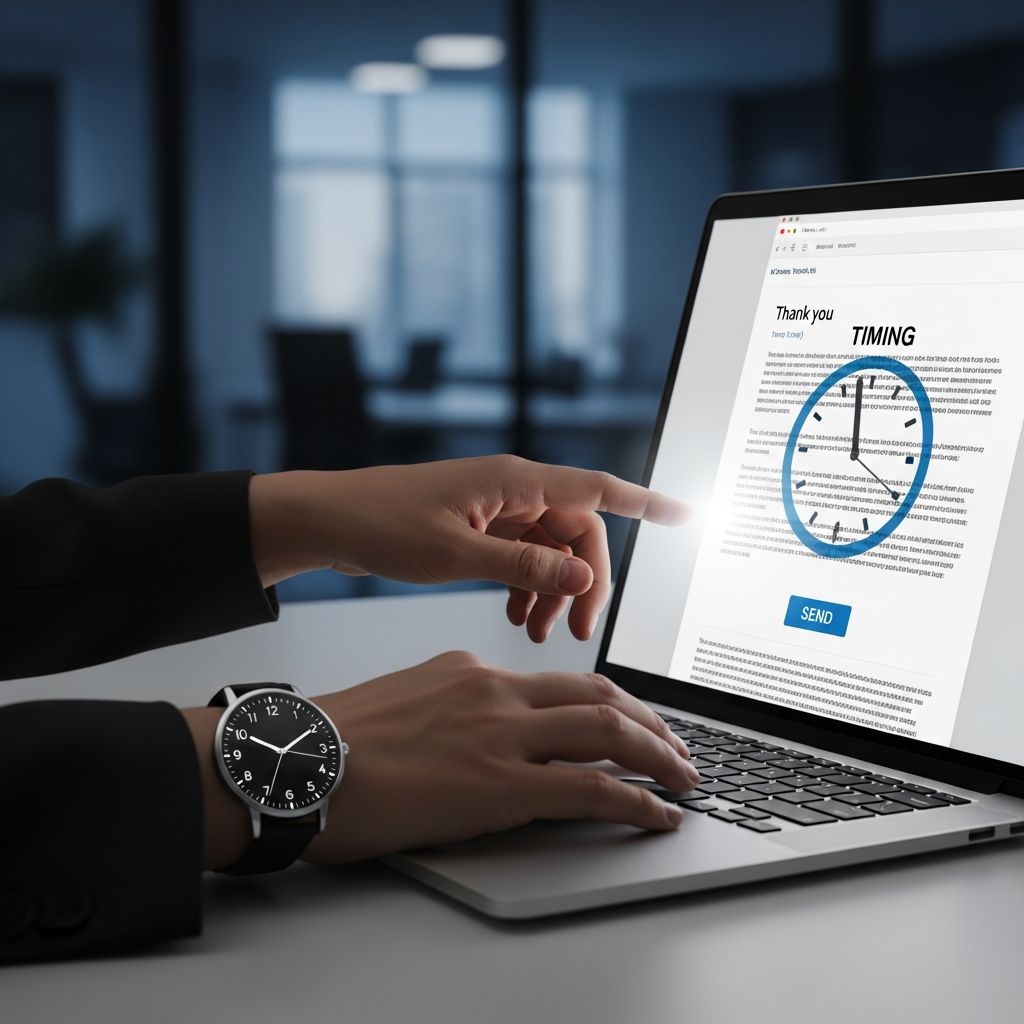
A short, well-timed thank-you email after an interview can reinforce your interest, highlight your qualifications, and subtly distinguish you from other candidates. According to career advisors and employers, this small gesture is now considered a core part of professional interview etiquette.
This guide explains exactly when to send your thank-you note, what to include, how to tailor it to different interview formats, and how to follow up if you do not hear back.
Why Thank-You Emails Still Matter
Many hiring managers expect some form of follow-up after an interview, and a concise thank-you note is the most common and appropriate option.
- Signals professionalism: It shows you understand business etiquette and can communicate clearly in writing.
- Reinforces your interest: Stating that you are still enthusiastic about the role reassures employers that you are serious about the opportunity.
- Highlights your fit: You can briefly connect your skills and experience to what you learned in the conversation.
- Keeps you memorable: After interviewing several candidates, a thoughtful note can help an interviewer remember specific details about you.
While a thank-you email alone will not win you a job, skipping it can be a missed chance to strengthen a positive impression.
The Ideal Timing: When to Hit Send
The timing of a thank-you email is almost as important as the content. You want to be prompt without appearing rushed.
| Situation | Recommended Timing | Reason |
|---|---|---|
| Standard on-site or video interview | Within 24 hours | Keeps you fresh in the interviewer’s mind while events are still recent. |
| Phone screen or short initial call | Same day or within 24 hours | Shows responsiveness and interest early in the process. |
| Final-round or full-day panel | By the next morning | Gives you time to reflect but still arrives quickly. |
| Interview late on Friday | Friday evening or early Monday | Either closes out the week or reaches them when they return. |
Why 24 Hours Is a Useful Rule of Thumb
Sending your email within a day strikes a balance: you respond quickly enough to look engaged, and you have time to write something polished and specific. Career resources and management experts consistently recommend that window for most professional roles.
Choosing the Right Channel: Email vs. Other Options
Most modern workplaces expect thank-you notes to arrive by email unless you were clearly told otherwise.
- Email: Fast, searchable, and appropriate for virtually all roles, especially corporate, tech, finance, and remote positions.
- Handwritten note: Sometimes appreciated in slower-paced or relationship-driven fields (for example, certain nonprofit or local roles) but too slow for time-sensitive hiring decisions.
- Messaging platforms: Only appropriate if the interviewer directed you to use a specific tool (such as an internal system) for communication.
If you are unsure, default to email; it is the standard in most industries.
Core Elements of a Strong Thank-You Email
A thank-you message does not need to be long. What matters is clarity, personalization, and relevance to the role.
- Clear subject line that references the interview.
- Professional greeting using the interviewer’s name.
- Direct expression of thanks for their time and the conversation.
- Specific callback to something you discussed, such as a project, team goal, or challenge.
- Brief statement of fit connecting your experience to what the role requires.
- Polite closing that keeps the door open for further contact.
Simple Thank-You Email Framework
You can adapt this structure to most interview types:
- Subject: Thank you for our conversation about [Role Title]
- Greeting: Dear [Name],
- Opening: Thank them for their time and the opportunity to learn more about the role or organization.
- Middle: Mention one or two specific topics you discussed and connect them to your skills or experience.
- Closing: Reiterate your interest, invite them to reach out with questions, and sign off with your full name and contact information.
Tailoring Your Message to Different Interview Formats
While the core components stay the same, your emphasis should shift slightly based on the type of interview.
After a Phone Screen
For brief screening calls, keep your email especially short and focused on appreciation and next steps.
- Thank the recruiter or interviewer for the call.
- Confirm your continued interest in the role.
- Mention one key qualification you discussed.
- Offer to provide additional information (for example, a portfolio or references).
After a One-on-One Interview
For a longer conversation with a hiring manager or team member, you can add slightly more detail.
- Highlight one or two responsibilities that excite you.
- Connect a relevant accomplishment to one of their challenges.
- Reflect briefly on cultural or team aspects that appealed to you.
After a Panel or Multi-Interviewer Session
When you meet several people, the etiquette is to send separate, personalized emails when you have their individual addresses.
- Reference a different part of the discussion with each person.
- Avoid copying and pasting identical messages; small changes show genuine effort.
- If you only have one contact, write to that person and ask them to extend your thanks to the rest of the group.
What to Avoid in a Thank-You Email
Even a brief note can undermine your candidacy if it is careless or overly informal. Employers often treat follow-up messages as another sample of your communication skills.
- No spelling or grammar mistakes: Reread carefully or use proofreading tools; errors can suggest a lack of attention to detail.
- Do not negotiate in the thank-you: Salary or schedule discussions belong in a different conversation, typically when an offer is on the table.
- Avoid generic language: If your email could be sent to any employer, it is not specific enough.
- Skip personal oversharing: Stay focused on the job, not unrelated life details.
- Do not pressure them for a decision: It is fine to mention that you look forward to hearing next steps, but avoid demanding a timeline.
Example Phrases You Can Reuse
Here are short snippets you can adapt to your own voice:
- Opening thanks: “Thank you for taking the time to speak with me about the [Job Title] position.”
- Interest in the role: “Our conversation reinforced my enthusiasm for contributing to [team or project].”
- Highlighting fit: “The discussion about [topic] resonated with my experience in [skill or project].”
- Closing line: “Please let me know if I can provide any additional information as you move forward.”
Use these as starting points, then adjust wording so it sounds natural and consistent with how you spoke during the interview.
Coordinating Thank-You Emails With the Hiring Timeline
Interviewers sometimes share when they expect to make a decision. Your follow-up approach should respect that timeline.
- If they gave a clear decision date: Send your thank-you within 24 hours, then wait until after the stated window before sending any additional follow-up.
- If no timeline was shared: A thank-you email is still appropriate within a day; if you have not heard anything after a week or two, a brief status-check email can be reasonable.
- If the process is lengthy: For multi-stage hiring that stretches over weeks, a thank-you email after each major conversation helps maintain momentum.
Following Up When You Have Not Heard Back
A thank-you email and a follow-up email are not the same thing. The thank-you comes first; a follow-up is appropriate only later if there has been silence beyond the expected timeframe.
When to Send a Follow-Up (Beyond the Thank-You)
- At least one week after the later of your interview date or the timeline they gave you.
- Only once or twice; more frequent messages risk appearing pushy.
A follow-up should be concise: remind them of your continued interest, reference the role title and date of the interview, and politely ask if there are any updates they can share.
Special Situations and How to Handle Them
When the Interview Did Not Go Well
Even if you felt uncertain, a thank-you email is still worthwhile. You can:
- Thank them for the opportunity and their time.
- Clarify one point if you believe you significantly misspoke or left out key context.
- Keep the tone positive and future-focused.
When You Realize the Role Is Not a Good Fit
A professional note can preserve the relationship for future opportunities.
- Thank them sincerely for the conversation.
- Briefly indicate that, after reflection, you do not think the role is the right match at this time.
- Express openness to staying connected or hearing about roles that align more closely with your background.
Group Interviews and Assessments
For group assessments or workshops where individual contact details are unclear:
- Send a thank-you email to your primary recruiter or coordinator.
- Ask them to extend your thanks to the facilitators and interviewers.
- You can mention specific parts of the day that were especially informative or engaging.
Checklist: Your Thank-You Email Before You Send It
Use this brief checklist to review your message:
- Sent within 24 hours of the interview?
- Subject line clear and specific to the interview?
- Correct spelling of interviewer’s name and company?
- At least one detail from your actual conversation included?
- No spelling or grammar errors when re-read slowly?
- Professional sign-off with your full name and contact information?
Frequently Asked Questions (FAQs)
Do employers really care about thank-you emails?
Many hiring managers view a thank-you note as a sign of professionalism and interest, and some say it can influence close decisions, especially when candidates are otherwise similarly qualified. It is rarely a formal requirement, but it is widely appreciated.
What if I forgot to send a thank-you email?
If a few days have passed, it is still better to send a brief note than to say nothing. Acknowledge the delay indirectly by simply expressing appreciation and interest without overexplaining.
Should I send multiple thank-you emails if I met several people?
Yes, when you have individual email addresses, send a short, personalized note to each person. If you only have one central contact, thank that person and ask them to pass along your appreciation to the rest of the team.
Is it acceptable to copy and paste most of my message?
Reusing a basic structure is fine, but you should customize at least a few sentences to reflect the specific role and conversation. Employers can often tell when a message is generic.
Can a thank-you email hurt my chances?
Only if it is poorly written, inappropriate in tone, or includes significant errors. Treat it as a professional document: keep it concise, respectful, and relevant to the role.
References
- 4 Sample Thank-You Emails To Send After an Interview — Indeed Career Guide. 2023-05-18. https://www.indeed.com/career-advice/interviewing/sample-thank-you-letter-after-interview
- Thank You Email After Interview — Management Consulted. 2022-08-10. https://managementconsulted.com/thank-you-email-after-interview/
- How to Write a Thank You Email After an Interview (with Examples) — Harvard Business Review. 2022-11-04. https://hbr.org/2022/11/how-to-write-a-thank-you-email-after-an-interview
- Three Templates for a Perfect Interview Thank You Email — Mac’s List. 2018-02-09. https://www.macslist.org/interviews/three-killer-templates-interview-thank-you-emails
- 20 Post-Interview Thank You Email Examples for Any Situation — GetMailTracker Blog. 2023-03-15. https://www.getmailtracker.com/blog/post-interview-thank-you-email
Similar Articles







Read full bio of Sneha Tete