Prezygotic Barriers: Keys to Species Formation
Discover how prezygotic isolation mechanisms prevent interbreeding and drive evolutionary divergence in nature.
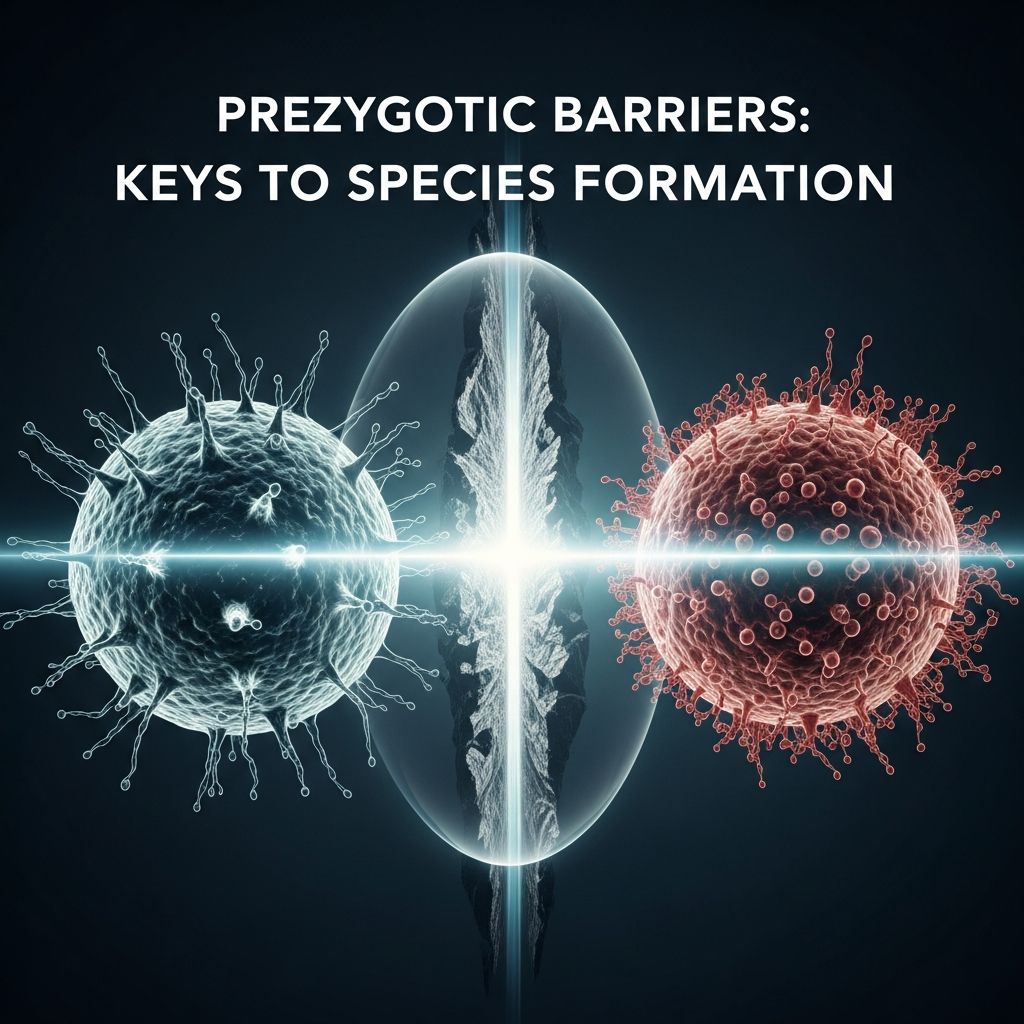
Prezygotic isolation mechanisms represent nature’s frontline defenses against interspecies breeding, occurring before fertilization and ensuring genetic integrity across populations. These barriers are fundamental to speciation, the process by which new species arise, by limiting gene flow between divergent groups.
Foundations of Reproductive Isolation in Evolution
Reproductive isolation underpins the biological species concept, where species are defined as groups incapable of producing fertile offspring. Prezygotic barriers act prior to zygote formation, conserving reproductive resources and preventing unfit hybrid development. They evolved through natural selection, often strengthening in sympatric populations where species overlap.
Unlike postzygotic mechanisms, which address hybrid inviability after conception, prezygotic strategies are more efficient, evolving faster as demonstrated in studies of Drosophila species pairs. This efficiency stems from their early intervention, blocking costly matings outright.
Temporal Isolation: Timing as a Species Divider
Temporal isolation arises when populations reproduce at different times, such as distinct seasons, daily cycles, or life stages, ensuring no overlap in mating opportunities. For instance, leopard frogs and wood frogs in North America mature sexually at different spring periods, preventing interbreeding despite shared habitats.
This mechanism is prevalent in plants too, where flowering times differ between closely related species. Such desynchronization maintains species boundaries without physical separation, highlighting how subtle temporal shifts reinforce isolation.
Advantages and Evolutionary Dynamics
Temporal barriers reduce hybridization risks efficiently. In parasites like cestodes, differing maturation times in hosts prevent gene flow, even after millions of years of divergence. Reinforcement may amplify these differences in overlapping ranges, accelerating speciation.
Habitat and Ecological Isolation: Environmental Separation
Habitat isolation occurs when species occupy distinct ecological niches, rarely encountering each other for mating. Fruit flies of the genus Rhagoletis exemplify this: each species prefers specific host plants for egg-laying, with adults returning to natal sites, minimizing cross-species interactions.
Ecological isolation extends to microhabitats within shared regions. Aquatic species might segregate by water depth or salinity, while terrestrial ones by soil type or elevation. This spatial partitioning, driven by adaptive specialization, forms a prezygotic wall.
- Key examples include bird species in different forest strata or fish in separate lake zones.
- These barriers often initiate allopatric speciation, later persisting in sympatry.
Behavioral Isolation: Courtship and Mating Rituals
Behavioral isolation hinges on species-specific mating signals, dances, songs, or pheromones that repel or fail to attract outsiders. Fireflies use unique flash patterns; females respond only to conspecific males. Similarly, in moths, pheromones with specific isomers ensure males detect only their species’ signals, controlled by few genetic loci.
Courtship in birds, like bowerbird displays or songbird repertoires, demands precise responses. Divergence in these ethological traits, even minor, enforces strong prezygotic isolation, especially potent in sympatry where reinforcement selects against hybrid matings.
| Species Pair | Behavioral Cue | Isolation Strength |
|---|---|---|
| Fireflies | Flash patterns | High |
| Moths | Pheromone isomers | Very High |
| Birds | Songs/Dances | Moderate to High |
Mechanical Isolation: Structural Incompatibilities
Mechanical isolation prevents copulation due to mismatched genitalia or pollinator adaptations. In insects, divergent genital morphology acts as a ‘lock-and-key’ system, blocking interspecies mating. Plants exhibit this via floral structures suited to specific pollinators, like orchid shapes favoring particular bees.
Though less common in vertebrates, size differences in reproductive organs can impede success. This barrier evolves rapidly, providing robust isolation even if behavioral cues fail.
Gametic Isolation: Molecular Mismatches at Fertilization
Gametic isolation targets gamete recognition, where sperm fails to fertilize eggs due to surface protein incompatibilities. Sea urchins demonstrate this: sperm from one species cannot penetrate another’s egg coat, despite physical proximity.
In plants, pollen tube growth halts in foreign styles. These biochemical barriers, often involving few genes, finalize prezygotic defense, ensuring only compatible unions proceed.
Interplay of Prezygotic Barriers in Speciation
Multiple barriers often combine for cumulative isolation. In sympatric cestodes Schistocephalus solidus and S. pungitii, host specificity leads to habitat isolation, reinforced by behavioral and gametic barriers, maintaining separation post-20 million years divergence.
Comparative studies show prezygotic strength correlates with genetic distance and sympatry. Reinforcement heightens barriers where hybrids form, selecting for choosier mates.
Experimental Evidence and Real-World Implications
Lab crosses quantify barrier strengths. In Drosophila, prezygotic isolation precedes postzygotic, stronger in overlapping ranges. Field observations in parasites confirm low hybridization via host-driven isolation.
Applications include invasive species control: disrupting temporal or behavioral cues limits spread. Conservation benefits from understanding how barriers preserve biodiversity.
Frequently Asked Questions (FAQs)
What is the primary difference between prezygotic and postzygotic isolation?
Prezygotic acts before fertilization to prevent mating or gamete fusion, while postzygotic affects hybrid viability or fertility afterward.
Can prezygotic barriers evolve in sympatric populations?
Yes, reinforcement strengthens them where species overlap, as seen in Drosophila and cestodes.
Are mechanical barriers more common in animals or plants?
More prevalent in animals via genital mismatch; plants rely more on pollinator specificity.
How do gametic barriers function at the molecular level?
Through incompatible recognition proteins on gametes, blocking sperm-egg fusion.
Why are prezygotic mechanisms evolutionarily advantageous?
They avoid wasting reproductive effort on unfit hybrids, evolving faster than postzygotic ones.
Future Directions in Research
Genomics reveals genetic bases of barriers, like pheromone loci in moths. Climate change may disrupt temporal isolation, increasing hybridization risks, warranting monitoring. Advances in parasite studies highlight host shifts driving barriers, informing disease ecology.
Integrating barriers into models predicts speciation rates, aiding biodiversity forecasts. Experimental evolution tests barrier evolution under selection.
References
- Reproductive Isolation: Pre-zygotic, Post-zygotic, Genetics — Microbe Notes. 2023. https://microbenotes.com/reproductive-isolation/
- The role of prezygotic isolation mechanisms in the divergence of two… — PMC (NCBI). 2016-10-12. https://pmc.ncbi.nlm.nih.gov/articles/PMC5103353/
- Reproductive isolating mechanisms — EBSCO Research Starters. 2023. https://www.ebsco.com/research-starters/health-and-medicine/reproductive-isolating-mechanisms
- Reproductive isolation — Wikipedia (background only). N/A. https://en.wikipedia.org/wiki/Reproductive_isolation
- Isolation Barriers — BioNinja. 2023. https://old-ib.bioninja.com.au/higher-level/topic-10-genetics-and-evolu/103-gene-pools-and-speciati/isolation-barriers.html
- Prezygotic barriers — UC Berkeley IB. 2012-09-17. https://ib.berkeley.edu/courses/bio1b/evolutionfall12/pdfs/Huelsenbeck10notes.pdf
- Prezygotic reproductive isolating mechanism — Britannica. 2023. https://www.britannica.com/science/prezygotic-reproductive-isolating-mechanism
Similar Articles








Read full bio of Sneha Tete