Private Student Loans: Certified vs. Uncertified Options
Understanding the key differences between certified and uncertified private student loans.
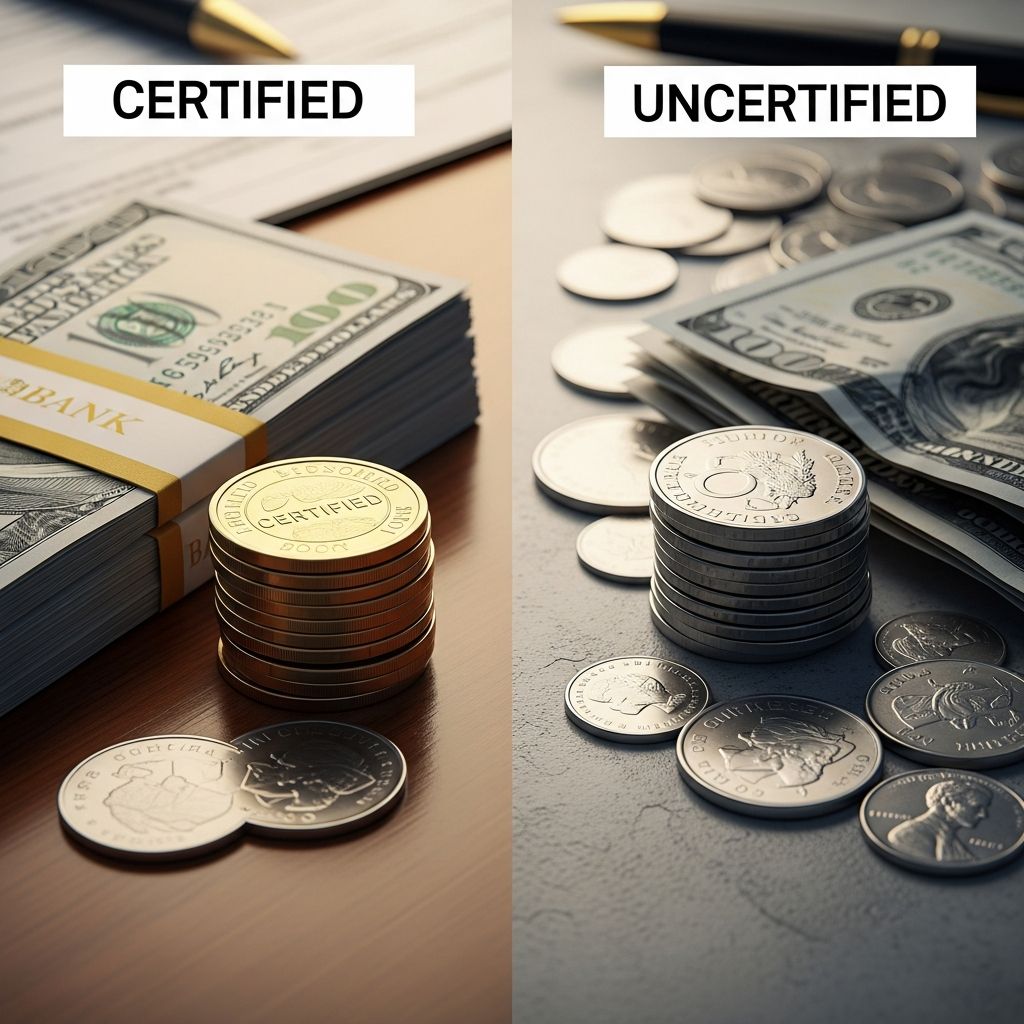
Understanding Certified and Uncertified Private Student Loans
When exploring private student loan options to finance your education, you’ll encounter terminology that may seem confusing at first glance. Among the most important concepts to grasp is the distinction between certified and uncertified private student loans. These two categories represent fundamentally different verification pathways and come with varying levels of borrower protections and processing timelines. Understanding these differences can help you make informed decisions about your education financing strategy.
What Defines Loan Certification in the Private Education Context?
Loan certification serves as a critical checkpoint in the private student lending process. Certification is a verification mechanism through which your school confirms that your loan request aligns with your actual educational costs and existing financial aid package. This process ensures that private loan amounts do not exceed your cost of attendance minus any scholarships, grants, or other financial assistance you have already received.
When a private loan is certified, it means your educational institution has reviewed and validated the loan details submitted by the lender. The school confirms that you are enrolled as stated, that your borrowing request is reasonable given your educational circumstances, and that the loan amount falls within permissible limits. This validation protects both borrowers and lenders by ensuring transparency and preventing excessive borrowing.
The Uncertified Loan Pathway: Speed Versus Verification
Uncertified private loans bypass the school verification process entirely, allowing for faster fund disbursement without institutional review. In this scenario, the lender and borrower proceed with the loan agreement without waiting for your school’s financial aid office to review and certify the loan details.
This expedited pathway appeals to borrowers who need funds quickly. However, the speed advantage comes with a tradeoff: the absence of institutional oversight means your school has not confirmed whether the loan amount aligns with your actual cost of attendance or whether you might be borrowing more than necessary to cover your education expenses.
The Self-Certification Requirement for Private Education Loans
Before any private student loan can be disbursed, federal law requires a self-certification process. This mandatory step requires you, as the borrower, to provide accurate information about your educational situation and financial circumstances.
The Private Education Loan Applicant Self-Certification form asks you to declare:
- Your cost of attendance for the enrollment period
- Your expected graduation date
- Your current year in the program
- The total amount of all other financial aid you are receiving
- Your understanding of how a private loan might affect other aid eligibility
This self-certification occurs early in the application process and serves as your acknowledgment that you understand the financial implications of taking on a private student loan. The form includes specific borrower-protection language explaining your rights and options, including your ability to apply for federal student aid through the FAFSA.
How the Certified Loan Process Functions
When you pursue a certified private student loan, the process involves multiple verification stages that take additional time but provide greater institutional oversight.
Stage One: Lender Submission
After your loan application receives approval, your lender forwards your loan details and enrollment information to your school’s financial aid office.
Stage Two: School Review and Verification
Your school’s financial aid office reviews the loan request to confirm your enrollment status, verify your cost of attendance, and assess how the private loan fits within your overall financial aid package. The financial aid staff member examines whether you are enrolled full-time, part-time, or less than half-time, as this affects loan eligibility. They also verify that the loan amount does not exceed your cost of attendance minus existing aid.
Stage Three: Certification Decision
Once your school completes its review, the financial aid office either certifies the loan as requested, certifies it for a reduced amount, or denies certification. If your enrollment status changes or if the loan amount would result in overborrowing, your school may reduce the certified amount or decline certification entirely.
Stage Four: Lender Processing
After your school certifies the loan, the lender receives notification and processes the disbursement. This stage may include an additional waiting period imposed by the lender for internal compliance checks.
Stage Five: Fund Disbursement
Finally, your lender disburses the certified funds directly to your school on the date your institution requests.
Timeline Expectations: Certified Versus Uncertified Loans
The certification process introduces significant time considerations that borrowers should anticipate. Certified private loan certification typically requires two to five weeks for schools to complete their review, depending on institutional volume and processing capacity. Some schools may require additional time during high-application periods, such as the weeks immediately before the academic term begins.
Uncertified loans, by contrast, can disburse much more rapidly once your lender completes its internal review. Without the school certification requirement, funds may become available within days rather than weeks.
This timeline difference has practical implications for when you can access your education funds. If your school’s payment deadline approaches and you still await loan certification, the delay could create financial pressure.
Comparing the Two Loan Categories
| Feature | Certified Loans | Uncertified Loans |
|---|---|---|
| School Review | Required | Not required |
| Enrollment Verification | School confirms | Borrower only confirms |
| Cost of Attendance Check | School verifies alignment | No institutional verification |
| Processing Timeline | 2-5 weeks typical | Faster (varies by lender) |
| Overborrowing Risk | Reduced by school oversight | Higher without institutional review |
| Disbursement Speed | Slower due to certification | Faster without school review |
| Borrower Responsibility | School provides safeguard | Borrower monitors appropriateness |
Institutional Safeguards and Borrower Protection Mechanisms
Certified loans offer institutional safeguards that uncertified loans do not provide. When your school certifies a private loan, the financial aid office serves as an intermediary checkpoint between you and the lender. This institutional review acts as a consumer protection mechanism by ensuring that your loan request does not exceed reasonable educational financing needs.
Your school has a vested interest in ensuring that students do not over-borrow, as excessive private debt can burden graduates and potentially affect institutional reputation and student outcomes. The school’s involvement in the certification process creates accountability that protects you from committing to more debt than necessary.
With uncertified loans, this institutional safeguard does not exist. You bear sole responsibility for determining whether the loan amount aligns with your actual educational costs and financial needs. While you complete self-certification, this process relies entirely on your own judgment and information accuracy without professional review.
When Schools May Decline or Reduce Certification
Schools retain the authority to modify or reject private loan certification requests in specific circumstances. Your institution may reduce a certified loan amount if:
- Your enrollment status changes during the certification process (you reduce course load or withdraw from classes)
- The requested loan amount exceeds your remaining cost of attendance after accounting for all other financial aid
- You fall below satisfactory academic progress standards
- Your school’s financial aid policy establishes maximum private loan limits
- Your enrollment status indicates you are not eligible for loans (for example, some schools do not certify loans for students enrolled less than half-time)
Schools may also deny certification entirely if you are not in good academic standing or if institutional policies prohibit private loan certification for your enrollment classification.
The Role of Self-Certification in Both Pathways
Whether you pursue a certified or uncertified private loan, self-certification remains mandatory. This federal requirement means you must accurately report your cost of attendance, other financial aid received, and enrollment status before your lender can disburse funds.
The self-certification form serves important purposes beyond simple data collection. It ensures you understand how private borrowing affects your financial aid eligibility, reminds you of your option to apply for federal aid instead, and documents your knowledge of the loan terms and conditions.
Critically, providing false information on self-certification creates legal liability. You must truthfully report your actual enrollment status, cost of attendance, and existing financial aid to comply with federal regulations.
Decision Framework: Choosing Between Certification Options
Selecting between certified and uncertified private loans depends on your specific circumstances, timeline needs, and risk tolerance.
Consider certified loans if:
- You have flexible timing before your school payment deadlines
- You prefer institutional oversight to verify your borrowing is appropriate
- You want professional confirmation that your loan amount aligns with your actual educational costs
- You value the safety net of school-level review before committing to the debt
Consider uncertified loans if:
- You have an immediate funding deadline and cannot wait for school certification
- You are confident in your own assessment of your borrowing needs
- You have already coordinated with your school’s financial aid office informally about your situation
- Speed of disbursement is your primary concern
Frequently Asked Questions
Does my school’s involvement in certification affect my loan terms or interest rates?
No. School certification verifies that your loan request is reasonable but does not change your loan’s interest rate, repayment terms, or other contract provisions. Your lender determines these terms based on your creditworthiness and the type of loan product.
What happens if I accept an uncertified loan and later realize I’ve borrowed too much?
Once an uncertified loan disburses and your lender credits funds to your school account, reversing the process becomes difficult. Some lenders may allow you to request a reduced disbursement before funds clear, but this must occur quickly. You should contact your lender immediately if you wish to reduce your loan amount.
Can I choose between certified and uncertified if both options are available?
This depends on your lender’s policies and your school’s practices. Some lenders offer both options; others primarily offer one pathway. Contact your school’s financial aid office and your prospective lender to understand which options apply to your situation.
How does certification affect my other financial aid eligibility?
Certification verifies that your private loan does not exceed your cost of attendance minus other aid, but it does not automatically affect your eligibility for federal loans, grants, or other assistance. However, your total aid package cannot exceed your cost of attendance, so a large private loan may reduce other aid offers.
What if my enrollment status changes after I receive a certified private loan?
Changes in enrollment status may trigger recalculation of your loan eligibility. You should immediately notify your school’s financial aid office if you drop courses or withdraw, as this may affect your certified loan amount and disbursement schedule.
References
- Guide to Student Loan Certification — SoFi. https://www.sofi.com/learn/content/student-loan-certification/
- A Borrower’s Guide to Student Loan Certification — ELFI. https://www.elfi.com/guide-to-student-loan-certification/
- Student Loan Certification: What Is It and How Does It Work? — LendKey. https://www.lendkey.com/blog/student-loans/student-loan-certification-what-is-it-and-how-does-it-work/
- Private Student Loans — Harvard Extension School. https://extension.harvard.edu/paying-for-school/financial-aid/types-of-financial-aid-available/private-student-loans/
- Private Education Loan Applicant Self-Certification Form 2022 — U.S. Department of Education Federal Student Aid. https://fsapartners.ed.gov/sites/default/files/2023-06/H450PrivateEducationLoanApplicantSelfCertificationForm.pdf
Similar Articles





Read full bio of Sneha Tete