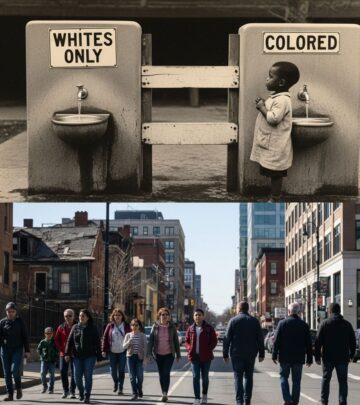
Race and Racism: Definitions, Systems, and Social Impact
Exploring the distinctions between race and racism, systemic inequities, and pathways toward understanding.
Distinguishing Race from Racism: Core Concepts
The terms “race” and “racism” are frequently conflated in everyday conversation, yet they represent fundamentally different concepts that require careful examination. Race functions as a social classification system that categorizes human populations based on perceived physical characteristics, cultural backgrounds, and geographic origins. However, contemporary scientific evidence demonstrates that race lacks biological validity as a meaningful categorization of human genetic variation. Humans possess far greater genetic diversity within so-called racial groups than between them, indicating that racial categories are social constructs rather than biological realities.
Racism, by contrast, operates as a systemic ideology and set of practices built upon the premise that certain racial groups are inherently superior or inferior to others. Unlike race, which is simply a categorization method, racism is fundamentally about power dynamics and the maintenance of hierarchical structures that privilege certain groups while disadvantaging others. This distinction is crucial because it shifts the discussion from describing human difference to examining how societies have weaponized those perceived differences to justify inequality and oppression.
Understanding Racism as a Power-Based System
A foundational definition of racism requires recognizing it as more than individual prejudice or personal bias. Rather, racism constitutes a comprehensive system of advantage based on race, operating through interconnected mechanisms of discrimination embedded throughout society. This conception moves beyond asking whether a specific individual harbors racist attitudes and instead examines how entire institutional structures—including legal systems, economic policies, educational frameworks, and healthcare institutions—systematically advantage members of one racial group while disadvantaging others.
The power dimension of racism is essential to understanding its mechanics. Because race operates as a hierarchy within many societies, particularly in North America, certain groups maintain structural advantages that allow them to control resources, establish norms, and create policies that reinforce their elevated position. To preserve these hierarchical arrangements and prevent minority groups from accumulating wealth and power, systemic mechanisms restrict opportunities for economic advancement, limit access to quality education, and enforce discriminatory policies within criminal justice and housing sectors.
The Architecture of Systemic and Structural Racism
Systemic racism represents racism embedded within the foundational institutions and everyday practices of society, often operating so invisibly that it becomes normalized and taken for granted. This form of racism pervades multiple sectors simultaneously, from criminal justice and education to healthcare delivery and housing access. The pervasiveness of systemic racism means that individuals can perpetuate discriminatory systems without conscious awareness or intent, as they simply follow established procedures, policies, and cultural norms that have been constructed with racist foundations.
Structural racism extends this concept further by examining how multiple institutional systems interact and reinforce one another to produce discriminatory outcomes. When policies in criminal justice, education, housing, and employment all work together—whether intentionally or inadvertently—they create cascading disadvantages for communities of color. These disadvantages compound across generations, creating persistent gaps in wealth accumulation, educational attainment, health outcomes, and political representation. Structural racism is not something that emerged recently or that can be remedied through individual efforts alone; rather, it has been woven into the historical development and contemporary functioning of social, economic, and political institutions.
Key Manifestations of Institutional Inequality
- Discriminatory housing policies that historically restricted property ownership and wealth-building opportunities for people of color
- Educational inequities reflected in unequal funding, resource allocation, and disciplinary disparities affecting students of color
- Criminal justice practices including disparate arrest rates, sentencing disparities, and overrepresentation in correctional systems
- Healthcare access barriers resulting in differential treatment, health outcomes, and life expectancy across racial groups
- Employment discrimination affecting hiring practices, promotion opportunities, and wage equity
The Historical Development of Racial Hierarchies
To understand contemporary racism, one must examine its historical roots. Racial categories and the ideologies supporting them developed not as neutral descriptive systems but as justification mechanisms for European colonialism and the exploitation of non-European populations. During the age of European exploration and conquest, European powers needed ideological frameworks to rationalize the subjugation, enslavement, and colonization of peoples they encountered. Rather than acknowledging conquest as morally problematic, these powers developed and promoted pseudo-scientific theories claiming inherent biological differences between racial groups, with Europeans positioned at the apex of a presumed hierarchy.
These racial theories served explicit political and economic purposes. They legitimized slavery, enabled the dispossession of indigenous populations, justified colonial extraction of resources, and rationalized the denial of rights and opportunities to non-European peoples. As the Atlantic slave trade expanded and slavery became increasingly central to American and European economic systems, racial categories became even more rigidly defined and policed, with severe legal and social consequences for violations of racial boundaries.
The institutional establishment of racism through legal codes, property laws, criminal statutes, and social policies meant that racism became embedded not merely in individual attitudes but in the structures that governed society. Laws explicitly restricted where people of color could live, which schools they could attend, which occupations they could pursue, and what rights they could exercise. These legal architectures of discrimination persisted well into the twentieth century in many jurisdictions and continue to shape outcomes through their historical legacies.
Distinguishing Individual Prejudice from Systemic Racism
A common misconception treats racism as primarily an individual moral failing—a question of whether a particular person holds prejudiced beliefs about other races. While individual prejudice certainly exists and can cause harm, focusing exclusively on individual attitudes obscures the more significant reality that racism operates as a system independent of any individual’s personal beliefs or intentions. An individual who consciously rejects racist ideologies can still benefit from and perpetuate racist systems through their participation in institutional structures and their acceptance of discriminatory norms.
Conversely, systemic racism functions automatically through established policies, standard procedures, and cultural expectations. When institutions apply policies uniformly without acknowledging or addressing their disparate impact on different groups, they perpetuate racial inequity. A hiring manager who uses identical criteria for all applicants might still produce racially disparate hiring outcomes if those criteria inadvertently disadvantage candidates from groups with unequal access to particular educational experiences, social networks, or economic resources. This distinction between individual racism and systemic racism is not meant to absolve individuals of responsibility but rather to clarify that dismantling racist systems requires institutional change, not merely individual attitude adjustment.
White Supremacy: Ideology and Practice
White supremacy constitutes both an ideology—a set of beliefs about racial hierarchy—and a set of practices through which that ideology becomes embedded in institutions and everyday interactions. While white supremacy is sometimes understood narrowly as referring only to overt extremist movements, the broader conception recognizes white supremacy as the foundational ideology undergirding institutional structures in many Western societies, particularly the United States. This systemic white supremacy involves the dominance of white people in political institutions, control of economic resources, and cultural authority to define what is normal, desirable, and valuable in society.
Systemic white supremacy operates through cultural beliefs that position whiteness as the unmarked norm against which other identities are measured and found lacking. It functions through social practices that naturalize white people’s presence in positions of authority and power while rendering people of color’s presence in similar positions exceptional or suspect. It is embedded in institutional structures that were designed during periods of explicit legal racism and that continue to produce racially disparate outcomes even as explicit racial language has been removed from policies and laws.
Intersectionality: Racism’s Intersection with Other Systems of Oppression
Racism does not operate in isolation but intersects with other systems of inequality including sexism, classism, ableism, and heterosexism. A person’s experience of racism is shaped by their simultaneous location within these overlapping systems of advantage and disadvantage. A woman of color experiences racism differently than a man of color, particularly when gendered expectations and limitations are layered atop racial discrimination. Similarly, low-income people of color face compounded barriers that combine class-based discrimination with racial discrimination, creating obstacles more complex than either form of discrimination alone.
Understanding intersectionality prevents oversimplified analyses that treat racial categories as homogeneous groups. It recognizes that a wealthy person of color has different access to resources and power than a poor person of color, even as both experience racism. It acknowledges that LGBTQ+ people of color face discrimination based on multiple identities simultaneously. This framework is essential for developing effective strategies to address racism because it recognizes that solutions must address how racism compounds with other inequalities rather than treating racism as though it affects all people of a given race equally.
The Role of Power in Defining Racist Dynamics
Central to any analysis of racism is recognition that racism fundamentally concerns power. Racism is not simply about negative feelings toward other groups or the existence of stereotypes; rather, it involves the capacity to translate those feelings and stereotypes into material consequences through institutional authority. An individual from a historically subordinated group might hold negative stereotypes about a historically dominant group, but without corresponding institutional power, those stereotypes do not translate into systematic disadvantage the way that dominant-group stereotypes do.
Power in the context of racism operates through multiple channels. Institutional power—the ability to make and enforce policies—is perhaps most consequential. Political power—the ability to influence law-making and governance—determines which groups’ interests are centered in policy decisions. Economic power—control over resources and employment—shapes who has access to wealth-building opportunities. Cultural power—the ability to define what is normal, valuable, and acceptable—influences how different groups are perceived and treated. Racial hierarchies are maintained when one group disproportionately controls these various forms of power and uses that control to advantage themselves while restricting others’ access to similar resources and opportunities.
Contemporary Manifestations of Racial Inequity
Contemporary racism expresses itself through mechanisms that often lack explicit racial language but produce racially disparate outcomes. Housing markets reflect historical segregation and lending discrimination through persistent residential segregation. Educational systems demonstrate racial inequities in funding, teacher quality, discipline policies, and academic tracking. Criminal justice systems show racial disparities in policing, prosecution, conviction, and sentencing. Healthcare systems produce disparities in treatment, quality of care, and health outcomes. Employment sectors demonstrate wage gaps, hiring discrimination, and limited advancement opportunities for workers of color.
These contemporary manifestations often operate through mechanisms that appear facially neutral but that perpetuate historical inequities. Employment requirements for specific educational credentials, for example, may appear neutral but perpetuate historical disadvantages stemming from unequal educational access. Criminal justice policies that mandate lengthy sentences for particular offenses appear neutral but disproportionately affect communities experiencing greater police surveillance. Housing policies that deny mortgage credit to residents in particular neighborhoods appear neutral but perpetuate segregation patterns established through explicit redlining in prior decades.
Pathways Toward Anti-Racism and Racial Justice
Addressing systemic racism requires more than individual good intentions or awareness. It demands structural and institutional changes that examine and reform policies, practices, and procedures that produce racial disparities. Anti-racism education and practice involves recognizing systemic inequities, understanding how racism operates through institutions, and actively working to dismantle discriminatory structures and practices.
Anti-racist approaches must address how racism intersects with other systems of oppression, recognizing that effective racial justice work must simultaneously address economic inequality, gender inequality, and other forms of systemic discrimination. This work requires sustained commitment from institutions and from individuals within those institutions willing to challenge established practices and advocate for equity-oriented reforms. It involves centering the experiences and leadership of those most impacted by racism—communities of color—rather than positioning white people as saviors or primary agents of change.
Essential Elements of Anti-Racist Work
- Examining institutional policies and procedures for racially disparate impacts
- Implementing accountability mechanisms to track progress toward racial equity
- Investing in leadership development within communities of color
- Addressing economic inequalities that compound with racial inequities
- Creating spaces for honest dialogue about race and racism
- Committing to sustained, long-term change rather than temporary initiatives
Frequently Asked Questions
Q: Is it possible for people of color to be racist?
A: Using the definition of racism as a system of advantage based on race, individual people of color can hold prejudiced beliefs about other groups. However, in societies where white people hold disproportionate institutional power, racism as a system operates primarily to advantage white people and disadvantage people of color. Individual prejudice and systemic racism are distinct phenomena.
Q: How does systemic racism persist if explicit racial discrimination is now illegal?
A: Systemic racism persists through policies and practices that appear race-neutral but produce racially disparate outcomes. Historical policies created wealth gaps, residential segregation, and educational inequities that continue affecting outcomes today. Additionally, implicit biases and cultural norms that were developed during periods of explicit racism continue influencing decision-making even without explicit racial language.
Q: What is the difference between being colorblind and being anti-racist?
A: A colorblind approach claims not to see race and treats all people identically. However, treating people identically when they face different obstacles and disparities does not produce equality. An anti-racist approach acknowledges racial inequities and works to address them through targeted policies and practices that remedy historical and ongoing discrimination.
Q: Can institutions themselves be racist if individuals within them are not?
A: Yes. Institutions can perpetuate racism through established policies, standard procedures, and cultural norms even when individual employees do not consciously hold racist beliefs. Institutions can produce racially disparate outcomes through accumulated historical decisions, unreflective adherence to traditional practices, and failure to examine whether policies have disparate racial impacts.
Q: How do I contribute to anti-racism work in my own context?
A: Anti-racism work involves examining your own institutional context for racial disparities, questioning established practices and policies, advocating for equity-oriented changes, centering the voices and leadership of people of color, and committing to sustained effort rather than performative gestures. This looks different depending on whether your context is educational, corporate, governmental, or community-based.
References
- So You Want To Talk About Race: Race/Racism — Cornell University Library Research Guide. 2024. https://guides.library.cornell.edu/oluo/race
- Race and Racism in the United States: A Sociological Guide — American Sociological Association. 2023. https://www.asanet.org/topics-issues/race-racism
- Race and Racism — Open Encyclopedia of Anthropology. 2024. https://www.anthroencyclopedia.com/entry/race-and-racism
- Understanding Racism — Maryland School for the Deaf Educational Resources. 2024. https://www.msd.edu/apps/pages/index.jsp?uREC_ID=1873180
- 11-Step Guide to Understanding Race, Racism, and White Privilege — Citizenship and Social Justice. 2024. https://citizenshipandsocialjustice.com/11-step-guide-to-understanding-race-racism-and-white-privilege/
- Understanding Race and Racism — Insight Meditation Society. 2019. https://www.dharma.org/
- Racism, Bias, and Discrimination — American Psychological Association. 2024. https://www.apa.org/topics/racism-bias-discrimination
Similar Articles








Read full bio of Sneha Tete