Rebuilding Ground Zero: New York’s Resilience
Discover the monumental effort to transform Ground Zero into a symbol of hope, memory, and renewal after 9/11.
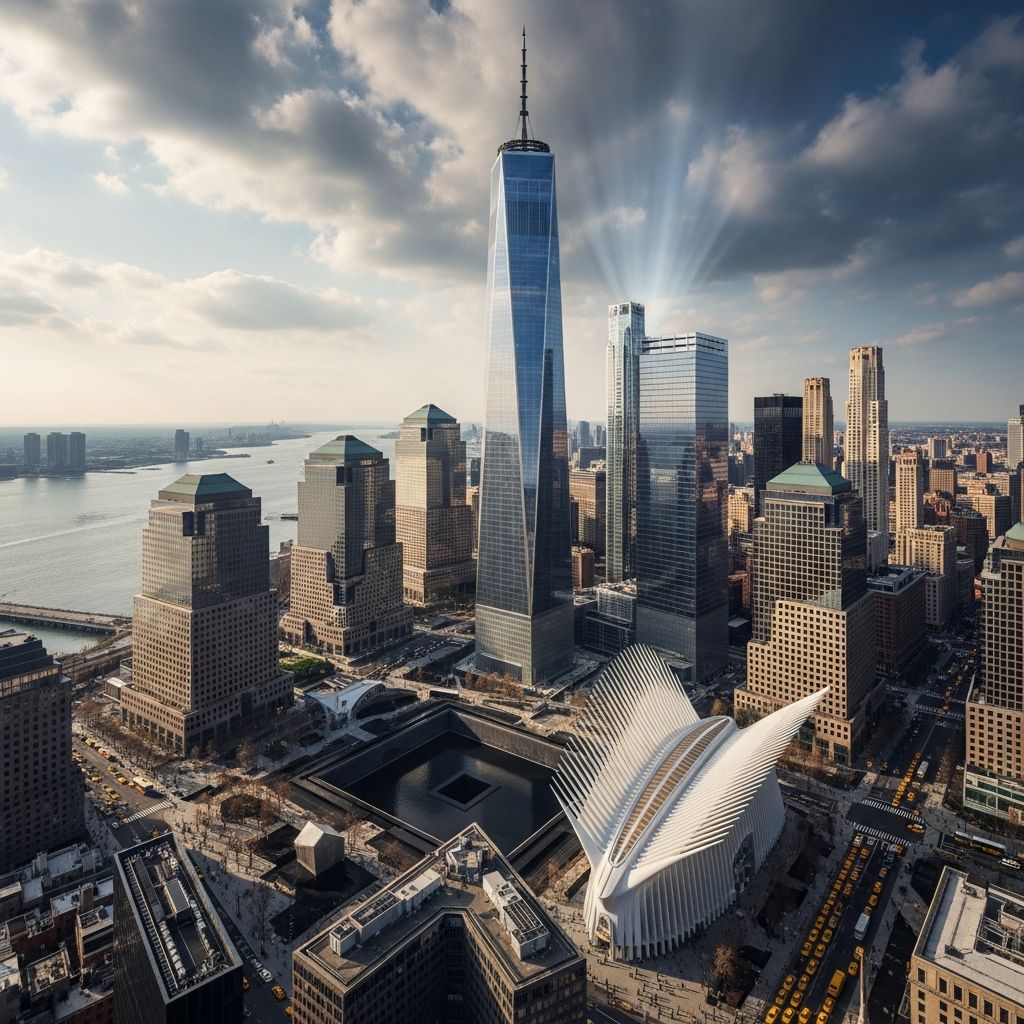
The site known as Ground Zero in Lower Manhattan became a global symbol of tragedy following the September 11, 2001, terrorist attacks. What began as utter devastation evolved into one of the most ambitious urban renewal projects in modern history, blending commemoration, commerce, and community revival. This article delves into the multifaceted journey of reconstruction, from initial chaos to the emergence of a vibrant new skyline.
The Immediate Aftermath: Destruction and Cleanup
The attacks obliterated not just the iconic Twin Towers but an entire 16-acre complex, including seven World Trade Center buildings, the plaza, and the PATH train station. Fires burned for 99 days, and cleanup efforts lasted eight months, with rescue and recovery workers operating 24/7 to remove every piece of steel by May 30, 2002.
Debris removal was a Herculean task, sifting through millions of tons of rubble while honoring the fallen. The Port Authority of New York and New Jersey (PANYNJ), alongside federal aid, coordinated these efforts, setting the stage for redevelopment.
- Total area affected: 14.6 acres (5.9 hectares)
- Cleanup duration: November 2001 to May 2002
- Key challenge: Balancing recovery of remains with site preparation
Establishing Oversight: The Rise of the LMDC
In November 2001, New York Governor George Pataki created the Lower Manhattan Development Corporation (LMDC), a state-city entity to guide revitalization. With a 16-member board split between gubernatorial and mayoral appointees, the LMDC managed federal funds, community input, and coordination with PANYNJ and developer Larry Silverstein, who leased the office spaces.
The LMDC organized international competitions for site plans and memorials, ensuring public involvement from survivors, families, and stakeholders.
Master Plan Evolution: Visions of Memory and Renewal
Early concepts varied widely. In 2002, Beyer Blinder Belle proposed six towers around a central plaza, but Daniel Libeskind’s ‘Memory Foundations’ won the LMDC competition. His design preserved the original slurry wall—a Hudson River-retaining structure symbolizing endurance—and integrated memorials with new towers.
Politics shaped the skyline: PANYNJ prioritized economic recovery, Silverstein sought office space, and families demanded solemn remembrance. Compromises led to a hybrid plan balancing spires, parks, and infrastructure.
| Key Players | Role | Contributions |
|---|---|---|
| Port Authority (PANYNJ) | Land owner | Infrastructure, Vehicle Security Center |
| Larry Silverstein | Developer | Office towers 2,3,4,7 |
| LMDC | Oversight | Competitions, funding coordination |
| Daniel Libesinkd | Architect | Master plan, slurry wall preservation |
One World Trade Center: The Freedom Tower
Originally dubbed the Freedom Tower, One World Trade Center (1 WTC) anchors the site with its 1,776-foot spire, evoking the Declaration of Independence year. Designed by David Childs, construction began in 2006 after security concerns redesigned the base into a fortified podium set back from streets.
Topping out in 2013, it opened in 2014 as the tallest building in the Western Hemisphere, featuring observation decks and symbolizing defiance.
The 9/11 Memorial and Museum: Heart of Remembrance
A 2003 competition drew 5,000 entries from 63 countries; Michael Arad and Peter Walker’s ‘Reflecting Absence’ prevailed. North and south pools mark the Twin Towers’ footprints, with 400 ginkgo trees and the names of 2,983 victims inscribed on bronze parapets.
The underground museum, incorporating the slurry wall and ‘Last Column,’ opened in 2014, narrating heroism and loss through artifacts.
- Pool dimensions: Each 200×200 feet, cascading water 30 feet deep
- Tree significance: Survivor tree from 9/11 rubble
- Opening date: Memorial 2011, Museum 2014
Other Towers: Commercial Revival
Four towers under Silverstein: 3 WTC (80 stories, opened 2018), 4 WTC (72 stories, 2013), 7 WTC (52 stories, 2006—first rebuilt), and the stalled 2 WTC (supertall, delayed by market and pandemic). 5 WTC, a cultural/office building, remains in planning.
These structures prioritize safety with concrete cores, blast-resistant glass, and elevated lobbies.
Infrastructure and Transportation Hubs
The Calatrava-designed Oculus PATH station, resembling a bird’s wings, opened in 2016 after cost overruns to $4 billion. It connects subways and PATH, handling millions daily. Temporary stations gave way to permanent ones amid excavations.
Vehicle Security Center and Liberty Park
Under Liberty Park lies the $667 million VSC, vital for deliveries. Excavations started 2010; the concrete roof finished 2013, enabling the 5-acre park above with the Sphere (surviving WTC artifact) and St. Nicholas views.
Performing Arts Center and Cultural Spaces
A $750 million center by Gehry Partners and Snøhetta faced delays over programming and costs atop transit. The temporary station was demolished post-2023 for its construction, promising theater and opera.
St. Nicholas Greek Orthodox Church: Faith Restored
Destroyed in 2001, the church’s rebuild at a new site (Liberty Park east) resolved 2008 land-swap deal with PANYNJ. Consecrated in 2024 after 23 years, its dome offers skyline views, blending Byzantine design with resilience.
Challenges: Disputes, Delays, and Costs
Rebuilding spanned decades due to stakeholder clashes—Silverstein vs. PANYNJ on tower heights, memorial vs. development priorities, and budget overruns (total ~$25 billion). The 2008 recession and COVID-19 stalled 2 WTC.
Deutsche Bank Building demolition (2007-2011) cost $260 million after fire damage, clearing VSC space.
Legacy: A Transformed Lower Manhattan
Today, the site thrives with offices, tourism (millions visit annually), and resilience features like staircases commemorating climbers. It proves renewal amid grief, boosting downtown economy.
Frequently Asked Questions
What was destroyed at Ground Zero?
Seven WTC buildings, plaza, and PATH station across 16 acres.
Who designed the master plan?
Daniel Libeskind’s Memory Foundations, selected 2003.
When did major buildings open?
- 7 WTC: 2006
- Memorial: 2011
- 1 WTC: 2014
- Oculus: 2016
Is reconstruction complete?
Nearly, except 2 WTC and Performing Arts Center (underway 2023+).
How does the site honor victims?
Via reflecting pools, museum artifacts, and inscribed names.
References
- Ground Zero – Then and Now — Voice of America. 2021. https://projects.voanews.com/ground-zero/
- How Ground Zero was Rebuilt (2001-2023) — YouTube (RealPatrickMcL). 2023. https://www.youtube.com/watch?v=XIAkIAXz43I
- World Trade Center Master Plan — Studio Libeskind. Accessed 2026. https://libeskind.com/work/ground-zero-master-plan/
- Rebuilding Ground Zero – A Skyline shaped by Politics — YouTube. 2023. https://www.youtube.com/watch?v=H-k5YaADmdI
- World Trade Center site — Wikipedia (official summary). Accessed 2026. https://en.wikipedia.org/wiki/World_Trade_Center_site
- Remembering 9/11: The Story of Rebuilding the World Trade Center — ArchDaily. 2024-09-11. https://www.archdaily.com/1021062/remembering-9-11-the-story-of-rebuilding-the-world-trade-center
- Rebuilding Ground Zero: Design of the 9/11 Memorial & Museum — 911 Ground Zero. Accessed 2026. https://911groundzero.com/blog/rebuilding-ground-zero-architects-behind-911-memorial-museum/
Similar Articles







Read full bio of medha deb