Scholarship Goal Setting Guide: Step-By-Step Plan
Unlock your scholarship potential by setting clear, actionable goals to streamline applications and boost success rates.
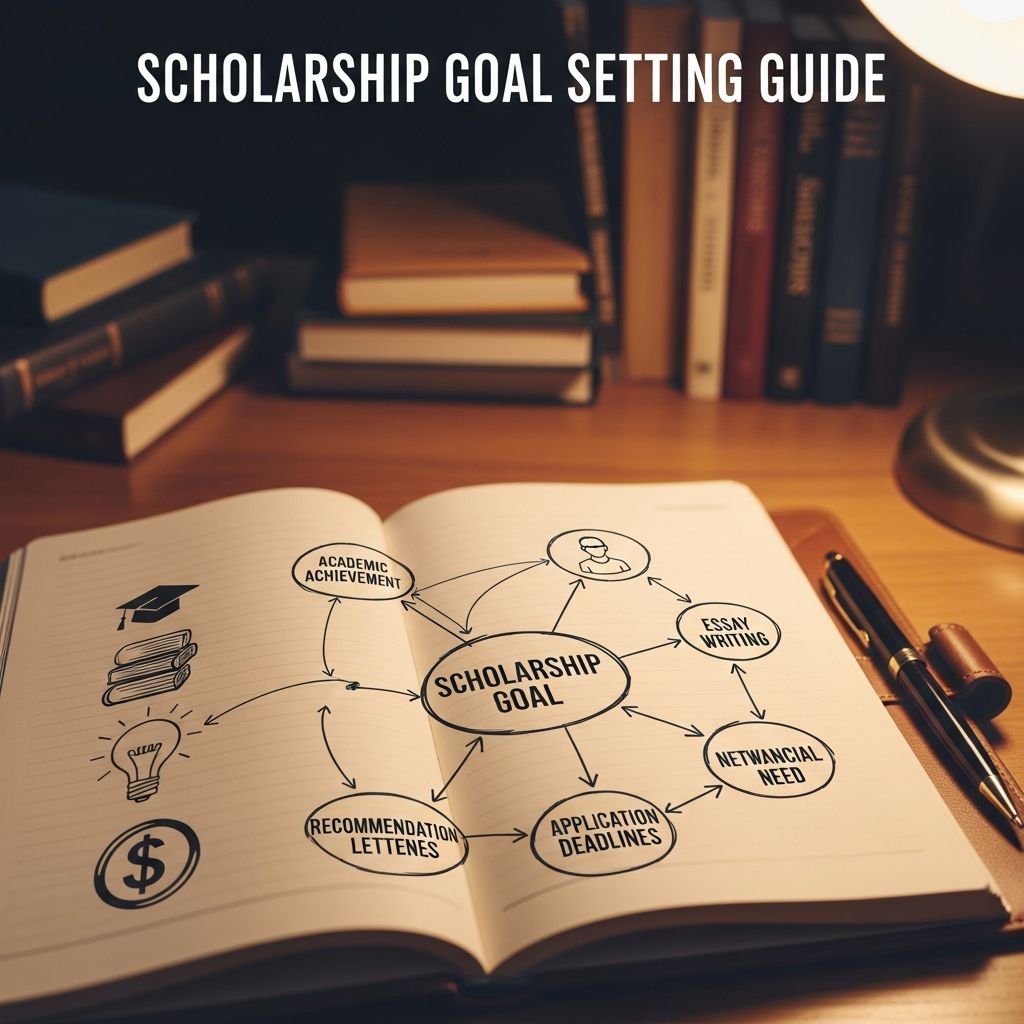
Scholarship Goal Setting Guide
Establishing targeted goals for scholarship pursuits transforms a daunting task into a manageable plan, enabling students to secure vital funding for higher education. This approach involves assessing personal strengths, prioritizing opportunities, and tracking progress systematically.
Understanding Your Scholarship Landscape
Before diving into applications, evaluate the vast array of scholarships available based on merit, need, demographics, and interests. Scholarships range from national programs offering substantial awards to local ones providing smaller but cumulative support. Recognizing this diversity helps in aligning pursuits with individual profiles, such as academic achievements, community service, or specific fields of study.
Students often overlook that even modest awards, like $500, can accumulate significantly over time. For instance, ten such scholarships total $5,000, covering books or fees effectively. Prioritizing a mix of high-value and accessible options ensures balanced effort and higher success probability.
Assessing Personal Strengths and Eligibility
Begin by cataloging your qualifications: GPA, extracurriculars, leadership roles, volunteer hours, and unique experiences. Many scholarships prioritize criteria like academic performance, financial need, or artistic talents. Tools like scholarship profiles compile this data for reuse across applications, saving time.
- Academic Metrics: Calculate your cumulative GPA and gather unofficial transcripts.
- Extracurriculars: List clubs, sports, jobs, and volunteer work with dates and impacts.
- Financial Status: Review FAFSA results or equivalent for need-based eligibility.
- Personal Story: Note challenges overcome or passions that define your goals.
This self-assessment reveals fitting opportunities, preventing wasted effort on mismatched scholarships.
Defining Realistic and Ambitious Targets
Set specific, measurable goals such as applying to 20 scholarships per month or securing five awards per semester. Use SMART criteria—Specific, Measurable, Achievable, Relevant, Time-bound—to refine them. For example, “Apply to three STEM scholarships by March 15th” beats vague intentions.
| Goal Type | Example | Timeline | Expected Outcome |
|---|---|---|---|
| Short-Term | Complete profile by week 2 | 2 weeks | Ready applications |
| Medium-Term | Submit 10 apps | 1 month | Initial awards |
| Long-Term | $10K in funding | Academic year | Tuition coverage |
Balance ambition with realism; high schoolers might target 50 applications yearly, while transfers focus on institution-specific aid.
Building a Strategic Application Calendar
Create a digital or physical calendar marking deadlines, from early fall for spring awards to spring for fall terms. Prioritize by award size, match quality, and due dates. Apps like Google Calendar or spreadsheets track status: researching, drafting, submitted, awarded.
Start early—deadlines approach quickly, and preparation like FAFSA filing by March is crucial. Group similar deadlines to batch tasks, such as requesting recommendations weekly.
Mastering Essential Application Components
Personal Essays and Statements
Craft narratives highlighting uniqueness, future aspirations, and community impact. Tailor each to the scholarship’s theme; generic essays fail. Limit to prompt guidelines, proofread rigorously, and seek feedback.
Securing Strong Recommendations
Select recommenders who know you well—teachers, supervisors, mentors. Request two weeks in advance, provide your resume, goals, and scholarship details. Follow up politely.
- Academic instructor for scholarly insight.
- Supervisor for work ethic demonstration.
Compiling Supporting Documents
Gather transcripts, resumes, financial proofs, and research samples routinely. Ensure completeness; omissions disqualify.
Organizing Your Scholarship Toolkit
Maintain a central folder with profiles, drafts, and submissions. Reusable elements like resumes evolve with updates. Track via checklists:
- Application form completed?
- Documents attached and formatted?
- Essay proofread by peer?
- Recommendations confirmed received?
Post-submission, note decisions for future reference.
Overcoming Common Hurdles
Procrastination hits hard; combat with daily micro-tasks like 30-minute searches. Rejection stings but informs refinements—analyze feedback if provided. Balance with studies by scheduling dedicated times.
For need-based aid, confirm eligibility via counselors, especially for transfers.
Tracking Progress and Adjusting Goals
Monthly reviews assess applications submitted versus goals met. Adjust targets upward with successes or pivot strategies if needed. Celebrate wins, like interview invites, to sustain momentum.
Advanced Strategies for Success
Local scholarships via community colleges yield less competition. Network at school fairs. Post-award, maintain GPA (e.g., 2.0 minimum) and enrollment for renewals. Authorize third-party access for monitoring.
Frequently Asked Questions
What is the best time to start scholarship goal setting?
Begin in freshman year or early for transfers; ongoing effort maximizes opportunities.
How many scholarships should I apply for?
Aim for 20-50 annually, focusing on quality matches.
Do I need a high GPA for scholarships?
Varies; many emphasize leadership or need over perfect scores.
What if I miss a document?
Incomplete apps are rejected; always double-check.
Can scholarships cover full tuition?
Some do, especially merit-based; combine for comprehensive funding.
Case Studies: Real-World Goal Achievement
Consider a student targeting $15,000: They set monthly goals, applied to 40 scholarships, secured eight awards totaling $12,000, adjusting for transfers[Inspired by general processes in 1,2]. Adapt similar plans personally.
References
- Application Process – The Peggy and Jack Baskin Foundation — Baskin Foundation. Accessed 2026. https://baskinfoundation.org/scholarships/information-for-applicants/application-process/
- A Step-by-Step Guide to Apply for Scholarships — St. John’s University. Accessed 2026. https://www.stjohns.edu/news-media/johnnies-blog/step-step-guide-apply-scholarships
- How to Apply for Scholarships: A Step-by-Step Guide — Central Scholarship. Accessed 2026. https://central-scholarship.org/blog/how-to-apply-for-scholarships-a-step-by-step-guide
- College Scholarship Guide — KOC Alaska (PDF). Accessed 2026. https://koc.alaska.edu/_documents/College%20Scholarship%20Guide.pdf
- How to Find and Apply for Scholarships — College Board BigFuture. Accessed 2026. https://bigfuture.collegeboard.org/pay-for-college/get-help-paying-for-college/scholarships-grants-institutional-aid/how-to-find-and-apply-for-scholarship
- Complete Guide to College Scholarships — Study.com. Accessed 2026. https://study.com/resources/college-scholarships-guide
Similar Articles






Read full bio of Sneha Tete