Identifying Termites: Physical Features and Species Distinctions
Learn to identify termites by their distinctive body structure, coloring, and behavioral traits.
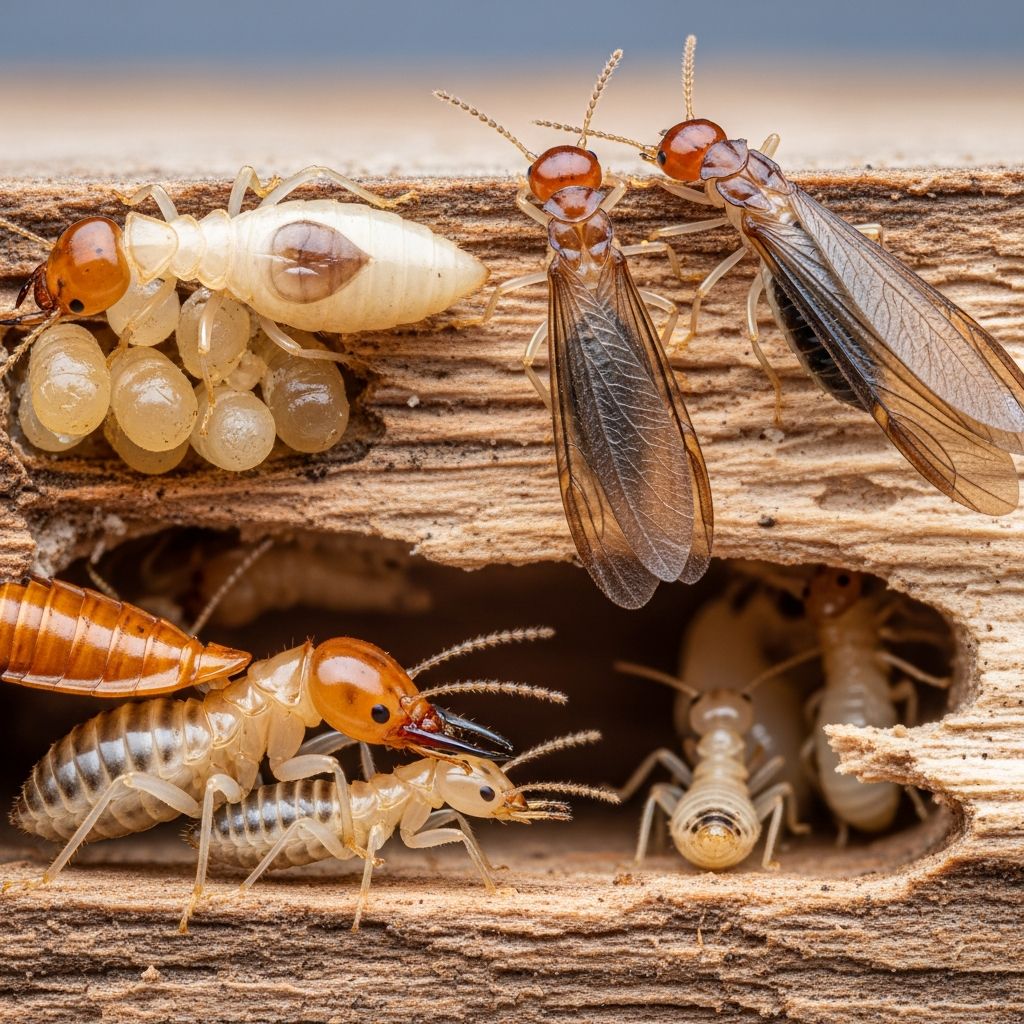
Understanding Termite Morphology and Identification
Termites represent one of the most destructive household pests in North America, yet many homeowners struggle to identify these insects correctly. Proper identification is crucial for implementing effective pest management strategies and understanding the severity of potential infestations. Unlike many other common household pests, termites display remarkable variation in appearance depending on their role within the colony, their developmental stage, and their species. This comprehensive guide explores the physical characteristics that define termites and enable accurate identification in residential and commercial settings.
General Physical Characteristics of Termites
Termites are relatively small insects, typically measuring between 1/4 inch and 3/8 inch in length, though some species may reach up to one inch depending on their caste and maturity level. Despite their diminutive size, termites possess several distinctive morphological features that differentiate them from other insects. Their bodies are generally elongated and oval-shaped, with a uniform thickness throughout their torso—a feature that contrasts sharply with the segmented appearance of ants.
The fundamental body structure of termites includes several key components. Their antennae are notably straight and unsegmented, extending directly from their heads without any noticeable bends or angles. This characteristic proves instrumental when distinguishing termites from ants or other similar insects. Additionally, termites exhibit a thick waist structure, meaning there is no pronounced narrowing or “wasp waist” between their thorax and abdomen. This continuous body profile contributes to their characteristic appearance and separates them visually from many competing insect species.
Termite legs are proportionally shorter than those of comparable insects, and their bodies maintain a soft, almost translucent quality in many species. The coloration of termites varies considerably, ranging from creamy white and pale tan to dark brown and black, depending on multiple factors including species type, caste assignment, and developmental stage.
Caste-Based Variations in Termite Appearance
One of the most significant factors influencing termite appearance is their caste designation within the colony hierarchy. Termite colonies operate as highly organized social structures, with individual termites fulfilling specialized roles. Each caste exhibits distinctive physical characteristics that reflect their function and responsibilities within the colony.
Worker Termites: The Colony’s Foundation
Worker termites constitute the largest population within any termite colony and are responsible for foraging, tunneling, and maintaining the nest structure. These termites display pale coloration, typically appearing creamy white or light tan, with soft bodies that lack the hardened exoskeleton present in other castes. Their heads are relatively small in proportion to their bodies, and their mandibles are underdeveloped compared to soldier termites. Worker termites are often the smallest members of the colony, measuring approximately 1/8 inch in length.
Due to their pale coloring and small size, worker termites are frequently compared to maggots in appearance, particularly when observed in groups. When multiple worker termites move in coordinated patterns, they resemble a procession of grains of rice moving across surfaces. This distinctive visual presentation can help homeowners recognize active termite activity, though workers are typically encountered inside wood rather than on exposed surfaces, as they prefer to remain protected within tunnels and galleries.
Soldier Termites: Colony Defenders
Soldier termites fulfill a specialized protective function within the colony, defending against invasive insects and external threats. These termites display noticeably larger heads than their worker counterparts, with prominent mandibles or pincers that serve as formidable defensive weapons. The head coloration of soldier termites typically ranges from dark brown to yellowish tones, creating a striking contrast with their lighter-colored bodies, which remain soft and pale similar to workers.
The enlarged mandibles characteristic of soldier termites are specifically adapted for combat and defensive positioning. These powerful jaws can deliver bites, though such incidents are rare and typically cause minimal harm to humans. Soldier termites maintain approximately the same body length as workers, but their disproportionately large heads make them easily distinguishable from other colony members. The combination of their darker heads and pale bodies creates a distinctive appearance that aids in visual identification.
Reproductive Termites and Swarmers
Reproductive termites, also called alates or swarmers, represent a completely different morphological category within termite colonies. These termites develop wings during specific seasonal periods, typically in spring, when they engage in nuptial flights to establish new colonies. Unlike workers and soldiers, reproductive termites possess darker coloration, ranging from dark brown to black, and their bodies are considerably harder and more heavily sclerotized.
The most distinctive feature of swarming termites is their wing development. These termites possess two pairs of wings that are equal in length and size, extending significantly beyond their body length—sometimes reaching twice the length of the insect’s torso. The wings are transparent or translucent with slightly rounded tips. Reproductive termites also display more defined body segmentation compared to workers and soldiers, with straighter abdominal profiles and more pronounced anatomical divisions.
Species-Specific Variations and Coloration Patterns
Beyond caste designation, individual termite species exhibit unique physical characteristics that influence their overall appearance and identification. Different species have evolved distinct morphological features adapted to their specific environmental niches and survival strategies.
Subterranean Termites
Subterranean termites represent the most economically destructive termite species in North America. These termites maintain underground colonies and construct mud tubes to navigate between their nests and food sources while minimizing exposure to dry air. Subterranean termite workers typically display pale coloration ranging from cream to light tan, while soldier castes present darker brown or nearly black coloring. These termites generally measure around 1/8 inch in length, and their colonies can contain up to two million individual termites, enabling them to cause catastrophic structural damage.
Drywood Termites
Drywood termites colonize dry wood without requiring soil contact or moisture sources, making them particularly problematic in arid regions and elevated structural components. Western drywood termite soldiers characteristically display reddish-brown heads combined with large, dark mandibles. These termites produce distinctive droppings called frass, which they expel through small holes in infested wood, creating visible evidence of infestation. The presence of frass accumulations represents a reliable indicator of drywood termite activity.
Dampwood and Conehead Termites
Dampwood termites rank among the largest termite species, with adults displaying variable coloration based on their developmental stage. Adults typically present dark heads and tan abdomens, while larvae maintain white coloration. These termites utilize prominent mandibles for wood consumption and tunnel creation. Conehead termites and certain dampwood species possess distinctive pear-shaped heads rather than the typical oval head shape, providing an additional identification characteristic. These species generally display cream-colored bodies contrasting with darker head coloration.
Distinguishing Termites from Similar Insects
Termites are frequently confused with flying ants, particularly when observers encounter winged reproductive forms during swarming events. However, several key anatomical distinctions enable reliable differentiation between these insect groups.
Termites Versus Flying Ants: Comparative Analysis
| Feature | Termites | Flying Ants |
|---|---|---|
| Waist Structure | Thick, undifferentiated waist with uniform body width | Pinched waist creating “wasp waist” appearance |
| Antennae | Straight and unsegmented | Bent or elbowed with segmented appearance |
| Wing Configuration | Two pairs of equal-length wings | Two pairs of wings with upper set noticeably larger |
| Body Shape | Long, broad, uniform oval profile | Narrow, segmented body with distinct sections |
| Coloration | Black or dark brown with translucent or silver wings | Dark black or reddish coloration |
| Legs | Shorter legs relative to body size | Longer legs relative to body size |
Termites Versus Carpenter Ants
Carpenter ants and termites are frequently mistaken for one another due to their similar size and wood-damaging capabilities. However, distinct visual differences enable accurate identification. Carpenter ants typically display dark black or reddish coloration, contrasting sharply with the pale white or brown appearance of most termites. Carpenter ant bodies are more heavily segmented and narrow, particularly at the waist, whereas termite bodies maintain consistent thickness throughout. Additionally, carpenter ants possess bent antennae with visible segmentation, while termite antennae remain straight and unsegmented.
Size and Body Dimension Variations
Termite size varies considerably depending on species classification and developmental stage. Termite larvae represent the smallest developmental form, measuring only approximately 1/10 inch in length with minimal visible segmentation. Mature worker and soldier termites typically range from 1/4 inch to 3/8 inch in body length, though some species achieve lengths approaching one inch.
Most termite species maintain long, oval-shaped bodies that taper minimally from anterior to posterior ends. Notable exceptions include conehead termites, which develop distinctly pear-shaped heads rather than the standard oval configuration. The elongated body form combined with the thick waist structure creates the characteristic termite silhouette that distinguishes these insects from morphologically similar species.
Developmental Stage and Coloration Relationships
Termite coloration demonstrates a clear correlation with developmental maturity and chronological age. Younger termite individuals, including larvae and recently molted nymphs, typically display lighter coloration ranging from nearly translucent white to pale cream. As termites mature and approach adult stages, their exoskeletons harden and often darken in coloration. This developmental progression means that newly emerged termites may appear significantly lighter than their older colony mates, sometimes appearing almost translucent.
This age-related coloration variation adds complexity to identification efforts, particularly when examining mixed-age termite populations within active infestations. Pest management professionals must account for these variations to ensure accurate species identification and appropriate treatment strategy selection.
Identifying Termite Infestations Through Visual Evidence
While direct observation of termites provides definitive identification, homeowners often encounter other evidence of termite presence before observing live insects. Mud tubes constructed by subterranean termites along foundation walls and wooden supports represent clear indicators of active infestations. Drywood termites leave behind frass deposits that accumulate in small piles beneath infested wood. Hollow-sounding wood, buckling paint, and weakened structural integrity often precede visible termite sightings, making these secondary indicators valuable for early infestation detection.
Frequently Asked Questions About Termite Identification
Q: How can I differentiate between termite swarmers and carpenter ants with wings?
A: Termite swarmers display straight antennae, equal-length wings that extend far beyond the body, and thick waists without segmentation. Carpenter ants possess bent antennae, unequal wing lengths, and characteristic narrow waists. Termite swarmers also typically appear darker with more obvious silver or translucent wing coloring.
Q: Why do termites appear lighter or darker at different times?
A: Termite coloration changes based on developmental stage and age. Younger termites display pale coloration as their exoskeletons remain soft and underdeveloped. As termites mature, their bodies harden and often darken significantly, creating visible color variations within colonies.
Q: What is the significance of soldier termite head size?
A: Soldier termite heads are disproportionately enlarged compared to workers, featuring powerful mandibles specifically adapted for colony defense. The enlarged head and dark coloration distinguish soldiers from workers and enable immediate identification of this specialized caste.
Q: Can termites bite or harm humans?
A: Soldier termites can bite, but such incidents are rare and typically harmless. Their mandibles are designed for combat with rival insects rather than defense against large organisms. Bites rarely leave visible marks or cause significant injury.
Q: How do mud tubes help identify subterranean termite species?
A: Mud tubes constructed by subterranean termites provide clear evidence of infestation and indicate the presence of underground colonies. These tubes allow termites to travel between soil and wood sources while maintaining protection from dry air exposure.
References
- What Do Termites Look Like? — Waltham Pest Services. https://www.walthamservices.com/blog/pictures-of-termites/
- Spotting Termites with the Human Eye: What to Look For — Smithereen Pest Management. https://www.smithereen.com/blog/spotting-termites-human-eye/
- What Does a Termite Look Like? — Dodson Pest Control. https://www.dodsonbros.com/termites/what-does-a-termite-look-like/
- What Do Termites Look Like? — PestWorld.org. https://www.pestworld.org/news-hub/pest-articles/what-do-termites-look-like/
- Termite Pictures: Photo Gallery with Images — Western Pest Services. https://www.westernpest.com/blog/termite-pictures/
- Termite Identification Guide — DoMyOwn.com. https://www.domyown.com/termite-identification-guide-a-476.html
Similar Articles







Read full bio of medha deb