Understanding Climatology: Science of Earth’s Climate
Discover the essential science of climatology, exploring long-term climate patterns, their impacts, and vital role in addressing global challenges.
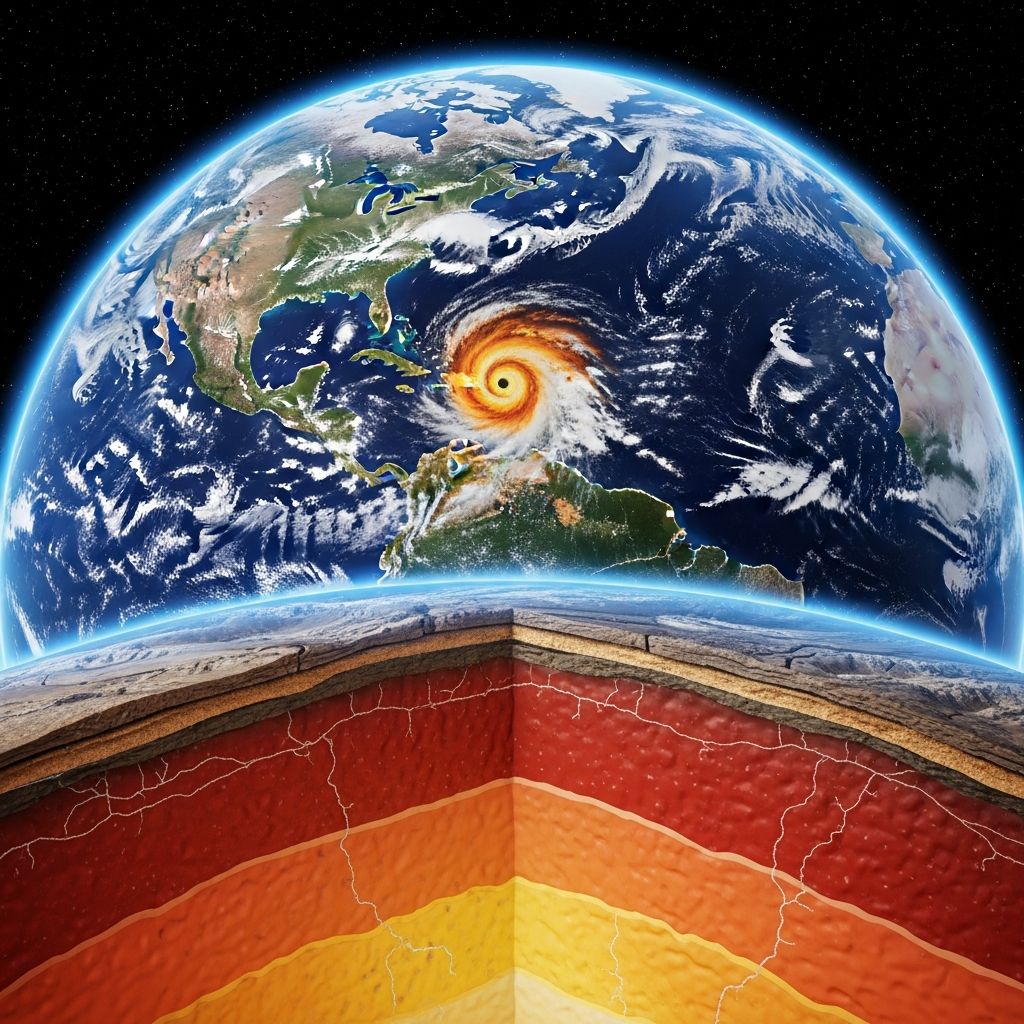
Understanding Climatology: The Science Behind Earth’s Climate
Climatology stands as a cornerstone of Earth sciences, focusing on the systematic analysis of climate systems over extended periods. Unlike daily weather reports, it reveals enduring patterns that shape ecosystems, economies, and human societies.
Defining Climatology and Its Core Principles
At its essence, climatology is the scientific examination of climate, defined as average weather conditions over at least 30 years. This discipline dissects elements like temperature averages, precipitation trends, humidity levels, wind patterns, and atmospheric pressure variations across regions and time scales ranging from decades to millennia.
Key principles include the aggregation of daily observations into long-term datasets. For instance, a region’s climate profile emerges from compiling decades of temperature readings, rainfall totals, and storm frequencies. This approach contrasts sharply with immediate atmospheric snapshots.
- Temperature regimes: Annual highs, lows, and seasonal shifts.
- Precipitation dynamics: Rainfall distribution, drought cycles, and flood risks.
- Wind and pressure systems: Prevailing directions and storm tracks.
- Humidity and cloud cover: Moisture content influencing evaporation and condensation.
These components form the foundation for classifying climates, aiding predictions of environmental shifts.
Climatology Versus Meteorology: Key Distinctions
A common confusion arises between climatology and meteorology. Meteorology targets short-term forecasts—hours to weeks—ahead, relying on real-time data for storm warnings and daily outlooks. Climatology, however, prioritizes historical trends and future projections spanning years or centuries.
| Aspect | Meteorology | Climatology |
|---|---|---|
| Time Scale | Days to weeks | Decades to millennia |
| Focus | Immediate events (e.g., hurricanes) | Average patterns and variability |
| Data Use | Real-time sensors, radars | Historical records, proxies |
| Goal | Forecasting weather | Predicting climate trends |
This table highlights how climatology builds on meteorological data but extends it to reveal broader cycles, such as El Niño oscillations or glacial advances.
Historical Evolution of Climate Studies
Climatology’s roots trace to ancient civilizations observing seasonal cycles for agriculture. Greek scholars like Aristotle noted regional differences in weather regimes. By the 19th century, systematic records from weather stations enabled first climate normals—30-year averages.
The 20th century brought revolutions: satellite imagery from the 1960s, computer models in the 1970s, and paleoclimate reconstructions via ice cores. Today, interdisciplinary tools from physics and data science drive sophisticated simulations.
Major Branches of Climatology
Climatology diversifies into specialized fields, each tackling unique aspects of climate systems.
Physical Climatology
This branch investigates energy balances, radiation transfers, and atmospheric dynamics driving climate. It models how solar input, greenhouse gases, and ocean currents interact.
Regional and Dynamic Climatology
Regional studies map local variations, like Mediterranean dryness versus monsoon intensities. Dynamic climatology explores circulation patterns, such as jet streams and trade winds.
Paleoclimatology: Windows to the Past
Paleoclimatologists reconstruct ancient climates using tree rings, sediment layers, and fossil pollen. These proxies reveal ice ages and warm periods, informing current change models.
Applied Climatology for Practical Solutions
Applied efforts translate data into action: optimizing crop yields, designing resilient cities, or assessing drought risks. It supports sectors from insurance to tourism.
Data Collection and Analytical Methods
Climatologists gather data from diverse sources: ground stations for precise measurements, satellites for global coverage, buoys monitoring ocean temperatures, and aircraft sampling upper atmospheres. Historical archives supplement with ship logs and diaries.
Advanced techniques include:
- Climate modeling: Supercomputers simulate scenarios using equations for fluid dynamics and thermodynamics.
- Statistical analysis: Identifies anomalies, like rising global temperatures.
- Remote sensing: Analyzes vegetation indices tied to rainfall.
- Proxy data: Corals and stalagmites for pre-instrumental eras.
These methods yield climate classifications, such as Köppen’s system dividing Earth into tropical, arid, temperate, continental, and polar zones based on vegetation and temperature.
Real-World Applications Across Industries
Agriculture and Food Security
Farmers rely on climate data for planting schedules and irrigation plans. Projections help breed drought-resistant crops amid shifting rain patterns.
Urban Planning and Infrastructure
Cities use microclimate studies to combat heat islands, design green spaces, and prepare for intensified storms. Coastal areas model sea-level rise for defenses.
Public Health and Disaster Preparedness
Climate influences disease vectors like mosquitoes expanding ranges. Early warnings mitigate heatwaves and floods, saving lives.
Energy and Water Resource Management
Hydropower operators forecast reservoir levels; wind farms site turbines in consistent breeze corridors.
Climatology’s Role in Tackling Climate Change
Modern climatology centers on anthropogenic influences: greenhouse emissions altering baselines. Models project warming scenarios, guiding policies like carbon reductions.
Key insights include accelerated Arctic melt, extreme weather upticks, and biodiversity threats. International bodies like IPCC synthesize findings for global strategies.
Tools and Technologies Powering Modern Climatology
Geographic Information Systems (GIS) visualize spatial trends. Machine learning detects patterns in vast datasets. Coupled atmosphere-ocean models predict decadal shifts.
Challenges persist: data gaps in remote areas, model uncertainties, and integrating socio-economic factors.
Future Directions in Climate Research
Emerging focuses include tipping points—like Amazon dieback—and geoengineering trials. High-resolution regional models enhance local forecasts. Citizen science apps expand data networks.
Frequently Asked Questions (FAQs)
What differentiates climate from weather?
Weather describes short-term conditions like today’s rain; climate averages those over 30+ years, capturing norms and extremes.
How do climatologists predict long-term changes?
They use computer models incorporating physics, historical data, and emission scenarios to simulate futures.
Why is the 30-year period standard?
World Meteorological Organization sets it to smooth short fluctuations, revealing true trends.
Can climatology address current global warming?
Yes, it quantifies human impacts and projects outcomes, informing mitigation.
What careers exist in climatology?
Roles span research, forecasting, policy advising, and consulting for governments and firms.
References
- Climatology Definition, Importance & Examples — Study.com. 2023. https://study.com/academy/lesson/climatology-definition-importance-examples.html
- Climatology | Earth and Atmospheric Sciences — EBSCO Research Starters. 2024. https://www.ebsco.com/research-starters/earth-and-atmospheric-sciences/climatology
- Climatology — Wikipedia (informed by primary sources). 2026-04-01. https://en.wikipedia.org/wiki/Climatology
- Physical Geography: Climatology — Dartmouth College Research Guides (.edu). 2025. https://researchguides.dartmouth.edu/physical_geography/climatology
- What is Climatology? — National Drought Mitigation Center, University of Nebraska-Lincoln (.edu). 2024. https://drought.unl.edu/Education/DroughtIn-depth/WhatisClimatology.aspx
Similar Articles








Read full bio of Sneha Tete