Understanding the GOP Establishment
Exploring the core of Republican Party leadership, influence, and internal power dynamics in American politics.
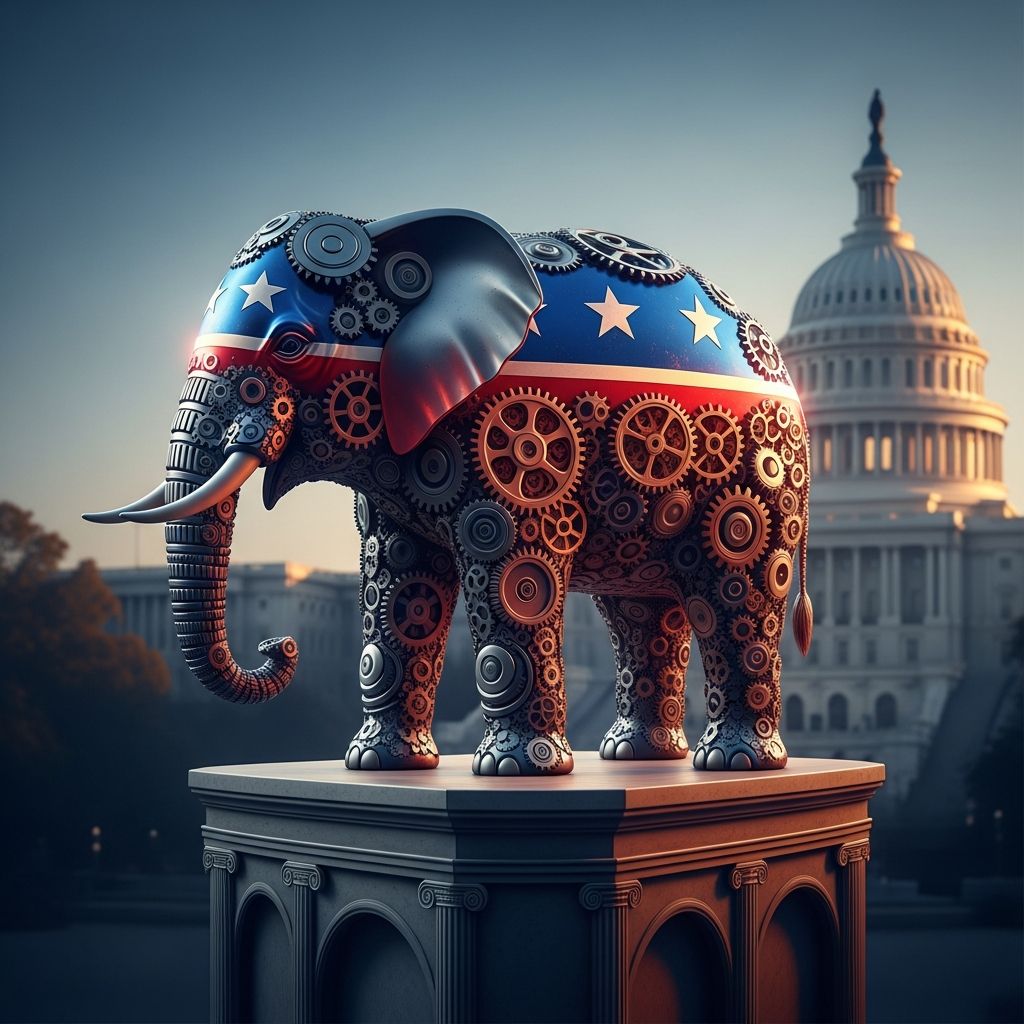
The
GOP establishment
refers to the entrenched leadership, major donors, and institutional figures within the Republican Party who wield significant influence over its direction, candidate selection, and policy priorities. This group often prioritizes pragmatism, electability, and long-term party stability over ideological purity.The Foundations of Republican Party Power Structures
At its core, the GOP establishment comprises elected officials, party operatives, lobbyists, and wealthy contributors who have built careers and fortunes within the Republican ecosystem. These individuals and organizations control key levers such as campaign funding, endorsement networks, and access to media platforms. Unlike the more volatile grassroots base, the establishment favors measured approaches to governance, emphasizing compromise in Washington to achieve incremental wins on issues like tax cuts, deregulation, and national security.
Historically, this power base emerged in the post-World War II era, solidifying during the Reagan Revolution of the 1980s. Figures like Senate Majority Leaders and House Speakers have long embodied this archetype, steering the party through legislative battles and electoral strategies. Their influence is most evident in primaries, where they rally behind candidates perceived as viable general-election contenders rather than firebrand insurgents.
Key Characteristics and Identifying Traits
Members of the GOP establishment are typically defined by several hallmarks:
- Longevity in Office: Many have served multiple terms in Congress or state legislatures, building seniority and committee influence.
- Fundraising Prowess: They maintain ties to corporate PACs, Wall Street firms, and industry groups that provide the bulk of campaign dollars.
- Pragmatic Ideology: While conservative, they often support bipartisan deals on immigration reform, trade agreements, and foreign aid.
- Institutional Loyalty: Prioritizing party unity and electoral success over purity tests on social issues.
This profile contrasts sharply with outsider challengers who campaign on disrupting the status quo. Establishment figures view such populism as risky, potentially alienating moderate swing voters needed for national victories.
Influential Figures Shaping the Establishment
Prominent examples include long-serving senators like Mitch McConnell of Kentucky, who as former Senate Majority Leader orchestrated judicial confirmations and budget maneuvers with surgical precision. House leaders such as Paul Ryan, during his speakership, exemplified establishment priorities by pushing tax reform while navigating internal divisions.
Governors like Chris Christie of New Jersey and John Kasich of Ohio have also represented this wing, blending fiscal conservatism with appeals to independents. Behind the scenes, strategists like Karl Rove and Haley Barbour have pulled strings through super PACs and consulting firms, ensuring aligned candidates advance.
| Figure | Role | Key Contribution |
|---|---|---|
| Mitch McConnell | Senate Leader | Judicial appointments, blocking Democratic agendas |
| Paul Ryan | House Speaker | Tax Cuts and Jobs Act passage |
| Reince Priebus | RNC Chair | Party infrastructure rebuilding |
| John Boehner | Former Speaker | Navigating Tea Party challenges |
These leaders have historically dominated GOP nominating contests, funneling resources to moderates or ‘electable’ conservatives.
Historical Evolution and Major Shifts
The establishment’s dominance peaked in the 1990s and 2000s, with nominees like Bob Dole and John McCain embodying its cautious internationalism and free-trade ethos. The 2010 Tea Party wave marked the first major crack, as insurgents like Rand Paul and Marco Rubio challenged incumbents, forcing the leadership to adapt.
Donald Trump’s 2016 ascent represented a seismic rupture. Dismissed initially by establishment favorites like Jeb Bush and Marco Rubio, Trump harnessed populist anger against trade deals, immigration policies, and endless wars—issues the establishment had long accommodated. His victory exposed vulnerabilities, leading to a hybrid era where insiders co-opted some outsider rhetoric while retaining control over institutions.
Post-2020, tensions persist. The establishment has regrouped around figures like Kevin McCarthy (before his ouster) and current leaders, balancing Trump-aligned populists with traditional donors. This evolution underscores a party in flux, where old-guard influence wanes but doesn’t vanish.
Power Sources: Money, Media, and Machinery
The establishment’s staying power stems from three pillars:
- Financial Networks: Control over $1 billion+ in election cycles via PACs like American Crossroads and Club for Growth (in its moderate phases).
- Media Alliances: Symbiotic relationships with outlets like Fox News (pre-Murdoch shifts) and The Wall Street Journal editorial page, amplifying preferred narratives.
- Party Infrastructure: Dominance of state committees, the RNC, and convention delegate selection processes.
These assets allow rapid mobilization against threats. For instance, in 2012, establishment spending overwhelmed Tea Party hopefuls in key Senate races, securing winnable seats.
Ideological Clashes with Populist Factions
Deep rifts define GOP internal dynamics. Establishment hawks favor free trade (e.g., NAFTA, TPP) and alliances like NATO, while populists decry job losses and interventionism. On immigration, insiders support legal pathways and H-1B visas; outsiders demand walls and moratoriums.
Socially, the establishment treads lightly on abortion and LGBTQ issues to court suburbs, irking evangelicals. Fiscal policy reveals another divide: insiders back entitlement tweaks for solvency; hardliners demand wholesale cuts.
These conflicts erupted in events like the 2013 government shutdown, where Tea Party members defied leadership, costing seats in 2014 midterms. Trump’s MAGA movement amplified this, birthing the ‘America First’ caucus challenging old orthodoxies.
Impact on Elections and Policy Outcomes
Establishment sway ensures GOP platforms remain broadly appealing. Their endorsed candidates win 70-80% of primaries with incumbent protection, per election analyses. Policies like the 2017 tax overhaul—pushed by Ryan and McConnell—bear their stamp: corporate-focused with individual breaks.
Yet populist surges yield concessions, such as tariff hikes under Trump and border security funding boosts. This tug-of-war produces a resilient party, adapting without fracturing entirely.
The Future: Adaptation or Decline?
Looking ahead, demographic shifts and voter realignments test the establishment. Rising non-college white voters favor populism, while suburban professionals lean toward pragmatists. Trump’s enduring sway suggests a blended model: insider management with outsider energy.
Emerging leaders like Glenn Youngkin in Virginia blend both worlds—winning governorships with establishment cash but populist messaging. If the GOP recaptures the White House, expect hybrid governance: fiscal discipline meets protectionism.
Ultimately, the establishment endures by evolving, ceding ground on rhetoric while guarding institutional gates.
Frequently Asked Questions (FAQs)
What exactly defines the GOP establishment?
It includes career politicians, big donors, lobbyists, and party officials who prioritize electability and party unity over radical change.
How does the establishment differ from Trump supporters?
Establishment figures emphasize global trade and alliances; Trumpists focus on nationalism, tariffs, and skepticism of institutions.
Has the establishment lost power since 2016?
It has diminished in primaries but retains control over funding, Senate confirmations, and RNC operations.
Who funds the GOP establishment?
Corporate PACs, Wall Street, tech firms, and traditional donors like the Koch network (in moderated form).
Can populists ever dominate the GOP fully?
Possible with sustained wins, but institutional barriers like donor networks make total takeover challenging.
References
- The Republican Establishment and the Election of 2016 — Brookings Institution. 2016-11-15. https://www.brookings.edu/articles/the-republican-establishment-and-the-election-of-2016/
- Marco Rubio and the Different Definitions of ‘Establishment’ — National Review. 2016-02-24. https://www.nationalreview.com/corner/marco-rubio-and-different-definitions-establishment/
- Party Factions in the U.S. House of Representatives — American Political Science Review (via Cambridge Core). 2021-06-01. https://doi.org/10.1017/S000305542100019X
- GOP Power Brokers and the 2024 Primaries — The Wall Street Journal. 2023-10-12. https://www.wsj.com/politics/elections/gop-power-brokers-2024-primaries-8f4e2d3a
- Factions and Finance in Republican Primaries — Pew Research Center. 2022-03-01. https://www.pewresearch.org/politics/2022/03/01/factions-and-finance/
Similar Articles







Read full bio of Sneha Tete