Understanding Hypersensitivity Reactions
Explore the four main types of hypersensitivity reactions, their mechanisms, symptoms, and clinical implications in depth.
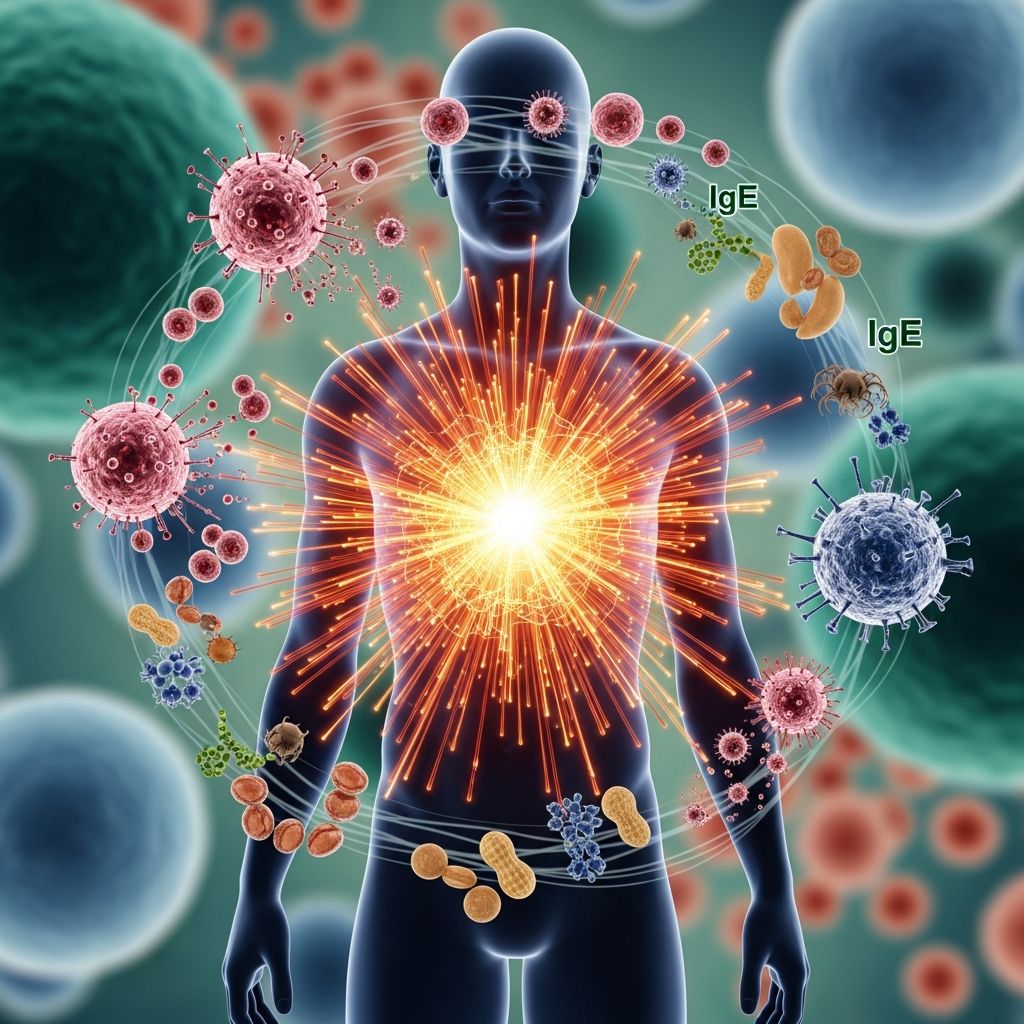
Understanding Hypersensitivity Reactions: The Immune System’s Overzealous Defenses
The human immune system serves as a vigilant guardian, protecting the body from invaders like pathogens and foreign substances. However, in certain cases, this defense mechanism becomes hyperactive, leading to hypersensitivity reactions. These overreactions can range from mild annoyances like itchy skin to life-threatening emergencies such as anaphylactic shock. Classified into four primary types by immunologist Philip Gell and Robin Coombs in the 1960s, hypersensitivity reactions provide crucial insights into allergies, autoimmune diseases, and transplant rejections.
This article examines each type in detail, including underlying mechanisms, common triggers, clinical manifestations, diagnostic approaches, and management strategies. By grasping these concepts, individuals can better recognize symptoms, seek timely medical help, and adopt preventive measures. Understanding these reactions not only aids patients but also informs healthcare professionals in tailoring effective interventions.
Foundations of Hypersensitivity: Why the Immune System Rebels
Hypersensitivity arises when the immune response to an antigen—any substance capable of triggering immunity—causes more harm than good. Antigens can include pollen, foods, drugs, or even the body’s own cells in autoimmune scenarios. The Gell-Coombs classification hinges on the timing, mediators involved (like antibodies or cells), and tissue damage patterns.
Key players include immunoglobulins (IgE, IgG, IgM), complement proteins, and T-lymphocytes. Reactions vary from immediate (minutes) to delayed (days). Risk factors encompass genetics, environmental exposures, and prior sensitizations. Recent studies emphasize the role of gut microbiota and epigenetics in predisposing individuals.
Type I: Immediate Hypersensitivity – The Classic Allergic Response
Type I reactions, also termed immediate or IgE-mediated, represent the most familiar form of allergy. Upon initial exposure to an allergen, naive B cells produce IgE antibodies that bind to high-affinity FcεRI receptors on mast cells and basophils. Subsequent encounters cross-link these IgE molecules, triggering rapid degranulation.
This releases potent mediators: histamine causes vasodilation and smooth muscle contraction; leukotrienes and prostaglandins amplify inflammation; cytokines recruit eosinophils. Reactions unfold in two phases: early (minutes, histamine-driven) and late (hours, cellular influx).
Common Triggers and Symptoms
- Environmental allergens: Pollen, dust mites, pet dander – manifesting as allergic rhinitis (sneezing, runny nose) or conjunctivitis.
- Food allergens: Peanuts, shellfish, milk – leading to oral itching, hives, gastrointestinal distress.
- Insect stings: Bees, wasps – causing localized swelling or systemic anaphylaxis.
- Drugs: Penicillin, aspirin – from mild rash to severe bronchospasm.
Symptoms include flushing, urticaria (hives), angioedema (deep swelling), wheezing, nausea, and hypotension. Anaphylaxis, the severest form, involves multi-organ failure and demands epinephrine.
Diagnosis and Management
History-taking reveals patterns; skin prick tests or serum IgE assays confirm allergens. Intradermal tests assess sensitivity gradients. Management prioritizes avoidance, antihistamines (H1-blockers for histamine), corticosteroids for late phases, and epinephrine auto-injectors for high-risk patients.
Type II: Antibody-Dependent Cytotoxic Reactions
Type II hypersensitivities involve IgG or IgM antibodies targeting antigens on cell surfaces or extracellular matrices, recruiting complement or effector cells for destruction. This cytotoxicity damages bystander tissues, distinguishing it from Type I’s mediator release.
Mechanisms include complement-dependent cytotoxicity (CDC), antibody-dependent cellular cytotoxicity (ADCC) via natural killer cells, and phagocytosis opsonization. Outcomes range from acute hemolysis to chronic autoimmunity.
Clinical Examples and Impacts
| Condition | Trigger/Antigen | Key Effects |
|---|---|---|
| Autoimmune hemolytic anemia | RBC surface proteins | Spherical RBCs, jaundice, fatigue |
| Immune thrombocytopenia | Platelet glycoproteins | Bleeding, purpura |
| Graves’ disease | TSH receptor | Hyperthyroidism, goiter |
| Goodpasture syndrome | Basement membrane collagen | Pulmonary hemorrhage, glomerulonephritis |
| Blood transfusion mismatch | ABO antigens | Acute hemolysis, shock |
These conditions often stem from drugs (e.g., penicillin coating RBCs), infections, or autoimmunity.
Diagnostic Tools and Therapies
Direct Coombs test detects cell-bound antibodies; indirect assays measure serum levels. Biopsies reveal deposits. Treatments include immunosuppressants (steroids, rituximab), plasmapheresis, or antigen avoidance.
Type III: Immune Complex-Mediated Damage
Type III reactions occur when soluble antigen-antibody complexes deposit in vessel walls, joints, or kidneys, activating complement and neutrophils. This unleashes proteases and reactive oxygen species, causing vasculitis and inflammation.
Complex size matters: small, persistent ones evade clearance. Triggers include chronic infections, drugs, or autoantigens. Reactions peak 3-8 hours post-exposure.
Associated Diseases
- Serum sickness: From heterologous sera or biologics like infliximab – fever, arthralgias, urticaria.
- Systemic lupus erythematosus (SLE): Nuclear antigens – malar rash, nephritis.
- Rheumatoid arthritis: Joint complexes – synovitis.
- Post-streptococcal glomerulonephritis: Bacterial antigens – hematuria, edema.
Henoch-Schönlein purpura features palpable purpura in children.
Identification and Interventions
Low complement levels, elevated ESR, biopsies showing deposits aid diagnosis. Urine/blood tests monitor kidneys. Steroids, cyclophosphamide, or plasmapheresis control flares.
Type IV: Delayed, Cell-Mediated Hypersensitivity
Unique among types, Type IV relies on T-cells, bypassing antibodies. Antigen-presenting cells process and display allergens to CD4+ (helper) or CD8+ (cytotoxic) T cells. Activation releases cytokines (IFN-γ, TNF), recruiting macrophages and causing delayed inflammation (24-72 hours).
Subtypes include Th1 (macrophage activation, e.g., tuberculin test), Th2 (eosinophils), Th17 (neutrophils), and cytotoxic (cell killing).
Manifestations and Causes
- Contact dermatitis: Nickel, poison ivy – eczematous rash.
- Drug eruptions: Antibiotics – maculopapular or severe SJS/TEN.
- Chronic infections: TB granulomas, leprosy.
- Autoimmunity: Type 1 diabetes, MS – T-cell attack on beta cells or myelin.
Testing and Control
Patch tests replicate exposure; biopsy shows lymphocytic infiltrates. Avoidance, topical steroids, or immunosuppressants manage cases.
Emerging Perspectives: Type V and Beyond
Some propose Type V for receptor-stimulating/blocking antibodies (e.g., myasthenia gravis), but it’s often subsumed under Type II. Research explores mixed reactions and genetic modifiers.
Prevention Strategies Across All Types
Avoidance: Identify triggers via diaries or tests.
Desensitization: Sublingual/oral immunotherapy for Type I.
Vaccinations: Prevent infection-triggered Types II/III.
Lifestyle: Anti-inflammatory diets, stress reduction.
Frequently Asked Questions (FAQs)
What is the most dangerous hypersensitivity reaction?
Type I anaphylaxis can be fatal within minutes due to airway closure and shock. Carry epinephrine if at risk.
How do doctors differentiate hypersensitivity types?
Timing, symptoms, lab tests (IgE levels, Coombs, biopsies), and history guide classification.
Can hypersensitivity reactions be cured?
Not always, but symptoms are manageable with avoidance, meds, and immunotherapy. Some resolve spontaneously.
Are hypersensitivity reactions hereditary?
Genetic predisposition (atopy) increases risk, especially for Type I, via familial clustering.
What role does the gut play in hypersensitivity?
Dysbiosis influences Th2 skewing in allergies; probiotics show promise in modulation.
Conclusion
Hypersensitivity reactions illuminate the delicate immune balance. Early recognition saves lives; ongoing research promises targeted therapies like biologics (omalizumab for IgE). Consult allergists for personalized care.
(Word count: 1728)
References
- Hypersensitivity reactions: Types and triggers — Medical News Today. 2023-05-15. https://www.medicalnewstoday.com/articles/hypersensitivity-reactions
- How to Recognize the 4 Types of Hypersensitive Reactions — ENT of Georgia. 2022-08-10. https://www.entofga.com/how-to-recognize-the-4-types-of-hypersensitive-reactions/
- Hypersensitivity Reactions: Types, Symptoms & Treatment — Cleveland Clinic. 2024-01-22. https://my.clevelandclinic.org/health/diseases/hypersensitivity-reactions
- Allergies explained — DermNet NZ. 2023-11-05. https://dermnetnz.org/topics/allergies-explained
- Hypersensitivity Reactions (Types I, II, III, IV) — Rutgers NJMS. 2009-01-01. https://njms.rutgers.edu/sgs/olc/mci/prot/2009/Hypersensitivities09.pdf
- Mechanisms of Hypersensitivity — PMC/NIH. 2020-03-15. https://pmc.ncbi.nlm.nih.gov/articles/PMC7120502/
Similar Articles








Read full bio of medha deb