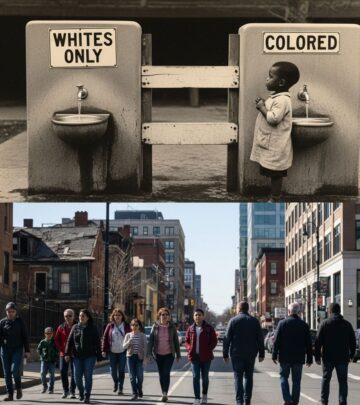
Understanding Irony: Definitions, Types & Real-World Applications
Master the art of irony: explore how contradiction creates meaning in language and life.

The Essence of Ironic Expression
Irony represents a fundamental disconnect between surface-level appearance and underlying reality, serving as one of the most versatile and nuanced tools in human communication. At its core, irony occurs when expectations collide with actual outcomes, generating layers of meaning that transcend literal interpretation. This collision between what seems to be and what actually is creates moments of revelation, humor, or poignancy that resonate across literature, rhetoric, and everyday conversation.
The concept of irony extends far beyond simple contradiction. It encompasses a sophisticated interplay between intention and expression, expectation and occurrence, meaning and utterance. When wielded effectively, irony serves as a mirror reflecting the complex contradictions woven throughout human experience and reality itself. This literary and rhetorical device challenges audiences to think critically, examining assumptions and recognizing the gap between surface appearances and deeper truths.
Understanding irony requires recognizing that it operates simultaneously on multiple levels. On one level, irony presents information or dialogue that seems straightforward; on another level, an entirely different meaning emerges when context and perspective shift. This duality makes irony particularly effective for conveying sophisticated ideas while simultaneously entertaining, shocking, or enlightening audiences.
How Irony Functions in Communication
Irony functions through the deliberate manipulation of expectation and reality, creating what scholars call a “juxtaposition.” The mechanism operates through several interconnected components. First, the audience or reader develops certain expectations based on context, character, or narrative setup. Second, events or statements then contradict those expectations in meaningful ways. Third, the contrast between expectation and reality generates insight, humor, or emotional resonance.
The effectiveness of irony depends heavily on context and audience awareness. Readers must possess sufficient information to recognize the contradiction being presented. Without this contextual knowledge, irony dissolves into mere confusion or miscommunication. An ironic statement requires the audience to understand what is literally being said while simultaneously grasping what is actually meant—a cognitive process that demands active interpretation rather than passive reception.
Additionally, irony demands that communicators and audiences share common frameworks for understanding the world. What constitutes irony in one cultural context might appear nonsensical or offensive in another. The shared recognition of expectations and norms creates the space where irony thrives, making it inherently social and contextual.
Three Distinct Categories of Irony
While irony appears in countless variations throughout human expression, literary scholars and rhetoricians have identified three primary classifications that encompass most ironic phenomena. These categories help readers and writers recognize, analyze, and deploy irony effectively in various contexts.
Verbal Irony: When Words Betray Their Literal Meaning
Verbal irony occurs when someone expresses something through language that contradicts their actual meaning. The speaker deliberately says the opposite of what they intend, relying on the listener’s ability to recognize the contradiction and extract the true meaning from context.
Classic examples of verbal irony abound in everyday speech. Imagine stepping outside during a torrential downpour and exclaiming, “What gorgeous weather!” The literal words praise the weather, yet the context—the rain, the likely tone of voice, the implausibility of genuinely enjoying such conditions—signals that the opposite sentiment is intended. The speaker means to communicate frustration or sarcasm, not literal approval.
Verbal irony appears frequently in literature and dialogue. A character might respond to devastating news by saying, “That’s just wonderful,” or greet a friend arriving hours late with, “So glad you could make it.” In each case, the words say one thing while intention conveys another. Writers use verbal irony to reveal character psychology, establish tone, and add layers of meaning to dialogue.
It is crucial to distinguish verbal irony from sarcasm, though the terms often overlap. Sarcasm represents a specific type of verbal irony characterized by mockery or contempt, typically directed at another person. Not all verbal irony is sarcastic—sometimes it serves to create humor or emphasize a point without cruelty. Sarcasm, however, nearly always carries an edge of hostility or ridicule.
Dramatic Irony: The Audience Sees What Characters Cannot
Dramatic irony emerges when the audience or reader possesses crucial information that characters within the narrative lack. This gap in knowledge creates tension, anticipation, or tragic resonance as viewers watch characters unknowingly move toward their fates.
The classic Greek tragedy Oedipus Rex exemplifies dramatic irony at its most devastating. King Oedipus embarks on a determined quest to find his father’s murderer, swearing to pursue justice relentlessly. The audience, having access to the play’s backstory and prophecies, knows what Oedipus cannot: he himself murdered his father. Oedipus pursues the guilty party with righteous intensity, unaware that each revelation brings him closer to the horrifying truth about himself. The irony lies not in contradiction of expectation about what will happen, but in the profound gap between what Oedipus believes about his circumstances and what is actually true.
Horror films frequently employ dramatic irony to generate suspense and fear. Viewers watching from their seats know the killer hides in the closet; the unsuspecting character entering the bedroom knows nothing of this danger. This knowledge disparity creates unbearable tension as audiences watch characters walk toward peril they cannot perceive.
Dramatic irony also functions as a tool for building sympathy and deepening emotional investment. When audiences know something characters do not, they experience a protective instinct, wishing they could warn the characters or change their fate. This emotional involvement makes dramatic irony particularly powerful in storytelling.
Situational Irony: When Reality Defies Expectations
Situational irony occurs when actual events or outcomes contradict what would reasonably be expected or anticipated. Unlike verbal irony, which involves intentional misstatement, or dramatic irony, which depends on information gaps, situational irony arises from the genuine reversal of expected circumstances.
Consider a firefighter who spends their entire career rescuing others from burning buildings, only to die in a house fire outside of work. The irony emerges from the contradiction between the expected outcome—a person trained and equipped to survive fire should be safest around flames—and the actual outcome. Life’s circumstances produce an outcome that seems to mock expectation.
Another example illustrates situational irony’s reach into economic and social contexts. A person who inherits a fortune from a distant relative they never knew might simultaneously inherit crushing tax obligations that force them to sell the inherited property to cover the debt. They gain wealth only to lose financial security—an ironic reversal of what inheritance typically represents.
Situational irony highlights the unpredictability of life and the ways circumstances can conspire against logical expectation. This type of irony often carries philosophical weight, suggesting that reality operates according to principles that resist human attempts at prediction or control.
The Purpose and Power of Irony
Writers and speakers deploy irony for multiple compelling reasons. First, irony allows communicators to juxtapose contradictory ideas, creating intellectual and emotional space for interpretation and inquiry. By presenting opposing concepts in tension, irony invites audiences to examine assumptions and recognize complexity.
Second, irony reflects lived experience. Life frequently produces ironic situations—plans go awry, expectations crumble, circumstances reverse themselves. By incorporating irony into storytelling and communication, writers create narratives that feel authentic and resonant with human experience.
Third, irony engages critical thinking. Rather than presenting simple, direct information, irony requires audiences to work, to recognize contradiction, and to extract meaning from the gap between appearance and reality. This cognitive engagement makes irony particularly effective for educational and persuasive purposes.
Fourth, irony generates emotional responses ranging from laughter to heartbreak. The surprise and revelation that irony provides can shock, delight, or devastate audiences, creating memorable moments that linger in consciousness.
Irony Across Different Contexts
While irony originated as a rhetorical device in classical oratory and evolved as a literary technique, its applications have expanded far beyond these traditional boundaries. Contemporary culture embraces irony as a fundamental mode of expression and interpretation.
In social media and digital communication, irony permeates interactions. Users frequently deploy ironic statements, intentionally misrepresenting their genuine feelings or opinions to create humor or establish rapport. The rise of internet culture has intensified reliance on ironic modes of expression, sometimes creating confusion for those unaware of the ironic intent.
Advertising and marketing professionals utilize irony to create memorable campaigns and establish brand personality. By saying the opposite of what brands want consumers to believe, or by highlighting contradictions in consumer behavior, marketers craft messages that cut through noise and engage audiences more effectively than straightforward appeals.
Philosophy has adopted irony as a conceptual framework for understanding human existence and knowledge. Philosophers reference Socratic irony—the method of feigning ignorance in order to expose the false conceptions of others through skillful questioning. This philosophical application of irony extends to existential questions about meaning, authenticity, and the nature of reality itself.
The Distinction Between Irony and Similar Concepts
Irony frequently gets confused with or conflated with other literary devices and rhetorical strategies, particularly sarcasm and satire. Understanding these distinctions clarifies the specific function and effect of each device.
As noted earlier, sarcasm represents a specific subset of verbal irony characterized by mockery or contempt. All sarcasm involves irony, but not all irony is sarcastic. Sarcasm deliberately wounds or ridicules, whereas irony can function without any hostile intent. A person might use irony to gently correct a misconception, while sarcasm typically aims to demean.
Satire, by contrast, represents a broader rhetorical mode that often employs irony as one tool among several. Satire aims to criticize or mock folly, corruption, or hypocrisy through exaggeration, irony, humor, and other techniques. While irony focuses on contradiction between expectation and reality, satire targets specific subjects for critical examination.
Recognizing Irony in Practice
Identifying irony requires attentiveness to context, tone, and contradiction. Readers and listeners must notice when something seems off—when words don’t align with situations, when expectations diverge from outcomes, or when characters lack crucial information audiences possess.
Several markers signal potential irony:
- Unexpected outcomes or plot reversals that contradict logical progression
- Dialogue that seems to mean the opposite of what is being said
- Information gaps between characters and audiences
- Tone shifts that suggest contradiction between words and meaning
- Situations where consequences mock or reverse expectations
Recognizing these markers develops with practice and engagement with ironic texts. Close reading and critical analysis strengthen the ability to perceive irony’s subtle operations.
Frequently Asked Questions About Irony
Q: Is irony the same as sarcasm?
A: No, though they overlap. Sarcasm is a specific type of verbal irony that conveys mockery or contempt, whereas irony encompasses a broader range of contradictions between expectation and reality that need not be hostile or insulting.
Q: Can something be ironic without being intended?
A: Yes. While verbal irony requires intentional misstatement, situational irony and dramatic irony can occur without anyone deliberately creating them. Life itself produces ironic circumstances through the collision of chance and expectation.
Q: Why do writers use irony instead of direct statements?
A: Irony engages audiences more deeply, creates multiple layers of meaning, reflects authentic human experience, and generates emotional impact more effectively than straightforward exposition. It also allows writers to convey sophisticated ideas while entertaining readers.
Q: Can irony be confused or misunderstood?
A: Absolutely. Irony depends on shared context and cultural understanding. Without sufficient background information or awareness of the ironic intent, audiences may mistake irony for sincerity or miss the contradiction entirely.
Q: Is dramatic irony only found in theater?
A: No. While dramatic irony originated in theatrical contexts, it appears throughout literature, film, television, and even real-world situations whenever audiences possess information characters lack.
References
- What Is Irony? | Examples, Types & Definition — Scribbr. 2024. https://www.scribbr.com/rhetoric/irony/
- Irony — The Poetry Foundation. https://www.poetryfoundation.org/education/glossary/irony
- 3 Types of Irony: What’s the Difference? With Examples — Reedsy. 2024. https://reedsy.com/blog/guide/irony/
- Irony Definition: Different Types of Irony in Literature — Writers.com. https://writers.com/irony-definition
- IRONY Definition & Meaning — Merriam-Webster Dictionary. https://www.merriam-webster.com/dictionary/irony
- What Does Irony Really Mean? — AmazingTalker. https://www.amazingtalker.com/questions/2005
- What is Irony? A Literary Guide for English Students and Teachers — Ohio State University School of Writing, Literature and Film. https://www.youtube.com/watch?v=q6e0oNVx8Uk
Similar Articles







Read full bio of medha deb