Understanding Landscape Archaeology
Explore how archaeologists study past societies through spatial analysis and environmental reconstruction.
Examining the Relationship Between Humans and Their Surroundings
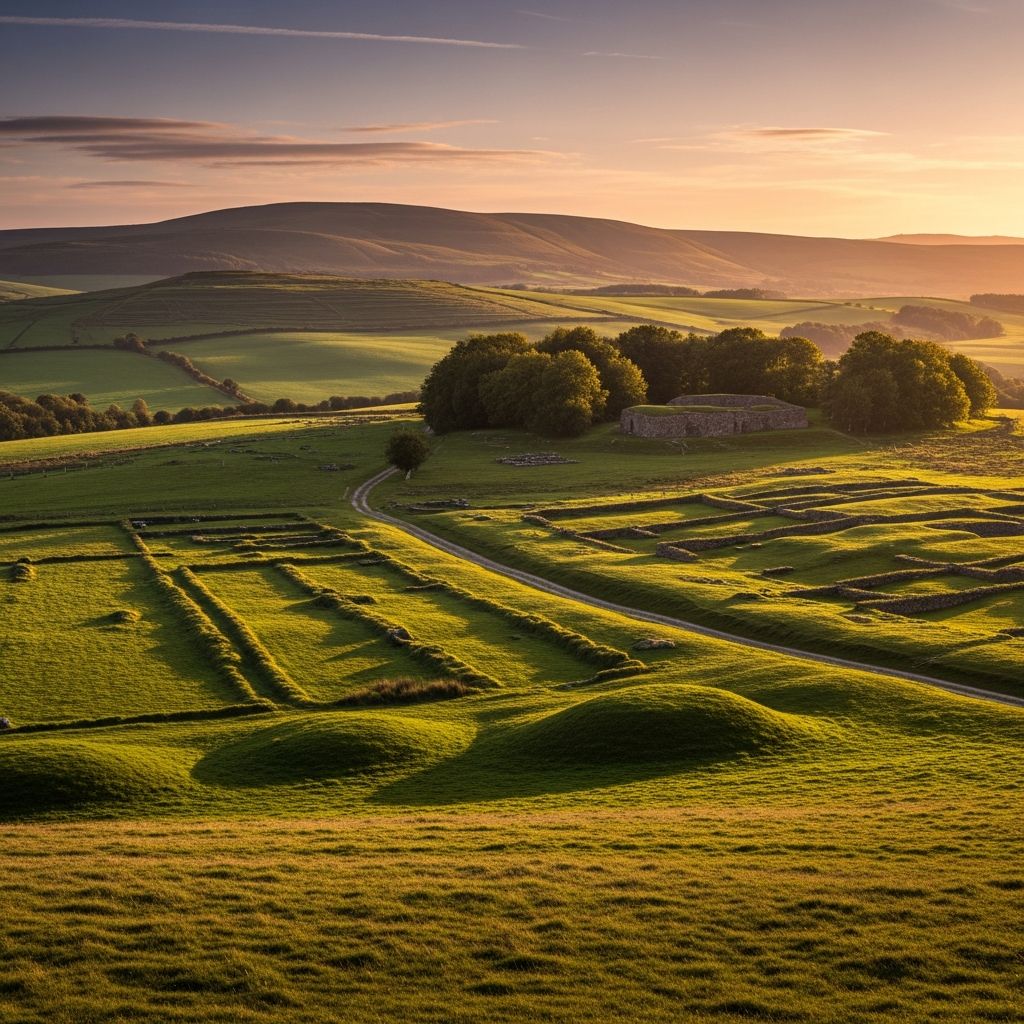
Landscape archaeology represents a distinctive methodological and theoretical perspective within the broader field of archaeology, one that fundamentally reimagines how scholars investigate the past. Rather than concentrating exclusively on individual artifacts or isolated archaeological sites, this approach encompasses the examination of entire regions and the complex interactions between human societies and their physical environments. The discipline emerged from a recognition that understanding past civilizations requires analyzing not merely what people created, but also where they created it, how they organized their settlements, and the manner in which they fundamentally altered the terrain around them.
At its foundation, landscape archaeology operates on the principle that the environment itself constitutes a critical source of archaeological evidence. Mountains, valleys, water systems, forests, and plains were not merely passive backdrops to human activity; they actively shaped human choices, settlement patterns, and cultural practices. Simultaneously, human societies left their imprint on these environments through agricultural practices, construction projects, and long-term modifications that sometimes persisted for centuries. This reciprocal relationship between people and place forms the conceptual core of the discipline.
Defining the Conceptual Framework
The term “landscape” within archaeological contexts carries meanings that extend far beyond simple geographical description. Scholars define landscape as the integration of natural surroundings with cultural phenomena, encompassing both the physical reality of terrain and the social, cognitive, and symbolic dimensions that communities assign to particular spaces. A landscape, in this sense, represents a cultural artifact—a product of human labor, knowledge systems, and social organization.
This expanded definition acknowledges that landscapes function on multiple levels simultaneously. The rice paddies of Southeast Asia, medieval field systems in Europe, and terraced agricultural zones worldwide exemplify how human intervention has fundamentally restructured natural environments according to cultural objectives and technological capacities. Yet landscapes simultaneously embody intangible dimensions including place names, folklore, environmental knowledge systems maintained by indigenous populations, and the meanings communities attach to particular locations.
Landscape archaeology thus encompasses what might be termed the archaeology of place-making—the processes through which human societies transform physical space into culturally meaningful locations. This includes identifying sacred sites, understanding territorial boundaries, recognizing movement corridors between settlements, and analyzing how spatial organization reinforced or challenged social hierarchies within communities.
Methodological Approaches and Technical Tools
The technical toolkit employed by landscape archaeologists reflects the field’s multidisciplinary character and continues to expand with technological advancement. Modern landscape archaeologists integrate diverse methodologies to construct comprehensive understandings of past environments and human activity patterns:
- Remote Sensing and Aerial Imagery: Satellite and aerial photographs provide bird’s-eye perspectives of large areas, revealing patterns invisible from ground level, including ancient field boundaries, settlement alignments, and vegetation patterns indicating buried structures.
- Light Detection and Ranging (LiDAR): This technology generates precise three-dimensional maps of terrain by penetrating dense vegetation, revealing archaeological features obscured by forest canopy or undergrowth. LiDAR has proven revolutionary for discovering previously unknown settlements and infrastructure in heavily forested regions.
- Geographic Information Systems (GIS): These computational platforms enable archaeologists to layer multiple datasets—topographic data, archaeological survey records, paleoenvironmental information, and historical documentation—to analyze spatial relationships and test hypotheses about settlement patterns and resource utilization.
- Ground Surface Survey: Systematic pedestrian survey of landscapes allows archaeologists to identify and map archaeological materials, settlements, and activity zones across broad areas.
- Paleoenvironmental Analysis: Specialists reconstruct ancient environmental conditions through examination of pollen records, soil composition, faunal remains, and botanical evidence, establishing the ecological contexts within which past societies operated.
- Stratigraphic Excavation: Traditional excavation methods remain essential components of landscape archaeology, providing detailed chronological and contextual information about specific sites within larger landscapes.
- Geomorphological Assessment: Specialists analyze landform development and modification processes to understand how natural processes and human activity have transformed terrain over time.
This methodological diversity reflects landscape archaeology’s inherent multidisciplinary character. The field draws expertise from geography, environmental science, geology, history, anthropology, and numerous other disciplines, creating a powerful synthetic approach to understanding past human-environment interactions.
Scales of Analysis and Research Questions
Landscape archaeology operates effectively across multiple analytical scales, each revealing different dimensions of past human organization and behavior. At the smallest scale, archaeologists examine individual structures—their sizes, shapes, construction techniques, and spatial relationships to neighboring buildings. These observations provide insights into household organization, domestic practices, and the social relationships among family units.
At an intermediate scale, researchers investigate settlement patterns and neighborhood organization. The layout of neighborhoods, the distribution of distinct functional areas (residential, ceremonial, industrial), and the proximity relationships among structures all illuminate social organization, political hierarchies, and community values. For example, concentrations of elaborate architectural features might indicate elite residential zones, while the dispersal or clustering of smaller structures suggests different forms of social organization.
At the broadest scale, landscape archaeology examines how multiple archaeological sites relate to one another as components of larger systems. Researchers ask fundamental questions about settlement hierarchies, regional interaction networks, territorial organization, and the movement of goods and people across substantial distances. A landscape perspective at this scale might reveal how hilltop settlements served defensive or administrative functions, how valley settlements focused on agricultural production, and how these different site types functioned interdependently within a regional system.
Understanding Cultural Landscape Transformation
Among the most significant contributions of landscape archaeology has been the recognition that landscapes serve functions extending far beyond economic subsistence. Contemporary landscape approaches acknowledge that communities deliberately organized space to communicate social messages, reinforce cultural identities, and establish or legitimize political authority. Monumental constructions, the placement of ceremonial sites, boundary markers, and the organization of movement corridors through territories all functioned as mechanisms for expressing and maintaining social power.
This theoretical development emerged from recognition that landscape archaeology could illuminate processes of social inequality and status differentiation. By examining how particular individuals or groups controlled access to valued resources or prominent locations, and how spatial organization reflected or reinforced these power relationships, archaeologists gained new insights into the emergence and maintenance of social hierarchies in ancient societies.
Furthermore, landscape archaeology has increasingly emphasized that landscapes are dynamic entities continuously transformed by human experience, memory, and identity. Communities continuously reinvigorated and reinterpreted their landscapes through ongoing occupation, ritual performance, and storytelling. This perspective recognizes that the meaning of places shifts over time as communities themselves change, migrate, or experience disruptions in their social organization.
Integration of Theoretical Perspectives
Landscape archaeology represents an intellectual synthesis that successfully bridges some of archaeology’s most significant theoretical divides. The discipline integrates processual archaeology’s emphasis on systematic data collection, quantitative analysis, and rigorous scientific methodology with post-processual archaeology’s concern for human agency, meaning-making, and the subjective dimensions of cultural experience.
This integrative approach enables landscape archaeologists to employ sophisticated spatial analysis and environmental reconstruction techniques while simultaneously attending to the cultural meanings, symbolic dimensions, and experiential qualities that landscapes possessed for the communities who inhabited them. The result is a more comprehensive understanding of how past societies operated—one grounded in material evidence and systematic analysis while remaining attentive to the complexity and intentionality of human action.
Emerging Technologies and Future Directions
Landscape archaeology continues to evolve as new technologies and theoretical frameworks emerge. Recent developments include sensory archaeology approaches that attempt to reconstruct how past communities experienced their landscapes through sight, sound, smell, and touch. Virtual reality simulations enable researchers to model how ancient landscapes appeared and how movement through them would have been experienced. These innovations promise to deepen understanding of how landscapes functioned not merely as economic or political systems, but as experiential environments intimately connected to human consciousness and cultural practice.
The discipline increasingly incorporates insights from climate science and historical ecology, recognizing that landscape change resulted from interactions between human societies and dynamic environmental systems. Long-term climate fluctuations, species migrations, and natural disturbances all influenced the opportunities and constraints within which human communities operated.
Historical Development of the Field
Landscape archaeology, in various forms, has existed for at least 150 years within archaeological practice. However, the theoretical sophistication and methodological rigor of contemporary landscape archaeology represent significant developments. Early landscape-oriented archaeological research often conceptualized landscape as a passive canvas upon which human societies arranged settlements and other cultural features. Contemporary landscape archaeology, by contrast, emphasizes the agency of landscapes themselves—the ways natural features and environmental processes actively shaped human possibilities and choices.
The emergence of geographical approaches, particularly geographic information systems technology, catalyzed substantial changes in how landscape archaeologists conceptualize and analyze spatial information. These tools enabled investigation of spatial relationships and patterns at scales and with precision previously impossible, transforming landscape archaeology from a primarily descriptive enterprise into an analytically sophisticated discipline.
Frequently Asked Questions
Q: How does landscape archaeology differ from traditional site-focused archaeology?
A: Traditional archaeology concentrates on individual sites and artifact analysis, while landscape archaeology emphasizes broader spatial contexts and the relationships between multiple sites, human activities across large areas, and human-environment interactions.
Q: What is archaeogeography?
A: Archaeogeography is an alternative term for landscape archaeology, derived from Greek words meaning “ancient” and “earth study,” emphasizing the discipline’s focus on ancient peoples’ construction and use of their environments.
Q: How do archaeologists use GIS in landscape studies?
A: GIS enables archaeologists to layer multiple datasets including topographic information, survey data, and environmental records, allowing analysis of spatial relationships and testing of hypotheses about settlement patterns and resource use across large areas.
Q: What can LiDAR reveal that other methods cannot?
A: LiDAR penetrates forest canopy and dense vegetation to create high-resolution three-dimensional maps revealing archaeological features invisible from ground level, making it particularly valuable for discovering settlements in heavily forested regions.
Q: How does landscape archaeology address social inequality?
A: Landscape archaeology examines how communities organized space, controlled resources, and positioned monuments and structures to communicate social status, reinforce hierarchies, and legitimize political authority.
Q: Can landscape archaeology incorporate indigenous knowledge systems?
A: Yes, landscape archaeology recognizes that landscapes embody indigenous environmental knowledge systems, place names, and folklore, incorporating these dimensions into comprehensive understandings of how communities understood and managed their environments.
References
- Landscape archaeology: an introduction — Landscape Archaeology Organization. 2024-06-15. https://landscapearchaeology.org/2024/landscape-archaeology-an-introduction/
- Landscape Archaeology (Course Syllabus) — University of Illinois Department of Anthropology. 2024. http://faculty.las.illinois.edu/cfennell/syllabus/anth453/453syllabus.html
- Landscape archaeology — Wikipedia. 2024. https://en.wikipedia.org/wiki/Landscape_archaeology
- Landscape is Archeology — University of Arkansas Department of Archeology. 2024. https://archeology.uark.edu/archeology-is/landscape-is-archeology/
- What is a Landscape Perspective in Archaeology? — Munich University Sudan Survey. 2023-06-22. https://www.sudansurvey.gwi.uni-muenchen.de/index.php/2023/06/22/what-is-a-landscape-perspective-in-archaeology/
- The Deep Roots of Landscape Archaeology and Aerial Archaeology — YouTube (Academic Lecture). https://www.youtube.com/watch?v=a-jwIjwBNOs
Similar Articles







Read full bio of Sneha Tete