Understanding Modern Art: A Complete Guide
Discover the evolution, key movements, and lasting impact of modern art from the 1860s to 1970s.
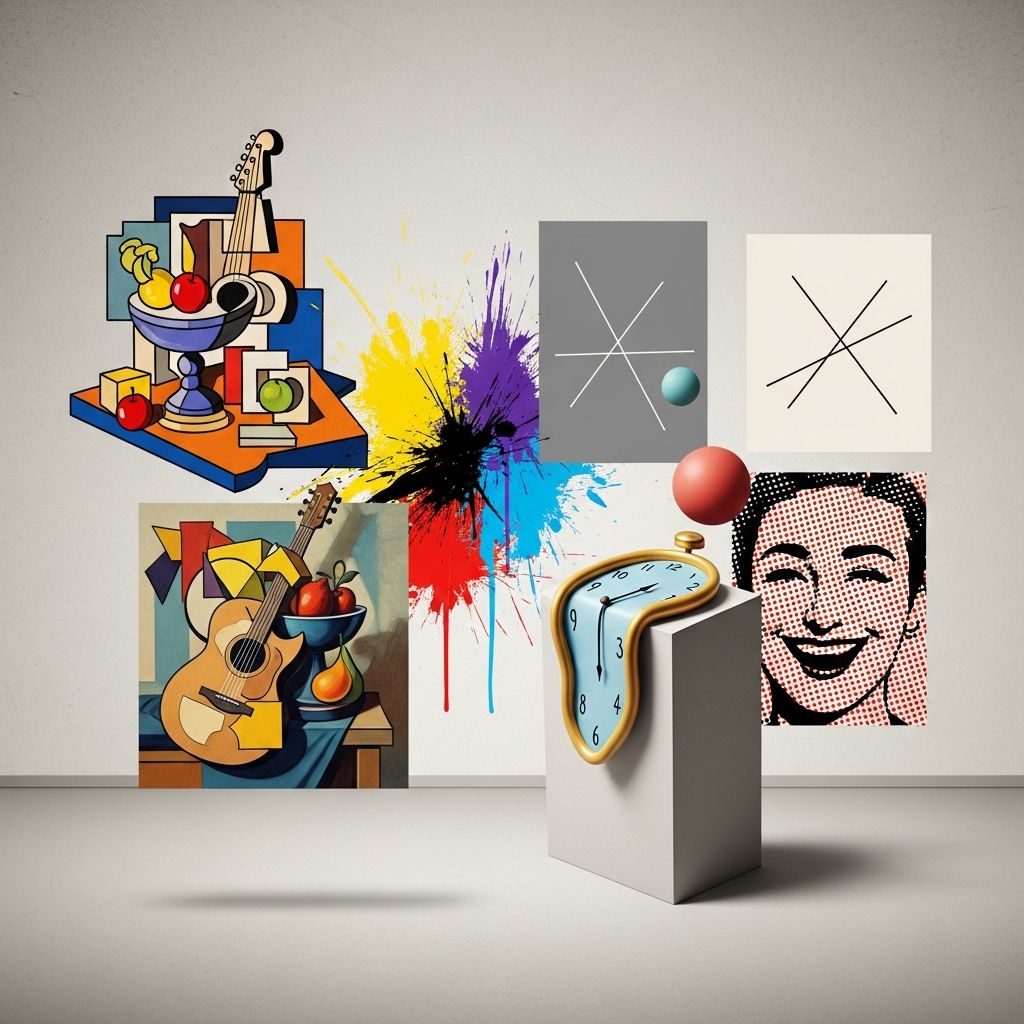
Modern art represents a transformative era in artistic history, spanning roughly from the 1860s to the 1970s, where creators boldly rejected longstanding conventions to embrace innovation and personal vision. This period marked a profound shift, driven by societal upheavals like the Industrial Revolution, scientific advancements, and philosophical changes, leading artists to explore abstraction, emotion, and new forms of expression.
The Origins and Timeline of Modern Art
The roots of modern art trace back to the mid-19th century, emerging as a response to rapid industrialization and cultural shifts in Europe. By the 1860s, artists began challenging the rigid academic standards that emphasized realistic depictions of historical, religious, or mythological subjects. Instead, they turned to everyday life, personal perception, and experimental techniques. This era extended through the early 20th century’s world wars and into the post-World War II period, concluding around the 1970s when contemporary art took precedence.
Key milestones include the late 19th-century Impressionist exhibitions in Paris, which defied salon juries, and the explosive avant-garde movements of the 1910s-1920s like Cubism and Futurism. Post-1945, American Abstract Expressionism dominated, reflecting global influences. Unlike rigid periods like the Renaissance, modern art’s timeline is fluid, often dated from 1863 (Manet’s Olympia) to the rise of Postmodernism.
Core Characteristics That Define Modern Art
At its heart, modern art is characterized by a relentless pursuit of novelty and a break from tradition. Artists prioritized individual expression over mimetic accuracy, often distorting forms, colors, and perspectives to convey inner realities or abstract concepts.
- Experimentation with Form and Medium: Creators tested unconventional materials, from industrial paints to found objects, emphasizing process over product.
- Abstraction and Non-Representational Focus: Moving beyond literal depiction, works explored pure color, line, and shape, as in Kandinsky’s pioneering abstracts.
- Rejection of Academic Norms: Dismissal of perspective, proportion, and finish in favor of raw emotion and spontaneity.
- Social and Political Undertones: Many pieces addressed modernity’s upheavals, utopian ideals, or human alienation.
- Conceptual Depth: The idea behind the work gained equal footing with its aesthetics, challenging ‘What is art?’
These traits unified diverse styles, fostering a legacy of boundary-pushing creativity.
Major Movements Shaping Modern Art
Modern art unfolded through dynamic movements, each responding to its era’s spirit. Below is a table summarizing pivotal ones:
| Movement | Time Period | Key Artists | Core Ideas |
|---|---|---|---|
| Impressionism | 1870s-1880s | Monet, Renoir, Degas | Captured fleeting light and color through loose brushwork and outdoor painting. |
| Post-Impressionism | 1880s-1900s | Van Gogh, Cézanne, Gauguin | Emphasized structure, emotion, and symbolism beyond Impressionist optics. |
| Cubism | 1907-1914 | Picasso, Braque | Fragmented objects into geometric planes, multi-viewpoint representation. |
| Futurism | 1909-1918 | Boccioni, Balla | Celebrated speed, technology, and dynamism with blurred motion. |
| Expressionism | 1905-1920s | Munch, Kirchner | Distorted forms to express angst and psychological depth. |
| Dadaism | 1916-1922 | Duchamp, Arp | Anti-art absurdity rejecting war and rationality via readymades. |
| Surrealism | 1920s-1940s | Dalí, Magritte | Accessed the unconscious through dream-like, bizarre imagery. |
| Abstract Expressionism | 1940s-1950s | Pollock, Rothko | Spontaneous, large-scale gestures embodying emotion. |
These movements built upon each other, expanding art’s possibilities from representational to profoundly conceptual.
Influential Artists and Iconic Works
Pablo Picasso’s Les Demoiselles d’Avignon (1907) shattered conventions with its African mask influences and proto-Cubist forms, heralding a new visual language. Claude Monet’s water lily series immersed viewers in atmospheric color, pioneering seriality in art. Wassily Kandinsky’s Composition VII (1913) liberated color and form into pure abstraction, syncing with musical rhythms.
Jackson Pollock’s drip paintings, like Number 1A, 1948, embodied action painting, where the artist’s physicality infused the canvas. Salvador Dalí’s The Persistence of Memory (1931) melted clocks to probe time and dreams, epitomizing Surrealism. These works not only defined movements but reshaped global perceptions of creativity.
Modern Art vs. Contemporary Art: Key Differences
| Aspect | Modern Art (1860s-1970s) | Contemporary Art (1970s-Present) |
|---|---|---|
| Timeline | Historical period tied to Modernism. | Ongoing, post-modern. |
| Focus | Form, abstraction, individual genius. | Concepts, identity, globalization. |
| Styles | Paintings, sculptures with experimental media. | Installations, digital, performance. |
| Influences | Industrial Revolution, Freud. | Digital age, activism. |
While modern art sought universal truths through innovation, contemporary art embraces pluralism and context-specific narratives.
The Global Impact and Legacy
Modern art democratized creativity, shifting power from academies to individual visions and influencing design, advertising, and architecture. It inspired the New York School’s dominance post-WWII, making the U.S. an art capital. Today, its emphasis on experimentation permeates education and markets, with modern works fetching record auction prices.
Critics once decried it as chaotic, but its validation through institutions like MoMA underscores its endurance. Modern art taught us that beauty lies in disruption, paving the way for inclusive, diverse expressions.
Frequently Asked Questions (FAQs)
What timeframe covers modern art?
Typically from the 1860s to the 1970s, encompassing movements from Impressionism to Abstract Expressionism.
How does modern art differ from traditional art?
It rejects realism and academic rules, favoring abstraction, emotion, and innovation.
Who are some must-know modern artists?
Picasso, Monet, Van Gogh, Pollock, and Kandinsky, each revolutionizing their mediums.
Is modern art always abstract?
No, while abstraction is prominent, early movements like Impressionism remained somewhat representational.
Why was modern art controversial?
It challenged societal norms, beauty standards, and art’s purpose, provoking outrage and debate.
References
- What is Modern Art? Definition, Movements, and Key Characteristics — Dans le Gris. 2023. https://danslegris.com/blogs/journal/modern-art-definition
- Modernism – Tate — Tate. Accessed 2026. https://www.tate.org.uk/art/art-terms/m/modernism
- What Is Modern Art? History, Types, Artists and Key Characteristics — Artzolo. 2023. https://www.artzolo.com/blogs/art-logs/what-is-modern-art-paintings
- Modern art – Wikipedia — Wikipedia. Accessed 2026. https://en.wikipedia.org/wiki/Modern_art
- The History of Modern & Contemporary Art Movements — Contemporary Art Issue. 2023. https://www.contemporaryartissue.com/the-history-of-modern-contemporary-art-movements/
- Modern art | History, Styles & Movements — Britannica. 2023-10-12. https://www.britannica.com/art/modern-art-to-1945-2080464
Similar Articles







Read full bio of Sneha Tete