Unlocking Abstract Art: Essence and Evolution
Discover the revolutionary world of abstract art, from its bold origins to modern expressions that challenge perception and emotion.
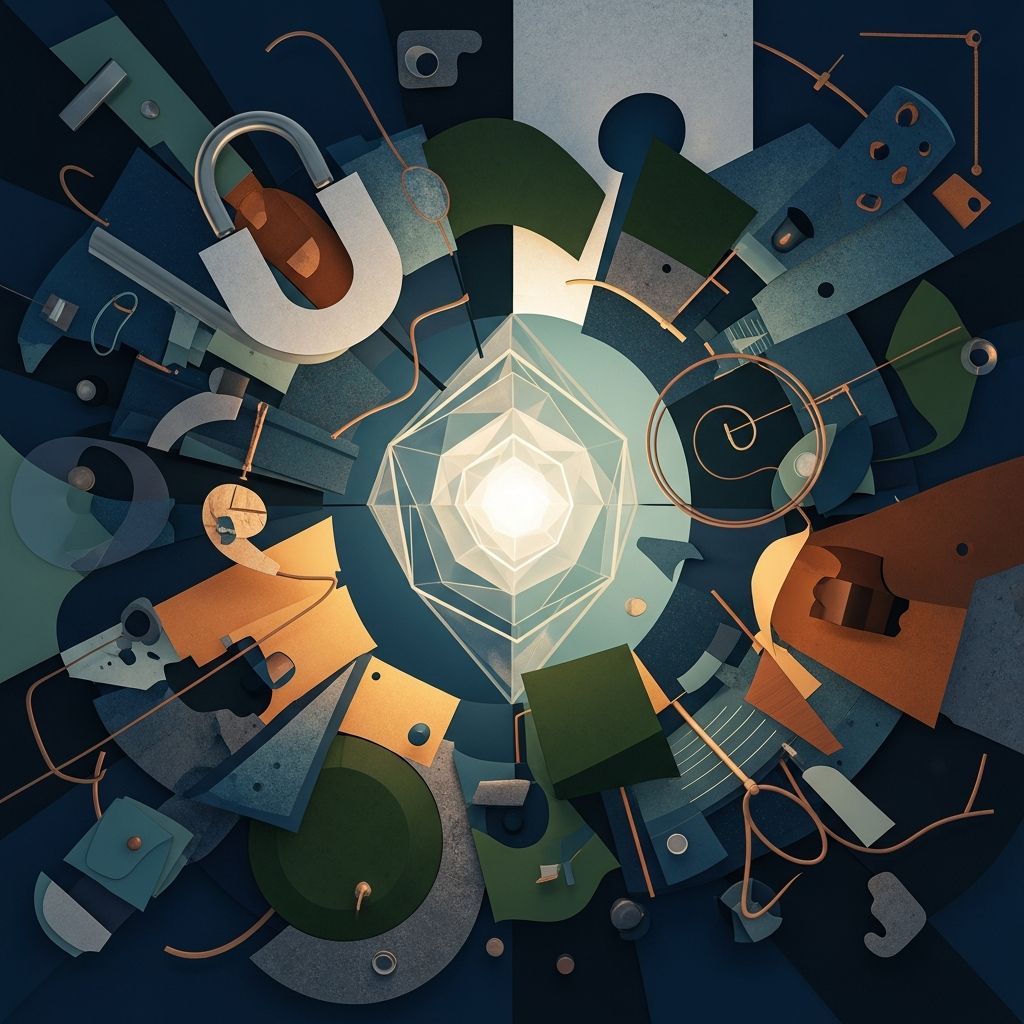
Abstract art represents a profound shift in artistic expression, prioritizing emotion, form, color, and line over literal depictions of the physical world. Emerging in the early 20th century, it challenged traditional notions of representation and opened doors to boundless creativity.
The Birth of Abstraction: Breaking Free from Reality
Abstract art’s roots trace back to the late 19th and early 20th centuries, when artists began questioning the dominance of realistic portrayal. Influenced by movements like Impressionism and Post-Impressionism, painters explored light, perception, and inner experience, laying groundwork for pure abstraction. Romanticism’s emphasis on imagination and the unconscious further fueled this departure from classic imitation.
In Europe, the artistic scene buzzed with experimentation. Fauvism introduced wild colors and bold brushwork, while Cubism fragmented forms into geometric planes, pushing toward non-representational art. These developments marked a rebellion against academic constraints, allowing artists to focus on subjective emotion over objective reality.
Pioneers Who Dared to Abstract
Wassily Kandinsky is widely credited as a founder of abstract art. In 1910-1911, he created what he believed were the first purely abstract works, inspired by synesthesia—his ability to ‘hear’ colors. His watercolor from 1910 abandoned recognizable subjects, emphasizing rhythmic lines and vibrant hues to evoke spiritual vibrations.
However, Hilma af Klint, a Swedish artist, may have preceded him. Around 1906, she produced biomorphic and geometric abstractions driven by spiritualism and theosophy, though her work remained largely unknown until later. Meanwhile, Piet Mondrian evolved from landscapes to grids of primary colors and black lines, seeking universal harmony through neoplasticism.
In Russia, Kazimir Malevich introduced Suprematism with his iconic Black Square in 1915—a stark black square on white, symbolizing the zero of form and pure feeling. This radical piece drew a line between old and new art paradigms.
| Artist | Key Contribution | Notable Work | Year |
|---|---|---|---|
| Wassily Kandinsky | First purely abstract paintings | First Abstract Watercolor | 1910 |
| Hilma af Klint | Spiritual geometric abstractions | Series of biomorphic forms | 1906 |
| Piet Mondrian | Geometric neoplasticism | Composition No. 10 | 1939-1942 |
| Kazimir Malevich | Suprematism | Black Square | 1915 |
Defining Traits of Abstract Expression
- Non-Representational Focus: Unlike figurative art, abstraction avoids depicting real-world objects, instead using shapes, colors, and textures to convey ideas.
- Emotional Depth: It taps into the subconscious, with color evoking moods—red for passion, blue for calm—and forms suggesting movement or stillness.
- Freedom in Technique: Artists employ drips, splatters, bold strokes, or precise geometry, prioritizing process and intuition.
- Visual Language: Line, form, color, and gestural marks create compositions independent of visual references.
These elements allow abstract art to communicate universally, transcending language and culture barriers.
Major Movements Shaping Abstraction
Cubism and Early Influences
Pioneered by Pablo Picasso and Georges Braque, Cubism deconstructed objects into facets, blurring the line between representation and abstraction. Though rooted in reality, its geometric simplification influenced pure abstraction.
Expressionism and Fauvism
Expressionists distorted forms to capture inner turmoil, while Fauvists like Henri Matisse unleashed vivid colors, treating subject matter as secondary to aesthetic impact.
Dada, Surrealism, and Beyond
Dadaism rejected bourgeois norms with absurd, non-objective works. Surrealism delved into dreams and the subconscious, inspiring automatic techniques that freed artists from conscious control.
Abstract Expressionism in America
Post-World War II, New York became the epicenter. Action Painting, led by Jackson Pollock, involved dripping paint to embody energy and psyche. Color Field artists like Mark Rothko used large swaths of color for meditative immersion.
Willem de Kooning blended abstraction with figurative hints in his Women series, creating iconic symbols. Hard-edge abstraction by Kenneth Noland and Ellsworth Kelly countered with clean lines and flat colors.
Global Echoes: Abstraction Worldwide
Abstraction wasn’t confined to Europe or America. In Russia, avant-garde groups experimented boldly. India’s V.S. Gaitonde and S.H. Raza infused tantric geometry and emotional bhav (essence). Japan’s Gutai group explored materiality, while Europe’s CoBrA drew from primal myths.
Georgia O’Keeffe defied categories, abstracting natural forms into magnified, sensual shapes.
Abstract Art in the Modern Era
Today, abstraction thrives in diverse forms—from minimalism’s serene grids (Agnes Martin) to Cy Twombly’s scrawled automatism. Digital tools and installations expand its boundaries, blending with conceptual art.
Its relevance persists as it mirrors contemporary chaos, offering solace through pure sensation.
How to Appreciate and Interpret Abstract Works
Approach abstraction without preconceptions:
- Observe colors: What emotions do they stir?
- Trace lines and shapes: Do they flow or conflict?
- Consider scale and texture: How does it engage your space?
- Reflect personally: What does it evoke in you?
Unlike narrative art, abstraction invites subjective dialogue.
Frequently Asked Questions (FAQs)
Who invented abstract art?
No single inventor exists, but Wassily Kandinsky and Hilma af Klint are key pioneers, with Kandinsky’s 1910-1911 works often cited as first purely abstract.
What distinguishes abstract from figurative art?
Abstract art avoids recognizable subjects, focusing on form, color, and emotion, while figurative depicts real or imagined objects.
Is abstract art just random paint splatters?
No, it involves intentional choices in composition, color theory, and technique to convey deep emotion or ideas.
Why was abstract art controversial?
It challenged traditions, rejecting realism for subjectivity, sparking debates on ‘what is art?’ especially post-WWI.
Can anyone create abstract art?
Yes, its emphasis on personal expression makes it accessible, though mastery requires skill in visual language.
Abstract Art’s Lasting Legacy
Abstract art revolutionized visual culture, influencing design, advertising, and therapy. It proved art’s power to transcend the visible, touching the soul directly. As Kandinsky noted, forms and colors vibrate like music, resonating universally.
From Malevich’s square to Pollock’s drips, it embodies freedom, inviting endless interpretation.
References
- A Short History of Abstract Art — Artsper Magazine. 2023. https://blog.artsper.com/en/a-closer-look/a-short-history-of-abstract-art/
- Defining Moments in the History of Abstract Art — Ideelart. 2023. https://ideelart.com/blogs/magazine/defining-moments-in-the-history-of-abstract-art
- Abstract art — Wikipedia. 2026-04-04. https://en.wikipedia.org/wiki/Abstract_art
- Abstract art | History, Characteristics, Artists, & Facts — Britannica. 2026. https://www.britannica.com/art/abstract-art
- Abstract Art – Modern Art Terms and Concepts — TheArtStory. 2023. https://www.theartstory.org/definition/abstract-art/
- What is Abstract Art Paintings – History, Characteristics & Buying Guide — ArtFlute. 2023. https://www.artflute.com/blog/abstract-art-buying-guide
- What is Abstract Art? The Complete Guide — Rise Art. 2023. https://www.riseart.com/guide/2366/guide-to-abstract-art
Similar Articles








Read full bio of medha deb