Unlocking Innovation: Core Strategies for Breakthrough Ideation
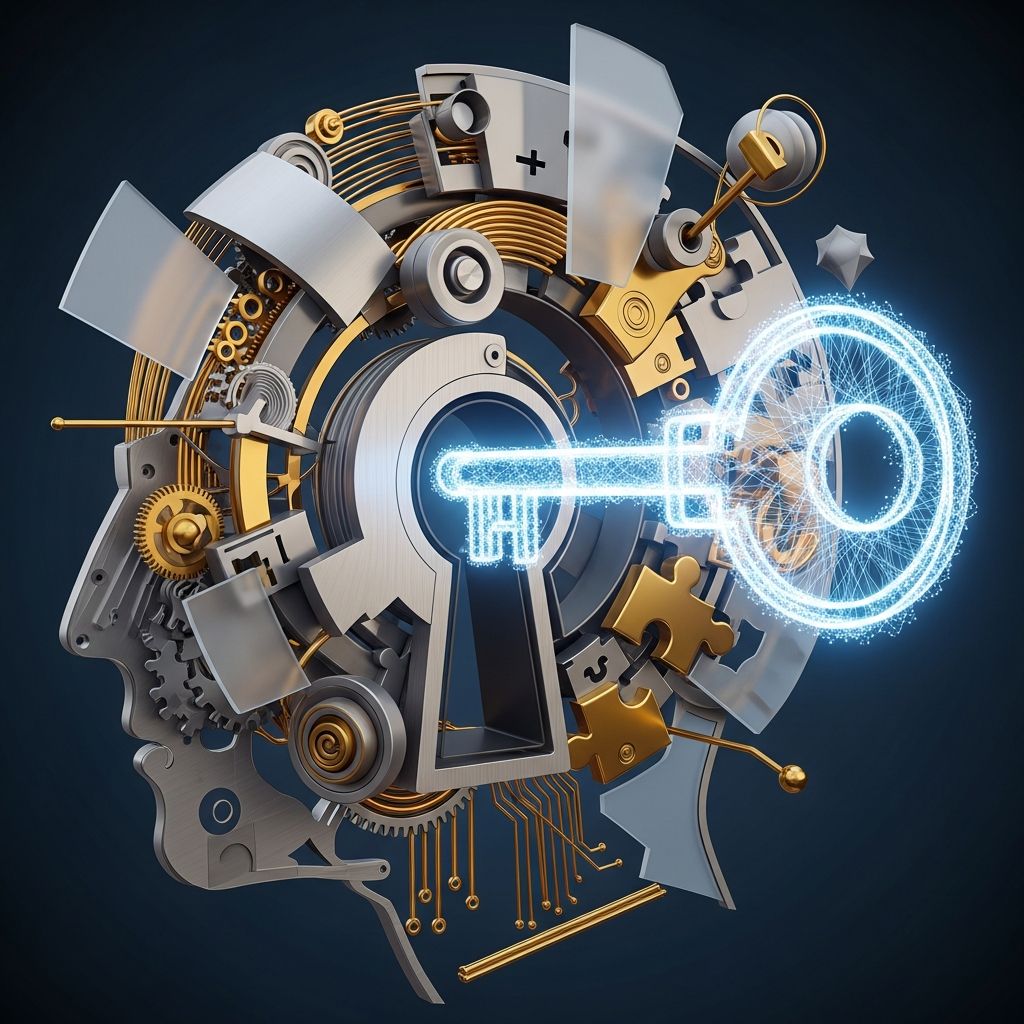
Mastering the Art of Generating Transformative Ideas
Innovation begins when conventional thinking reaches its limits. The most accomplished creators and problem-solvers have developed systematic approaches to move beyond standard analytical reasoning and access deeper levels of imaginative capacity. Rather than waiting for inspiration to strike randomly, these individuals employ deliberate techniques that train the mind to generate novel solutions consistently. Understanding these methodologies reveals that breakthrough thinking isn’t a mysterious talent reserved for the few—it’s a learnable discipline rooted in cognitive science and practical execution.
The Foundation: Balancing Two Thinking Modes
Creative ideation thrives when two complementary thinking processes work together harmoniously. The first mode, divergent thinking, expands possibilities by generating numerous ideas without immediate evaluation. The second mode, convergent thinking, filters and refines these ideas into actionable solutions. Many people default to convergent thinking exclusively, which explains why brainstorming sessions often feel sterile and uninspired. The most prolific innovators intentionally separate these phases, allowing ideas to flourish before critical judgment enters the process. This separation prevents the premature dismissal of unconventional concepts that might evolve into brilliant solutions with further development.
Strategic Questioning as an Ideation Catalyst
One of the most powerful yet underutilized techniques involves reframing problems as open-ended questions. Instead of stating “We need to reduce customer wait times,” creative thinkers ask “What if we eliminated waiting altogether?” or “How might we transform waiting into a positive experience?” This linguistic shift redirects mental focus from constraints toward possibilities. When questions replace statements, the brain naturally enters exploratory mode rather than defensive mode. Asking “What if?” repeatedly about different scenarios trains your mind to see beyond current reality and envision alternative futures. This practice, when applied consistently, becomes a cognitive habit that surfaces innovative solutions even in routine situations.
Perspective Multiplication: Seeing Through Different Lenses
A fundamental breakthrough in creative research identified that seeing problems from multiple viewpoints dramatically improves solution quality. When individuals or teams deliberately adopt different roles or perspectives, they access thinking patterns that remain invisible from their habitual viewpoint. A person approaching a design challenge through the lens of a customer experiences fundamentally different concerns than the same person viewing it as an engineer or accountant. Research demonstrates that groups including members from diverse cultural or disciplinary backgrounds generate more creative solutions than homogeneous groups, precisely because different backgrounds naturally produce different perspectives.
Several structured techniques facilitate this perspective multiplication. The Six Thinking Hats method, developed through creativity research, assigns different cognitive roles represented by colored hats—each hat symbolizes a distinct thinking mode such as analytical assessment, emotional reaction, optimistic possibility, critical evaluation, and intuitive insight. By consciously adopting each hat’s perspective in sequence, individuals examine problems through a comprehensive range of viewpoints before settling on solutions.
Information Architecture: The Foundation of Creative Solutions
Breakthrough ideas rarely emerge from insufficient information. Research into creative cognition identified eight core processes that distinguish effective problem-solvers from average ones. The foundational processes involve gathering relevant information thoroughly, then organizing that information into meaningful patterns. This isn’t passive consumption—effective creators actively seek information from unexpected domains, recognizing that novel combinations of existing concepts produce original ideas. Someone solving a transportation challenge might investigate principles from forest ecosystem organization or jazz improvisation, discovering that unexpected domains contain solutions applicable to their specific problem.
After gathering information, the next critical step involves organizing it to reveal hidden connections. Mind mapping represents one popular technique for this process, where central concepts branch into related ideas, creating visual representations of how different information elements connect. This visual organization often reveals gaps in understanding or surprising relationships that linear note-taking misses entirely.
The Subconscious as a Creative Partner
Perhaps counterintuitively, some of the most effective ideation involves stepping away from conscious problem-solving efforts. When the analytical mind takes a break, the subconscious continues processing information and making unexpected associations. Many inventors, artists, and entrepreneurs report their breakthrough insights arriving during walks, showers, or other activities that occupy the conscious mind while relaxing focused attention. This phenomenon reflects legitimate neuroscience: when attention relaxes, unconscious intelligence engages more fully, transforming apparent stuckness into spontaneous insight. Strategic disengagement—deliberately pausing problem-solving efforts—activates different neural networks than sustained concentration does.
Volume as a Path to Quality
A counterintuitive discovery in creativity research shows that generating larger quantities of ideas correlates with producing higher-quality solutions. This might seem paradoxical—shouldn’t fewer, more carefully considered ideas be superior? Yet the data consistently shows that among people who generate many ideas, the ratio of exceptional to mediocre ideas remains consistent. This means the person generating one hundred ideas will likely have produced more excellent ideas than the person generating ten ideas, despite potentially having a lower percentage of quality. This principle justifies brainstorming cultures that emphasize quantity without premature judgment, since filtering a large pool of possibilities yields better results than carefully curating a small pool.
Mental State Management for Creative Access
The physiological and psychological state you occupy significantly influences creative capacity. High stress, fatigue, or tension constricts thinking patterns and reduces access to creative resources. Conversely, relaxation, curiosity, and psychological safety expand thinking flexibility. Top performers in creative fields deliberately cultivate mental states conducive to ideation through various practices. Some employ meditation or breathing techniques to center themselves before approaching problems. Others use movement, music, or environmental changes to shift their neural state. The recognition that consciousness itself can be modulated—and that different states support different types of thinking—represents a powerful insight many people overlook when pursuing creative challenges.
Implementation as Part of the Creative Process
Creativity doesn’t conclude when ideas are generated; it extends through development, testing, and refinement. Effective innovators build this implementation phase directly into their creative process. Ideas that seem brilliant in abstract form often reveal unforeseen obstacles or opportunities when exposed to reality through prototyping and experimentation. This iterative cycle of creating, testing, learning, and refining produces solutions that are both innovative and practically viable. The key distinction separates people who generate ideas from people who generate ideas that work—implementation excellence proves just as important as ideation excellence.
Community and Collaboration as Creative Amplifiers
While some ideation occurs individually, many of the most transformative ideas emerge through collaborative processes. Communities dedicated to creative work provide accountability, diverse perspectives, and mutual support that solitary effort cannot match. These communities take numerous forms—professional organizations, creative writing groups, maker spaces, online forums, or structured educational settings. Within these environments, individuals encounter thinking styles different from their own, face constructive challenges to their assumptions, and receive encouragement to pursue unconventional directions. The collaborative context normalizes experimentation and risk-taking, reducing the psychological barriers that inhibit creative expression.
Practical Implementation Frameworks
Understanding creative principles intellectually differs from applying them consistently. Several practical frameworks help translate these principles into sustainable habits:
- The Clarify-Ideate-Develop-Implement Model: This structured approach begins with thorough problem definition through research and empathy. The ideation phase emphasizes idea generation without judgment. The development phase tests and refines promising ideas through prototyping. Implementation continues refinement based on real-world feedback.
- Gamification Strategies: Simple games and exercises train creative thinking efficiently. The “What-If” game can be played anywhere with minimal preparation. More structured approaches like escape rooms or strategic games force creative thinking to solve specific puzzles within defined timeframes.
- The Elevated Perspective Technique: Deliberately stepping back from immediate details to view problems from a “30,000-foot view” often reveals solutions invisible at ground level. This bird’s-eye perspective reveals the forest that specific details can obscure.
- Idea Curation Systems: Developing systematic methods for recording, organizing, and revisiting ideas ensures that creative insights don’t disappear. Digital tools, journals, or collaborative platforms can facilitate this curation process.
Building Sustainable Creative Capacity
Treating creativity as a trainable skill rather than an innate talent fundamentally changes how people approach ideation. Just as musicians develop performance capacity through deliberate practice, individuals can strengthen creative capacity through consistent application of proven techniques. This requires creating environments where experimentation is valued, where ideas are welcomed before being evaluated, and where diverse perspectives are actively sought. Organizations and individuals that deliberately cultivate these conditions consistently outproduce those relying on inspiration alone or isolated efforts.
Connecting Core Processes to Results
Research examining creative problem-solving effectiveness identified measurable relationships between process execution and outcome quality. When individuals effectively execute core creative processes—including problem definition, information gathering, information organization, conceptual combination, idea generation, idea evaluation, and implementation planning—the quality and originality of their solutions increase significantly. Importantly, this relationship holds even when accounting for general intelligence or divergent thinking ability. The specific execution of these processes matters more than raw creative talent.
Frequently Asked Questions
Q: Can anyone develop creative problem-solving skills, or is it only for naturally talented individuals?
A: Creativity is a trainable skill supported by cognitive science research. While individuals may have different starting points, consistent practice with proven techniques strengthens creative capacity across all ability levels. The specific execution of creative processes correlates more strongly with results than innate talent.
Q: How much time should be invested in the ideation phase before moving to implementation?
A: The optimal balance depends on problem complexity and available resources. Generally, allowing sufficient time for divergent thinking before convergent evaluation produces better results. However, extended ideation without moving toward implementation can become unproductive. Most experts recommend generating substantial idea quantities, then systematically filtering toward the most promising options.
Q: What role does failure play in the creative problem-solving process?
A: Failure provides essential information during implementation and testing phases. Each unsuccessful prototype or experiment reveals constraints or opportunities that guide refinement. Environments normalizing failure as part of the learning process support more ambitious creative exploration than environments penalizing mistakes.
Q: How can teams balance individual creative thinking with collaborative ideation?
A: Effective teams often combine individual ideation with group synthesis. Individuals generate ideas independently, then bring them to collaborative discussion where diverse perspectives enhance and refine them. This hybrid approach captures individual insight while leveraging collaborative perspective multiplication.
Q: Which creative problem-solving techniques work best for complex, long-term challenges?
A: Long-term challenges benefit from iterative cycling through the full creative process multiple times. Early cycles might emphasize broad exploration, while later cycles focus on specific refinement. Combining diverse techniques throughout prevents cognitive rigidity and maintains fresh perspectives across extended timelines.
References
- Cross-Field Differences in Creative Problem-Solving Skills — U.S. National Library of Medicine, National Institutes of Health. 2010. https://pmc.ncbi.nlm.nih.gov/articles/PMC2950648/
- 12 Proven Creative Problem-Solving Techniques That Work — Scott Jeffrey. 2024. https://scottjeffrey.com/creative-problem-solving-techniques/
- What Is Creative Problem-Solving & Why Is It Important? — Harvard Business School Online. 2024. https://online.hbs.edu/blog/post/what-is-creative-problem-solving
- The Science of Creativity: How to Train Your Brain for Innovative Thinking — University of Pennsylvania, Learning and Performance Sciences. 2023. https://lpsonline.sas.upenn.edu/features/science-creativity-how-train-your-brain-innovative-thinking
- What Is Creative Problem Solving? — National Inventors Hall of Fame. 2024. https://www.invent.org/blog/trends-stem/creative-problem-solving-techniques
- Teaching Creative Problem-Solving — Army University Press, Journal of Military Learning. 2024. https://www.armyupress.army.mil/Journals/Journal-of-Military-Learning/Journal-of-Military-Learning-Archives/JML-April-2024/Teaching-Creative-Problem-Solving/
Similar Articles








Read full bio of Sneha Tete